The right battery load tester can quickly reveal weak starting performance, charging problems, and declining battery capacity before they become costly surprises. This roundup compares automotive carbon-pile testers, digital analyzers, and programmable electronic loads for different testing needs.
Whether you maintain passenger vehicles, commercial equipment, lithium battery packs, or a professional workshop, the best choice depends on voltage compatibility, load range, measurement accuracy, safety features, and ease of use.
Best 10 High-Accuracy Battery Load Testers Picks for 2026
Smart 12V Diagnostics
ANCEL BA101 Digital Battery Tester

- Tests battery health, cranking, and charging systems
- Supports 100-2000 CCA 12V batteries
- Includes readable display and multi-fault protection
Best For: DIY 12V vehicle maintenance and battery diagnosis
Heavy-Duty Load Testing
OTC 3181 130 Amp Battery Tester

- Applies a 130-amp load for fast testing
- Compatible with 6V and 12V batteries
- Large 0-16V display with sturdy battery clamps
Best For: Garage and shop testing of top- or side-post batteries
Programmable Bench Testing
ET5411 400W Electronic Load Tester

- Provides 1mV and 1mA measurement resolution
- Supports six constant-load operating modes
- Designed for battery and power-supply development
Best For: Bench testing by engineers and advanced electronics users
Compact Vehicle Testing
TOPDON BT100 12V Battery Tester

- Tests 100-2000 CCA 12V lead-acid batteries
- Includes battery, cranking, and charging tests
- Compact design with protected copper clamps
Best For: Portable testing for DIY users, garages, and auto shops
Best Versatile Electronic Load Tester

- Four-wire system helps improve voltage-measurement accuracy
- Four adjustable discharge modes for varied testing
- Up to 200V, 20A, and 180W with safety protections
Best For: Battery, charger, power-bank, and USB-device testing
Best Automotive Diagnostic Tester
FOXWELL BT705 12V/24V Battery Tester
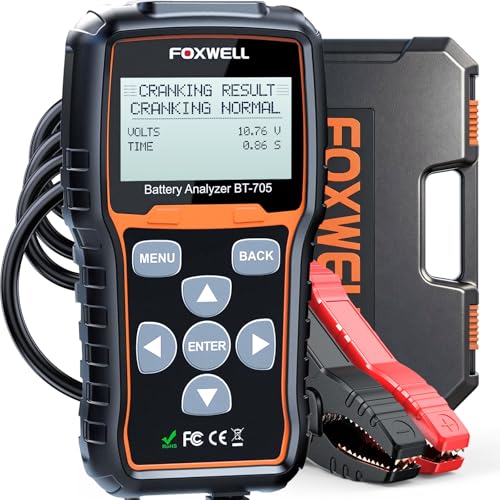
- Checks battery health, cranking, and alternator output
- Supports 100–2000 CCA and several lead-acid battery types
- Guided GOOD, RECHARGE, or REPLACE results
Best For: Cars, trucks, RVs, boats, and fleet vehicles
Best Heavy-Duty Carbon-Pile Tester
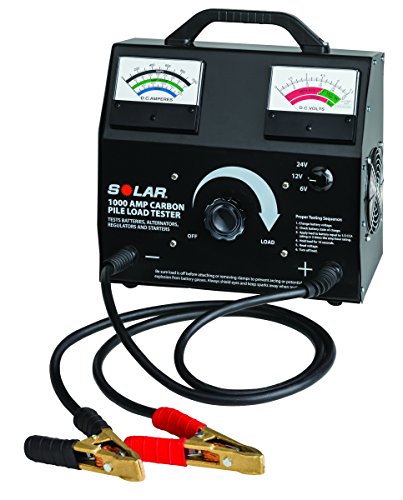
- Variable carbon-pile load reaches 1000 amps
- Tests batteries up to 2000 CCA
- Works with 6V, 12V, and 24V systems
Best For: Shop-based battery, starter, and alternator testing
Versatile 12V/6V Pick
Battery Tender 100-Amp Load Tester

- Tests 6V and 12V batteries
- Checks battery, starter, and charging systems
- Color-coded display with heavy-duty clamps
Best For: Multi-vehicle garage diagnostics
Garage Workhorse
Schumacher BT-100 Battery Load Tester

- Performs three automotive diagnostic tests
- Supports 6V and 12V batteries up to 1,000 CA
- Visible analog meter and rocker switch
Best For: Home garages and broad vehicle coverage
Precision Analog Choice

- Specified voltage accuracy of ±0.2V
- Tests 6V and 12V batteries up to 1,000 CCA
- Protected meter and anti-sparking switchgear
Best For: DIY users and shop diagnostics
Smart 12V Diagnostics – ANCEL BA101 Digital Battery Tester
For shoppers comparing high-accuracy battery load testers for everyday vehicle maintenance, the ANCEL BA101 combines battery-health, cranking, and charging-system checks in one compact tool. It supports 12V batteries from 100-2000 CCA and displays SOH, SOC, voltage, current, and CCA readings.
Best For: DIY owners and technicians testing 12V flooded, AGM, GEL, or EFB batteries in cars, trucks, boats, RVs, ATVs, and similar vehicles.
Pros:
- Provides SOH, SOC, voltage, current, CCA, cranking, and charging tests.
- Supports multiple battery standards and 100-2000 CCA ratings.
- Uses direct vehicle-battery power, with a readable backlit display and adjustable contrast.
- Includes protection against reverse polarity, short circuits, overcurrent, and overvoltage.
Cons:
- Works only with 12V batteries over 30Ah.
- Not intended for lithium, 6V, 8V, or 24V batteries.
- Accurate results depend on entering the correct battery type, rating, and temperature.
The BA101 is a versatile choice when you want more than a simple voltage check. Its broad 12V compatibility and system-testing functions make it useful for diagnosing potential battery or charging problems before they cause a breakdown.
Heavy-Duty Load Testing – OTC 3181 130 Amp Battery Tester
The OTC 3181 is a straightforward option among high-accuracy battery load testers, using a 130-amp load to produce accurate, reliable results in about 10 seconds. Its large 0-16V display and compatibility with both 6V and 12V batteries suit practical shop and garage testing.
Best For: Users who need a durable, conventional load tester for 6V and 12V batteries with top- or side-post terminals.
Pros:
- Performs a 130-amp heavy-duty load test in approximately 10 seconds.
- Works with both 6V and 12V batteries.
- Large display covers a 0-16V range and includes zero adjustment.
- Clamps are designed for a firm grip on top- and side-post batteries.
Cons:
- Provides a more traditional load-test readout rather than the broader diagnostic data of digital analyzers.
- Requires direct battery power and hands-on clamp placement.
Choose the OTC 3181 if dependable load testing matters more than extensive menu-based diagnostics. Clamp storage tabs and rear brackets also make it convenient for organized garage or toolbox use.
Programmable Bench Testing – ET5411 400W Electronic Load Tester
The ET5411 takes a different approach to high-accuracy battery load testers: it is a programmable DC electronic load for controlled bench testing rather than a vehicle-specific battery analyzer. With 1mV and 1mA resolution, it is designed for battery, charger, and power-supply testing and development.
Best For: Engineers, researchers, and advanced users evaluating batteries, chargers, switching supplies, and linear power supplies under programmable loads.
Pros:
- Offers 1mV and 1mA measurement resolution.
- Supports CC, CV, CR, CP, CC+CV, and CR+CV operating modes.
- Uses a 2.8-inch TFT LCD with Chinese and English display options.
- Includes key-lock functionality to help prevent accidental changes.
Cons:
- It is a bench electronic load, not a dedicated automotive battery health or CCA tester.
- The supplied notes do not specify automotive clamps, vehicle-system tests, or a stated battery-voltage range.
- Its 400W capacity may require careful matching to the battery or device under test.
The ET5411 is best suited to controlled laboratory, workshop, or development environments. Its programmable modes and fine resolution offer considerably more control than a basic automotive load tester, but they also require more technical setup.
Compact Vehicle Testing – TOPDON BT100 12V Battery Tester
The TOPDON BT100 is a compact choice among high-accuracy battery load testers for 12V lead-acid vehicle batteries. It reports SOH, SOC, voltage, current, rating, and other analysis while adding dedicated battery, cranking, and charging-system tests.
Best For: DIY users, garages, and auto shops that regularly check 12V batteries in cars, trucks, motorcycles, boats, RVs, ATVs, SUVs, lawnmowers, and golf carts.
Pros:
- Tests 100-2000 CCA flooded, AGM, EFB, and GEL batteries.
- Performs battery-health, cranking, and charging-system checks.
- Compact 5.3-by-3-by-1-inch design is easy to store in a glove box or console.
- Copper clamps include reverse-polarity prevention and spark-proof features.
Cons:
- Limited to 12V lead-acid batteries.
- Must be properly connected before it powers on, and the vehicle ignition should be off during testing.
- The supplied notes do not indicate compatibility with lithium batteries.
For convenient roadside or routine garage checks, the BT100 offers a useful balance of portability and diagnostic coverage. Its color-coded indicators and menu operation make quick battery and starting-system assessments easier without charging the tester first.
Best Versatile Electronic Load Tester – 180W 4-Wire USB Load Tester
For high-accuracy battery load testers that can handle more than automotive diagnostics, this 180W electronic load tester offers adjustable testing across batteries, power banks, chargers, cables, and adapters. Its four-wire system helps reduce the effect of wire resistance when measuring voltage, while the color display provides detailed readings for voltage, current, power, capacity, temperature, resistance, and discharge time.
Best For: Users testing lithium batteries, USB devices, chargers, and power adapters with adjustable electronic-load modes.
Pros:
- Four-wire measurement system is designed for more accurate voltage readings.
- Supports constant-current, constant-power, constant-resistance, and constant-voltage modes.
- Offers up to 200V, 20A, and 180W capacity with overload, overcurrent, and high-temperature protection.
- Includes a large color screen, app compatibility, and temperature-controlled cooling.
Cons:
- Its corded, bench-style design is less convenient for quick vehicle checks.
- The broad range of settings may be more than casual users need.
This is the most versatile choice of the three for controlled discharge and capacity testing. Choose it when measurement flexibility and four-wire accuracy matter more than portability or simple pass/fail battery health results.
Best Automotive Diagnostic Tester – FOXWELL BT705 12V/24V Battery Tester
Among high-accuracy battery load testers for vehicles, the FOXWELL BT705 is aimed at checking battery health, cranking performance, and charging output rather than performing extended electronic-load tests. It covers 12V and 24V systems, measures 100–2000 CCA, and provides guided results on a 2.8-inch screen.
Best For: Home garages, repair shops, and fleet users diagnosing 12V or 24V lead-acid vehicle batteries and charging systems.
Pros:
- Tests battery health, cranking performance, and alternator charging output.
- Supports Flooded, AGM, GEL, and EFB batteries across 100–2000 CCA.
- Guided results summarize battery condition as GOOD, RECHARGE, or REPLACE.
- Includes a 5.9-foot cable, durable clamps, and a hard carrying case.
Cons:
- Designed for 12V and 24V automotive systems, not general-purpose battery capacity testing.
- Its measurement range and compatibility focus on lead-acid vehicle batteries.
The BT705 is the practical pick for vehicle diagnostics, especially when you want an easy-to-read assessment instead of raw electrical readings alone. The long cable also makes it easier to monitor cranking tests from the driver’s seat.
Best Heavy-Duty Carbon-Pile Tester – Solar 1876 1000A Load Tester
Clore Automotive Solar 1876 1000 Amp Carbon Pile Battery Load Tester, One Size, Factory
Check Price On AmazonFor high-accuracy battery load testers suited to demanding automotive work, the Clore Automotive Solar 1876 uses a variable carbon-pile load reaching 1000 amps. It tests batteries up to 2000 CCA and supports 6V, 12V, and 24V systems, making it a substantial option for shops and users working across multiple vehicle types.
Best For: Heavy-duty battery, starter, and alternator checks on cars, trucks, equipment, and other 6V/12V/24V applications.
Pros:
- Variable load capability reaches 1000 amps.
- Tests batteries rated up to 2000 CCA.
- Supports starter and alternator assessment across 6V, 12V, and 24V systems.
- Large gauges and heavy-duty clamps are designed for practical shop use.
Cons:
- At 8.8 pounds, it is less portable than a handheld digital tester.
- Its hand-powered carbon-pile design provides fewer automated readouts than the FOXWELL.
- The cable reach is limited to 56 inches.
The Solar 1876 makes sense when you need a traditional, high-load automotive tester with broad voltage compatibility. Its large gauges and strong load capability favor workshop use over compact roadside diagnostics.
Versatile 12V/6V Pick – Battery Tender 100-Amp Load Tester
For shoppers comparing high-accuracy battery load testers, the Battery Tender 026-0020 offers fixed 100-amp testing for 12V batteries and 50-amp testing for 6V batteries. Its color-coded display, attached clamps, and single toggle switch make it practical for checking battery condition, starter draw, and charging-system performance.
Best For: Vehicle owners testing starter and deep-cycle batteries across cars, trucks, motorcycles, boats, RVs, and ATVs.
Pros:
- Tests both 6V and 12V batteries, including units rated up to 1,000 cranking amps.
- Supports battery-health, starter-motor-draw, alternator, and charging-system checks.
- Color-coded readings, heavy-duty clamps, and a rubber-insulated handle improve usability and handling.
Cons:
- Uses fixed 50-amp and 100-amp load levels rather than an adjustable load.
- Its handheld design weighs about 2.1 pounds and may be larger than a simple voltage checker.
The Battery Tender is a capable all-around choice when you need one tester for multiple vehicle types and both 6V and 12V systems. The clearly marked display and broad compatibility make it especially useful for routine garage diagnostics.
Garage Workhorse – Schumacher BT-100 Battery Load Tester
The Schumacher BT-100 is a practical option among high-accuracy battery load testers, combining battery, charging-system, and starter-draw testing in one unit. It applies a 50-amp load to 6V batteries and a 100-amp load to 12V batteries, with an analog meter for quick visual readings.
Best For: Home garages and vehicle owners who want one tester for cars, trucks, motorcycles, boats, RVs, lawn tractors, and ATVs.
Pros:
- Runs three useful diagnostic tests: battery health, charging-system performance, and starter-motor draw.
- Handles 6V and 12V batteries up to 1,000 CA with color-coded clamps.
- Top-mounted rocker switch and visible analog meter support straightforward operation.
Cons:
- The analog display may be less detailed than a digital readout.
- Load levels are fixed at 50 amps for 6V and 100 amps for 12V testing.
With broad vehicle compatibility and three diagnostic functions, the BT-100 is a sensible bench or garage tester. Choose it when quick analog readings and a simple control layout matter more than advanced digital features.
Precision Analog Choice – NEIKO 40510A Battery Tester
NEIKO 40510A Car Battery Tester | 100 AMP 6 and 12 Volt Automotive Load Checker | CCA Analyzer
Check Price On AmazonThe NEIKO 40510A stands out for its stated voltage accuracy of ±0.2V, making it a compelling option among high-accuracy battery load testers. It applies a 100-amp load to 12V batteries and a 50-amp load to 6V batteries, while its analog meter helps assess battery condition under starter-like demand.
Best For: DIY users and mechanics testing automotive, marine, powersport, and RV batteries at home or in a shop.
Pros:
- Lists voltage accuracy of ±0.2V for more confidence in readings.
- Tests 6V and 12V batteries up to 1,000 CCA using fixed 50-amp or 100-amp loads.
- Features anti-sparking internal switchgear, a protected meter, and clearly marked red and black clamp grips.
Cons:
- The load test should be held for a maximum of 10 seconds.
- Its analog meter may provide less precise readout detail than a digital analyzer.
The NEIKO is a strong fit when published voltage accuracy and durable handling features are priorities. Its portable format and broad 6V/12V compatibility make it useful for routine battery checks across several vehicle categories.
How We Picked the Best High-Accuracy Battery Load Testers
We focused on testers that offer useful, repeatable measurements rather than relying only on basic voltage readings. The selection covers 6V, 12V, and 24V automotive tools alongside programmable electronic loads for controlled battery-capacity testing. We considered load capability, supported battery types, display clarity, charging and cranking diagnostics, thermal protection, cable quality, portability, and the practical needs of home mechanics and professional technicians.
Because “accuracy” depends on the test method, we separated conventional automotive load testers from electronic loads. A carbon-pile tester is appropriate for simulating starter demand, while a programmable DC load is better for controlled discharge tests and capacity verification.
Quick Comparison
| Use case | What to prioritize | Best tester style |
|---|---|---|
| Routine 12V car checks | Simple controls and clear results | Digital automotive analyzer |
| Starter-battery load testing | High current and strong clamps | Carbon-pile load tester |
| 6V and 12V equipment | Dual-voltage compatibility | Heavy-duty manual tester |
| 24V systems | 24V support and suitable cables | Professional automotive analyzer |
| Battery capacity experiments | Adjustable constant-current discharge | Programmable electronic load |
Key Buying Factors for High-Accuracy Battery Load Testers
Voltage and Battery Compatibility
Confirm that the tester matches the batteries you service. Many automotive models are designed for 6V or 12V lead-acid batteries, while fleet and industrial applications may require 24V support. Lithium packs and other chemistries need a tester with appropriate voltage limits and discharge controls.
Load Range and Test Method
Check the maximum current, wattage, and test duration. A 100-amp tester may suit everyday automotive checks, but larger engines and commercial batteries can require substantially more load. For capacity testing, adjustable electronic loads provide better control than a fixed automotive load.
Accuracy, Protection, and Usability
Look for readable displays, stable leads, polarity protection, over-temperature safeguards, and clear pass/fail guidance. Accurate results also require clean terminals, fully charged batteries, and following the manufacturer’s specified test time. A tester with poor clamps or undersized cables can produce misleading readings.
Who Should Buy Which High-Accuracy Battery Load Testers?
Choose a straightforward 6V/12V automotive load checker if you mainly maintain cars, motorcycles, lawn equipment, or classic vehicles. A digital analyzer is the better fit when you want charging, cranking, alternator, and battery-health information in one tool. For workshops servicing heavier vehicles, choose a high-current carbon-pile tester or a model supporting 24V systems.
If your goal is measuring lithium-battery capacity, evaluating power supplies, or running repeatable discharge experiments, select a programmable electronic load with adjustable current, voltage limits, cooling, and four-wire measurement. Buyers who need occasional checks should prioritize portability and simple operation; frequent professional users should spend more on durable leads, thermal management, wider voltage coverage, and repeatable controls.