Choosing the right grounding tester can save time, reduce guesswork, and improve safety on the jobsite. If you need dependable readings for installations, maintenance, or compliance checks, accuracy matters.
This roundup of the best high-accuracy earth resistance testers for 2026 focuses on measurement range, testing method, ease of use, and field-ready features.
Best 10 High-Accuracy Earth Resistance Testers Picks for 2026
Compact Auto-Zero Kit
Extech 382252 Earth Ground Resistance Tester Kit

- 20/200/2000 ohm ranges
- Auto zero with voltage and continuity checks
- Includes case, leads, and earth bars
Best For: Portable routine ground testing with basic multi-function measurements
Wide-Range Digital Tester
UNI-T UT522 UT520 Series Earth Tester

- 0Ω-4000Ω resistance range
- 2-wire and 3-wire testing modes
- Backlit display with hold and alerts
Best For: Wide-range digital earth resistance testing with clear on-screen feedback
Fall-of-Potential Kit
Ideal Electrical 3-Pole Ground Tester
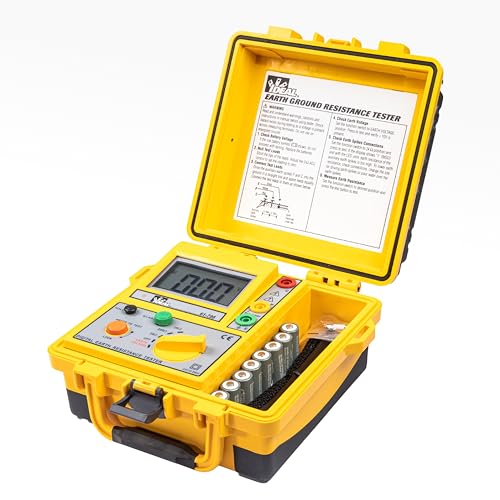
- 3-pole Fall of Potential testing
- Auto-ranging with zero-ohm adjustment
- Includes electrodes, leads, and hard case
Best For: Precise ground rod testing with a traditional 3-pole setup
Clamp-On Logging Meter
DLG DI-120 Ground Earth Resistance Tester
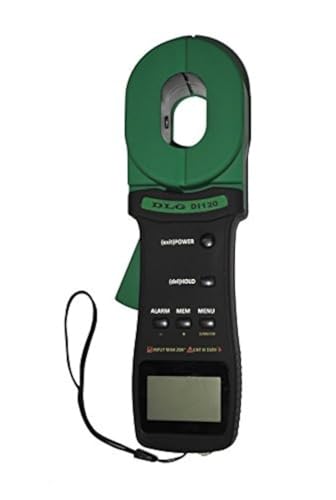
- Clamp-on testing with 0.001Ω resolution
- USB upload and 99-point datalogging
- Large LCD with 55×32 mm jaw
Best For: Fast clamp-on resistance checks with basic logging and fine resolution
Field-Ready Low-Range Tester
VICTOR 4105B High Accuracy Digital Earth Resistance Tester

- 0.1Ω to 1000Ω ground resistance range
- Measures ground voltage up to 1000V
- Dustproof and moisture-proof field design
Best For: grounding checks and lightning protection inspections
Clamp-On Fast-Scan Tester
EITAI2000A-S Gen2 Clamp Ground Earth Resistance Meter
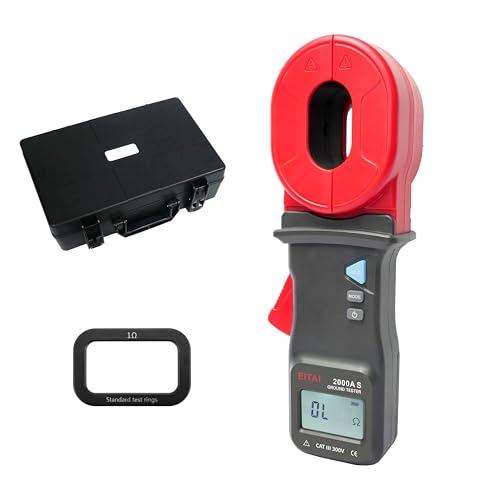
- 0.01Ω to 500Ω range with 0.001Ω resolution
- Clamp-on, contactless testing with no auxiliary electrodes
- Reads in about 0.5 seconds and stores 99 sets
Best For: power grids, telecom base stations, and lightning protection networks
Budget Multi-Mode Tester
MS2302 Digital Earth Ground Resistance Tester

- 2-pole and 3-pole measurement modes
- 0Ω to 4000Ω range with large LCD
- Stores up to 100 groups of data
Best For: general-purpose grounding tests with multiple measurement modes
Clamp-On Loop Tester
ETCR2100A+ Digital Clamp Ground Earth Resistance Meter Tester 200Ω

- Clamp-on, non-contact loop testing
- 0.010Ω to 200Ω range, 0.001Ω resolution
- 32mm jaw for field-friendly use
Best For: Fast loop resistance checks where disconnecting ground wires is impractical
Multi-Function Ground Meter

- 3-wire and 2-wire resistance testing
- 0.03Ω to 2000Ω across 4 ranges
- AC/DC voltage plus auto measurement
Best For: Technicians needing a versatile grounding meter with voltage and interference testing
Soil Resistivity Meter

- Measures ground resistance and soil resistivity
- 2-wire and 3-wire testing modes
- Auto measurement with backlight and alerts
Best For: Grounding and soil resistivity work in electrical and field environments
Compact Auto-Zero Kit – Extech 382252 Earth Ground Resistance Tester Kit
If you want a straightforward option among high-accuracy earth resistance testers, the Extech 382252 is a compact kit built around 20/200/2000 ohm ranges and auto zeroing. It also adds AC/DC voltage and continuity checks, so it can handle more than just ground resistance during routine field work.
Best For: Technicians who want a battery-powered earth ground tester kit with basic multi-function checks and a portable case.
Pros:
- 3 resistance ranges: 20/200/2000 ohm
- Auto zero plus continuity and AC/DC voltage functions
- Includes leads, 2 earth bars, holster, case, and 6 AA batteries
- Lightweight, battery-powered design for field use
Cons:
- Range set is narrower than higher-end digital testers
- Not built around advanced logging or USB transfer features
The Extech 382252 is a practical pick if you need a portable tester kit with the essentials and simple operation. Its mix of resistance, voltage, and continuity checks makes it useful for everyday electrical maintenance where convenience matters.
Wide-Range Digital Tester – UNI-T UT522 UT520 Series Earth Tester
UNI-T UT522 UT520 Series Digital Earth Tester, 0O-4000O Earth Resistance Tester
Check Price On AmazonThe UNI-T UT522 is a strong candidate in high-accuracy earth resistance testers when you need a wide measurement span and straightforward digital operation. It supports simple 2-wire testing and precise 3-wire testing, with helpful functions like data hold, low-battery indication, and an LCD backlight.
Best For: Users who need a digital earth tester with wide resistance coverage and both 2-wire and 3-wire test modes.
Pros:
- Wide 0Ω-4000Ω earth resistance range
- Supports simple 2-wire and precise 3-wire testing
- Data hold, backlight, auto power off, and low-battery indication
- Full icon display with poor-contact and over-range alerts
Cons:
- Manual range operation may take more user attention
- Heavier than compact handheld testers at 2 kg
For buyers who value broad range coverage and clear status feedback, the UT522 offers a well-rounded testing setup. It is a practical choice when you want a capable digital meter that supports both basic and more precise field methods.
Fall-of-Potential Kit – Ideal Electrical 3-Pole Ground Tester
This Ideal Electrical tester is aimed at buyers looking for high-accuracy earth resistance testers that use the 3-pole Fall of Potential method. It adds auto-ranging, zero-ohm adjustment, and data hold, making it a practical choice when you want precise ground rod and earth voltage readings without a complicated setup.
Best For: Electricians and technicians who want a 3-pole ground resistance tester with accurate readings and auto-ranging convenience.
Pros:
- 3-pole Fall of Potential method for precise measurements
- Measures ground resistance and earth voltage
- Auto-ranging plus zero-ohm adjustment and data hold
- Includes electrodes, test leads, and a hard case
Cons:
- 3-pole testing typically requires more setup than clamp-on designs
- Best suited to users who can work with external electrodes
If your priority is measurement accuracy and conventional test methodology, the Ideal Electrical kit stands out. Its feature set is focused on dependable field testing, with the added convenience of auto-ranging and a complete carry case.
Clamp-On Logging Meter – DLG DI-120 Ground Earth Resistance Tester
The DLG DI-120 is a clamp-on option for buyers who want high-accuracy earth resistance testers without driving separate ground rods for every check. It measures from 0.01 ohm to 1000 ohm with 0.001 ohm resolution and includes USB data upload plus onboard datalogging for repeated inspections.
Best For: Users who need clamp-on ground resistance testing with fine resolution and basic data logging.
Pros:
- Clamp-on design for faster ground resistance checks
- 0.01Ω to 1000Ω range with 0.001Ω resolution
- USB data upload and 99-point datalogging
- Large LCD and 55×32 mm jaw size
Cons:
- Software support is listed for older Windows versions only
- Clamp size may be a limitation for some installations
For users who want quick clamp-based measurements and the ability to store data, the DI-120 is a practical field tool. Its fine resolution and logging features make it especially useful when repeat checks matter.
Field-Ready Low-Range Tester – VICTOR 4105B High Accuracy Digital Earth Resistance Tester
If you need a high-accuracy earth resistance tester for straightforward grounding checks, the VICTOR 4105B focuses on practical field use. It measures ground resistance from 0.1Ω to 1000Ω and also checks ground voltage up to 1000V, making it useful for routine grounding inspections and lightning protection equipment.
Best For: Technicians who want a compact, accurate tester for grounding system checks and lightning protection inspections.
Pros:
- High-accuracy digital earth resistance measurement with a 0.1Ω to 1000Ω range.
- Also measures ground voltage, adding useful extra diagnostic capability.
- Dustproof and moisture-proof structure suits field work.
- Designed for reliable operation in grounding resistance testing.
Cons:
- Lower resistance range is narrower than some broader-range testers.
- Not a clamp-style, contactless meter.
- Specification details are more focused on grounding checks than multipurpose testing.
Overall, the 4105B is a practical choice when you want a dependable earth resistance tester built around accurate grounding measurements and field durability. Its simpler feature set makes it best for focused inspection work rather than advanced all-in-one testing.
Clamp-On Fast-Scan Tester – EITAI2000A-S Gen2 Clamp Ground Earth Resistance Meter
EITAI2000A-S Gen2 Clamp Ground Earth Resistance Meter Tester, 0.01Ω-500Ω, Manufacturer Direct Sales
Check Price On AmazonThe EITAI2000A-S Gen2 is built for users who want a high-accuracy earth resistance tester without disconnecting leads or setting auxiliary electrodes. Its clamp-on design measures from 0.01Ω to 500Ω with 0.001Ω resolution, making it well suited for critical systems where fast, contactless testing matters.
Best For: Maintenance teams working on power grids, telecom base stations, and lightning protection networks.
Pros:
- Contactless clamp-on measurement avoids grounding lead breakage and auxiliary electrodes.
- Very fine 0.001Ω resolution across a 0.01Ω to 500Ω range.
- One-handed operation with results in about 0.5 seconds.
- Stores up to 99 measurement sets and includes sound/light alarms.
Cons:
- Clamp jaw size may limit use on larger conductors beyond its 55×32mm opening.
- Battery-powered design may not suit users who prefer mains-powered instruments.
- Best suited to loop resistance testing rather than traditional auxiliary-electrode setups.
In practical use, this meter stands out when speed, portability, and non-contact testing are more important than conventional setup. It is a strong fit for routine maintenance on live installations where fast diagnosis helps reduce downtime.
Budget Multi-Mode Tester – MS2302 Digital Earth Ground Resistance Tester
The MS2302 is a practical high-accuracy earth resistance tester for users who need both 2-pole and 3-pole measurement modes in one device. With a 0Ω to 4000Ω range, large LCD, and easy range selection, it is aimed at straightforward grounding tests with clear readouts and simple operation.
Best For: Users who want a general-purpose earth ground resistance meter with multiple measurement modes and data storage.
Pros:
- Supports 2-pole and 3-pole modes for flexible grounding tests.
- Large LCD and gear selection design make measurements easier to read and choose.
- Stores up to 100 groups of measurement data, even during power cuts.
- Double insulation and non-slip, anti-fall design improve safety and handling.
Cons:
- Less specialized than a dedicated clamp-on tester for non-contact checks.
- Feature set is oriented toward standard grounding resistance work.
- Does not emphasize ultra-fast readout or advanced interference suppression.
The MS2302 is a solid all-around option if you want dependable grounding resistance testing with mode flexibility and built-in data retention. It fits users who value usability and a wide measurement range over specialized clamp-on convenience.
Clamp-On Loop Tester – ETCR2100A+ Digital Clamp Ground Earth Resistance Meter Tester 200Ω
If you need high-accuracy earth resistance testers for fast loop checks, the ETCR2100A+ is built for non-contact measurements without disconnecting ground wires or using auxiliary electrodes. Its clamp-on design is aimed at loop resistance testing where traditional methods can be slower or less practical, with a 0.010Ω to 200Ω range and 0.001Ω resolution.
Best For: Quick loop resistance testing in power, industrial, construction, and field maintenance work.
Pros:
- Clamp-on, non-contact design speeds up loop resistance testing.
- Wide 0.010Ω to 200Ω range with 0.001Ω resolution.
- Useful for applications where conventional meters may miss ground faults.
- 32mm jaw supports versatile field use.
Cons:
- Measures loop resistance only, not single-point grounding.
- May require an artificial loop near the grounding electrode for testing.
- Not the best fit if you need direct auxiliary-electrode ground testing.
This model is a strong pick if your workflow centers on loop measurements and you want a faster, clamp-on approach. Just make sure your use case matches its loop-only design before buying.
Multi-Function Ground Meter – Earth Ground Resistance Tester 0.03-2000 ohm Meter,Upgraded Earth Resistance Tester Auto Measurement 600V AC Ground Voltage Meter with 6pcs 1.5V Batteries,Tool Bag
This high-accuracy earth resistance tester is designed for users who need more than basic grounding checks. It supports 3-wire and 2-wire resistance measurement, plus AC earth voltage testing up to 600V and DC solar voltage testing up to 1500V, making it a practical all-around meter for field and maintenance work.
Best For: Users who want a versatile grounding tester with voltage measurement and automatic reading capture.
Pros:
- Supports 3-wire and 2-wire resistance measurement.
- Measures ground resistance from 0.03Ω up to 2000Ω across four ranges.
- Includes AC voltage, DC voltage, interference voltage, and residual resistance functions.
- One-button auto measurement stops when the reading stabilizes.
Cons:
- More feature-rich than a simple dedicated ground resistance meter.
- Requires attention to the correct measurement mode and range.
- Best suited to users who need multiple testing functions, not just one-purpose use.
For technicians who want a flexible tool that can handle grounding, voltage, and interference checks, this model offers a broad feature set. Its auto-stop testing and multiple ranges make it especially practical for routine field measurements.
Soil Resistivity Meter – Earth Resistance Tester 0.03-2000Ω Soil Resistivity Meter, Upgraded Digital Earth Ground Resistance Tester 2/3 Wire Measurement AC/DC Voltage Meter with Batteries,Tool Bag
Among high-accuracy earth resistance testers, this model stands out for combining grounding checks with soil resistivity measurement. It supports 2-wire and 3-wire resistance testing, AC earth voltage up to 600V, DC solar voltage up to 1500V, and automatic testing that stops when the reading stabilizes.
Best For: Grounding and soil resistivity checks in electrical, industrial, and field applications.
Pros:
- Measures both ground resistance and soil resistivity.
- Supports 2-wire and 3-wire testing for flexible field use.
- Offers 0.03Ω to 2000Ω resistance ranges in four steps.
- Includes AC/DC voltage testing, over-range alerts, and backlight display.
Cons:
- Feature set may be more than needed for basic single-purpose testing.
- Requires correct range selection for accurate results.
- Best suited to users who will use both grounding and resistivity functions.
If you need a meter that can handle soil resistivity as well as grounding resistance, this is the most specialized option in the group. Its auto measurement and warning features make it a useful choice for field testing in low-light or variable conditions.
How We Picked the Best High-Accuracy Earth Resistance Testers
We prioritized High-Accuracy Earth Resistance Testers that offer consistent readings, practical range coverage, and features that matter in real-world electrical work. Preference went to models with clear measurement modes, dependable build quality, and useful extras such as auto-ranging, clamp testing, USB connectivity, or multi-wire support.
Because test conditions vary, we also looked for options suited to different workflows: fast no-spike clamp testing, traditional 2-pole or 3-pole measurements, and units that can handle both grounding and related voltage checks.
Quick Comparison
As a general rule, clamp-on testers are best for speed and convenience when you want to measure without disconnecting ground rods or conductors. Traditional 2/3-wire testers are often the better choice when maximum flexibility and broader site troubleshooting are more important. If you need frequent verification in mixed environments, a model with auto-ranging and a wide resistance span can make daily use easier.
Key Buying Factors for High-Accuracy Earth Resistance Testers
Measurement Method
Choose clamp-on models for fast, non-intrusive testing. Choose 2-pole or 3-pole testers when you need standard grounding verification or more control over test setup.
Accuracy and Resolution
Look for fine resistance resolution and stable readings, especially if you work on sensitive electrical systems. For High-Accuracy Earth Resistance Testers, small differences can matter when confirming compliance or diagnosing grounding issues.
Range and Versatility
A wider resistance range helps if you test everything from low-resistance grounding paths to higher-resistance soil or problem installations. Auto-ranging can reduce setup time and mistakes.
Voltage and Safety Features
Many testers also check AC voltage or include safety ratings that make them more practical on active sites. These features can be useful when verifying whether a circuit or grounding point is safe to test.
Accessories and Field Use
Leads, probes, clamps, carry cases, and extra electrodes can improve value and usability. If you move between locations often, portability and clear displays matter as much as raw specs.
Who Should Buy Which High-Accuracy Earth Resistance Testers?
If you want the fastest workflow, a clamp-on tester is usually the best fit. If you need broader diagnostic capability or work on new installations, a 2-pole or 3-pole model is often the better choice. Facilities teams, electricians, utility contractors, and inspection crews should each match the tool to their testing frequency, site conditions, and reporting needs.
For buyers comparing High-Accuracy Earth Resistance Testers, the best model is the one that balances precision, range, and workflow efficiency for your specific job.