When hurricane season approaches, it’s essential to have a reliable backup power system in place. You don’t want to be left in the dark when a storm hits. From portable power stations to robust battery backups, there are plenty of options to take into account. Each system comes with its own features and benefits that can make a significant difference during outages. Let’s explore the best choices to guarantee you’re well-prepared for any storm.
CyberPower CP1500PFCLCD PFC Sinewave UPS Battery Backup and Surge Protector

The CyberPower CP1500PFCLCD PFC Sinewave UPS Battery Backup and Surge Protector is ideal for anyone looking to safeguard their essential devices during hurricane season. With a capacity of 1500VA/1000W, it supports both active PFC and conventional power supplies, ensuring your computers and network devices stay protected. It features 12 outlets—six with battery backup and surge protection, and six for surge protection only. Plus, you’ll appreciate the two USB charge ports for quick charging of your mobile devices. The multifunction LCD panel keeps you informed about battery conditions, helping you avoid downtime when you need power the most.
Best For: Individuals and businesses looking to protect computers, workstations, and network devices from power outages and fluctuations, especially during hurricane season.
Pros:
- Provides both battery backup and surge protection for essential devices, ensuring continuous operation.
- Features a multifunction LCD panel that displays real-time battery and power conditions, helping to prevent downtime.
- Includes two USB charge ports for convenient charging of mobile devices.
Cons:
- The unit may be bulky and take up significant space, which can be a concern for smaller setups.
- The initial cost may be higher compared to basic surge protectors without UPS functionality.
- Limited to 12 outlets, which may not be sufficient for setups with many devices needing backup.
Anker SOLIX C2000 Gen 2 Portable Power Station
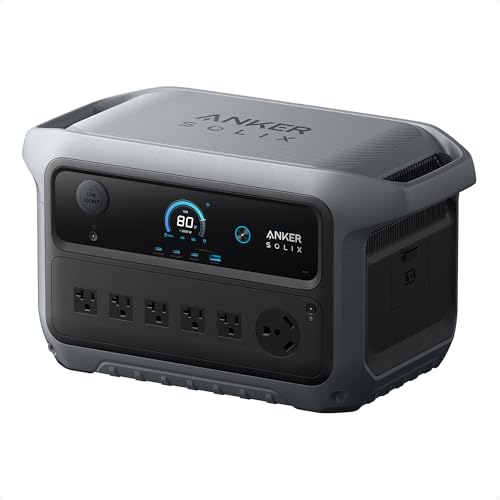
For anyone seeking a reliable and powerful backup during hurricane season, the Anker SOLIX C2000 Gen 2 Portable Power Station stands out with its impressive peak power of 4,000W and a robust 2,048Wh battery. You’ll appreciate its ultra-efficient design, boasting only 9W of standby power. This portable powerhouse can run a dual-door fridge for up to 32 hours, and with an expandable capacity, you can extend that to 64 hours. Its lightweight build makes it easy to transport, and with six recharging methods, including solar, you’ll always stay prepared. Plus, it comes with a five-year warranty for peace of mind.
Best For: Those in need of a reliable power source for home backup, camping, or during power outages.
Pros:
- Ultra-efficient with only 9W standby power, maximizing energy savings.
- Lightweight and compact design, making it easy to transport.
- Multiple recharging methods, including solar, ensuring versatile use.
Cons:
- Peak power of 4,000W may not be sufficient for very high-demand appliances.
- Price point may be higher compared to standard generators.
- Battery expansion requires additional purchases.
APC Back-UPS Pro 1500VA UPS (BX1500M)

When it comes to reliable backup power during hurricane season, the APC Back-UPS Pro 1500VA UPS (BX1500M) stands out for its impressive 900W capacity and robust surge protection. This unit features 10 outlets—five for battery backup and five for surge-only—ensuring your essential devices stay powered. With Automatic Voltage Regulation (AVR), it corrects low voltage without draining the battery. You can expect up to 19 minutes of runtime at a 300W load, protecting computers, TVs, and smart devices. Plus, its ENERGY STAR certification guarantees efficiency, while user-replaceable batteries minimize downtime. Prepare your home with this reliable backup solution!
Best For: Those seeking reliable power backup for home electronics during outages or storms, including computers, TVs, and smart devices.
Pros:
- Versatile outlet options with 10 outlets (5 battery backup, 5 surge-only) to protect a variety of devices.
- Automatic Voltage Regulation (AVR) ensures stable power without draining the battery during minor fluctuations.
- ENERGY STAR certified, promoting energy efficiency and reducing electricity costs.
Cons:
- Limited runtime of up to 19 minutes at a 300W load may not be sufficient for extended outages.
- User-replaceable battery is sold separately, adding to the overall cost of maintenance.
- Weight of 24.3 pounds may make it cumbersome to move or install in some settings.
Anker SOLIX C1000 Gen 2 Portable Power Station

Powering up to 10 devices, the Anker SOLIX C1000 Gen 2 Portable Power Station emerges as an ideal choice for those seeking reliable backup during hurricanes. With a robust 2,000W output and a 1,024Wh capacity, it handles your power needs effortlessly. You’ll appreciate the ultra-fast recharging—just 49 minutes at 1,600W—ensuring you’re ready in no time. Its compact design makes it easy to carry, and it’s 14% smaller and 11% lighter than similar models. Plus, with a 10 ms UPS backup, your essential equipment stays protected. It’s perfect for emergencies, remote work, tiny homes, or off-grid living.
Best For: Those seeking a reliable and portable power source for emergencies, remote work, tiny homes, or off-grid living.
Pros:
- Ultra-fast recharging in just 49 minutes at 1,600W.
- Compact and lightweight design, making it easy to carry and store.
- 10 ms UPS backup to protect vital equipment during power outages.
Cons:
- Limited to 1,024Wh capacity, which may not be sufficient for high-demand devices.
- Solar recharging takes 1.8 hours, which could be slow in urgent situations.
- Requires an app for managing power with TOU mode, which may not appeal to all users.
APC UPS Battery Backup for Power Outages (BE600M1)
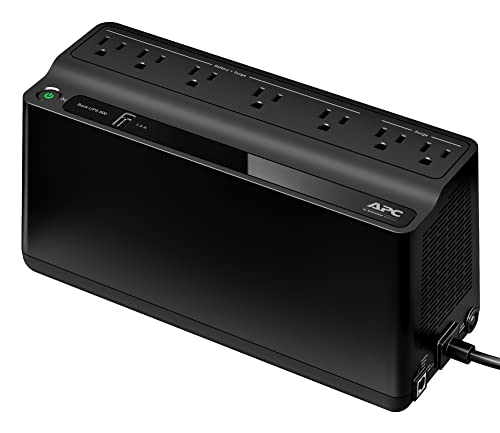
The APC UPS BE600M1 is an ideal choice for anyone looking to protect essential electronics during hurricanes and power outages. With a capacity of 600VA and 330W, this unit provides up to 23 minutes of runtime at a 100W load, ensuring your devices stay powered. It features seven outlets—five with battery backup and surge protection, plus two for surge-only use. The 1.5A USB port allows you to charge your phone during outages. Backed by a three-year warranty and $75,000 equipment protection, it’s a reliable option that has earned a 4.5-star rating from nearly 29,000 customers. Stay prepared!
Best For: Individuals and small businesses looking to protect their electronics during power outages and ensure uninterrupted connectivity.
Pros:
- Provides up to 23 minutes of runtime at a 100W load, allowing for safe shutdown of devices.
- Features seven outlets, including five with battery backup and surge protection, plus a USB port for charging phones.
- Backed by a three-year warranty and $75,000 equipment protection, offering peace of mind.
Cons:
- Limited runtime may not be sufficient for high power consumption devices.
- Requires an additional purchase for battery replacement (APCRBC154).
- Heavier than some competing models, which may affect portability.
EF ECOFLOW Portable Power Station DELTA 2

For those seeking a reliable and efficient backup power solution during hurricanes, the EF ECOFLOW Portable Power Station DELTA 2 stands out with its impressive 1024Wh capacity and 1800W output. It can power 90% of your appliances and features 15 outlets for multiple devices. You’ll appreciate the 7x faster charging, reaching 80% in just 50 minutes. Plus, it’s expandable up to 3kWh with extra batteries. The LFP battery guarantees longevity, supporting over 3000 cycles. For off-grid charging, consider adding a solar panel. With a 5-year warranty and excellent support, you’re set for storm season.
Best For: Those in need of a dependable power source for home backup during emergencies, camping, or RV trips.
Pros:
- Fast charging capability, reaching 80% in just 50 minutes.
- High output of 1800W, able to power 90% of household appliances.
- Expandable capacity up to 3kWh with additional batteries for extended use.
Cons:
- Initial investment may be higher compared to traditional generators.
- Solar panel is an optional accessory and not included in the base package.
- Heavier than smaller portable power stations, making it less convenient for some users to transport.
CyberPower CP1500AVRLCD3 Intelligent LCD UPS System

Homeowners seeking reliable backup power during hurricanes will find the CyberPower CP1500AVRLCD3 Intelligent LCD UPS System an excellent choice. With a capacity of 1500VA/900W, it provides robust power protection for your workstations and entertainment devices using simulated sine wave output. You’ll appreciate its 12 outlets—six with battery backup and surge protection and six surge protected only. Plus, the dual USB ports offer fast charging for your mobile devices. The multifunction LCD panel keeps you informed about battery status and alerts you to potential issues. With a three-year warranty and a $500,000 equipment guarantee, this UPS is a smart investment.
Best For: Homeowners seeking reliable backup power during hurricanes and those needing protection for workstations and entertainment devices.
Pros:
- Provides robust power protection with a capacity of 1500VA/900W and simulated sine wave output.
- Features 12 outlets, including six with battery backup and surge protection for added security.
- Dual USB ports enable fast charging for mobile devices, enhancing convenience.
Cons:
- The simulated sine wave output may not be suitable for all sensitive electronics.
- The size of the mini tower may take up more space than smaller UPS options.
- Limited to a maximum capacity of 900W, which may not support larger setups during prolonged outages.
Jackery Portable Power Station Explorer 300

When you’re preparing for hurricane season, the Jackery Portable Power Station Explorer 300 stands out as a reliable choice for anyone needing dependable backup power. Weighing just 7.1 pounds, it boasts a 292Wh battery capacity, perfect for powering essential devices like laptops and smartphones. You can recharge it in just 2 hours using a wall outlet or solar panel, thanks to its integrated MPPT controller. With six ports, including two AC outlets and a USB-C port, you’ll stay connected. Plus, its quiet, fume-free operation means you won’t disturb your surroundings while keeping your devices charged during storms.
Best For: Individuals seeking a portable and efficient power solution for camping, outdoor activities, and emergency backup during power outages.
Pros:
- Lightweight design at just 7.1 pounds for easy portability.
- Quick recharge time of 2 hours to 80% using wall outlets or solar panels.
- Multiple output options including two AC outlets and a USB-C port for versatile device compatibility.
Cons:
- Limited battery capacity may not power larger appliances for extended periods.
- Solar panel sold separately, increasing initial setup costs for solar charging.
- Requires careful management of power usage to avoid exceeding output limits.
Jackery HomePower 3000 Portable Power Station with Solar Panels

The Jackery HomePower 3000 Portable Power Station with Solar Panels stands out as an ideal solution for those facing power outages during hurricanes, thanks to its impressive 3600W output and 3072Wh battery capacity. You can easily power essential appliances like your fridge, lights, and WiFi router for up to 15 hours. With multiple ports, including dual 100W PD for fast charging, it recharges fully in just 1.7 hours. Its compact design makes it 47% smaller and 43% lighter than similar models, ensuring reliability and durability. Plus, with 4,000 cycles, it’s a long-lasting investment for your home emergency needs.
Best For: Those seeking a reliable and portable power solution for home backup, RVs, and emergencies, especially during power outages.
Pros:
- Compact and lightweight design, making it easy to transport and store.
- Fast recharging capabilities, achieving full charge in just 1.7 hours.
- Long-lasting battery life with 4,000 cycles and 70% capacity retention.
Cons:
- Higher initial investment compared to traditional generators.
- Limited to 3600W output, which may not support larger appliances simultaneously.
- Solar charging may take longer to reach full capacity, depending on sunlight conditions.
Jackery Explorer 1000 v2 Portable Power Station

For those seeking reliable power during hurricane season, the Jackery Explorer 1000 v2 Portable Power Station stands out with its impressive 1070Wh LiFePO4 battery. Weighing just 23.8 lbs, it’s easy to transport, thanks to its compact design and foldable handle. You’ll appreciate the 1500W AC output, perfect for running essential devices. Fast charging capabilities let you go from 0% to 100% in just an hour. With over 10 years of lifespan and extensive connectivity options, it’s versatile for all your needs. Plus, you can control it via the Jackery app for added convenience. Stay powered and prepared!
Best For: Individuals and families seeking reliable, portable power solutions during emergencies like hurricanes or outdoor adventures.
Pros:
- Fast Charging: Reaches 100% charge in just one hour, perfect for quick power needs.
- Long Lifespan: Offers over 10 years of battery life with capacity retention of over 70% after 4,000 cycles.
- Versatile Connectivity: Multiple output ports, including USB-C and AC, cater to various devices and appliances.
Cons:
- Weight: At 23.8 lbs, it may be cumbersome for some users to transport.
- Solar Panel Compatibility: Only works with Jackery solar panels, limiting solar charging options.
- No PO Box Delivery: Requires a physical address for deliveries, which may inconvenience some customers.
Factors to Consider When Choosing Home Backup Power Systems for Hurricanes
When choosing a home backup power system for hurricanes, you need to take into account several key factors. Think about your power capacity requirements, how portable the system is, and what charging options it offers. Also, don’t overlook important safety features and the runtime you can expect during outages.
Power Capacity Requirements
Choosing the right power capacity for your home backup system is vital, especially during hurricane season. Start by evaluating the total wattage of your essential appliances and devices. You’ll want a backup system that can handle both peak and continuous power requirements. A capacity of at least 1,000 to 1,500 watts is generally recommended for basic needs like refrigerators, lights, and communication devices. Don’t forget to take into account battery capacity in watt-hours (Wh) or volt-amps (VA); for example, a system with 2,048Wh can power various devices for longer. Also, evaluate runtime estimates based on your usage. Understanding surge capacity is important, particularly for appliances like refrigerators and HVAC systems, which may need extra power during startup.
Portability and Weight
As you prepare for hurricane season, considering the portability and weight of your backup power system becomes fundamental for effective emergency management. In hurricane-prone areas, you might need to evacuate quickly, so a power system that’s easy to transport is critical. Lighter models are typically easier to carry and maneuver during emergencies, making them more user-friendly. Many portable power stations are compact, allowing for convenient storage while still providing enough capacity for your essential devices. Striking a balance between power capacity and weight is significant; if the system’s too heavy, you may hesitate to take it with you. Understanding the dimensions and weight guarantees your backup system fits comfortably in your vehicle or designated storage area during a hurricane emergency.
Charging Options Available
After evaluating portability and weight, it’s important to take into account the charging options available for your backup power system. Many modern portable power stations offer multiple charging methods, including AC outlets, USB ports, and DC car ports, providing versatility for various devices. Consider units with solar charging capabilities, which can be a lifesaver during prolonged outages. Look for systems with fast recharging features that can reach a full charge in under two hours via AC or solar. Some models allow expandable battery capacity, letting you add batteries for longer runtimes. Finally, integration with mobile apps can help you manage power usage and monitor charging status, giving you enhanced control during emergencies.
Safety Features Included
When selecting a home backup power system for hurricanes, prioritizing safety features is vital to protect both your devices and your household. Look for systems with surge protection to guard against power spikes that can damage electronics. Automatic Voltage Regulation (AVR) is another significant feature, maintaining stable output voltage and preserving battery life by correcting minor fluctuations without switching to battery power. A built-in Battery Management System (BMS) enhances safety by monitoring battery performance, preventing overheating, overcharging, and short circuits. Additionally, choose systems that guarantee a seamless shift to backup power within milliseconds, imperative for keeping medical equipment and security systems running. Finally, check for warranty coverage and equipment protection guarantees for added peace of mind.
Runtime During Outages
Choosing the right backup power system means understanding its runtime capacity during outages, especially in hurricane conditions. You need to evaluate the system’s capacity, typically measured in VA or W, to guarantee it can power essential devices for the duration of an outage. Higher capacity systems, like those over 1500VA, can sustain power longer—up to several hours for lower loads. Keep in mind that the runtime varies based on the devices you connect; for example, a fridge demands more power, reducing your overall backup time. Many systems also feature Automatic Voltage Regulation (AVR) to stabilize output, enhancing efficiency. Calculate the total wattage of your essential devices to choose a system that meets your needs during extended outages.