A home battery can keep essentials running when the grid goes down, but the right setup depends on what you need to power and for how long. A portable station for a refrigerator is a different purchase from a system designed to support home circuits.
These 10 options span plug-in power stations, solar-ready bundles, and larger home backup systems. Use the guide below to narrow your choice by usable capacity, output, charging options, and installation requirements.
Best 10 Home Battery Backup Systems Picks for 2026
Best for Scalable Whole-Home Backup

- About 12kWh included capacity
- 7,200W, 120V/240V output
- Expandable to 90kWh
Best For: High-output, expandable household backup
Best for High-Output Essentials
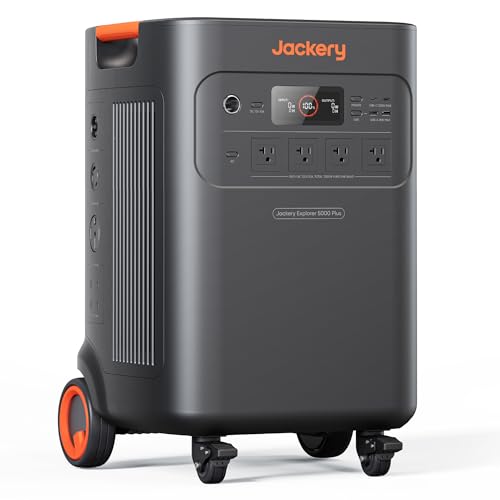
- 7,200W rated output
- 5,040Wh included capacity
- Expandable to 60kWh
Best For: Powering demanding appliances during outages
Best Solar-Ready Bundle
Jackery HomePower 3600 Plus with Solar Panels

- Two 200W panels included
- 3,584Wh battery capacity
- 3,600W single-unit output
Best For: Portable backup with starter solar panels
Best Station-Only Option

- 3,584Wh included capacity
- 3,600W single-unit output
- Wheeled station; panels not included
Best For: Movable backup without bundled solar panels
Best Expandable Backup Kit
ECO-WORTHY 10.24kWh Inverter and Battery Kit

- 10.24kWh stated battery storage
- 10kW inverter with 120V/240V support
- App monitoring and expansion options
Best For: Fixed backup setups with room to grow
Best Portable Essentials Backup

- 2,010Wh LFP battery
- 1,500W continuous output
- 35.7 lb portable design
Best For: Portable power for selected essentials
Best Solar-Included System
ECO-WORTHY 10kW Solar Backup Kit

- Six 590W solar panels included
- Over 30kWh stated usable storage
- 10kW hybrid inverter with 120V/240V output
Best For: Large solar-and-storage installations
Best for Whole-Panel Coverage
Anker SOLIX E10 with Power Dock

- 200A Power Dock covers the full panel
- 6kWh storage expands to 90kWh
- Automatic switchover in 20ms or less
Best For: Homeowners seeking expandable, automatic whole-panel backup
Best for Large Off-Grid Storage
ECO-WORTHY 48V 30.72kWh Backup Kit

- 30.72kWh included battery capacity
- 10kW inverter with dual MPPT controllers
- Rack-mounted system for planned installations
Best For: High-capacity off-grid and home backup setups
Best Portable Solar Starter
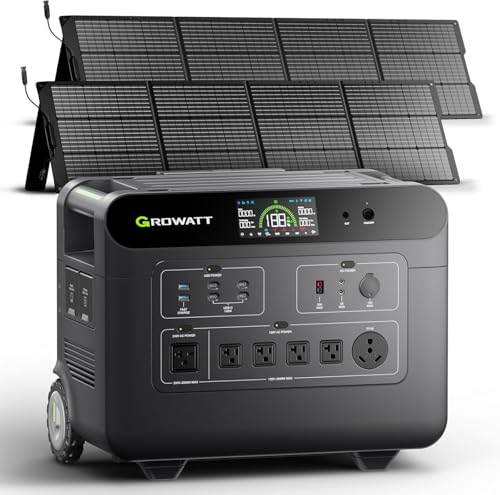
- 3,600Wh station plus two 200W panels
- 3,600W continuous output
- Expandable with a second unit for 240V
Best For: Portable emergency power with included solar panels
Best for Scalable Whole-Home Backup – EcoFlow DELTA Pro Ultra 12kWh
Among home battery backup systems, the EcoFlow DELTA Pro Ultra stands out for its substantial starting capacity: this package includes an inverter and two batteries totaling about 12kWh. Its 7,200W output supports both 120V and 240V appliances.
Best For: Households seeking high-output backup that can expand as their power needs grow.
Pros:
- Expandable to 90kWh with additional batteries and inverters.
- Online UPS offers a stated 0-ms transfer time for sensitive devices.
- Charging options include solar, wall outlets, EV charging and generators.
Cons:
- At a listed 293.6 pounds, this package is difficult to move.
- The inverter and batteries arrive in separate packages.
This is the capacity-first choice of the group. Plan for its weight and the additional equipment needed for your preferred home-circuit setup.
Best for High-Output Essentials – Jackery Explorer 5000 Plus
The Jackery Explorer 5000 Plus brings 7,200W of rated output and a 5,040Wh battery to home battery backup systems. It supports 120V and 240V loads, making it worth considering when essential appliances have substantial power demands.
Best For: Buyers who need strong appliance-running output now and want the option to add capacity later.
Pros:
- Rated for 7,200W continuous output and 14,400W surge.
- Capacity can expand to 60kWh with additional equipment.
- Compatible with high- and low-voltage solar panels.
Cons:
- The included unit has 5,040Wh of storage; extended backup requires expansion.
- Its listed weight is 134.5 pounds.
For circuit-level backup, Jackery specifies pairing it with a 60A Smart Transfer Switch. Factor that separate setup into your decision rather than treating the power station alone as a complete installed system.
Best Solar-Ready Bundle – Jackery HomePower 3600 Plus with Solar Panels
For shoppers comparing home battery backup systems with solar included, this HomePower 3600 Plus bundle pairs a 3,584Wh power station with two 200W panels. The station supplies 3,600W of output and has wheels and a telescopic handle for moving it around the home.
Best For: Buyers who want a portable backup station and starter solar panels in the same purchase.
Pros:
- Includes two 200W solar panels.
- Supports AC, solar, generator and hybrid AC+DC charging.
- Capacity can expand to 21kWh per unit with additional batteries.
Cons:
- 240V output requires a parallel setup rather than the single included station.
- At 77.2 pounds, the station is wheeled but still heavy to lift.
The included panels make this the more convenient starting point for solar charging than the station-only version. Match the 3,600W single-unit output and 3,584Wh capacity to the appliances and runtime you actually need.
Best Station-Only Option – Jackery HomePower 3600 Plus
The station-only Jackery HomePower 3600 Plus is a practical entry point into home battery backup systems if you do not need panels bundled with your purchase. It offers 3,584Wh of storage and 3,600W output in a wheeled, 77.2-pound unit.
Best For: Buyers who want a movable backup station and prefer to choose solar equipment separately.
Pros:
- 3,600W output can support a range of household loads within its rating.
- Wheels and a telescopic handle help with room-to-room movement.
- Supports AC, solar, generator and hybrid AC+DC charging.
Cons:
- No solar panels are listed among the included components.
- Achieving 240V or 7,200W requires a parallel configuration.
This version makes sense when flexibility matters more than getting solar panels in the box. Its advertised higher-output and longer-runtime configurations depend on additional units or batteries.
Best Expandable Backup Kit – ECO-WORTHY 10.24kWh Inverter and Battery Kit
Among home battery backup systems, this ECO-WORTHY kit suits buyers planning a fixed, expandable setup. It pairs two 51.2V 100Ah LiFePO4 batteries with a 10kW off-grid inverter, providing 10.24kWh of stated storage.
Best For: Households building a high-output backup system with room to add batteries.
Pros:
- 10kW rated output and a stated 20kW surge rating.
- Supports 120V/240V split-phase output and includes two MPPT controllers.
- Battery monitoring through Bluetooth, Wi-Fi, and the ECO-WORTHY app.
Cons:
- An off-grid inverter kit, not a portable plug-in power station.
- Components ship separately and may arrive at different times.
The combination offers substantially more storage and output than a portable unit, but buyers should plan for a fixed-system installation and confirm the configuration they need before ordering.
Best Portable Essentials Backup – Anker SOLIX S2000
If you want home battery backup systems without a fixed installation, the Anker SOLIX S2000 is a portable option for selected essentials. Its 2,010Wh LFP battery supplies 1,500W continuous output, and the unit weighs 35.7 pounds.
Best For: Powering a few essential devices during outages, with the option to take the station elsewhere.
Pros:
- 2,010Wh capacity and 3,000W stated peak output.
- Supports up to 400W solar input and several other charging methods.
- Eight outlets and a stated switchover time of less than 10 ms.
Cons:
- 1,500W continuous output limits which appliances can run together.
- No 12V DC port.
This is the simpler choice for targeted outage coverage rather than whole-home backup. Check each appliance’s power draw; refrigerator runtime will vary by model and conditions.
Best Solar-Included System – ECO-WORTHY 10kW Solar Backup Kit
For shoppers comparing home battery backup systems that include solar generation, this ECO-WORTHY package bundles six 590W panels, two 48V 314Ah LiFePO4 batteries, and a 10kW hybrid inverter. The listing describes it as a 32kWh home backup solution with more than 30kWh of usable energy.
Best For: Buyers planning a large solar-and-storage installation rather than a portable emergency battery.
Pros:
- Includes 3,540W of rated solar panels plus the inverter and batteries.
- Supports both 120V and 240V output.
- Battery app monitoring and built-in protection features are specified.
Cons:
- Panels and batteries require pallet and truck delivery due to their size and weight.
- One of two visually different inverter versions may ship.
This is the most comprehensive package here for buyers who also need panels, but its delivery and installation requirements warrant planning ahead.
Best for Whole-Panel Coverage – Anker SOLIX E10 with Power Dock
Among home battery backup systems, the Anker SOLIX E10 stands out for its 200A Power Dock, designed to back up the entire electrical panel rather than selected circuits. This configuration pairs 6kWh of storage with 7.6kW of continuous output.
Best For: Homeowners who want professionally installed, automatic whole-panel backup that can expand over time.
Pros:
- Power Dock provides automatic switchover in 20ms or less.
- Storage can expand from 6kWh to 90kWh, with up to 9kW of solar input per unit.
- Outdoor-rated E10 and Dock components can work with existing solar.
Cons:
- The included 6kWh capacity may require expansion for longer outages.
- Whole-panel integration calls for installation planning; professional installation is available.
Choose this system if covering every circuit matters more than starting with maximum battery capacity. Check the installed configuration and storage needed for your household before buying.
Best for Large Off-Grid Storage – ECO-WORTHY 48V 30.72kWh Backup Kit
For buyers comparing home battery backup systems with substantial starting capacity, this ECO-WORTHY kit includes six 51.2V 100Ah LiFePO4 batteries—30.72kWh total—plus a 10kW off-grid inverter and server rack. It is aimed at backup power and off-grid setups that need more than a small portable station can provide.
Best For: Buyers planning a rack-mounted, high-capacity off-grid or home backup installation.
Pros:
- Includes six batteries, a six-layer rack, and a 10kW pure sine wave inverter.
- Inverter combines two MPPT controllers with AC and solar charging.
- Battery monitoring is available through Bluetooth, Wi-Fi, and the ECO-WORTHY app.
- Battery and inverter have passed UL 1973 and UL 1741 testing, respectively, according to the supplied specifications.
Cons:
- Rack-mounted components require more space and setup than a plug-in power station.
- The supplied notes describe an off-grid inverter but do not specify an included automatic transfer switch.
This is a strong capacity-first option if you are prepared to plan the electrical installation. Confirm the output configuration and transfer equipment your home requires before purchase.
Best Portable Solar Starter – GROWATT HELIOS 3600 Solar Kit
The GROWATT HELIOS 3600 is a portable entry among home battery backup systems, bundling a 3,600Wh power station with two 200W solar panels. Its 3,600W continuous output makes it a practical starting point for keeping selected household devices running during an outage.
Best For: Households wanting portable emergency power with solar panels included from the start.
Pros:
- Includes 400W of solar panels and supports up to 2,000W solar charging input.
- Provides 15ms EPS switching for connected equipment.
- Two units can be connected in parallel for 7,200W at 240V; storage can expand up to 36kWh.
Cons:
- The included 3,600Wh capacity is more suited to selected loads than extended whole-home use.
- Higher-output, 240V operation requires a second unit.
It is an approachable way to start with portable battery and solar backup. If you expect to run large appliances or cover longer outages, budget for the expansion needed to reach those goals.
How We Picked These Home Battery Backup Systems
We compared the listed options by battery capacity, AC output, solar or generator charging options, expandability, and the work needed to use them during an outage. The selection includes portable stations for essential devices, larger expandable units, and inverter-and-battery systems aimed at supporting home circuits. Manufacturer ratings are a starting point, not a promise of runtime: actual results depend on your loads, conversion losses, temperature, and how the system is installed.
Quick Comparison: Which Type Fits Your Home?
For occasional outages, a portable power station is the simplest place to start. The Anker SOLIX S2000 is in the roughly 2kWh class, while the Jackery HomePower 3600 Plus and GROWATT HELIOS 3600 target buyers who want more stored energy; the listed Jackery solar bundle and GROWATT package also include panels. The Jackery Explorer 5000 Plus and EF ECOFLOW DELTA Pro Ultra offer higher-capacity starting points for larger loads.
For a more permanent setup, compare the ECO-WORTHY 48V inverter-and-battery packages and the Anker SOLIX E10 with Power Dock. These deserve closer attention to electrical design, installation costs, and whether the configuration supports the circuits you intend to back up.
Key Buying Factors for Home Battery Backup Systems
Capacity and Runtime
Battery capacity, usually stated in watt-hours or kilowatt-hours, determines how much energy is stored. Estimate each essential device’s watts multiplied by the hours you need it, then add a margin for inverter losses and unexpected use. A 10kWh battery, for example, will not necessarily deliver 10kWh at AC outlets. Check whether a capacity figure describes the included batteries or a possible expanded configuration.
Output and Starting Loads
Continuous AC output limits what can run at once. Refrigerators, pumps, and air conditioners may also draw a brief startup surge. Check both ratings against your appliances, and confirm voltage and outlet types. A large battery cannot run a load its inverter cannot support.
Charging, Expansion, and Installation
Check wall-charging speed, solar input limits, panel compatibility, and whether extra batteries are supported. Included solar panels can be useful, but their rated wattage is a peak figure; sunlight and placement affect charging time. If you want to power home circuits, verify transfer-switch or panel compatibility and budget for a qualified electrician. Never backfeed a household outlet.
Who Should Buy Which Home Battery Backup Systems?
Choose a smaller portable station if you mainly need phones, lights, internet, and a few appliances during short outages. Step up to a higher-output or expandable station if you need longer refrigerator runtime or several devices at once. Consider a docked or 48V inverter system when your goal is backed-up circuits, substantial solar storage, or frequent outages—and you are ready to plan and pay for installation. Before buying, write down your essential loads and desired backup hours; that calculation will narrow this list faster than headline capacity alone.