Choosing the right lighting can extend your growing season, support seedlings, and help raised-bed plants thrive when sunlight is limited. This roundup compares 10 practical options, from weather-resistant outdoor strings to adjustable indoor stands and flexible clip-on lamps.
Use the buying guide below to match light coverage, weather protection, mounting style, and controls to your raised-bed setup.
Best 10 Horticultural Grow Lights for Raised Beds Picks for 2026
Outdoor Coverage Pick
Owleye Waterproof String Grow Light

- IP65-rated outdoor construction
- Links up to 10 sets
- 31W, 33.89 μmol/s output
Best For: Raised beds and greenhouses needing expandable weather-resistant lighting
Indoor Stand Pick
68-Inch Full-Spectrum Floor Grow Light

- Adjusts from 16.5 to 68 inches
- 6/12/18-hour timer options
- Five dimming levels and three color modes
Best For: Indoor tall plants and sheltered container gardens
High-Output Outdoor Pick
VIVOSUN 6-Light String Grow Light

- 210 μmol PPF from six lights
- Full-spectrum 380–780nm output
- 22-foot cord with daisy chaining
Best For: Larger raised beds and greenhouse installations needing strong expandable coverage
Compact Indoor Pick
FOXGARDEN Adjustable Grow Light Stand

- 108-LED full-spectrum array
- Six dimming levels from 10% to 100%
- Adjustable height with timer controls
Best For: Indoor seedlings, cuttings, and small sheltered plant setups
Best Tall Floor-Standing Pick
Adjustable Full-Spectrum Grow Light

- Adjusts from 59 to 75 inches
- Dual heads with flexible goosenecks
- Five brightness levels and four timer settings
Best For: Indoor raised beds with plants at varying heights
Best Clamp-On Budget Option
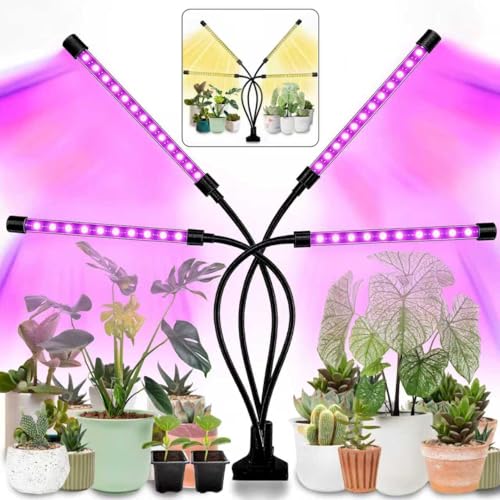
- Four flexible LED lamp heads
- 10 dimming levels and three spectrum modes
- Clamp mount with USB connectivity
Best For: Compact indoor raised beds and targeted lighting
Best Wide-Coverage Setup

- Up to 500 LEDs across 10 heads
- Individually adjustable flexible pipes
- Reinforced tripod with repeating timer
Best For: Larger indoor raised beds needing broad coverage
Best Flexible Coverage
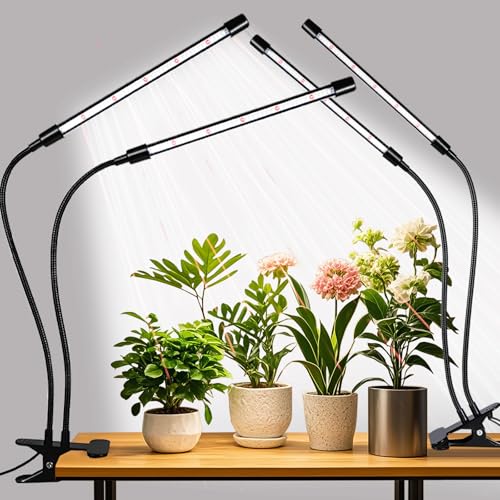
- Two fixtures with four flexible heads
- Full-spectrum white and red LEDs
- Timer and 10 dimming levels
Best For: Indoor gardeners needing broad, adjustable coverage
Best Compact Setup
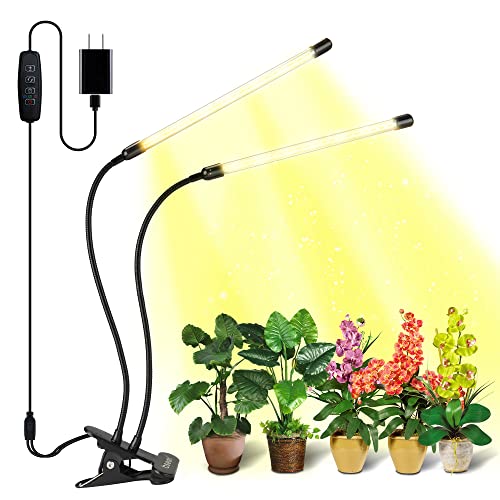
- Yellow-and-white full-spectrum LEDs
- Ten dimming levels and three modes
- Desktop design with repeating timer
Best For: Small indoor gardens and potted plants
Best Single-Fixture Value

- Two flexible, adjustable light heads
- Full-spectrum 6000K white and red LEDs
- Three modes, dimming, and timer
Best For: Focused indoor plant areas needing one fixture
Outdoor Coverage Pick – Owleye Waterproof String Grow Light
For gardeners comparing horticultural grow lights for raised beds, the Owleye is a practical outdoor option with a 12-foot, three-bulb string design. Its IP65 rating, full-spectrum output, and linkable layout make it suitable for supplemental lighting in exposed growing areas.
Best For: Raised beds, greenhouses, and outdoor gardens that need weather-resistant supplemental light.
Pros:
- IP65 dustproof and waterproof construction for outdoor use.
- Full-spectrum, primarily red-and-blue light supports different growth stages.
- Can link up to 10 sets for larger growing spaces.
- 31-watt design produces 33.89 μmol/s while limiting heat output.
Cons:
- Three-bulb coverage may be limited for larger beds without additional linked sets.
- The pink-tinted light may not suit shoppers seeking a natural white appearance.
- Requires an AC power connection and hanging installation.
This is a strong fit when outdoor durability and expandable coverage matter most. Its five-year warranty and stated after-sales support add reassurance for a garden installation.
Indoor Stand Pick – 68-Inch Full-Spectrum Floor Grow Light
Although it is not designed for outdoor exposure, this adjustable floor lamp can complement a covered indoor growing setup when comparing horticultural grow lights for raised beds or container gardens. Its tall stand, timer, dimming, and color-mode controls make positioning straightforward.
Best For: Indoor or sheltered container gardens with tall plants and access to a wall outlet.
Pros:
- Height adjusts from 16.5 to 68 inches for different plant sizes.
- Offers 6-, 12-, and 18-hour timer cycles with memory function.
- Five dimming levels and three color modes provide flexible control.
- Weighted base helps improve stability and prevent tipping.
Cons:
- It is not waterproof, so it is unsuitable for exposed raised beds.
- Its 24-watt output is intended for indoor plant lighting rather than broad outdoor coverage.
- Freestanding placement requires floor or container-garden space.
Choose this model for height adjustment and hands-off scheduling in an indoor growing area. For an uncovered raised bed, a weather-rated string light is a better match.
High-Output Outdoor Pick – VIVOSUN 6-Light String Grow Light
The VIVOSUN is a higher-output choice among horticultural grow lights for raised beds, offering six lights on a 22-foot adjustable cord. Its full-spectrum mix, aluminum shades, and daisy-chain capability are useful when a garden needs broader or expandable supplemental coverage.
Best For: Larger raised beds, greenhouses, gardens, and farms requiring substantial linkable outdoor lighting.
Pros:
- Six-light configuration delivers 210 μmol PPF and 90 watts total power.
- Full-spectrum LEDs include warm white, cool white, blue, and 660nm red light.
- 22-foot cord and daisy-chain design support flexible layouts.
- IP44-rated construction and low heat output support indoor or outdoor use.
Cons:
- IP44 protection requires securing bulbs firmly and protecting unused sockets.
- The 90-watt total draw is higher than lower-output alternatives.
- Coverage expansion depends on the available power setup and connection limits.
This model stands out when light intensity, six-bulb coverage, and expandability take priority. Its lower ingress-protection rating means installation should include careful socket and connection protection.
Compact Indoor Pick – FOXGARDEN Adjustable Grow Light Stand
The FOXGARDEN is a compact tabletop stand for indoor seedlings, cuttings, vegetables, and flowers. While it is not weatherproof for exposed raised beds, its adjustable height, timer, and dimming controls can serve a covered balcony or indoor seed-starting station when evaluating horticultural grow lights for raised beds.
Best For: Indoor seed starting, cuttings, small plants, and sheltered balcony gardening.
Pros:
- Full-spectrum array uses 108 LEDs, including white, warm white, and red LEDs.
- Six brightness settings range from 10% to 100%.
- Adjustable height spans 11.02 to 21.65 inches.
- Includes 4-, 8-, and 12-hour timer settings and a stable metal base.
Cons:
- Indoor-only design is not suitable for exposed raised beds.
- Its 22-watt output and compact height limit coverage for large plants or beds.
- Tabletop placement requires a stable, available surface.
This is a convenient starter light for controlled indoor propagation rather than a primary outdoor bed light. The timer and six dimming levels make it especially useful for repeatable seedling care.
Best Tall Floor-Standing Pick – Adjustable Full-Spectrum Grow Light
For raised beds brought indoors, the LBW grow light offers a tall floor-standing design that can reach from 59 to 75 inches. Its two lamp heads, flexible goosenecks, full-spectrum LEDs, adjustable brightness, and multiple timer settings make it a practical option when plants vary in height and lighting needs.
Best For: Indoor raised beds and tall plant groupings that need adjustable overhead coverage.
Pros:
- Height adjusts from 59 to 75 inches for different plant sizes.
- Two lamp heads and 360-degree goosenecks allow flexible positioning.
- Offers full-spectrum, warm-white, and cool-white modes with five brightness levels.
- Includes 6-, 8-, 12-, and 16-hour timer settings and a stable round metal base.
Cons:
- The floor-standing format requires space beside the raised bed.
- It is designed for corded electric use rather than outdoor installation.
This is a strong fit when you want one adjustable light stand to serve plants at several heights. The stable base and broad control options are useful for indoor setups, though its floor footprint and indoor-oriented design should be considered before placing it near a raised bed.
Best Clamp-On Budget Option – Four-Head LED Grow Light
The LEOTER four-head lamp is a compact choice for horticultural grow lights for raised beds when you need targeted coverage rather than a freestanding stand. It combines full-spectrum and red-blue modes with 10 dimming levels, flexible goosenecks, and a metal clamp for positioning on a nearby surface.
Best For: Small indoor raised beds, seed-starting areas, and targeted plant lighting where clamp mounting is convenient.
Pros:
- Four adjustable heads use 80 LEDs across full-spectrum and red-blue combinations.
- Provides 10 dimmable intensity levels for different growth stages.
- Includes a circular 3-, 9-, and 12-hour timer with automatic daily operation.
- USB connectivity and a metal clamp offer flexible placement options.
Cons:
- It is an indoor-only, clip-on design and is not waterproof.
- The timer needs to be reset if the light loses power.
- Clamp mounting may be less suitable for wide or heavy raised-bed frames.
This model makes sense for growers who want adjustable, localized lighting without adding a floor stand. Its clamp and goosenecks provide useful positioning flexibility, but the smaller four-head format and indoor-only construction are better suited to compact beds than large growing areas.
Best Wide-Coverage Setup – 10-Head Tripod Grow Light
For larger indoor raised beds, this 10-head tripod system emphasizes broad coverage with up to 500 LEDs and individually adjustable 15-inch flexible pipes. Its full-spectrum output, reinforced tripod, and repeating 4-, 8-, or 12-hour timer make it a useful option when several plants need light at once.
Best For: Indoor raised beds or plant groupings that need wider, multi-directional coverage.
Pros:
- Ten light heads provide wider coverage, with up to 500 LEDs overall.
- Each head can be directed independently using a flexible 15-inch pipe.
- Full-spectrum lighting includes blue and red wavelengths for multiple growth stages.
- Reinforced tripod design and repeating 4-, 8-, and 12-hour timer support hands-off use.
Cons:
- The tripod requires open floor space around the raised bed.
- Timer choices are limited to 4, 8, or 12 hours.
- The supplied details describe indoor use, so outdoor weather exposure is not supported.
This is the most coverage-oriented option of the three, making it appealing for a broad indoor bed or multiple containers. The many adjustable heads improve targeting, while the tripod footprint means you should measure the surrounding space before setting it up.
Best Flexible Coverage – 168-LED Clip Plant Lights
For shoppers comparing horticultural grow lights for raised beds, this two-pack offers broad, adjustable coverage for seedlings, herbs, or compact indoor garden setups. Its four flexible heads, full-spectrum white-and-red LEDs, timer, and dimming controls make it easy to position light around multiple plants.
Best For: Indoor gardeners who want two clip-on fixtures with flexible, multi-directional coverage.
Pros:
- Two lights with four heads and 360-degree adjustable goosenecks.
- Full-spectrum white-and-red lighting with three spectral modes.
- Ten brightness levels and a 3/9/12-hour cycle-memory timer.
- Sturdy clips and a listed 72-watt rating.
Cons:
- Not waterproof, so it is intended for indoor use rather than exposed outdoor beds.
- Requires a corded electrical connection.
This is the more coverage-oriented option in the group. The dual-light design is useful when plants are spread across a shelf or compact growing area, but keep the fixtures protected from water.
Best Compact Setup – bseah Two-Tube Grow Light
This compact bseah lamp is a practical choice for small indoor plant areas when you want horticultural grow lights for raised beds or container displays without a large fixture. It combines yellow-and-white full-spectrum LEDs with adjustable brightness, timer controls, and a metal gooseneck base.
Best For: Small indoor gardens and potted plants that need a lightweight desktop light.
Pros:
- Full-spectrum yellow-and-white LED combination supports multiple growth stages.
- Ten dimming levels and three switch modes provide flexible control.
- Automatic 3/9/12-hour timer repeats daily when continuously powered.
- Metal gooseneck and non-slip mat help keep the lamp stable.
Cons:
- Not water resistant and designed for indoor use.
- Its 10-watt specification is better suited to compact plant groupings than broad areas.
- USB connectivity and a 5V DC power source may require a convenient nearby power connection.
Choose this model for a small, controlled growing space rather than wide bed coverage. Its desktop footprint, flexible arm, and repeating timer make it convenient for routine plant care.
Best Single-Fixture Value – 84-LED Clip Plant Light
If you need horticultural grow lights for raised beds but only want one compact fixture, this 84-LED clip light provides adjustable coverage without the two-pack configuration. It includes full-spectrum white-and-red LEDs, flexible positioning, three modes, ten brightness settings, and an automatic timer.
Best For: Indoor growers needing one flexible clip-on light for a focused plant area.
Pros:
- Two-head design with 360-degree flexible goosenecks for targeted positioning.
- Full-spectrum 6000K white-and-red LED arrangement.
- Three spectral modes and ten dimmable brightness levels.
- Cycle-memory timer supports 3/9/12-hour schedules.
Cons:
- Not waterproof and limited to indoor usage.
- Single-fixture format covers less area than the two-pack option.
- Clamp mounting requires a suitable stable edge nearby.
This model is a sensible middle ground for focused coverage. It offers the same core controls and flexible positioning as the larger configuration while keeping the setup to one clip-mounted unit.
How We Picked the Best Horticultural Grow Lights for Raised Beds
We focused on features that matter in real raised-bed growing: full-spectrum output, usable coverage, weather resistance, mounting flexibility, timer controls, dimming, power-cord reach, and ease of adjustment. Outdoor string models were evaluated for waterproof construction and installation flexibility, while stand and clip-on lights were considered for seed starting, patio beds, greenhouses, and sheltered growing areas.
Because product specifications and availability can change, verify the current listing for exact dimensions, power requirements, protection ratings, and included hardware before buying.
Quick Comparison
| Light type | Best for | Notable features |
|---|---|---|
| Outdoor string light | Raised beds exposed to weather | Waterproof housing, long cords, linkable design |
| Floor stand | Tall plants and larger containers | Adjustable height, broad coverage, timers |
| Clip-on or gooseneck | Small beds, seedlings, and targeted lighting | Flexible positioning, dimming, compact setup |
| Tripod or multi-panel stand | Wider indoor growing areas | Multiple LED panels, adjustable spread, timed operation |
Key Buying Factors for Horticultural Grow Lights for Raised Beds
Coverage and Mounting
Measure the bed before choosing a lamp. A single clip light may suit a small section or seed tray, while a long string or multi-panel stand can cover several plants. Adjustable height and flexible arms make it easier to keep the light close enough for strong growth without crowding foliage.
Weather Protection
For uncovered outdoor beds, choose a model specifically rated for outdoor use, such as an IP-rated waterproof string light. Protect plugs, adapters, and connection points as well as the LED housing; these components may have different limitations.
Spectrum, Intensity, and Controls
Full-spectrum LEDs are a versatile choice for seedlings and leafy growth. Dimming helps accommodate different plant stages, while automatic timers provide a consistent daily schedule and reduce manual adjustment. Red and blue modes can be useful for targeted growing, but coverage and intensity remain more important than color options alone.
Power and Installation
Check cord length, outlet access, mounting clips, stand footprint, and stability. Outdoor installations should use appropriately protected connections and avoid placing cords where water collects or people can trip.
Who Should Buy Which Horticultural Grow Lights for Raised Beds?
- For exposed raised beds: Choose an outdoor waterproof string model with sufficient cord length and linkable sections.
- For tall plants or patio containers: A height-adjustable floor stand offers better vertical coverage.
- For seedlings and compact beds: Select a clip-on or gooseneck light with dimming and a timer.
- For broad indoor coverage: Consider a tripod or multi-panel design that spreads light across several plants.
- For low-maintenance growing: Prioritize automatic timers, simple controls, and a stable mounting system.