A 48V LiFePO4 battery needs more than an inverter with a matching voltage label. The right unit must also support your household voltage, solar array, charging limits, and plans for backup power.
These 10 options range from smaller 120V systems to higher-output split-phase setups. Use the buying guide to narrow them down by your actual loads and installation requirements.
Best 10 Hybrid Solar Inverter for 48v Lifepo4 Battery Picks for 2026
Best for Compact Backup
LiTime 5000W All-in-One Inverter

- 5,000W pure sine wave output
- Built-in 100A MPPT and 40A AC charger
- Parallel-capable; one unit outputs 120V
Best For: Expandable 120V cabin or home backup
Best for Battery-Optional Systems
POWLAND Split-Phase Hybrid Inverter

- Battery-free or 48V battery operation
- 120V/240V split-phase output
- Confirm conflicting 10kW/12kW ratings
Best For: Larger split-phase solar systems with flexible battery plans
Best Battery-Included System

- 10kW inverter plus 314Ah LiFePO4 battery
- Listed 16.1kWh usable energy
- Heavy battery ships by truck freight
Best For: Home backup buyers needing inverter and battery together
Best for Dual-Array Expansion
PowMr 12000W Split-Phase Inverter

- Listed 12,000W continuous output
- Dual 100A MPPT solar inputs
- At least 150V PV startup required
Best For: Larger split-phase builds with two solar inputs
Best Compact 120V Pick
ECO-WORTHY 3500W 48V Inverter Charger

- 3,500W pure sine wave, 120V output
- 80A MPPT; up to 120A combined charging
- Supports LiFePO4 and phone monitoring
Best For: Smaller 48V off-grid systems with 120V loads
Best for Tariff Scheduling
SUNGOLDPOWER 10000W Split-Phase Inverter

- 10,000W rated 120V/240V output
- Dual MPPT; up to 200A battery charging
- Programmable charge/discharge time slots
Best For: Larger 48V systems using split-phase loads and utility-rate scheduling
Best for Fast Backup Switching
HumsiENK 48V Split-Phase Hybrid Inverter

- 120V/240V split-phase; ≤10ms switchover
- Dual MPPT and up to 220A charging
- Verify conflicting continuous-output figures
Best For: Feature-rich 48V backup with fast switching and 240V loads
Grid-Flexible Pick
POWLAND 10000W Split-Phase Hybrid Inverter
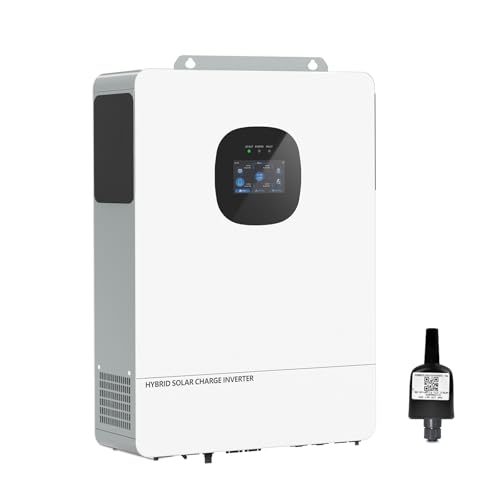
- 10,000W pure sine wave output
- 120V/240V split-phase power
- Battery-free or 48V battery operation
Best For: Larger homes wanting battery-optional split-phase power
Scalable Power Pick
Aninerel 12000W Dual-MPPT Hybrid Inverter

- 12,000W continuous output
- Two MPPT solar controllers
- Supports up to six parallel units
Best For: Expandable high-output home or workshop systems
Low-Frequency Pick
VEVOR 6400W Split-Phase Hybrid Inverter
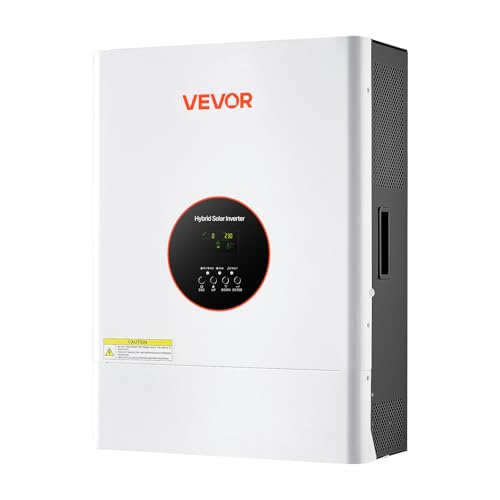
- 6,400W pure sine wave output
- Built-in 120A MPPT controller
- No Wi-Fi monitoring
Best For: Off-grid split-phase systems without remote monitoring needs
Best for Compact Backup – LiTime 5000W All-in-One Inverter
If you need a hybrid solar inverter for 48v lifepo4 battery backup without separate charging hardware, this LiTime combines a 5,000W pure sine wave inverter, 100A MPPT controller, and 40A AC charger in one unit. A single unit outputs 120V.
Best For: Cabins and home backup setups needing 120V output now, with an option to expand later.
Pros:
- Supports 48V lithium and lead-acid batteries, plus a user-configurable mode.
- Offers multiple charging and output modes, including timed grid charging and discharging.
- Supports up to six units in parallel; two or more can provide 120V/240V output.
Cons:
- One unit provides 120V only; 240V requires a parallel setup.
- Its 5,000W rating may be too small for larger whole-home loads.
The integrated design keeps the component list short. Check your load calculations and parallel configuration before planning for 240V appliances.
Best for Battery-Optional Systems – POWLAND Split-Phase Hybrid Inverter
For shoppers comparing a hybrid solar inverter for 48v lifepo4 battery storage with battery-free operation, this POWLAND offers both approaches. Its listing describes split-phase 120V/240V output, solar-grid-battery operation, WiFi monitoring, and support for up to six parallel units.
Best For: Larger home systems that need split-phase output and the option to operate without a battery.
Pros:
- Supports 48V LiFePO4 and lead-acid batteries as well as battery-free operation.
- Includes a WiFi module and CT modules for monitoring and grid-flow control.
- Supports parallel expansion up to six units.
Cons:
- The listing conflicts on output capacity: its title and bullets say 12,000W, while the details list 10,000W.
- Its listed dimensions and 46-pound weight call for dedicated installation space.
The battery-optional design is its main draw. Confirm the exact continuous output rating and grid-connection requirements before sizing a system around it.
Best Battery-Included System – ECO-WORTHY Powermega 10kW Kit
If you want a hybrid solar inverter for 48v lifepo4 battery backup and need the battery too, this ECO-WORTHY package includes a 10kW hybrid inverter and a 48V-class, 314Ah LiFePO4 battery. The listing specifies 16.1kWh of usable energy and 120V/240V output options.
Best For: Home backup or off-grid buyers starting with a matched inverter-and-battery package.
Pros:
- Includes both the inverter and a UL 1973-certified battery.
- Battery offers active-balancing BMS protection, a built-in breaker, and WiFi/Bluetooth monitoring.
- Inverter supports split-phase 240V and single-phase 120V output.
Cons:
- The listed 293.2-pound package requires planning for handling and placement.
- The battery ships by truck freight, and components may arrive separately.
This is the most straightforward option here if you lack a battery already. Verify delivery access and installation space before ordering.
Best for Dual-Array Expansion – PowMr 12000W Split-Phase Inverter
For a larger hybrid solar inverter for 48v lifepo4 battery setup, this PowMr is rated at 12,000W continuous output and accepts up to 13.2kW of PV input. Its two 100A MPPT controllers let you connect two solar inputs, while one inverter supports 120V and 240V connections.
Best For: Higher-power backup or off-grid builds using two solar inputs and split-phase loads.
Pros:
- Provides 120V/240V output from a single unit.
- Dual MPPT inputs support up to 13.2kW of listed PV capacity.
- Supports lithium or lead-acid batteries, batteryless operation, and up to six units in parallel.
Cons:
- PV startup requires at least 150V, so smaller arrays need careful string planning.
- The listing alternates between 10kW and 12kW wording despite specifying 12,000W continuous output.
Its dual solar inputs and single-unit split-phase output make it flexible for a larger build. Verify the exact model rating and PV string limits against your planned equipment.
Best Compact 120V Pick – ECO-WORTHY 3500W 48V Inverter Charger
If you need a hybrid solar inverter for 48V LiFePO4 battery storage and standard 120V loads, this ECO-WORTHY combines a 3,500W pure sine wave inverter, an 80A MPPT controller, and AC charging in one unit. It also supports lead-acid batteries.
Best For: Smaller 48V off-grid systems that need 120V output and flexible charging modes.
Pros:
- Up to 4,400W PV input and 120A maximum combined battery charging.
- Four charging modes and three operating modes offer control over solar, utility, and battery use.
- Supports remote phone monitoring and parallel connection of up to six units.
Cons:
- Single-unit output is limited to 3,500W and 120V AC.
- Its 145V maximum PV open-circuit voltage limits solar-string design.
This is a practical all-in-one choice when your loads fit its 120V, 3,500W rating. Plan the solar array around its voltage limit, and follow the manufacturer’s recommendation to hire a professional for installation.
Best for Tariff Scheduling – SUNGOLDPOWER 10000W Split-Phase Inverter
For a hybrid solar inverter for 48V LiFePO4 battery banks serving both 120V and 240V loads, the SUNGOLDPOWER offers 10,000W rated pure sine wave output and two built-in MPPT controllers. It can also be set for 120V single-phase output.
Best For: Larger 48V systems that need split-phase power and scheduled charging around utility rates.
Pros:
- 120V/240V split-phase output and a stated 20,000W peak rating.
- Dual MPPT controllers and up to 200A battery charging.
- Time-slot charging and discharging settings help plan around peak and off-peak tariffs.
- Supports lithium and several lead-acid battery types, plus battery-free operation.
Cons:
- At 54 pounds, it is substantially heavier than a small inverter charger.
- The stated CAN, USB, and RS485 battery communication support is specific to SunGoldPower batteries.
Choose this model when split-phase output and tariff-based scheduling matter more than compact size. Confirm your battery’s communication compatibility if BMS integration is part of the plan.
Best for Fast Backup Switching – HumsiENK 48V Split-Phase Hybrid Inverter
If rapid backup switching is a priority in a hybrid solar inverter for 48V LiFePO4 battery storage, the HumsiENK lists a transfer time of 10ms or less. Its feature bullets describe 10,000W continuous pure sine wave output with native 120V/240V split-phase support.
Best For: 48V backup systems needing split-phase output, dual solar inputs, and fast automatic switchover.
Pros:
- Dual independent MPPT channels and a stated 12,000W solar charging capacity.
- Up to 220A battery charging, with time-of-use scheduling.
- Wi-Fi/Bluetooth app monitoring and USB, RS485, and CAN ports.
- Supports LiFePO4 and other listed battery types; up to six units can be paralleled.
Cons:
- The supplied title and details describe 12,000W output, while the feature bullets state 10,000W continuous; verify the rating before sizing loads.
- App control and advanced settings add configuration work for a basic installation.
This is the most feature-heavy backup option here, but the conflicting output figures deserve attention. Confirm its continuous rating and installation requirements before matching it to major 240V loads.
Grid-Flexible Pick – POWLAND 10000W Split-Phase Hybrid Inverter
If you want a hybrid solar inverter for 48v lifepo4 battery use but may start without batteries, this POWLAND model supports both setups. It provides 10,000W of pure sine wave power and 120V/240V split-phase output for substantial household loads.
Best For: Larger home systems that need split-phase power and the option to operate without a battery.
Pros:
- Supports 48V LiFePO4 and lead-acid batteries, plus battery-free operation.
- Built-in MPPT controller accepts a stated 90–485V DC solar input range.
- Can combine solar, battery, and grid power; an optional CT sensor supports grid export control.
Cons:
- The supplied specifications conflict on expansion: they describe a 10,000W unit but say stacking reaches 6,000W.
- Grid-export control requires an optional CT sensor.
This is worth considering for a high-load setup, but confirm the expansion specifications and grid-connection requirements before buying.
Scalable Power Pick – Aninerel 12000W Dual-MPPT Hybrid Inverter
For buyers comparing a hybrid solar inverter for 48v lifepo4 battery systems with room to grow, this Aninerel unit offers 12,000W continuous pure sine wave output, 120V/240V split-phase power, and two MPPT controllers.
Best For: Large residential or workshop systems that need high output and a stated path to parallel expansion.
Pros:
- Supports 48V LiFePO4 batteries and battery-free solar-to-load operation.
- Dual MPPT controllers support up to 6,000W of PV input each and up to 220A battery charging.
- Supports parallel connection of up to six units.
Cons:
- The supplied peak-output figures conflict: the bullets state 24,000W, while the details list 17,998W.
- Wi-Fi support is described by reference to a different model suffix than the one listed in the details.
Its dual solar inputs and expansion capability stand out, but verify surge capacity and monitoring features for the exact model before ordering.
Low-Frequency Pick – VEVOR 6400W Split-Phase Hybrid Inverter
This VEVOR hybrid solar inverter for 48v lifepo4 battery setups combines a low-frequency, 6,400W pure sine wave inverter with a built-in 120A MPPT controller. Its 120V/240V split-phase output suits off-grid systems that need both common household voltages.
Best For: Off-grid homes that want a low-frequency split-phase inverter and do not need Wi-Fi monitoring.
Pros:
- Supports lithium, lead-acid, and custom 48V battery types, with a lithium activation function.
- Provides 6,400W output with a stated 8,960W peak.
- Includes over-temperature, over-current, voltage, short-circuit, and overload protections.
Cons:
- No Wi-Fi monitoring.
- Weighs 78.5 pounds, so installation planning matters.
The integrated controller and low-frequency design make this a practical off-grid option if its output meets your load requirements and local LCD monitoring is sufficient.
How We Picked the Best Hybrid Solar Inverter for 48v Lifepo4 Battery
We focused on models marketed for 48V battery systems and compared their stated AC output, solar charge controllers, charging capacity, and system flexibility. The selection spans compact 120V units, 120V/240V split-phase models, and a battery-and-inverter bundle. Listed specifications are a starting point, not proof that a particular inverter will communicate with your battery or meet local installation rules.
Quick Comparison: Which Type Fits Your System?
For a cabin or a limited set of 120V circuits, the 3,500W ECO-WORTHY or 5,000W LiTime may be easier to size around than a 10–12kW unit. The VEVOR 6,400W model offers a middle ground for buyers seeking split-phase output. Higher-output options from POWLAND, PowMr, SUNGOLDPOWER, HumsiENK, and the unbranded 12,000W listing target larger loads, but their usable power depends on wiring, battery discharge capability, and operating conditions. The ECO-WORTHY Powermega bundle is worth considering if you want an inverter and battery sold as a system; confirm exactly what the package includes.
Key Buying Factors for a Hybrid Solar Inverter for 48v Lifepo4 Battery
AC Output and Load Sizing
List the appliances you want to run simultaneously and note motor startup surges. Choose 120V output for 120V-only loads; choose a true 120V/240V split-phase model if your panel or equipment requires both legs. Do not assume a 110/220V listing is interchangeable with a North American 120/240V installation without checking its manual.
Battery Charging and BMS Compatibility
Check the inverter’s supported battery-voltage range, adjustable LiFePO4 charging settings, and maximum battery charge and discharge current. Compare those figures with the battery manufacturer’s limits. If closed-loop battery communication matters, verify the exact BMS protocol and supported battery models; a generic “lithium compatible” claim may mean manual voltage settings only.
Solar, Grid, and Installation Requirements
Size the array against the MPPT voltage window, maximum PV open-circuit voltage in cold weather, input current limits, and allowed PV power. Check whether grid charging, export, battery-free operation, or generator input is supported in the operating mode you need—not just mentioned in a listing. Grid connection can require specific certifications, utility approval, and professional installation. Also budget for appropriately rated breakers, disconnects, cabling, grounding, and battery protection.
Who Should Buy Which Hybrid Solar Inverter for 48v Lifepo4 Battery?
Choose a smaller 120V model for modest off-grid loads when you do not need 240V. Consider a midrange split-phase unit for a subpanel serving mixed-voltage circuits. Look at 10–12kW models only if your load calculation and battery bank can support them; a large inverter does not create extra battery capacity. A bundled system may simplify component selection, but verify its usable storage, warranty terms, and expansion options before buying.