If you need reliable insulation resistance testers for field work, the best models balance ruggedness, clear readouts, and the right test voltages for the job.
This roundup focuses on practical options for electricians, maintenance teams, and industrial technicians who need fast, accurate checks on-site.
Best 10 Insulation Resistance Testers for Field Work Picks for 2026
Frontline Industrial Pick
Fluke 1535 Insulation Tester for field testing

- 250 V to 2500 V test range
- Automatic PI and DAR calculation
- CAT IV 600V safety support
Best For: Industrial crews needing fast, high-range insulation testing in the field
Quick-Check Jobsite Choice
HIOKI IR4057-50 insulation tester
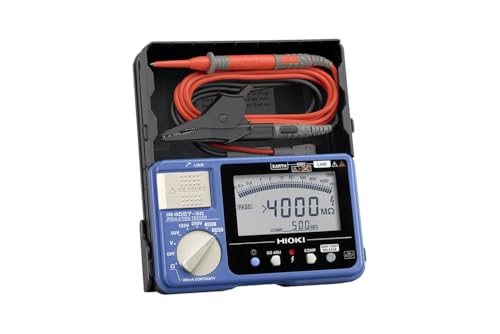
- 50 V to 1000 V selectable test voltages
- Rapid PASS/FAIL comparator
- Drop-proof, backlit jobsite design
Best For: Technicians who need quick, on-site go/no-go insulation checks
Calibrated Pro Option
Fluke 1507 digital megohmmeter

- 50 V to 1000 V test voltage range
- Remote probe for hard-to-reach tests
- NIST-traceable calibration certificate included
Best For: Teams needing a calibrated tester for advanced field diagnostics
HVAC Field Favorite
Supco M500 megohmmeter for insulation checks

- 500 V insulation testing
- Measures up to 1000 megohms
- Portable battery-operated handheld design
Best For: HVAC technicians needing a simple portable insulation tester
Field-Tested Precision
Fluke 1503 Insulation Resistance Tester
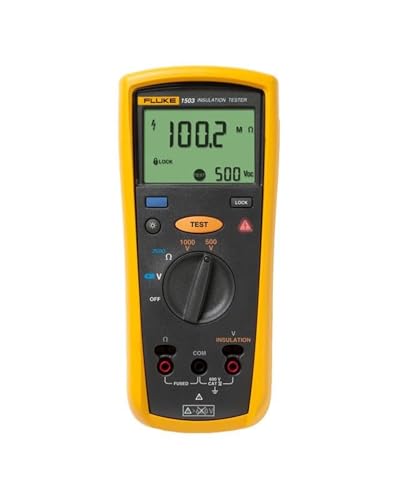
- Preset and adjustable test voltages
- Automatic PI and DAR calculations
- Stores up to 99 test results
Best For: Technicians needing reliable field insulation testing with built-in diagnostics.
High-Voltage Diagnostic Range

- Five test voltages up to 2500V
- Wide 0.1MΩ to 200GΩ range
- PASS/FAIL plus PI and DAR
Best For: Industrial field testing that benefits from high-voltage range and easy pass/fail checks.
Two-in-One Field Utility
Extech MG320 Insulation Tester Multimeter

- Combines insulation tester and true RMS multimeter
- Insulation testing up to 4GΩ
- Includes leads, batteries, and soft case
Best For: Technicians who want one rugged tool for insulation checks and general meter work.
Field-Ready Multirange Pick
Extech 380260 Autoranging Digital Insulation Tester, 250/500/1000V

- 250V, 500V, and 1000V DC test options
- Insulation resistance up to 2000 MΩ
- Includes continuity, low resistance, and AC/DC voltage checks
Best For: Electricians and maintenance techs who need a versatile, ready-to-use field tester
High-Voltage Heavy-Duty Option
NJTY T6125 Digital Insulation Resistance Tester, 2500V, 0.01MΩ-200GΩ

- 0.01 MΩ to 200 GΩ measurement range
- 250V, 500V, 1000V, and 2500V outputs
- Rugged, shockproof, dustproof, and moisture-proof build
Best For: Technicians working on transformers, motors, and power cables in tough conditions
Compact Jobsite Favorite
Extech MG310 Compact Digital Insulation Tester, 250/500/1000V

- Compact field-friendly insulation tester
- 250V, 500V, and 1000V selectable tests
- Large dual-readout LCD with lock power-on
Best For: Electricians, HVAC techs, and plant engineers doing routine insulation checks
Frontline Industrial Pick – Fluke 1535 Insulation Tester for field testing
If you need insulation resistance testers for field work, the Fluke 1535 is built for fast checks on cables, motors, transformers, and other electrical equipment. Its 250 V to 2500 V test range and resistance measurements up to 500 GΩ make it a strong fit for industrial troubleshooting where speed and stable readings matter.
Best For: Industrial electricians and maintenance teams who need a rugged tester for frontline insulation checks.
Pros:
- Test voltages from 250 V to 2500 V support a wide range of insulation jobs.
- Automatic PI and DAR calculation helps speed up condition assessment.
- Fast-measurement design is aimed at quicker, more stable resistance readings.
- CAT IV 600V compliance and voltage alarm add jobsite safety support.
Cons:
- Heavier than some handheld testers at 6.1 pounds.
- May be more tester than needed for basic light-duty checks.
Overall, this is a practical field tool for users who want broad voltage coverage and built-in efficiency features for industrial insulation testing. The included test lead set and carrying case also make it easier to deploy on the job.
Quick-Check Jobsite Choice – HIOKI IR4057-50 insulation tester
The HIOKI IR4057-50 is a smart pick if you want insulation resistance testers for field work that can move quickly from test to decision. With selectable voltages from 50 V to 1000 V, a rapid PASS/FAIL comparator, and built-in voltage and continuity functions, it reduces tool swapping during jobsite inspections.
Best For: Technicians who want fast pass/fail results and a durable tester for on-site inspections.
Pros:
- Five selectable test voltages cover 50 V to 1000 V applications.
- Rapid PASS/FAIL comparator responds in about 0.3 seconds.
- Built-in AC/DC voltage meter and continuity check improve versatility.
- Drop-proof design, backlit display, and bright LED help in tough conditions.
Cons:
- Resistance range tops out at 4000 MΩ, which is narrower than some higher-end testers.
- Not every user will need the integrated voltage and continuity functions.
For teams that value speed and a compact workflow, this model stands out as a field-ready insulation tester. The live-circuit indicator and automatic discharge features also add useful safety support during daily use.
Calibrated Pro Option – Fluke 1507 digital megohmmeter
For buyers comparing insulation resistance testers for field work, the Fluke 1507 brings a familiar industrial layout with a wide test-voltage spread from 50 V to 1000 V. It is aimed at advanced electrical testing, and the remote test probe plus live circuit detection make repetitive checks easier and safer.
Best For: Technicians who need a calibrated megohmmeter with remote probing and live-circuit protection.
Pros:
- Five test voltages support a broad range of insulation testing tasks.
- Includes a remote test probe for repetitive or hard-to-reach testing.
- Live circuit detection blocks insulation testing if more than 30 volts is detected.
- Ships with a NIST-traceable calibration certificate and backlit display.
Cons:
- Does not advertise the higher insulation resistance ceiling of some specialty testers.
- Focused on advanced testing, so it may be more than a casual user needs.
This is a solid choice when calibration documentation and field usability matter as much as measurement range. The included certificate can help teams that need instrument readiness for quality systems right out of the box.
HVAC Field Favorite – Supco M500 megohmmeter for insulation checks
The Supco M500 is a practical choice among insulation resistance testers for field work, especially if you handle HVAC and general electrical troubleshooting. Its 500 volt output, 0 to 1000 megohms range, LED display, and portable battery-powered build are geared toward quick insulation checks on motors, compressors, wiring, and panels.
Best For: HVAC technicians and field troubleshooters who want a simple portable megohmmeter.
Pros:
- 500 volt testing supports common insulation diagnostic work.
- Measures up to 1000 megohms with a clear LED display.
- Handheld, battery-operated design is built for portable use.
- Well-suited to HVAC components like compressors, blower motors, and condenser motors.
Cons:
- Single 500 volt test level limits flexibility versus multi-voltage testers.
- C size batteries are not included.
If you want a straightforward field tester focused on HVAC and everyday insulation checks, the M500 keeps the workflow simple. Its rugged handheld format and included soft carrying case make it easy to take from one service call to the next.
Field-Tested Precision – Fluke 1503 Insulation Resistance Tester
If you need insulation resistance testers for field work, the Fluke 1503 is a straightforward choice for electricians and maintenance techs who want dependable readings and built-in test support. It offers preset and adjustable test voltages, measures leakage current and capacitance, and flags dangerous voltage so you can work more confidently on site.
Best For: Field technicians who want a compact insulation tester with automatic PI/DAR calculations and solid safety ratings.
Pros:
- Preset and adjustable test voltages for insulation resistance testing
- Automatically calculates PI and DAR for deeper insulation assessment
- Measures leakage current to 2 mA, capacitance to 20 µF, and voltage to 600V
- Stores up to 99 test results and supports timed tests up to 99 minutes
Cons:
- Focused on insulation testing rather than being a full multimeter combo
- Higher-end diagnostic features may be more than casual users need
The Fluke 1503 stands out as a practical field tool when you need detailed insulation checks without a complicated workflow. Its safety standards, result storage, and PI/DAR automation make it a strong fit for routine troubleshooting and maintenance jobs.
High-Voltage Diagnostic Range – KAIWEETS 2500V Megohmmeter
For insulation resistance testers for field work that need a wider voltage range, the KAIWEETS megohmmeter brings 5 selectable test voltages and a broad resistance span. It is designed for maintenance and safety verification jobs where you want quick PASS/FAIL feedback, plus PI and DAR calculations for trend monitoring.
Best For: Industrial users who need a high-voltage insulation tester with customizable thresholds and advanced diagnostics.
Pros:
- 5-range testing from 100V to 2500V
- Measures insulation resistance from 0.1MΩ to 200GΩ
- Calculates DAR and PI on-device for preventive maintenance
- Includes PASS/FAIL evaluation, data hold, backlight, and auto shutdown
Cons:
- Bulk of advanced settings may be unnecessary for simple spot checks
- Primarily an insulation tester, not a combo multimeter
This KAIWEETS unit is a strong pick when your field work calls for more voltage flexibility and diagnostic depth. The adjustable thresholds and safety-compliant design make it especially useful for maintenance teams focused on verification and fault prevention.
Two-in-One Field Utility – Extech MG320 Insulation Tester Multimeter
The Extech MG320 is a practical option if you want insulation resistance testers for field work but also need an everyday true RMS multimeter in the same tool. It combines insulation testing at 250V, 500V, and 1000V with multimeter functions that cover voltage, current, resistance, continuity, and diode checks.
Best For: Field techs who want one rugged meter for insulation testing and general electrical diagnostics.
Pros:
- 2-in-1 design combines insulation tester and true RMS multimeter
- Insulation testing up to 4GΩ with 250V, 500V, and 1000V settings
- Measures AC/DC voltage up to 1000V plus current, resistance, continuity, and diodes
- Includes test leads, batteries, and a soft case for field use
Cons:
- Insulation range tops out at 4GΩ, lower than some dedicated testers
- More of a multifunction tool than a specialized megohmmeter
The MG320 makes sense when portability and versatility matter more than having a dedicated insulation-only instrument. Its field-ready kit and CAT IV/CAT III ratings give it a strong practical edge for technicians who move between troubleshooting and insulation checks all day.
Field-Ready Multirange Pick – Extech 380260 Autoranging Digital Insulation Tester, 250/500/1000V
For insulation resistance testers for field work, the Extech 380260 is a practical choice when you need a straightforward meter with common test voltages and basic multi-function diagnostics. It offers selectable 250V, 500V, and 1000V DC tests, plus low resistance, continuity, and AC/DC voltage measurements in one compact kit.
Best For: Electricians and maintenance techs who want a versatile field tester with familiar voltage steps and a ready-to-carry kit.
Pros:
- Selectable 250V, 500V, and 1000V DC test voltages
- Measures insulation resistance up to 2000 MΩ
- Includes low resistance, continuity, and AC/DC voltage functions
- Comes with heavy duty test leads, carrying case, and batteries
Cons:
- Maximum test voltage is 1000V, so it is not the highest-output option here
- No expanded measurement range beyond 2000 MΩ is listed
The 380260 is a solid all-around field tester if your jobs center on common insulation checks and general electrical troubleshooting. Its auto-discharge, data hold, and lock power-on features add convenience during repetitive work.
High-Voltage Heavy-Duty Option – NJTY T6125 Digital Insulation Resistance Tester, 2500V, 0.01MΩ-200GΩ
If you need insulation resistance testers for field work on larger electrical equipment, the NJTY T6125 stands out for its wide measurement range and 2500V output. It is built to handle transformers, motors, and power cables, while also adding AC voltage and low resistance checks for broader troubleshooting.
Best For: Technicians testing transformers, motors, and power cables in harsher field environments.
Pros:
- Measures insulation resistance from 0.01 MΩ to 200 GΩ
- Four selectable test voltages: 250V, 500V, 1000V, and 2500V
- Also measures AC voltage and low resistance
- Shockproof, dustproof, and moisture-proof design with protective case
Cons:
- Larger voltage range may be more than needed for simple routine checks
- Heavier feature set can make it less basic than a simple field megohmmeter
The T6125 is the strongest pick here when your field work demands higher test voltage and a broader resistance range. Its data hold, over-range alarm, backlit LCD, and auto shutdown round out a rugged, practical package.
Compact Jobsite Favorite – Extech MG310 Compact Digital Insulation Tester, 250/500/1000V
Among insulation resistance testers for field work, the Extech MG310 is a compact option that focuses on the core measurements most techs need. It provides selectable 250V, 500V, and 1000V testing up to 2000 MΩ, with a large dual-readout LCD for easier checking in busy or dim locations.
Best For: Electricians, HVAC technicians, and plant engineers who want a compact tester for routine insulation checks.
Pros:
- Compact design suited to jobsite carry and field use
- Selectable 250V, 500V, and 1000V test voltages
- Measures insulation resistance up to 2000 MΩ
- Includes lock power-on for hands-free repetitive testing
Cons:
- Top test voltage is 1000V, so it is not aimed at higher-voltage applications
- Fewer extra measurement functions are listed than on some multi-function units
The MG310 is a sensible pick if you want a field tester that stays focused on insulation work without feeling overly complex. The included leads, batteries, and carrying case make it easy to take straight to the job.
How We Picked These Insulation Resistance Testers for Field Work
We focused on models that make sense outside the lab: portable size, durable construction, useful test-voltage options, and easy operation in real maintenance environments. We also looked for clear display behavior, dependable measurement ranges, and features that help reduce downtime during troubleshooting.
Quick Comparison
As you compare options, think first about voltage range and intended use. Lower-voltage units can cover many general electrical checks, while higher-voltage models are better suited to heavier industrial insulation testing. Some units add multimeter functions, while others prioritize dedicated megohmmeter performance. For Insulation Resistance Testers for Field Work, the best choice is usually the one that matches your typical equipment and site conditions rather than the one with the biggest spec sheet.
Key Buying Factors for Insulation Resistance Testers for Field Work
Test Voltage Range
Match the tester to the assets you inspect. Common field ranges include 250V, 500V, 1000V, and higher. Motor circuits, cables, and industrial equipment may require different settings, so choose a tester that covers your most common use cases.
Measurement Range and Resolution
Look for a wide resistance range if you work across varied equipment types. Better resolution helps when you need to spot early-stage insulation degradation before it becomes a failure.
Portability and Ergonomics
Field work often means carrying tools between panels, rooftops, plant floors, and confined spaces. A compact tester with a readable screen, simple controls, and comfortable leads can save time on every job.
Safety and Durability
For on-site use, strong casing, dependable lead quality, and clear safety ratings matter. A tester should feel built for daily handling and changing environments, not just bench use.
Extra Functions
Some buyers want a dedicated insulation tester; others benefit from added multimeter or continuity functions. If you need faster troubleshooting, a combo unit can reduce the number of tools you carry, but a dedicated model may offer a more focused workflow.
Who Should Buy Which Insulation Resistance Testers for Field Work?
Choose a simpler, lower-voltage model if you need straightforward checks on general electrical systems or want a lighter tool for routine maintenance. Pick a higher-voltage or broader-range tester if you service industrial motors, long cable runs, or more demanding equipment. If you often troubleshoot in the field and want one instrument to do more, a combo tester may be the best fit. For teams standardizing tools across multiple technicians, consistency in voltage options, display readability, and handling is often more valuable than any single premium feature.
In short, the best Insulation Resistance Testers for Field Work are the ones that fit your typical test requirements, stay easy to use under pressure, and hold up to real-world site conditions.