As you think about sustainable living in 2026, integrated home energy systems will play an essential role in optimizing your energy consumption. With advancements in technology, products like the SIEMENS Inhab and Anker SOLIX E10 are leading the charge. These systems not only monitor energy usage but also offer solutions for renewable energy storage. Curious about which options will best suit your needs? Let’s explore the top contenders that could transform your home’s energy management.
SIEMENS Inhab Smart Home Energy Monitor

If you’re looking to take control of your energy usage and promote sustainable living, the SIEMENS Inhab Smart Home Energy Monitor is an excellent choice. This device offers real-time monitoring of your home’s electricity consumption, utilizing advanced sensors for both whole home and circuit-level insights. You can easily track your energy usage around the clock, making it simple to identify savings opportunities. With features like personalized notifications and energy management functions, you’ll stay informed about your consumption patterns. Installation is straightforward, and it’s compatible with most electrical panels, making it a practical addition to any sustainable living setup.
Best For: Homeowners looking to monitor and optimize their energy consumption for better efficiency and cost savings.
Pros:
- Real-time monitoring provides up-to-date insights on energy usage.
- Advanced energy management functions help maximize savings and efficiency.
- Easy installation compatible with most electrical panels.
Cons:
- Requires WiFi connectivity for full functionality.
- Initial setup may be complex for users unfamiliar with electrical systems.
- Limited to monitoring circuits within the capacity of the installed sensors.
Emporia Vue 3 Home Energy Monitor

The Emporia Vue 3 Home Energy Monitor is ideal for homeowners seeking to optimize their energy consumption and reduce costs. This UL-listed device installs easily in your circuit panel and supports various electrical systems. With 24/7 real-time monitoring, you can track energy usage directly from your smartphone or web app. The sensors provide accurate data, allowing you to manage critical appliances like your air conditioner and water heater efficiently. Plus, automate energy management based on peak demand or solar usage through the Emporia Energy App, ensuring you save money and prevent costly repairs in the long run.
Best For: Homeowners looking to optimize their energy consumption and reduce utility costs through real-time monitoring and automation.
Pros:
- UL Listed for safety and reliability, ensuring compliance with rigorous safety standards.
- 24/7 monitoring allows for continuous tracking of energy usage, helping to identify areas for savings.
- Supports various electrical systems and includes multiple sensors for comprehensive appliance monitoring.
Cons:
- Requires a 2.4 GHz WiFi connection for operation, which may not be available in all homes.
- Installation may require professional assistance for those unfamiliar with electrical systems.
- The need for an additional 200A sensor for certain system types can increase initial setup costs.
Smart Home Energy Monitor with 16 Circuit Level Sensors

For renters and those living in shared apartments, the Smart Home Energy Monitor with 16 Circuit Level Sensors stands out as an essential tool for managing energy consumption. With real-time tracking of power usage and costs, you’ll gain insights on your electricity habits. Its easy installation and compatibility with Home Assistant make it a breeze to set up. Monitor individual room usage or even EV chargers while receiving actionable notifications to save money. Plus, the customizable electricity rate templates allow you to adapt to peak pricing. With a 1-year warranty and solid customer support, you can trust this device for sustainable living.
Best For: Renters and individuals living in shared apartments who want to effectively manage their energy consumption and costs.
Pros:
- Easy installation with clamp-on sensors allows for quick setup in circuit panels.
- Real-time tracking of power usage and costs helps promote energy conservation and reduce bills.
- Compatible with Home Assistant for seamless integration into smart home systems.
Cons:
- Limited to single-phase and three-phase configurations, which may not suit all electrical setups.
- Requires a 2.4GHz WiFi connection for remote monitoring, possibly limiting use in areas with poor connectivity.
- Some users may find the initial setup challenging if they are not familiar with electrical systems.
Meross Smart Energy Consumption Monitor

Looking to take control of your home’s energy consumption? The Meross Smart Energy Consumption Monitor is your go-to solution. With 18 circuit monitoring, it provides real-time power usage data and smart alerts, all without any subscriptions. Its easy clamp-on design makes installation a breeze. You’ll enjoy accurate tracking of power, voltage, and current, allowing you to save 10-20% on energy costs by identifying energy hogs. Plus, it integrates seamlessly with Home Assistant for enhanced energy management. With local data storage, your privacy is guaranteed, giving you peace of mind while optimizing your energy use.
Best For: Homeowners looking to monitor and optimize their energy consumption effectively.
Pros:
- Real-time monitoring allows users to track energy usage 24/7 from anywhere.
- No subscription fees mean ongoing costs are minimized, and users can enjoy smart alerts for unusual usage without additional charges.
- Easy installation with a clamp-on design makes it accessible for most users without needing professional help.
Cons:
- May require some technical knowledge to integrate with Home Assistant for advanced features.
- Limited to monitoring only up to 18 circuits, which may not suffice for larger homes with more complex electrical systems.
- The accuracy of ±2% may not meet the needs of users seeking highly precise data for energy management.
Anker SOLIX E10 Power Dock and Battery

Anker SOLIX E10 Power Dock and Battery stands out as an ideal choice for homeowners seeking a reliable and expandable energy solution. With a 6kWh battery that can expand to 90kWh, you’ll enjoy 7.6kW of continuous power for daily needs, easily scaling to 22.8kW with additional units. The system features a seamless ≤20ms automatic switchover during outages, ensuring no interruptions. Setup is effortless—just stack, plug, and power up. Plus, it’s weatherproof and boasts an impressive 10-year battery lifespan. Enjoy limited-time perks like a metal pad and financing options while reducing your energy bills with this efficient system.
Best For: Homeowners looking for a reliable, expandable energy solution that provides seamless backup power during outages.
Pros:
- Effortless installation process, allowing for quick setup in just a few hours.
- Weatherproof design ensures durability for outdoor use in various conditions.
- Expandable battery capacity allows for future growth and increased energy needs.
Cons:
- Initial investment may be high for some homeowners.
- Requires additional units for maximum scalability, which could increase costs.
- Limited to specific operating temperature ranges, which may affect performance in extreme weather conditions.
EF ECOFLOW Smart Home Panel 2

The EF ECOFLOW Smart Home Panel 2 stands out as an ideal choice for homeowners seeking a seamless blend of energy management and backup power capabilities. This panel connects with DELTA Pro Ultra, DELTA Pro 3, solar systems, and gas generators, allowing you to harness multiple energy sources efficiently. With the ability to manage up to 36kWh of energy storage, you can run all your household appliances effortlessly. Its 20-ms auto-switchover feature provides reliable backup power during outages, ensuring your home stays powered without any hassle. Plus, it comes with a 3-year warranty, making it a smart investment for sustainable living.
Best For: Homeowners looking for an efficient energy management system that provides reliable backup power during outages.
Pros:
- Multiple energy source management allows for cost-effective use of solar and gas energy.
- Large energy storage capacity of up to 36kWh enables operation of all household appliances.
- Quick auto-switchover feature (20 ms) ensures uninterrupted power during outages.
Cons:
- Weight of 40 pounds may make installation challenging for some users.
- Limited to specific compatible models (DELTA Pro Ultra, DELTA Pro 3, etc.) which may restrict options for some homeowners.
- Customer rating of 4.0 out of 5 stars indicates that it may not meet everyone’s expectations.
EF ECOFLOW Smart Home Panel 3 (32 Circuits)

For homeowners seeking a reliable and efficient backup power solution, the EF ECOFLOW Smart Home Panel 3 (32 Circuits) stands out with its seamless backup capability in under 20 milliseconds. This panel serves as the center of your whole-home backup system, compatible with the DELTA Pro Ultra X. Not only does it provide a powerful 12,000 watts, but it can also extend your backup time by up to 42%. However, remember that installation is required before use. With a 5-year warranty, it’s a solid investment for anyone prioritizing sustainable living. Check out the pricing and availability for the best deal.
Best For: Homeowners looking for an efficient and reliable backup power solution that seamlessly integrates into their whole-home system.
Pros:
- Seamless backup capability in under 20 milliseconds ensures minimal disruption during power outages.
- Powerful output of 12,000 watts allows for extensive coverage of household circuits.
- Extended backup time by up to 42% provides peace of mind during extended outages.
Cons:
- Installation required before use may deter some users who prefer plug-and-play solutions.
- Customer reviews are mixed, with an average rating of only 3.1 out of 5 stars.
- Best Sellers Rank indicates lower popularity compared to other products in the market.
Smart Home Energy Monitor with Live Electricity Usage Tracking
With its bi-directional power tracking feature, the Smart Home Energy Monitor is perfect for eco-conscious homeowners looking to optimize their energy usage. This device accurately tracks voltage, current, and total energy consumption, giving you real-time insights into your home’s electricity usage. Its easy installation process means you won’t deal with complex wiring, and it seamlessly integrates with the Smart Life app for customizable automation. Plus, its support for dynamic load balancing enhances your energy efficiency. With a solid 4.0-star rating, it’s a trusted choice for managing your home’s energy footprint effectively. Embrace smart living today!
Best For: Eco-conscious homeowners looking to optimize their energy usage and manage their electricity consumption effectively.
Pros:
- Accurate tracking of voltage, current, and total energy consumption for real-time insights.
- Easy installation with pluggable terminals and compact split-core CTs, requiring no complex wiring.
- Seamless integration with the Smart Life app for customizable automation and enhanced energy efficiency.
Cons:
- May require a stable Wi-Fi connection for optimal performance and data reporting.
- Limited to single-phase 3-wire systems, which may not suit all home configurations.
- The 30-day return policy may not provide enough time for thorough testing of the device’s features.
Aeotec Home Energy Meter 8 – Smart Electricity Monitor
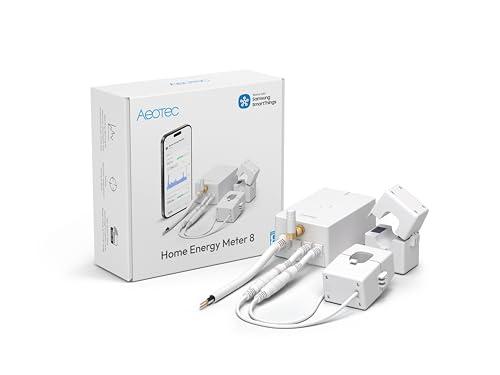
Looking to take control of your energy consumption? The Aeotec Home Energy Meter 8 is your solution. This smart electricity monitor tracks real-time usage and production, featuring Z-Wave Long Range technology with two 200A clamp-on sensors. It offers 99% accuracy in monitoring, helping you optimize energy use and measure surplus power from solar panels. Compatible with SmartThings and HomeAssistant, it enhances your smart home setup. With exceptional security, including S2 and AES-128 encryption, your data stays safe. Experience energy management like never before with a device that fits seamlessly into your sustainable living plans.
Best For: Homeowners and eco-conscious individuals looking to optimize their energy consumption and production with real-time monitoring.
Pros:
- High Accuracy: Measures energy usage and production with 99% accuracy, providing reliable insights.
- Smart Home Integration: Compatible with popular systems like SmartThings and HomeAssistant for enhanced connectivity.
- Robust Security: Offers S2 and AES-128 encryption to ensure data privacy and security.
Cons:
- Limited Temperature Range: Operates effectively only between 5°F to 140°F, which may not suit extreme climates.
- Z-Wave Dependency: Requires a compatible Z-Wave hub for functionality, which might necessitate additional investment.
- Size: Its compact size may limit installation options in certain electrical panels or areas.
Emporia Energy Monitor Super Bundle with 16 Sensors & 4 Smart Plugs

The Emporia Energy Monitor Super Bundle, featuring 16 sensors and 4 smart plugs, is ideal for homeowners enthusiastic to take control of their energy consumption. With real-time tracking of your entire home’s electricity usage, you gain second-by-second visibility into how much energy each circuit consumes. The included smart plugs allow you to remotely control devices, helping you automate schedules and reduce standby power waste. Plus, the free Emporia app lets you monitor usage trends and access your data anytime. By optimizing your energy management, you can markedly lower costs while supporting sustainable living practices.
Best For: Homeowners looking to efficiently monitor and manage their electricity usage while automating energy-saving practices.
Pros:
- Comprehensive tracking of whole-home energy usage with up to 16 individual circuit sensors.
- Remote control and automation of devices through 4 included Wi-Fi smart plugs, reducing energy waste.
- User-friendly Emporia app for real-time monitoring, trend analysis, and secure cloud data access.
Cons:
- Requires Wi-Fi connectivity for full functionality of smart plugs and app integration.
- Initial setup may be complex for users unfamiliar with smart home technology.
- Limited compatibility with certain home automation systems outside of iOS, Android, and Alexa.
Factors to Consider When Choosing Integrated Home Energy Systems
When you’re choosing an integrated home energy system, you’ll want to evaluate several key factors. Energy monitoring accuracy, installation complexity, and system compatibility can greatly impact your experience. Plus, access to real-time data and robust energy management features can enhance your overall efficiency and sustainability.
Energy Monitoring Accuracy
How can you guarantee your energy monitoring system delivers the insights you need for efficient energy management? Start by choosing devices with accuracy ratings between ±0.5% and ±2%. This precision is essential for tracking both energy consumption and production, especially if you have solar panels. Look for systems that provide real-time data with short reporting intervals; second-by-second updates often yield more accurate insights than those offering minute or hour-long intervals. Bi-directional monitoring is another key feature, allowing you to measure household consumption and power export, which is significant for evaluating overall system efficiency. Finally, consider monitors with customizable reporting to tailor insights to your specific needs, enhancing your energy management effectiveness.
Installation Complexity
While selecting an integrated home energy system, considering installation complexity is vital for a smooth setup. Systems using clamp-on sensors typically offer easier, quicker installations compared to those needing hardwired connections. If your system supports multiple phases or has to fit with existing electrical panels, professional installation might be necessary, adding to costs and complexity. Look for energy monitors with user-friendly designs, featuring plug-and-play components that reduce wiring hassles. The installation environment also matters; accessibility to your circuit panel and whether your home has a single-phase or multi-phase system will impact setup time. Finally, make sure you understand any Wi-Fi connectivity requirements, as stable internet access is essential for peak performance and monitoring.
Compatibility With Systems
Choosing an integrated home energy system that’s compatible with your existing setup is vital for maximizing efficiency and convenience. First, make sure it supports various electrical configurations, such as single-phase, split-phase, and three-phase systems, to match your home’s needs. Check for compatibility with smart home ecosystems like Home Assistant or Z-Wave, enhancing your automation capabilities. It’s also important to select systems that can connect seamlessly to renewable energy sources, such as solar panels and gas generators, for effective energy management. Verify that the energy monitoring system accurately tracks both consumption and production, especially if you’re utilizing solar or battery storage. Finally, look for flexible installation options, like clamp-on sensors, which simplify setup across different electrical panel types.
Real-Time Data Access
Accessing real-time data is essential for homeowners looking to optimize their energy usage effectively. With instant monitoring, you won’t have to rely on estimates; you’ll see your energy consumption as it happens. Systems that offer real-time reporting can track usage at both the whole-home and circuit levels, helping you pinpoint energy hogs and adjust your consumption patterns accordingly. Accurate real-time data also allows for personalized notifications, alerting you to unusual behaviors or potential savings. Plus, many systems store historical data, letting you analyze your energy trends over time. This real-time insight can enhance energy management, aiding in peak demand management and load shedding, ultimately reducing your energy costs and improving efficiency.
Energy Management Features
When evaluating integrated home energy systems, it’s crucial to take into account the energy management features that can make a significant difference in your household’s efficiency. Effective systems offer real-time monitoring of your electricity usage, helping you track consumption and identify trends. Advanced options may include Time of Use Management and Peak Demand Management, which allow you to optimize costs based on variable pricing. Smart alerts can notify you of unusual consumption patterns, enabling proactive management. Additionally, systems supporting solar net metering can enhance your use of renewable energy, potentially lowering utility bills. Customizable reporting intervals and data export options let you analyze performance thoroughly, empowering you to make informed decisions for energy efficiency improvements.
Cost and Warranty
Understanding the costs and warranties associated with integrated home energy systems is essential for making a smart investment. You’ll want to compare upfront costs with potential long-term savings, as some systems can greatly reduce your energy bills over time. Pay close attention to warranty durations; while some products may only offer a one-year warranty, others can last up to ten years, impacting reliability and cost-effectiveness. Don’t forget to take into account installation, maintenance, and upgrade expenses in your overall budget. A solid return policy, like a 30-day guarantee, can offer peace of mind if the system doesn’t meet your expectations. Finally, check customer ratings and reviews to gauge reliability and performance, ultimately influencing your investment’s value.