When it comes to solar installations, choosing the right inverter system can greatly enhance your energy efficiency. You’ll want to take into account factors like capacity, features, and monitoring capabilities to guarantee peak performance. With options like the SUNGOLDPOWER and ECO-WORTHY inverters, you have plenty to explore. Let’s take a closer look at the top systems that can power up your energy savings and help you make an informed decision.
SUMRY Solar Inverter Charger (3600W DC 24V to AC 110V)

The SUMRY Solar Inverter Charger (3600W DC 24V to AC 110V) is an excellent choice for homeowners looking to harness solar power efficiently. It boasts a robust 3600W rated power and can deliver up to 7200W peak power, ensuring you can run multiple appliances easily. With a built-in 120A MPPT solar charge controller and compatibility with various battery types, this inverter adapts to your needs. Its pure sine wave output guarantees stable voltage for sensitive devices. Plus, the LCD display keeps you informed, while safety features protect against overloads and overheating, making it a reliable addition to your solar setup.
Best For: Homeowners looking for a versatile and efficient solar inverter charger to power their appliances while maximizing solar energy use.
Pros:
- High Power Output: With 3600W rated and 7200W peak power, it can easily support multiple household appliances.
- Versatile Battery Compatibility: Works with various battery types including AGM, Gel, Lead-acid, Lithium-ion, and LiFePO4, giving users flexibility.
- Safety Features: Built-in protections against overload, overheating, and short circuits ensure safe operation.
Cons:
- Weight: At 8.5 kg, it may be heavier than some users expect for installation or portability.
- Optional Monitoring Module: Remote monitoring requires an additional purchase, which may add to the overall cost.
- Limited Input Voltage Range: The PV input voltage range of 60V-500V may not be suitable for all solar panel setups.
SUNGOLDPOWER 10000W 48V Solar Inverter (SPH10048P)

For those seeking a robust and versatile power solution, the SUNGOLDPOWER 10000W 48V Solar Inverter (SPH10048P) stands out with its impressive 10,000W rated output and peak capacity of 20,000W. This all-in-one inverter supports multiple battery types and features a built-in 2 MPPT solar controller for efficient charging. With four charging modes and time-slot functionality, you can optimize your energy usage. Its pure sine wave output guarantees compatibility with sensitive electronics. Weighing 54 pounds, it’s designed for durability and ease of installation. Plus, you’ll appreciate the LCD display for real-time monitoring of your system’s performance.
Best For: Those looking for a reliable and versatile solar power solution for off-grid or hybrid systems.
Pros:
- High power output with a rated capacity of 10,000W and peak of 20,000W, suitable for various applications.
- Multiple charging modes and a built-in 2 MPPT solar controller enhance energy efficiency and flexibility.
- User-friendly LCD display provides real-time monitoring of system performance.
Cons:
- Weight of 54 pounds may make installation more challenging for some users.
- 2-year warranty may be shorter compared to competitors, potentially affecting long-term reliability.
- Best Sellers Rank of #80,319 suggests it may not be as widely recognized or tested as some other brands.
ECO-WORTHY 10000W DC 48V Solar Inverter with WiFi

Ideal for those seeking a reliable off-grid solution, the ECO-WORTHY 10000W DC 48V Solar Inverter with WiFi seamlessly integrates multiple functions into one unit. With a robust output of 10,000 watts and compatibility with various battery types, it’s perfect for your 48V system. You’ll appreciate the dual MPPT controllers, allowing for efficient solar input management. Plus, the WiFi module lets you monitor your system remotely via a mobile app. Safety is paramount too, with UL1741 certification and thorough protection features. Installation’s straightforward, but it’s best handled by experienced professionals. Enjoy peace of mind with a one-year warranty!
Best For: Individuals or businesses looking for a high-capacity, off-grid solar power solution with smart monitoring capabilities.
Pros:
- Integrated Design: Combines inverter, charger, and dual MPPT charge controller in one unit for convenience.
- Smart Monitoring: WiFi module allows for remote access and management through a mobile app.
- Expandable System: Can connect up to 6 units for a total output of 60KW, accommodating future energy needs.
Cons:
- Installation Requirements: Recommended for installation by licensed electricians or experienced professionals, which may increase costs.
- Weight and Size: The unit’s large dimensions may require ample installation space and support.
- Limited Warranty: The one-year manufacturer warranty may be shorter compared to some competitors in the market.
12000W Solar Hybrid Inverter (48V DC to 120V/240V AC)

When you need a robust solution for powering heavy-duty appliances and daily loads, the 12,000W Solar Hybrid Inverter stands out with its impressive continuous output and voltage flexibility. It converts 48V DC to both 120V and 240V AC, supporting up to 12,000W continuously and 24,000W peak. With dual MPPT solar charging controllers, it boosts efficiency by up to 30%. You can connect up to six units in parallel, achieving a total output of 72kW. Its IP65 rating guarantees durability, while the smart cooling system keeps it running smoothly, making it an excellent choice for your energy needs.
Best For: Those seeking a powerful and efficient inverter solution for heavy-duty appliances in homes, RVs, and commercial applications.
Pros:
- High output capability with 12,000W continuous and 24,000W peak, suitable for demanding electrical loads.
- Dual MPPT solar charging controllers enhance efficiency by up to 30%, improving solar energy utilization.
- Scalable design allows for parallel connection of up to 6 units, providing flexibility for larger installations.
Cons:
- Initial cost may be higher compared to lower-capacity inverters, which could be a barrier for some users.
- Complex installation may require professional assistance, especially for larger setups or parallel connections.
- Limited battery compatibility may restrict choices for some users, particularly those with existing battery systems.
BELTTT 3000W Pure Sine Wave Inverter 12V DC to 120V AC

The BELTTT 3000W Pure Sine Wave Inverter stands out as the perfect solution for anyone looking to power their off-grid lifestyle or enhance their solar installations. With a continuous output of 3000W and peak surge power of 6000W, you can confidently run your appliances. Its intelligent LCD display keeps you informed about input/output voltages and battery status. Safety features like undervoltage and overload protection guarantee reliable operation. Plus, the aluminum housing adds durability. Weighing just under 10 pounds, it’s portable for RVs or trucks. Enjoy a one-year warranty and excellent customer ratings, making it a solid choice for your energy needs.
Best For: The BELTTT 3000W Pure Sine Wave Inverter is best for individuals seeking a reliable power source for off-grid living, RVs, or solar applications.
Pros:
- High Power Output: Continuous 3000W output with a peak surge of 6000W allows for running multiple appliances simultaneously.
- Safety Features: Equipped with multiple protection mechanisms, including undervoltage, overload, and short circuit protection.
- Intelligent Display: LCD screen provides real-time information on input/output voltages and battery status.
Cons:
- Weight: At nearly 10 pounds, it may not be as portable as lighter alternatives.
- Limited Warranty: Only a one-year warranty may be shorter compared to some competitors.
- Installation Complexity: Some users may find the hardwire port installation challenging without professional help.
12000W Hybrid Solar Inverter 48V

For homeowners seeking a reliable and efficient power solution, the 12000W Hybrid Solar Inverter 48V stands out with its dual MPPT technology. This inverter supports both 120V and 240V appliances, providing versatility for your energy needs. With a maximum battery charging capacity of 220A and the ability to connect up to six units in parallel, you can scale your system as necessary. Its remote monitoring feature via WiFi/GPRS allows you to track performance in real-time. Plus, the inverter’s robust safety protections and IP65 rating guarantee durability, making it an excellent choice for both indoor and semi-outdoor environments.
Best For: Homeowners looking for a versatile and efficient power solution with the capability to support both standard and high-demand appliances.
Pros:
- Dual MPPT technology enhances energy harvest by up to 30%, optimizing solar power utilization.
- Remote monitoring via WiFi/GPRS allows real-time tracking of performance and energy usage.
- Robust safety features including overvoltage and short circuit protections ensure reliable operation and longevity.
Cons:
- Weight of 23 kg may require additional support or mounting considerations during installation.
- Initial cost may be a barrier for some homeowners compared to standard inverters.
- Limited to a maximum of six units in parallel, which could restrict scalability for larger systems.
ECO-WORTHY Powermega 48V LiFePO4 Energy Storage System (2 Pack)
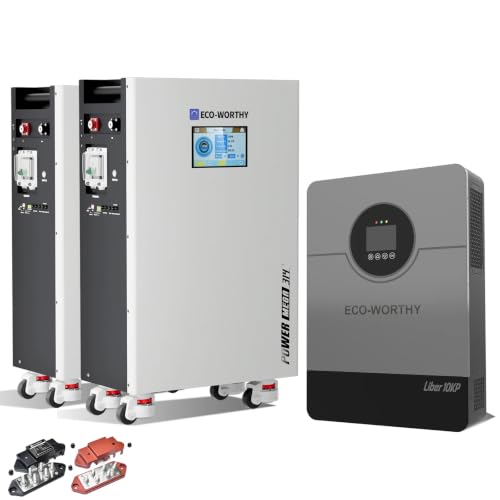
Ideal for homeowners seeking reliable energy solutions, the ECO-WORTHY Powermega 48V LiFePO4 Energy Storage System delivers over 30kWh of usable energy, making it perfect for whole-home backup during outages or off-grid living. This system includes two 314Ah batteries and a 10kW hybrid inverter, providing up to 10,000 watts of power. With smart features like Bluetooth and WiFi monitoring, you can easily track performance in real-time. Plus, its robust safety features, including a smart battery management system and built-in circuit breaker, guarantee peace of mind. Enjoy a 5-year warranty and efficient solar integration with this high-capacity energy solution.
Best For: Homeowners seeking a reliable and high-capacity energy solution for backup power, off-grid living, or solar storage.
Pros:
- High energy capacity with over 30kWh usable energy, suitable for whole-home backup.
- Smart features such as Bluetooth and WiFi for real-time monitoring and performance tracking.
- Robust safety features including a smart battery management system and built-in circuit breaker ensure user safety.
Cons:
- Requires a delivery address suitable for truck deliveries, which may not be convenient for all customers.
- Hefty weight of the system (100kg) may require assistance for installation and mobility.
- Initial investment may be high for some homeowners compared to traditional energy solutions.
3600W Pure Sine Wave Solar Inverter with MPPT Charge Controller

Offering a robust 3600W output, this Pure Sine Wave Solar Inverter with MPPT Charge Controller is perfect for those seeking reliable power for off-grid systems, RVs, or home emergencies. It converts 24V DC to 110V/120V AC, supporting various battery types like Lead-Acid and Lithium. With a built-in 120A MPPT charge controller, it achieves up to 98% efficiency. Choose from four charging modes and monitor your system through the LCD display or via WiFi. Its compact design fits easily, making it ideal for your camping trips or backup power needs. Enjoy peace of mind knowing you’re well-equipped for any situation.
Best For: This product is best for individuals seeking reliable power solutions for off-grid living, camping, RV usage, or emergency home backup.
Pros:
- High Efficiency: Achieves up to 98% efficiency with its built-in MPPT charge controller, maximizing solar energy utilization.
- Versatile Charging Modes: Offers four different charging modes to suit various power needs and preferences.
- Multiple Compatibility: Supports a wide range of battery types, including Lead-Acid and Lithium, making it adaptable to different setups.
Cons:
- Limited Output Power: Maximum output of 3600W may not be sufficient for high-demand appliances or larger systems.
- Complex Installation: May require professional installation for optimal performance due to its technical specifications.
- Size and Weight: While compact, the dimensions might still be cumbersome for some users looking for ultra-portable options.
PowMr 6500W Solar Inverter with Touchscreen

The PowMr 6500W Solar Inverter stands out with its intuitive LCD touchscreen, making it an excellent choice for homeowners looking to efficiently manage their solar energy systems. It offers dual 120V and 240V AC output with a robust 6500 watts and peak power of 13000VA. You can connect a solar array of up to 10kW via its dual MPPT functionality. Plus, its battery-less mode guarantees immediate operation with solar or grid input. With thorough protection features and compatibility with various battery types, this inverter not only enhances your energy management but also assures safety and efficiency in your solar setup.
Best For: Homeowners seeking an efficient and versatile solar energy management system with advanced features.
Pros:
- Intuitive LCD touchscreen for real-time energy monitoring and management.
- Supports dual MPPT functionality, allowing connection of solar arrays up to 10kW.
- Comprehensive protection features ensure safety against overvoltage, overload, and short circuits.
Cons:
- Weight of 41.2 lbs may require additional support for installation.
- Shipping costs for warranty service are borne by the customer.
- Best Sellers Rank indicates it may not be as widely recognized compared to other brands.
SUNGOLDPOWER 10000W DC 48V Solar Inverter

For those looking to maximize their solar energy usage with a robust and versatile solution, the SUNGOLDPOWER 10000W DC 48V Solar Inverter stands out with its dual MPPT solar controllers. This inverter supports parallel operation and delivers a rated output power of 10,000W, peaking at 20,000W. With a maximum battery charging capability of 200A, it guarantees efficient energy management across various charging modes. You’ll appreciate its pure sine wave output, smart protection features, and user-friendly communication options, including a WiFi module for remote monitoring. Plus, with a solid 4.4-star rating, it’s a reliable choice for your solar setup.
Best For: Those seeking a high-capacity solar inverter with advanced features for efficient energy management and remote monitoring.
Pros:
- Supports parallel operation and dual MPPT solar controllers for enhanced energy efficiency.
- Offers multiple charging modes, including solar priority and battery-free operation.
- Equipped with smart protection features and a WiFi module for convenient remote monitoring.
Cons:
- Weighs 53.5 pounds, which may require additional effort for installation.
- Limited to a 2-year manufacturer warranty compared to some competitors.
- Best Sellers Rank indicates it may not be as widely recognized as other brands in the market.
Factors to Consider When Choosing Inverter Systems for Solar Installations
When you’re choosing an inverter system for your solar installation, you’ll need to take into account several key factors. Look at the power output capacity and verify it matches your energy needs, while also checking for voltage compatibility. Don’t forget to evaluate efficiency ratings, built-in protections, and monitoring features to maximize your system’s performance.
Power Output Capacity
Choosing the right power output capacity for your inverter system is essential to guarantee it meets your energy needs effectively. For residential applications, inverters typically range from 3,600W to 12,000W, allowing you to support your household appliances adequately. If you have high-demand devices or plan to live off-grid, consider inverters with higher capacities, like 10,000W or 12,000W. Pay attention to peak power ratings, which can be double the continuous output; this feature is vital for starting appliances that require a surge of power. Also, think about future expansions—some inverter models allow for parallel operations or scaling up, ensuring you can adapt to increased energy demands over time.
Voltage Compatibility
Confirming your inverter system matches the voltage of your solar installation is crucial for ideal performance. You’ll want to check the voltage configuration—whether it’s 24V, 48V, or another setup—to guarantee compatibility with your solar panels and batteries. Inverters convert DC voltage from your solar array, which can range from 12V to 500V, into usable AC voltage for your home, typically at 110V or 240V. Ascertain the inverter’s input voltage range can handle the maximum voltage from your panels. Additionally, consider the output capabilities; some models provide split-phase output for heavier appliances, while others may only offer single-phase. Finally, verify the inverter can manage the peak power needs of your devices, which can exceed its continuous output rating.
Efficiency Ratings
While evaluating inverter systems for your solar installation, efficiency ratings play an essential role in maximizing energy use. Typically, these ratings range from 90% to over 98%, reflecting the percentage of DC power converted to usable AC power. Higher efficiency ratings mean more energy for your household needs, enhancing overall system performance. Modern inverters also utilize Maximum Power Point Tracking (MPPT) technology, achieving efficiencies up to 98% and notably boosting energy capture from solar panels. However, it’s vital to evaluate how the inverter performs at different loads, as many excel within a specific power output range. The overall system efficiency, including the inverter, directly impacts your return on investment and energy savings throughout your solar installation’s lifespan.
Built-in Protections
When evaluating inverter systems for your solar installation, built-in protections are essential for safeguarding both your investment and your home. Look for overload protection to prevent damage when power demand exceeds what the inverter can handle. Over-voltage protection is another critical feature, disconnecting the system if voltage levels become unsafe. Temperature protection, including thermal shutdown and cooling fans, helps avoid overheating that can lead to failures or decreased efficiency. Additionally, short circuit protection will quickly disconnect the inverter from the power source during faults, minimizing potential damage. Advanced inverters may offer multiple layers of protection, like reverse polarity protection, ensuring safe operation under various conditions. Prioritizing these features will enhance the reliability and longevity of your solar system.
Monitoring Features
As you explore inverter systems for your solar installation, considering the monitoring features can markedly enhance your system’s performance and your overall experience. Monitoring capabilities allow you to track real-time metrics like voltage, current, and power output, which helps with troubleshooting and boosts efficiency. Advanced inverters often come with remote monitoring via mobile apps, giving you access to data and control from anywhere. Look for models with LCD displays that show system status, charging modes, and battery health, keeping you engaged and informed. Additionally, communication options like CAN, USB, and RS485 enable seamless integration with battery management systems. Incorporating time-of-use (TOU) scheduling can also optimize energy consumption by adjusting charging and discharging based on electricity rates.
Installation Flexibility
Considering installation flexibility is essential when selecting inverter systems for your solar installation, as it directly impacts how well the system can adapt to your energy needs. Look for inverters that support various configurations, like grid-tied, off-grid, or hybrid setups, to match your preferences. Many systems allow for parallel connectivity, letting you add multiple units as your energy demands grow without redesigning the entire setup. Choose inverters with adjustable output settings for compatibility with different household appliances, whether you need 120V or 240V. Integrated designs combining inverters with charge controllers can streamline your installation. Additionally, systems that operate without batteries enhance flexibility, especially for temporary or mobile applications where battery storage isn’t feasible.