A Level 2 home charger can make overnight charging more convenient, but the best choice depends on your electrical setup—not just the highest amperage on the box.
These 10 J1772 chargers span plug-in, hardwired, smart, and portable options. Use the comparisons below to narrow your choices before checking your vehicle’s compatibility and an electrician’s installation requirements.
Best 10 Level 2 Ev Charger with J1772 Connector Picks for 2026
Flexible Access Pick
Grasside 40A Plug-In J1772 Charger

- 40A NEMA 14-50 plug-in model
- RFID, app, or plug-and-charge access
- 25-foot cable; IP65 enclosure
Best For: Homes wanting flexible charging access controls
Weather-Ready Plug-In Pick

- 40A NEMA 14-50 plug-in setup
- IP66/NEMA 4 enclosure
- App scheduling and energy tracking
Best For: Plug-in charging with weather resistance and app controls
Energy-Tracking Pick
Emporia 48A Hardwired J1772 Charger

- Up to 48A hardwired output
- Real-time energy data and scheduling
- UL listed; ENERGY STAR certified
Best For: Hardwired charging with mobile energy monitoring
Smart Plug-In Pick

- NEMA 14-50 plug-in connection
- App controls and charging data
- UL-certified; three-year parts warranty
Best For: App-focused drivers with a suitable 240V outlet
Weather-Ready Hardwired Pick
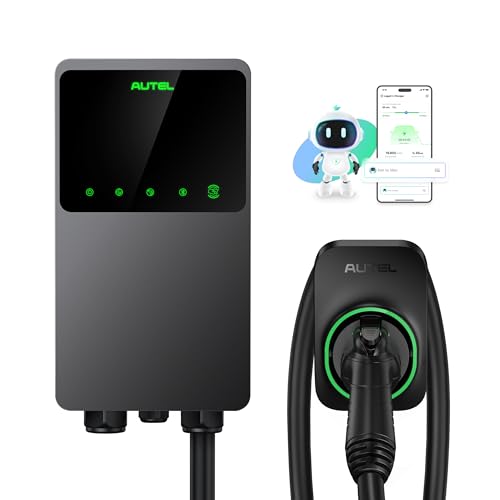
- Up to 50A hardwired output
- 25-foot cold-flexible cable
- NEMA Type 4 enclosure and app scheduling
Best For: Hardwired garage or outdoor setups needing cable reach
Mixed-EV Household Pick

- J1772 connector plus NACS adapter
- 30-foot cable and RFID controls
- 40A plug-in or up to 48A hardwired
Best For: Households with J1772 and Tesla vehicles
Best Hardwired Smart Charger

- Adjustable 16–50A output
- Wi-Fi app controls
- UL-certified; 23-foot cable
Best For: Permanent, app-connected home charging
Best Plug-In Touchscreen Option

- NEMA 14-50 plug; up to 40A
- Touchscreen and Wi-Fi app
- 25-foot cable
Best For: Plug-in charging with on-device controls
Best Portable Pick

- Portable NEMA 14-50 design
- Adjustable 6–32A output
- LCD, 25-foot cable and case
Best For: Charging at compatible outlets in multiple locations
Flexible Access Pick – Grasside 40A Plug-In J1772 Charger
This level 2 EV charger with J1772 connector is a practical choice if you want a 40A plug-in station with more than one way to control access. It uses a NEMA 14-50 outlet on a dedicated 50A circuit and includes a 25-foot cable.
Best For: Households that want plug-and-charge convenience alongside optional RFID or app-based access control.
Pros:
- Offers plug-and-charge, RFID authentication, and app control.
- App supports 10–40A current adjustment, scheduling, and charging records; onboard buttons offer 16/24/32/40A settings.
- ETL listed to UL 2594 standards, with an IP65-rated metal enclosure and a 25-foot cable.
Cons:
- Requires an EV-grade NEMA 14-50 outlet on a 50A circuit.
- App connectivity requires 2.4 GHz Wi-Fi; Tesla vehicles need a separate J1772 adapter.
Choose this model for its access-control options rather than speed alone. Check your outlet and circuit before buying, and plan for an adapter if you drive a Tesla.
High-Output Hardwired Pick – EVIQO 48A J1772 Charger
For a permanent garage setup, this level 2 EV charger with J1772 connector delivers up to 48A when professionally hardwired to a dedicated 60A, 240V circuit. Its 25-foot cable gives you room to reach a vehicle parked across a garage or driveway.
Best For: Drivers planning a professionally installed, higher-output J1772 charging station.
Pros:
- Provides up to 48A on a dedicated 60A circuit, with a documented 50A setting for a dedicated 70A circuit.
- App offers charging controls, 6–48A adjustment, scheduling, and energy and cost tracking.
- IP66/NEMA 4 housing and a glow-in-the-dark connector holster suit indoor or outdoor placement.
Cons:
- Hardwired installation requires a licensed electrician and adequate electrical-panel capacity.
- App features require a 2.4 GHz Wi-Fi network.
The extra output is useful only if your vehicle and electrical setup can make use of it. Confirm circuit capacity and installation requirements before choosing this over a plug-in model.
Weather-Ready Plug-In Pick – EVIQO 40A J1772 Charger
This level 2 EV charger with J1772 connector combines a 40A plug-in setup with an IP66/NEMA 4 enclosure. It connects to a 240V NEMA 14-50 outlet on a dedicated 50A circuit, while the 25-foot cable helps accommodate different parking positions.
Best For: Buyers with the correct NEMA 14-50 circuit who want app controls and a weather-resistant enclosure without hardwiring the charger.
Pros:
- Plugs into a NEMA 14-50 outlet rather than requiring a hardwired connection.
- App supports 6–40A adjustment, scheduling, and energy and cost tracking.
- Sealed IP66/NEMA 4 housing includes a glow-in-the-dark connector holster.
Cons:
- Needs a dedicated 50A circuit and the correct four-prong NEMA 14-50 outlet—not a dryer outlet.
- Connected features require 2.4 GHz Wi-Fi.
This is the plug-in alternative to EVIQO’s hardwired model. Verify the outlet and circuit first; if they are not already in place, arranging electrical work may still be necessary.
Energy-Tracking Pick – Emporia 48A Hardwired J1772 Charger
The Emporia level 2 EV charger with J1772 connector is preconfigured for hardwired installation with a whip and delivers up to 48A. A 25-foot cable and 2.4 GHz Wi-Fi connectivity support everyday charging and mobile energy monitoring.
Best For: J1772 drivers who want a hardwired charger with real-time energy data and scheduled charging.
Pros:
- Provides up to 48A through its hardwired configuration.
- Mobile controls show real-time energy data and let you schedule charging around utility rates.
- UL listed and ENERGY STAR certified, with a 25-foot cable and three-year warranty.
Cons:
- Requires hardwired installation; professional installation is recommended.
- Smart features require 2.4 GHz Wi-Fi, and NACS/Tesla vehicles do not have a direct J1772 connection.
Emporia makes the most sense if energy visibility matters as much as charging output. Confirm your vehicle’s charge port and have the installation assessed before ordering.
Smart Plug-In Pick – ChargePoint HomeFlex J1772
The ChargePoint HomeFlex is a level 2 EV charger with J1772 connector for drivers who want a plug-in home setup and app-based charging controls. Its NEMA 14-50 plug requires a compatible 240V receptacle on a 40A or 50A circuit.
Best For: Drivers with a suitable NEMA 14-50 outlet who want charging schedules and information in one app.
Pros:
- ChargePoint app provides charging data, reminders, and smart-home connectivity.
- UL-certified unit supports indoor or outdoor installation and has a cold-resistant cable.
- Includes a three-year parts warranty and access to 24/7 support.
Cons:
- Needs a suitable 240V NEMA 14-50 receptacle and circuit.
- Tesla vehicles require a separate adapter.
Choose this model if plug-in installation and ChargePoint’s app matter more to you than a hardwired-only setup. Have an electrician confirm that your outlet and circuit are appropriate before installation.
Weather-Ready Hardwired Pick – Autel MaxiCharger 50A
The Autel MaxiCharger is a hardwired level 2 EV charger with J1772 connector built for drivers who want up to 50A output, a 25-foot cable, and connected controls. Its NEMA Type 4 enclosure makes it an option for garage or outdoor installation.
Best For: Households planning a hardwired installation that want a long cable and charging schedules.
Pros:
- Supports up to 50A charging and includes a 25-foot cable rated for flexibility in cold weather.
- CSA-certified with a NEMA Type 4 enclosure for outdoor exposure.
- App scheduling plus Bluetooth, Wi-Fi, and Ethernet connectivity.
Cons:
- Hardwired installation requires an electrician; it is not a plug-in model.
- App and remote-update features depend on connectivity.
This is a practical choice when the charging spot is far from the vehicle’s port or exposed to weather. Confirm your electrical setup can support the intended charging output before installation.
Mixed-EV Household Pick – ApexCharger MACH 1
The ApexCharger MACH 1 is a level 2 EV charger with J1772 connector that also includes a NACS adapter for Tesla vehicles. Its 30-foot cable and choice of NEMA 14-50 plug-in or hardwired installation make it flexible for households with different parking and vehicle needs.
Best For: Households charging both J1772 and Tesla vehicles that want installation options and extra cable reach.
Pros:
- Includes a J1772 connector and a Tesla NACS adapter.
- Offers a 30-foot cable, display, app controls, and two RFID cards.
- Supports 40A through its NEMA 14-50 plug or up to 48A when hardwired with a 60A breaker.
Cons:
- Getting the full 48A output requires hardwiring rather than using the included plug.
- Tesla charging requires using the included adapter.
The MACH 1 stands out for mixed-vehicle compatibility and installation flexibility. Decide whether the 40A plug-in configuration meets your needs or whether a hardwired 48A setup is worth arranging.
Best Hardwired Smart Charger – ChargePoint HomeFlex 50A
The ChargePoint HomeFlex is a level 2 EV charger with J1772 connector for drivers who want a permanent home installation and app-based charging controls. Its adjustable 16–50A output offers flexibility, though available charging speed depends on the vehicle and electrical setup.
Best For: J1772 EV owners who want a hardwired charger with Wi-Fi features and a 23-foot cable.
Pros:
- Adjustable 16–50A charging output.
- ChargePoint app provides charging information and controls.
- UL-certified, indoor/outdoor rated, with a cold-resistant cable.
Cons:
- Requires electrician-installed hardwiring.
- Some smart functions require Wi-Fi; NACS/Tesla vehicles need an adapter.
This is the strongest fit of the three for a fixed, higher-output setup. Confirm your circuit and vehicle’s AC charging limit before choosing a current setting.
Best Plug-In Touchscreen Option – NexCyber 40A Charger
This NexCyber level 2 EV charger with J1772 connector uses a NEMA 14-50 plug and offers adjustable 16–40A charging. Its touchscreen handles core settings without an app, while Wi-Fi adds charging history, scheduling and status checks.
Best For: Drivers with a suitable NEMA 14-50 setup who want both on-device controls and optional app features.
Pros:
- Touchscreen displays charging information and supports current and start-time adjustments.
- 25-foot cable offers flexible vehicle positioning.
- ETL and FCC certified, with a stated three-year warranty.
Cons:
- Professional electrical installation is recommended for a suitable outlet.
- NACS/Tesla vehicles need an adapter; the seller advises against direct sun or rain exposure.
Choose this if a plug-in format and screen matter more than portability. Check that your outlet and circuit can safely support the selected charging current.
Best Portable Pick – Disaenco AURA A32J 32A
The Disaenco AURA A32J is a portable level 2 EV charger with J1772 connector designed for a properly installed NEMA 14-50 outlet. It delivers up to 32A at 240V, with adjustable current for compatible electrical setups.
Best For: Drivers who want a carryable charger for use at compatible NEMA 14-50 locations.
Pros:
- Adjustable 6–32A output and basic plug-and-charge operation without Wi-Fi.
- LCD shows current, voltage, power, elapsed time and status.
- 25-foot cable, carrying case and two-year warranty.
Cons:
- 32A charging requires a circuit rated for at least 40A.
- NACS vehicles require a separately obtained compatible adapter.
Its main advantage is flexibility rather than maximum output. Verify each outlet’s grounding and circuit capacity before using it away from home.
How We Picked the Best Level 2 Ev Charger with J1772 Connector
We focused on the distinctions that affect everyday ownership: advertised charging amperage, plug-in versus hardwired installation, cable length, connected features, and portability. The 10 selections include 32A, 40A, 48A, and 50A options, so there are choices for different electrical setups and charging needs. Product specifications alone cannot establish long-term reliability or real-world charging speed; verify current listings, documentation, and warranty terms before buying.
Quick Comparison: Which Type Fits Your Home?
- 32A portable charger: A flexible choice if you want to take your EVSE between suitable NEMA 14-50 locations and do not need the highest output.
- 40A plug-in charger: A practical starting point for homes with a properly installed, dedicated NEMA 14-50 outlet and an appropriately sized circuit.
- 48A or 50A hardwired charger: Worth considering when your vehicle can use the additional power and your electrical system can support it.
- Smart charger: Useful if you want app-based scheduling or usage tracking; compare the specific features offered rather than assuming every Wi-Fi model works the same way.
Key Buying Factors for a Level 2 Ev Charger with J1772 Connector
Vehicle Compatibility and Charging Speed
J1772 is the charging connector used by many EVs and plug-in hybrids for AC charging. If your vehicle has a different charge port, confirm the adapter you need before ordering. Also check your vehicle’s onboard AC charging limit: a 48A or 50A station will not force a car to charge faster than it can accept.
Circuit, Installation, and Output
Level 2 chargers use a 240V supply, but their electrical requirements vary. Under the usual continuous-load rule, a 40A charging setting needs a circuit rated for at least 50A; 48A needs at least 60A. A charger advertised at 50A may require an even larger circuit at full output. Have a qualified electrician check panel capacity, wiring, breaker size, and local code requirements. Confirm whether the charger’s output is adjustable and whether that setting meets the installation instructions.
Plug-In Versus Hardwired
A NEMA 14-50 model can simplify replacement where a suitable outlet already exists, but the receptacle and circuit still need to be appropriate for sustained EV charging. Hardwiring may better suit a permanent, higher-output installation. Do not assume a charger offering both connection methods supports the same maximum amperage in both configurations.
Cable Reach and Everyday Use
Measure from the mounting location to the vehicle’s charge port with room for how you normally park. Several selected models advertise 25-foot cables, but check the exact model and installation limits. For outdoor placement, confirm the unit’s environmental rating; for connected models, check Wi-Fi coverage and whether core charging functions work without an app.
Who Should Buy Which Level 2 Ev Charger with J1772 Connector?
Choose a 32A portable model if flexibility matters most. Choose a 40A NEMA 14-50 charger if your dedicated outlet and circuit are suitable and overnight charging meets your needs. Consider a 48A or 50A hardwired charger if you want higher potential output and your car, wiring, and panel can support it. Choose a smart model when scheduling or tracking will be useful—not simply because it has Wi-Fi. For any Level 2 Ev Charger with J1772 Connector, the right match starts with your vehicle and electrical installation.