Choosing the right low profile solar attic ventilation fan can make a big difference in attic temperatures, moisture control, and summer cooling costs.
Below, we break down the top options for different roof types, home sizes, and airflow needs so you can buy with confidence.
Best 10 Low Profile Solar Attic Ventilation Fan Picks for 2026
Best for Large Roofs
Solatube Roof Mount 2400 Solar Attic Fan

- 33W solar power for strong attic heat reduction
- Includes low-profile flashing for roof flexibility
- HVHZ-rated and DIY-friendly installation
Best For: Larger homes and buyers who want a low-profile solar attic fan with durable roof-mount options.
Best for Flat Roofs
Solatube RM1500 Solar Attic Fan
- 16W solar-powered attic ventilation
- Low profile flashing for flat roofs
- Whisper-quiet, HVHZ-rated design
Best For: Homeowners with flat or low-slope roofs who want discreet solar attic cooling.
Best Solar Airflow
25W Solar Exhaust Fan, 430 CFM
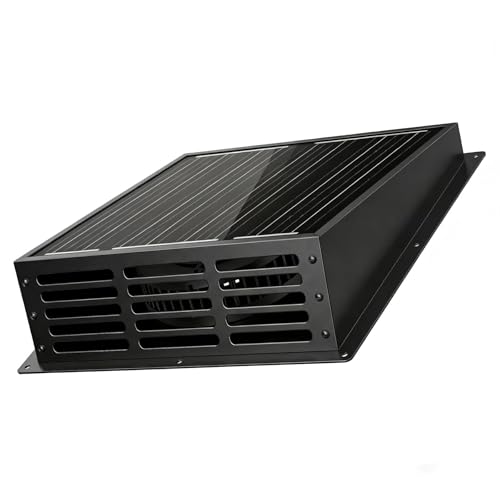
- 430 CFM airflow for compact solar ventilation
- 100% solar-powered with no wiring required
- Weatherproof housing and safety mesh for outdoor installs
Best For: Off-grid buyers who need simple daytime ventilation for attics, sheds, coops, or garages.
Best for 24/7 Runtime
QuietCool AFR SLR-40 Solar Roof Fan

- 40-watt panel with heavy-duty steel housing
- AC/DC inverter supports daytime and nighttime operation
- Adjustable panel with thermostat-controlled start at 88°F
Best For: Homeowners who want solar attic ventilation with backup runtime and adjustable roof-mounted placement.
Best for High-Airflow Attics

- Up to 2400 CFM cooling capacity
- Auto thermostat starts at 79°F
- Weatherproof for metal and masonry roofs
Best For: Large attics, sheds, or garages that need strong solar-powered exhaust.
Best Smart Thermostat Control
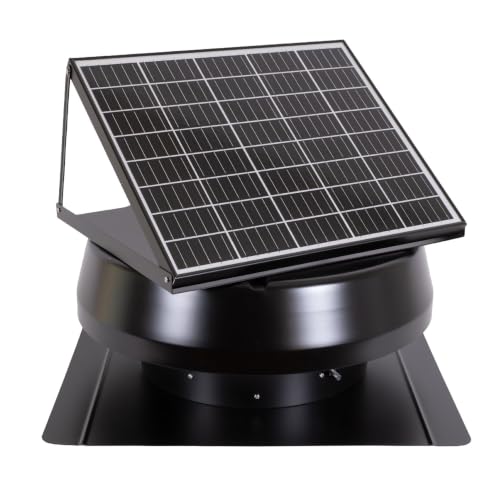
- Smart thermostat with 50°F-122°F control range
- 1150 CFM airflow for attics up to 2,900 sq. ft.
- Adjustable panel plus IP68 motor and 15-year warranty
Best For: Homeowners who want thermostat-based attic ventilation with strong airflow and day/night flexibility.
Best Off-Grid Pick
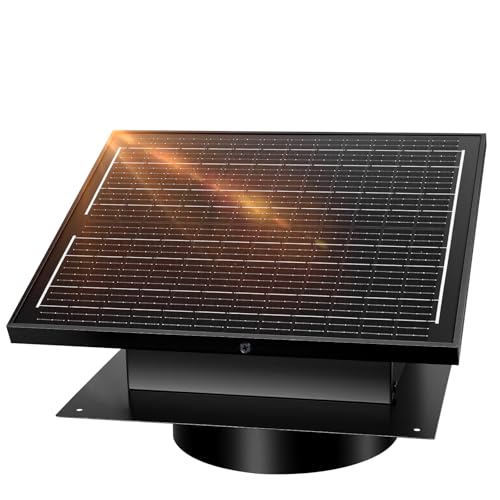
- 2500 CFM airflow for larger attic and utility spaces
- IP68 waterproof build with durable metal housing
- Solar-only operation cuts wiring and power costs
Best For: Off-grid buyers who want a durable solar exhaust fan for hot, damp spaces.
Best for High-Sun Roofs
25W Solar Roof Vent Fan, 8-Inch

- 25W monocrystalline panel for sunlight-powered airflow
- Galvanized steel cover with mesh helps boost durability
- 8-inch size fits attics, garages, sheds, and shops
Best For: Sun-exposed roofs where a simple solar exhaust fan can help ventilate hot enclosed spaces.
Best for Simple Auto Venting
40W Solar Attic Fan, 12 Inch 2000 CFM

- Controller-free auto ventilation
- Strong 2000 CFM airflow
- Weatherproof copper-motor build
Best For: Homeowners needing an easy solar exhaust fan for attics, garages, sheds, or greenhouses.
Best for Large Roofs – Solatube Roof Mount 2400 Solar Attic Fan
If you need a low profile solar attic ventilation fan for a bigger home, the Solatube Roof Mount 2400 is built to move heat out efficiently while keeping energy use at zero. Its 33-watt solar design, quiet operation, and included low-profile flashing make it a strong fit for flat and specialty roofs.
Best For: Larger homes, hot attics, and buyers who want solar-powered ventilation with roof-flashing options for different roof types.
Pros:
- 33W solar-powered ventilation helps reduce attic heat and cooling load
- Includes low-profile flashing and other roof options for installation flexibility
- Quiet operation and HVHZ-rated durability for demanding weather
- DIY-friendly setup can help avoid electrician costs
Cons:
- May be more fan than smaller attics need
- Solar performance depends on available sunlight and roof exposure
- Roof-specific installation may still be more involved than a basic vent cover
This is a practical pick if you want a low profile solar attic ventilation fan that prioritizes roof compatibility, durability, and cooling power for larger spaces. It stands out most where attic heat is a major issue and a clean, low-profile install matters.
Best for Smart Climate Control – 55W Solar Attic Fan with Thermostat
If you want a low profile solar attic ventilation fan that does more than just spin in the sun, this hybrid model is built for hands-off attic cooling. The thermostat, remote, and AC backup make it a practical pick for homeowners who want steady ventilation without constant adjustments.
Best For: Homes, garages, sheds, or greenhouses that need automatic attic heat control and 24/7 ventilation support.
Pros:
- Thermostat automatically turns the fan on at 77°F and off at 68°F
- Hybrid solar and AC power keeps airflow going in cloudy weather or at night
- Strong 1300 CFM airflow helps pull hot air out of the attic fast
- Remote control adds easy adjustment without roof access
Cons:
- AC backup means installation is less simple than a solar-only fan
- 12-inch unit may be larger than buyers want for very tight roof spaces
This is a smart choice if you want a low profile solar attic ventilation fan with more automation and reliability than a basic solar-only vent. It stands out for temperature control and continuous operation, though buyers focused only on the smallest profile may want to compare dimensions carefully.
Best for Flat Roofs – Solatube RM1500 Solar Attic Fan
If you need a low profile solar attic ventilation fan for a modern home, the Solatube Roof Mount RM1500 is built to move hot air out while keeping the roofline discreet. Its 16-watt solar design is aimed at reducing attic heat buildup and easing the load on your cooling system, with a mount and flashing package suited to flat-roof applications.
Best For: Homeowners with flat or low-slope roofs who want quiet, solar-powered attic cooling with a cleaner, less conspicuous look.
Pros:
- 16W solar-powered ventilation helps reduce attic heat and cooling demand
- Low profile flashing suits flat roofs and a more discreet installation
- Whisper-quiet operation with HVHZ-rated durability for harsh weather
- DIY-friendly kit includes hardware and instructions
Cons:
- Roof-mounted solar fans depend on strong sun exposure to perform at their best
- May be more fan than needed for smaller attics with light heat buildup
- Installation still requires comfort working on the roof
Overall, this low profile solar attic ventilation fan stands out for homeowners who want efficient attic cooling without a bulky rooftop look. The Solatube RM1500 is especially appealing if you value quiet operation, weather resistance, and a low-visibility install over the simplest possible setup.
Best Solar Airflow – 25W Solar Exhaust Fan, 430 CFM
If you want a low profile solar attic ventilation fan that focuses on straightforward daytime cooling, this 25W solar exhaust fan is built for the job. It uses a 12V monocrystalline panel and a 2500 RPM motor to push up to 430 CFM, helping move hot air, moisture, and stale air out of attics, sheds, greenhouses, and similar spaces without added बिजली costs.
Best For: Off-grid owners and DIYers who need a simple solar-powered vent for attics, garages, coops, or small outbuildings.
Pros:
- 430 CFM airflow is strong for a compact solar ventilation unit
- Fully solar-powered, so there are no wiring or electricity costs
- Weatherproof build with safety mesh for outdoor use
- Compact footprint makes it easier to mount in tighter spaces
Cons:
- Runs only in sunlight, with no battery backup for after dark
- Best performance depends on direct sun exposure
- Not the quietest choice if installed near living areas
For buyers comparing a low profile solar attic ventilation fan, this model stands out for its simple off-grid design and solid airflow rather than extra features. It’s a practical pick if you want a set-and-forget vent for daytime heat removal in smaller structures.
Best for 24/7 Runtime – QuietCool AFR SLR-40 Solar Roof Fan
If you want a low profile solar attic ventilation fan that can keep moving air even after sunset, the QuietCool AFR SLR-40 is built for that job. Its 40-watt panel, adjustable mounting, and included AC/DC inverter make it a practical choice for attics that need steady heat relief and flexible placement on the roof.
Best For: Homeowners who want solar-powered attic ventilation with backup AC/DC runtime for more consistent daily performance.
Pros:
- Included AC/DC inverter supports 24/7 runtime
- Adjustable solar panel tilts up to 60° and rotates 180°
- Preset thermostat starts at 88°F for automatic operation
- Heavy-duty steel housing adds durability
Cons:
- Requires roof-mount installation
- Higher upfront cost than basic solar-only fans
Overall, this model stands out if you need a low profile solar attic ventilation fan with more control than a standard solar-only setup. The inverter and thermostat help it feel less weather-dependent, making it a strong fit for larger attics or homeowners who want a more dependable ventilation solution.
Best for High-Airflow Attics – VEVOR 35W Solar Attic Fan
If you need a low profile solar attic ventilation fan that still moves serious air, this VEVOR model is built around a 35W MPPT controller and a brushless DC motor rated up to 2400 CFM. It’s a practical pick for hot attics, sheds, and garages where you want automatic daytime exhaust without adding to your electric bill.
Best For: Homeowners who want a strong, weather-resistant solar attic fan for larger attic spaces and mixed roof types.
Pros:
- Up to 2400 CFM for aggressive hot-air removal
- Built-in thermostat turns on automatically at 79°F
- Weatherproof design with an adjustable solar panel angle
- Compatible with metal and masonry roofs
Cons:
- Not the smallest footprint if you need a truly compact fan
- Performance depends on direct sunlight
This is a solid option if airflow matters more than a minimal installation profile. For shoppers comparing a low profile solar attic ventilation fan, the VEVOR stands out more for capacity and automatic control than for ultra-compact design.
Best Smart Thermostat Control – iLIVING 14" Solar Roof Fan
If you want a low profile solar attic ventilation fan with more control than a basic solar-only model, the iLIVING 14-inch option stands out. Its smart thermostat lets you set the activation range, while the adjustable solar panel and high airflow rating make it a practical pick for larger attic spaces that need steady heat relief.
Best For: Homeowners who want thermostat-based attic ventilation with strong airflow and day/night flexibility.
Pros:
- Smart thermostat control with a 50°F-122°F range and enable/disable function
- High 1150 CFM output covers up to 2,900 sq. ft.
- Adjustable solar panel helps optimize sun exposure
- IP68 waterproof brushless motor and 15-year warranty add peace of mind
Cons:
- AC/DC adapter kit is sold separately for nonstop operation
- Better suited to larger attics than compact spaces
- Installation may take more planning than a simpler fan
Overall, this low profile solar attic ventilation fan is a strong fit if you care about adjustable controls and serious airflow rather than the simplest solar-only setup. It gives you a more flexible way to manage attic heat, especially in homes that need consistent ventilation performance.
Best Off-Grid Pick – 32W Solar Attic Exhaust Fan
If you want a low profile solar attic ventilation fan that can move a lot of hot air without adding to your electric bill, this 32W unit is built for practical whole-space cooling. It’s designed for off-grid use, quiet operation, and simple DIY installation, making it a solid fit for attics and other enclosed spaces that trap heat and moisture.
Best For: Homeowners who want a solar-powered exhaust fan for attics, garages, sheds, or greenhouses with minimal wiring and no ongoing power cost.
Pros:
- 2500 CFM airflow coverage for spaces up to about 3000 sq. ft.
- IP68 waterproof construction with galvanized steel and aluminum mesh for tougher weather resistance
- Runs on solar power only, helping reduce attic heat and AC runtime
- Quiet 43dB operation and DIY-friendly installation
Cons:
- Performance depends on sunlight, so output drops on cloudy days or in shaded installs
- May be more fan than needed for smaller attics or lightly used spaces
This is a strong pick if you need a low profile solar attic ventilation fan that prioritizes reliability, weather resistance, and energy savings over smart features or advanced controls. It’s especially appealing for utility buildings and warm climates where passive ventilation needs a boost.
Best for High-Sun Roofs – 25W Solar Roof Vent Fan, 8-Inch
If you want a low profile solar attic ventilation fan that relies entirely on direct sunlight, this 25W roof vent is built for simple, off-grid heat relief. Its 8-inch removable vent design, brushless DC motor, and metal housing make it a practical pick for attics, garages, shops, and similar spaces that get steady sun exposure.
Best For: Homeowners or DIY buyers who have a sun-exposed roof and want a straightforward solar-powered exhaust fan for attic or utility ventilation.
Pros:
- 25W monocrystalline panel and brushless motor support strong airflow in bright sun.
- Galvanized steel cover with aluminum mesh helps improve durability and block debris or pests.
- 8-inch vent layout is a good fit for attic, garage, shed, and warehouse ventilation.
- No wiring or electricity use, so it can help reduce ongoing operating costs.
Cons:
- Performance drops quickly in shade, clouds, or partial roof obstruction.
- Solar-only operation means it cannot store power for nighttime use.
For buyers who have the right roof exposure, this low profile solar attic ventilation fan offers a solid mix of size, efficiency, and weather-resistant construction. It’s less flexible than powered units, but in direct sun it can be an effective way to move hot air out of enclosed spaces.
Best for Simple Auto Venting – 40W Solar Attic Fan, 12 Inch 2000 CFM
If you want a low profile solar attic ventilation fan that runs without a controller, this 40W model is a straightforward pick for hot attics, sheds, garages, and similar spaces. The 12-inch design and 2000 CFM airflow give it enough output for practical heat relief while keeping installation and daily use simple.
Best For: Homeowners who want a controller-free solar exhaust fan for routine attic and outbuilding ventilation.
Pros:
- Controller-free operation keeps setup and use simple
- 2000 CFM airflow is strong for a 12-inch solar fan
- Weatherproof build suits roof-mounted outdoor use
- Copper motor adds durability for long-term ventilation
Cons:
- Solar performance depends on direct sunlight
- May be more fan than needed for very small spaces
- Roof installation may require basic DIY comfort
Overall, this low profile solar attic ventilation fan is a smart fit if you want dependable passive-style cooling without extra controls or complex wiring. It focuses on straightforward ventilation power, making it a practical choice for buyers who value simplicity and weather-ready construction.
How We Picked the Best Low Profile Solar Attic Ventilation Fan
We focused on low-profile and roof-mount designs that balance airflow, weather resistance, ease of installation, and practical features like thermostats, hybrid power support, and low-noise operation. We also considered whether each model is suited to larger homes, outbuildings, or tighter attic spaces.
Quick Comparison
If you want maximum airflow, prioritize higher CFM and wattage. If your roofline or curb appeal matters most, look for a compact housing and included low-profile flashing. For year-round reliability, hybrid or AC/DC-ready models are worth a closer look.
Key Buying Factors for a Low Profile Solar Attic Ventilation Fan
Airflow and Attic Size
Match the fan’s CFM to the size and heat load of your attic. Larger homes generally need stronger airflow, while smaller attics, sheds, and garages can do well with lower-output units.
Roof Fit and Profile
A true Low Profile Solar Attic Ventilation Fan should sit neatly on the roof with minimal visual bulk. Check flashing compatibility, roof pitch requirements, and whether the design works with flat or low-slope roofs.
Controls and Runtime
Thermostats help the fan run when needed instead of constantly. Hybrid models with AC/DC or inverter support add flexibility during cloudy weather or at night.
Durability
Because these fans live outdoors, weatherproof housings, sealed motors, and waterproof panels matter. Look for corrosion resistance and strong mounting hardware if your area gets heavy rain, heat, or snow.
Noise and Energy Use
Solar fans are usually quiet, but motor quality and blade design still matter. Efficient operation is especially important if you want ventilation without adding to utility bills.
Who Should Buy Which Low Profile Solar Attic Ventilation Fan?
Choose a high-CFM model if you have a large attic or persistent heat buildup. Pick a compact, low-profile unit if appearance and roofline clearance are priorities. Go with a hybrid or thermostat-controlled fan if you want more automated, dependable ventilation. For garages, sheds, and small accessory spaces, a smaller solar attic fan is often enough.
For the best long-term value, focus on the combination of airflow, fit, and weather resistance rather than wattage alone. The right Low Profile Solar Attic Ventilation Fan should match your roof, climate, and ventilation goals.