Adding solar to a pontoon boat can keep batteries topped off for lights, fish finders, stereos, and small accessories without constant generator noise or shore power.
This roundup focuses on marine solar panels for pontoon boat owners who want dependable charging, weather resistance, and straightforward mounting options for real-world boating use.
Best 10 Marine Solar Panels for Pontoon Boat Picks for 2026
Compact High-Efficiency Pick

- 25% N-Type efficiency
- IP67 outdoor-ready build
- Compact size for tight mounts
Best For: Pontoon boats with limited flat mounting space
Easy Starter Kit
50W Solar Charger Kit with Bracket

- All-in-one 12V charging kit
- Waterproof controller included
- Adjustable mounting angles
Best For: Trickle-charging a pontoon boat battery
Certified Performance Choice

- 25.8% high-efficiency cells
- IP68 waterproof marine build
- TÜV/IEC/UL certified
Best For: Certified rigid solar for a pontoon boat
Flexible Surface Fit
Much 200W Flexible Marine Panel

- Bends to curved surfaces
- IP67 waterproof junction box
- Lightweight, easy to mount
Best For: Curved or uneven pontoon surfaces
High-Efficiency Rigid Option
400W 2-Pack N-Type Bifacial Panels
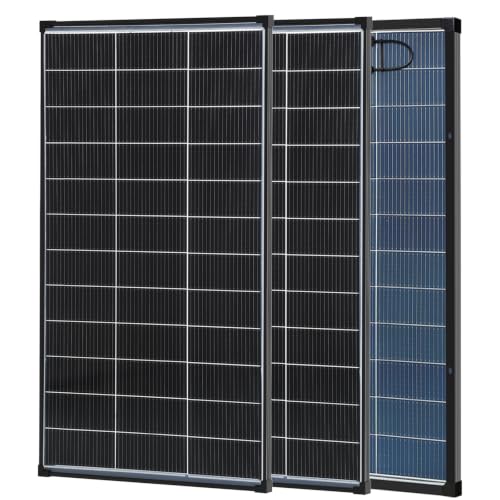
- 25.2% efficiency from N-type 18BB cells
- Bifacial design can add up to 15% more energy
- IP68 waterproof with pre-drilled mounting holes
Best For: Pontoon owners wanting high output and strong weather resistance
Flexible Curve-Fit Pick
Arch Pro 200W Bendable Marine Panel

- Flexible panel fits curved pontoon surfaces
- Lightweight at 7.94 lbs and only 2.5 mm thick
- ETFE coating and anti-shading bypass diodes
Best For: Curved or compact boat mounting areas
Starter Kit Choice
200W Solar Kit with PWM Controller

- Includes two 100W panels and a 30A controller
- 22% efficiency with bypass diodes for low light
- Supports Sealed, Gel, Flooded, and Lithium batteries
Best For: Buyers who want a ready-to-install beginner kit
High-Output Rigid Pair

- 25% monocrystalline efficiency
- IP68 waterproof, rustproof build
- Pre-drilled holes for mounting
Best For: Pontoon setups with enough deck space for rigid, high-output charging
Space-Saving Flexible Pick

- Only 2.3 lb for easy handling
- Bends up to 30 degrees
- ETFE surface with MC4 leads
Best For: Curved or tight pontoon mounting spots where low weight matters
Ultra-Thin Curve Fit

- About 0.1 inch thin when flat
- Flexible for curved boat surfaces
- IP68-rated for marine use
Best For: Low-profile pontoon installs and supplemental charging on curved surfaces
Compact High-Efficiency Pick – Renogy 200W N-Type Panel
If you want marine solar panels for pontoon boat use and need strong output in a limited footprint, this Renogy 200W panel is built around efficiency and durability. Its N-Type 16BB design, IP67 rating, and compact size make it a practical choice for boaters planning a tidy, fixed-mount setup.
Best For: Pontoon owners who want a compact, high-efficiency rigid panel for marine and off-grid charging.
Pros:
- 25% cell efficiency helps maximize power from limited roof space.
- Compact and lighter than previous models for easier placement.
- IP67 construction is suited to outdoor and marine environments.
- Works with both 12V and 24V battery systems.
Cons:
- Rigid panel design is less flexible than marine curved-surface options.
- Single-panel listing means larger systems may require multiple units.
Overall, this is a strong fit if your pontoon has a flat mounting area and you want a reliable panel with modern efficiency gains. It is especially appealing for buyers prioritizing long-term performance and a cleaner, space-saving install.
Easy Starter Kit – 50W Solar Charger Kit with Bracket
For marine solar panels for pontoon boat owners who mainly want battery maintenance rather than full-time power, this 50W kit is a simple plug-and-play option. It includes the panel, waterproof controller, and adjustable mounting bracket, making it a beginner-friendly way to keep a 12V battery topped up.
Best For: Pontoon boat owners who want a small maintenance charger with everything included.
Pros:
- Includes a waterproof charge controller for safer battery maintenance.
- Adjustable bracket offers multiple tilt angles for better sun exposure.
- Pre-drilled holes and plug-and-play cables simplify installation.
- Built with tempered glass and an aluminum frame for weather resistance.
Cons:
- 50W output is better for trickle charging than high-demand power use.
- Bulkier than a panel-only setup because it includes bracket and controller.
This kit makes sense when ease of installation matters more than maximum output. It is a practical maintenance-focused choice for keeping onboard batteries supported during storage or occasional use.
Certified Performance Choice – TUV 200W N-Type Panel
If you are comparing marine solar panels for pontoon boat setups and want a panel with strong efficiency plus certification-backed confidence, this 200W N-Type model stands out. It is designed for RV, marine, and off-grid use, with IP68 waterproofing, high conversion efficiency, and good partial-shading behavior.
Best For: Pontoon boat owners who want a certified, high-efficiency rigid solar panel for a dependable install.
Pros:
- 25.8% efficiency helps generate more power from limited space.
- TÜV, IEC, and UL certifications add confidence in safety and durability.
- IP68 waterproof design suits marine and outdoor use.
- Partial-shading architecture can help maintain output when part of the panel is shaded.
Cons:
- Rigid panel format is not ideal for curved pontoon surfaces.
- Weighs more than flexible panel options.
- Warranty is listed as 1 year manufacturer coverage in the notes.
For boaters who want a higher-confidence rigid panel with strong efficiency claims and broad installation versatility, this is an attractive option. It is especially useful when the pontoon has a stable mounting area and you want dependable long-term outdoor performance.
Flexible Surface Fit – Much 200W Flexible Marine Panel
When you need marine solar panels for pontoon boat surfaces that are not perfectly flat, a flexible panel can be the easier fit. This Much 200W option is designed to bend to curved surfaces and uses ETFE material, making it a practical choice for boats, yachts, and other off-grid setups with awkward mounting areas.
Best For: Pontoon owners who need a lightweight flexible panel for curved or uneven mounting areas.
Pros:
- Flexible design can curve up to a 260-degree arc.
- IP67 waterproof junction box supports marine use.
- Lightweight build is easier to handle than rigid glass panels.
- Pre-drilled holes and connector cables make installation simpler.
Cons:
- Flexible construction may not feel as rigid as framed panels.
- Notes mention 2 x 100W panels included, which may not suit every layout.
This is the most shape-friendly option in the group and is worth considering if your pontoon has curved or uneven mounting surfaces. It trades some of the feel of a traditional framed module for easier placement and lighter weight.
High-Efficiency Rigid Option – 400W 2-Pack N-Type Bifacial Panels
If you want marine solar panels for pontoon boat use that lean toward maximum output and durability, this 400W two-panel kit is built for serious charging capacity. The N-type 18BB cells, bifacial design, and IP68 waterproof construction make it a strong fit for exposed outdoor installs where long-term reliability matters.
Best For: Pontoon owners who want a rigid, high-output setup for larger battery banks or heavier daily energy use.
Pros:
- 25.2% efficiency with N-type 18BB cells for strong power production
- Bifacial design can generate up to 15% more energy in reflective conditions
- IP68 waterproofing helps protect against water, steam, rust, and corrosion
- Pre-drilled holes and MC4 plugs simplify mounting and wiring
Cons:
- Rigid glass construction is less adaptable than flexible marine panels
- At 39.2 pounds, each panel is relatively heavy for some boat setups
- Best suited to flat or rail-mounted surfaces rather than curved decks
This is a practical pick if your pontoon has room for rigid panels and you care more about output and weather resistance than ultra-light installation. The two-panel format also gives you room to grow a marine charging system over time.
Flexible Curve-Fit Pick – Arch Pro 200W Bendable Marine Panel
For marine solar panels for pontoon boat installations where the surface is curved or space is tight, this flexible BougeRV panel is designed to conform more easily than rigid modules. Its lightweight fiberglass build, ETFE coating, and anti-shading bypass diode setup make it a practical choice for mobile outdoor charging.
Best For: Boat owners who need a light, bendable panel for curved or compact mounting areas.
Pros:
- Flexible design can match up to 270b0 curved surfaces
- Very lightweight at 7.94 lbs and only 2.5 mm thick
- ETFE coating adds scratch, sand, and abrasion resistance
- Anti-shading bypass diode tech helps maintain more stable output
Cons:
- Rated 200W output depends heavily on real-world sunlight conditions
- May not be compatible with some power stations due to open-circuit voltage
- Flexible panels may not suit users who prefer a rigid frame
If your pontoon setup needs a panel that can adapt to a curved or awkward mounting area, this one stands out for ease of placement. It trades rigid-panel structure for light weight and install flexibility, which can be a big advantage on boats.
Starter Kit Choice – 200W Solar Kit with PWM Controller
If you want marine solar panels for pontoon boat use and prefer an all-in-one package, this Renogy starter kit gives you the basics in one box. It includes two 100W panels, a 30A PWM charge controller, and mounting hardware, making it a straightforward option for getting a small boating system up and running.
Best For: Pontoon owners who want a simple starter kit with panels, controller, and mounting parts included.
Pros:
- Complete kit includes panels, PWM controller, cables, and Z-brackets
- 22% cell efficiency with bypass diodes for better low-light performance
- 4-stage charging supports Sealed, Gel, Flooded, and Lithium batteries
- Built-in controller protections help guard against common electrical issues
Cons:
- PWM controller is less advanced than MPPT options
- 200W total output may be modest for larger marine power needs
- Kit is better for basic systems than highly customized installs
This is the easiest pick for buyers who want a ready-to-install setup without piecing together components separately. For a pontoon owner starting small, it offers a practical path to basic solar charging.
High-Output Rigid Pair – 2x200W 12V Waterproof Panels
If you want marine solar panels for pontoon boat setups with a lot of charging headroom, this 2-pack of 200W rigid panels is built for higher output rather than minimal footprint. The monocrystalline cells are rated at 25% efficiency, and the panels are designed for 12V battery charging on boats, RVs, trailers, and similar off-grid systems. At 46 x 31 inches each, they fit best where you have the deck space and a solid mounting plan.
Best For: Pontoon owners who have room for rigid panels and want strong daily charging potential for 12V battery banks.
Pros:
- High 25% cell efficiency for strong energy production
- IP68 waterproof and rustproof construction for marine use
- Pre-drilled holes make mounting easier on a boat or trailer
- Built with tempered glass and an aluminum frame for durability
Cons:
- Large 46 x 31 inch footprint may be awkward on smaller pontoons
- Rigid design is less adaptable to curved surfaces
- Heavier than flexible marine panel options
This is a practical pick if your pontoon can support rigid mounting and you care more about total output than low-profile installation. The two-panel pack also gives you more charging capacity for 12V systems that need consistent replenishing.
Space-Saving Flexible Pick – Lightweight 100W ETFE Panel
For marine solar panels for pontoon boat installs where weight and mounting flexibility matter, this 100W flexible DOKIO panel is designed to fit places rigid glass panels cannot. It uses an ETFE surface, MC4 leads, and a semi-flexible build that can bend up to 30 degrees, which makes it a useful option for curved or tighter mounting areas on boats and other mobile off-grid setups.
Best For: Pontoon owners who need a lightweight panel for curved or space-limited mounting locations.
Pros:
- Lightweight at 2.3 pounds for easier handling
- Flexible up to 30 degrees for curved surfaces
- ETFE top sheet for improved light transmission and wear resistance
- MC4 connectors simplify wiring
Cons:
- 100W output is lower than larger rigid panel options
- Requires ventilation space and careful heat management
- Installation guidance warns against mounting on combustible materials
This panel makes sense when your pontoon layout rewards flexibility and a lighter footprint more than maximum wattage. It is especially appealing if you want a panel that is easier to fit around the realities of a boat deck or curved structure.
Ultra-Thin Curve Fit – 50W Bendable Marine Panel
If you are shopping for marine solar panels for pontoon boat use and want the easiest low-profile fit, this 50W Renogy flexible panel is built for curved surfaces and stealthy installs. It is extremely lightweight, only about a tenth of an inch thick when laid flat, and it is rated for marine, RV, boat, and other off-grid applications. That makes it a sensible choice when you need a compact add-on panel instead of a large primary charging array.
Best For: Pontoon owners who want a thin, flexible panel for curved surfaces or discreet installs.
Pros:
- Very thin at about 0.1 inch when flat
- Extremely flexible for curved boat surfaces
- Lightweight polymer construction is easy to transport and install
- IP68 rating and durability testing for marine conditions
Cons:
- 50W output is modest for larger charging needs
- Single-panel output is lower than 100W and 200W alternatives
- Best suited as a supplemental panel rather than a high-capacity system
This is the right kind of panel if your pontoon has limited flat space or you want a clean, low-visibility solar setup. It trades raw charging power for easier placement, flexibility, and a very slim profile.
How We Picked the Best Marine Solar Panels for Pontoon Boat
We looked for panels and kits that make sense for pontoon use: strong waterproof ratings, solid real-world efficiency, marine-friendly form factors, and installation flexibility. Because pontoons often have limited flat roof space and frequent exposure to sun, spray, and vibration, the best options balance output with durability and mounting convenience.
Quick Comparison
For simple maintenance charging, smaller kits can be enough to keep a starting or house battery healthy. For active day boating, 100W to 200W panels are usually the sweet spot. If you run multiple electronics or want faster recovery after overnight use, higher-output rigid pairs or larger arrays are the better fit. Flexible panels are easier to place on curved or awkward surfaces, while rigid panels usually offer better efficiency and long-term value.
Key Buying Factors for Marine Solar Panels for Pontoon Boat
Power Needs
Start by estimating what you actually run on the boat. A trickle charger setup can handle storage maintenance, but onboard electronics and accessories usually need more wattage. Match panel output to battery size and daily usage, not just available deck space.
Mounting Surface and Layout
Pontoon boats often have bimini tops, rails, or partial roof space rather than a large flat cabin roof. Flexible panels help when the mounting area curves or needs to stay lightweight. Rigid panels work well when you have a secure flat mount and want maximum efficiency.
Marine Durability
Look for IP67 or IP68 protection, corrosion-resistant hardware, and UV-tolerant materials. On the water, splash resistance is only part of the story; heat, vibration, and salt exposure also matter.
Charge Control and System Compatibility
Make sure the panel voltage matches your battery bank and that the controller supports your system. Many pontoon owners do well with 12V setups, while larger banks may benefit from 24V-capable options or more advanced controllers.
Who Should Buy Which Marine Solar Panels for Pontoon Boat?
If you want basic battery maintenance during storage, a small solar charger kit is the easiest choice. If you need dependable daily charging for lights and electronics, choose a 100W to 200W marine solar setup. If your pontoon has an odd-shaped or curved mounting area, flexible panels are usually the better fit. For maximum output and a more permanent installation, go with higher-efficiency rigid panels or multi-panel combinations.
In short, the best Marine Solar Panels for Pontoon Boat owners are the ones that match your available space, battery needs, and boating habits. Prioritize durability first, then choose the highest practical wattage you can mount securely.