The best occupancy sensors for homes can reduce wasted energy, automate lighting, and make rooms more convenient without requiring constant switch adjustments. The right choice depends on whether you need simple motion-triggered control, reliable presence detection, or integration with a broader smart-home system.
This roundup compares smart, in-wall, and ceiling-mounted options across installation requirements, sensing technology, coverage, and compatibility so you can choose a sensor suited to each room.
Best 10 Occupancy Sensors for Homes Picks for 2026
Best Smart Lighting Integration
Caseta Wireless Occupancy Sensor
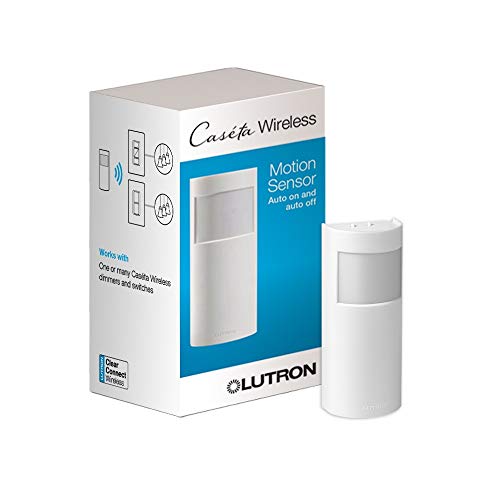
- Controls multiple Caseta devices
- App scheduling and light-level customization
- Wireless placement with long battery life
Best For: Caseta users automating lights, fans, and shades
Best for Room-by-Room Comfort

- Combines occupancy and temperature sensing
- Prioritizes rooms such as bedrooms
- Includes two sensors with flexible mounting
Best For: ecobee owners balancing comfort across rooms
Best Hardwired Value
Lutron Maestro Motion Switch 2-Pack

- Offers occupancy and vacancy modes
- Adjustable 1- to 30-minute timeout
- Works with multiple bulb types
Best For: Single-pole lighting upgrades in utility rooms
Best for Large Rooms
Leviton Ceiling Occupancy Sensor

- Combines PIR and ultrasonic sensing
- Covers approximately 1,000 square feet
- Self-adjusts sensitivity and time delay
Best For: Large indoor spaces with compatible low-voltage lighting
Best All-Around Presence Sensor

- 60GHz mmWave, PIR, and AI detect still or moving occupants
- Matter over Thread and Zigbee support
- Adds light, temperature, and humidity sensing
Best For: Flexible wireless smart-home automations
Best Commercial-Style Ceiling Sensor
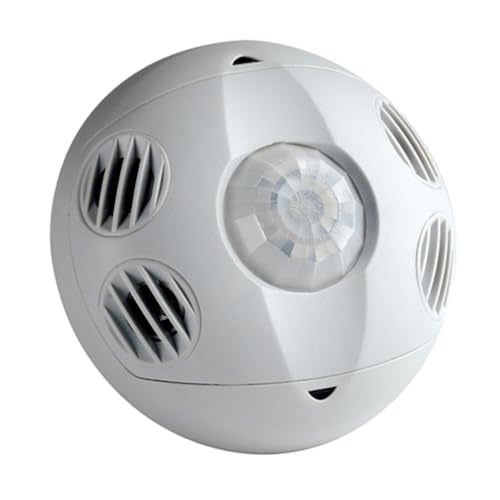
- Uses PIR and ultrasonic detection
- Self-adjusting sensitivity and time delay
- Ceiling-mounted coverage for lights and fans
Best For: Permanent low-voltage room installations
Best Home Assistant Sensor

- 24GHz mmWave detects motion and stationary presence
- Integrated ambient light sensor
- Pre-flashed with ESPHome
Best For: Home Assistant-based local automations
Wide-Coverage Ceiling Pick

- 1,600-square-foot indoor coverage
- Adjustable timing and light thresholds
- Neutral wire required
Best For: Large indoor areas needing ceiling-mounted automatic lighting
Flexible Wall-Switch Choice
Leviton Decora Occupancy Sensor

- 180° view with 900-square-foot coverage
- Automatic-on or manual-on operation
- Supports multi-way and multi-sensor setups
Best For: Wallbox installations needing flexible controls
Bulk No-Neutral Option
ELEGRP 10-Pack Motion Switches

- No neutral wire required
- Ten switches with wall plates
- Automatic or manual modes
Best For: Multi-room projects in homes with grounded, single-pole circuits
Best Smart Lighting Integration – Caseta Wireless Occupancy Sensor
For homes already using Caseta devices, this wireless sensor is a convenient way to automate lighting and other compatible controls. It detects fine motion within a 180-degree field of view and can be mounted or placed without wiring.
Best For: Caseta users who want flexible, app-customized occupancy control in rooms such as bathrooms, hallways, garages, and laundry areas.
Pros:
- Can control Caseta switches, dimmers, fan controls, and Serena shades within 60 feet.
- Supports active-hours scheduling, adjustable light levels, and customized device control through the Lutron app.
- Offers wireless placement and a stated typical battery life of up to 10 years.
Cons:
- Requires a Caseta Smart Hub, such as the L-BDG2-WH.
- Its control features are centered on compatible Caseta devices.
This is one of the more capable occupancy sensors for homes with an existing Caseta ecosystem. The hub requirement limits its appeal for standalone setups, but Caseta owners get broad control and unusually flexible placement.
Best for Room-by-Room Comfort – ecobee SmartSensor 2-Pack
The ecobee SmartSensor combines occupancy detection with temperature readings, helping an ecobee thermostat respond to the rooms your household actually uses. This two-pack is designed for flexible placement, with stands and wall-mounting materials included.
Best For: ecobee thermostat owners who want more balanced bedroom and living-area comfort, plus occupancy-based energy adjustments.
Pros:
- Detects occupancy and shares temperature readings with an ecobee thermostat from up to 60 feet, including through walls and floors.
- Can prioritize a bedroom overnight and help adjust settings when rooms are unoccupied.
- Includes two sensors, stands, adhesive, batteries, and installation guidance without requiring wiring or professional installation.
Cons:
- Requires an ecobee Smart Thermostat for its primary comfort features.
- Smart Security alerts require an active ecobee Smart Security subscription.
Unlike lighting-focused occupancy sensors for homes, this kit is primarily a comfort-management accessory. It makes the most sense when room temperature balancing is as important as detecting presence.
Best Hardwired Value – Lutron Maestro Motion Switch 2-Pack
This hardwired Lutron Maestro switch offers straightforward automatic lighting control for common problem areas. It can turn lights on when someone enters, off after the room is empty, and accommodate either automatic-on or manual-on operation.
Best For: Homeowners replacing standard single-pole switches in bathrooms, closets, garages, or laundry rooms with occupancy-based control.
Pros:
- Supports Occupancy Mode and Vacancy Mode, with shutoff delays of 1, 5, 15, or 30 minutes.
- Works with several bulb and load types, including CFL, LED, incandescent, halogen, and low-voltage applications within stated limits.
- Includes two switches and can be installed without a neutral wire when using the ground wire.
Cons:
- Requires hardwired installation and is single-pole only.
- The coordinating wallplate is sold separately.
- Its 2-amp rating limits the supported load.
For buyers who prefer a conventional wall-switch installation, this is a practical option among occupancy sensors for homes. Its two operating modes and adjustable timeout make it more adaptable than a basic automatic-on switch.
Best for Large Rooms – Leviton Ceiling Occupancy Sensor
The Leviton OSC10-M0W is a ceiling-mounted, low-voltage sensor designed for broad indoor coverage. Its combined PIR and ultrasonic technology is intended to improve detection consistency in spaces where a single sensing method may be less reliable.
Best For: Larger indoor rooms or commercial-style home spaces needing ceiling-mounted occupancy detection across approximately 1,000 square feet.
Pros:
- Combines PIR and ultrasonic sensing for increased sensitivity.
- Provides approximately 1,000 square feet of coverage with a 180-degree field of view.
- Uses self-adjusting circuitry to continually evaluate sensitivity and time delay.
Cons:
- Requires a 24VDC, 35mA low-voltage connection rather than battery power.
- Ceiling mounting and three-wire installation are less convenient than wireless options.
- Designed for lighting systems rather than broad smart-home device control.
This sensor is a specialized choice among occupancy sensors for homes, especially where coverage and consistent detection matter more than app control. Verify the required low-voltage infrastructure before choosing it for a residential project.
Best All-Around Presence Sensor – Aqara FP300
The Aqara FP300 is a versatile choice for occupancy sensors for homes, combining 60GHz mmWave radar, PIR, and AI-powered detection to recognize people who are moving or sitting still. It also adds light, temperature, and humidity readings for more detailed automations.
Best For: Smart-home users who want wireless presence detection with broad ecosystem compatibility and environmental monitoring.
Pros:
- Detects stationary and moving occupants with mmWave, PIR, and adaptive AI.
- Supports Matter over Thread and Zigbee, with compatibility across several major platforms.
- Combines presence, light, temperature, and humidity sensing in one device.
- Offers up to three years of battery life in Zigbee mode and flexible mounting.
Cons:
- Third-party Matter setups require a Thread Border Router and Matter Controller.
- Aqara installations require a compatible Zigbee or Matter hub.
With a 120-degree field of view and detection up to 6 meters, the FP300 is a flexible option for room lighting, climate, and security automations. Its hub requirements are the main consideration before buying.
Best Commercial-Style Ceiling Sensor – Leviton OSC20-M0W
The Leviton OSC20-M0W takes a conventional approach to occupancy sensors for homes, using both PIR and ultrasonic technologies to control connected lights and fans. Its ceiling-mounted design and self-adjusting circuitry are aimed at dependable room coverage.
Best For: Indoor rooms where a wired, ceiling-mounted sensor is preferred for automatic light or fan control.
Pros:
- Combines PIR and ultrasonic detection for increased sensitivity.
- Self-adjusting circuitry continually evaluates sensitivity and time delay.
- Twist-lock attachment supports 360-degree rotation during installation.
- Provides approximately 1,000 square feet of coverage according to the supplied specifications.
Cons:
- Requires a 24VDC, three-wire low-voltage connection rather than battery power.
- Ceiling mounting and wiring make installation less flexible than wireless sensors.
The OSC20-M0W is suited to planned installations where consistent switching matters more than portability. Confirm the required low-voltage power and compatibility with the intended lights or fans before installation.
Best Home Assistant Sensor – Akamatis Litos v3
The Akamatis Litos v3 is a focused option for occupancy sensors for homes built around Home Assistant. Its 24GHz mmWave radar detects motion and stationary people up to 6 meters indoors, while the ambient light sensor can help condition automations on room brightness.
Best For: Home Assistant users who want local, customizable presence and light-level automations.
Pros:
- Detects both motion and stationary objects with 24GHz mmWave radar.
- Includes an ambient light sensor for presence-and-brightness automation rules.
- Arrives with ESPHome firmware pre-flashed for a simpler setup.
- Uses an ESP32-C3 and external antenna for Wi-Fi connectivity.
Cons:
- Requires an existing Home Assistant installation.
- Does not offer the broad ecosystem compatibility listed for some competing sensors.
Litos v3 makes the most sense for buyers already comfortable with Home Assistant and ESPHome. Its dedicated light sensor and stationary-presence detection can support precise local automations, but it is not a standalone general-purpose smart-home sensor.
Wide-Coverage Ceiling Pick – 360° Ceiling Occupancy Sensor
For shoppers comparing occupancy sensors for homes, the RAYZEEK ceiling-mounted model is designed for broad indoor coverage and automatic lighting control. Its 360-degree PIR detection reaches up to 1,600 square feet, but installation requires a working neutral wire.
Best For: Garages, basements, hallways, utility rooms, offices, and other larger indoor areas where ceiling-mounted detection is practical.
Pros:
- 360-degree detection with coverage up to 1,600 square feet.
- Adjustable timeout from 15 seconds to 30 minutes.
- Supports motion and ambient-light sensing, with selectable sensitivity and light thresholds.
- Compatible with incandescent, halogen, fluorescent, LED lights, ceiling fans, and exhaust fans within its load ratings.
Cons:
- Requires a working neutral wire; it will not function without one.
- Indoor use only and limited to a 5A load.
- Ceiling mounting may require more involved installation than a wall switch.
This is a strong option when broad, overhead coverage matters more than a simple wall-switch replacement. Confirm the wiring and fixture load before buying.
Flexible Wall-Switch Choice – Leviton Decora Occupancy Sensor
The Leviton Decora is a practical wall-mounted choice for occupancy sensors for homes, combining automatic or manual-on operation with adjustable settings. It provides a 180-degree field of view and can support single-pole, multi-way, or multi-sensor applications.
Best For: Bedrooms, hallways, bathrooms, and other rooms where a conventional in-wall switch and configurable motion coverage are preferred.
Pros:
- Offers 180-degree detection across up to 900 square feet.
- Supports automatic-on or manual-on operation.
- Can be used in single-pole, 3-way, or multi-sensor configurations with compatible Leviton devices.
- Adjustable sensitivity range, ambient light, and timeout settings.
Cons:
- Multi-way use requires the DD0SR companion switch, and multi-sensor setups use two DOS15 sensors.
- Coverage is narrower than a 360-degree ceiling sensor.
- Installation is intended for a wallbox and hardwired controller setup.
Choose this model if you want the familiar feel of a Decora wall switch with more control over sensing and timeout behavior. Its configuration options also make it useful for irregular or expanded coverage areas.
Bulk No-Neutral Option – ELEGRP 10-Pack Motion Switches
For homes without a neutral wire, this ELEGRP 10-pack offers a straightforward way to add motion-activated lighting throughout multiple rooms. The switches use PIR sensing, fit standard electrical boxes, and support automatic or manual operation, but they require a grounding wire and are intended for single-pole control.
Best For: Multi-room projects, renovations, and homeowners who need several no-neutral occupancy switches for compatible lighting circuits.
Pros:
- No neutral wire is required, making it suitable for many older homes.
- Includes 10 switches with wall plates for broader home installations.
- Supports up to 300W LED or CFL and 600W incandescent loads.
- Offers automatic or manual ON/OFF modes and a slim matte-white design.
Cons:
- A grounding wire is required for operation.
- Not suitable for 3-way circuits.
- Designed for single-pole control and has lower stated LED/CFL load ratings than some higher-capacity switches.
This package stands out when you need multiple occupancy sensors for homes and want to avoid running a neutral wire. Verify grounding, circuit type, and fixture wattage before installation.
How We Picked the Best Occupancy Sensors for Homes
We evaluated these Occupancy Sensors for Homes based on sensing method, installation type, coverage, wiring requirements, automation features, and compatibility. The selection includes PIR motion sensors for straightforward lighting control, dual-technology and ceiling-mounted models for broader coverage, and mmWave presence sensors that can detect people who remain relatively still.
We also considered practical differences between standalone switches and connected sensors. A smart sensor may offer app control, schedules, and integrations, while a conventional in-wall or ceiling model can be simpler, faster to install, and less dependent on a hub or wireless network.
Quick Comparison
| Sensor type | Best for | Main advantage | Potential trade-off |
|---|---|---|---|
| Smart motion sensor | Connected lighting scenes | Remote control and automation | May require a hub or compatible ecosystem |
| mmWave presence sensor | Rooms where people sit still | More continuous presence detection | Setup and sensitivity adjustment can take longer |
| In-wall occupancy switch | Replacing a standard light switch | Directly controls the fixture | Electrical-box and wiring compatibility matter |
| Ceiling-mount sensor | Large rooms and open spaces | Wide overhead coverage | More involved installation |
Key Buying Factors for Occupancy Sensors for Homes
Sensing Technology
PIR sensors detect changes in infrared heat and work well when people move through a room. They may not reliably detect someone sitting still. mmWave sensors are better suited to offices, bedrooms, and living rooms where occupants remain in place, but they can require careful placement and sensitivity tuning. Multi-technology sensors combine detection methods for more dependable coverage.
Installation and Wiring
In-wall switches are convenient replacements for existing controls, but check single-pole or multi-way support, load ratings, neutral-wire requirements, and bulb compatibility. Ceiling sensors may need low-voltage wiring, a compatible power supply, or professional installation. Wireless models are easier to place but may depend on batteries, Wi-Fi, Zigbee, Matter, or a proprietary hub.
Coverage and Room Size
Match the sensor’s stated field of view to the room rather than assuming a larger number is always better. Ceiling height, furniture, partitions, doorways, and mounting position can reduce real-world coverage. For large or irregular spaces, multiple sensors may perform better than one oversized unit.
Automation and Privacy
Look for adjustable timeout settings, manual override, daylight sensing, schedules, and integrations with your preferred smart-home platform. If privacy is a concern, choose a local-control model or verify how occupancy data is processed before connecting it to cloud services.
Who Should Buy Which Occupancy Sensors for Homes?
- Choose a smart motion sensor for app-based lighting scenes, schedules, and ecosystem integration.
- Choose an mmWave presence sensor for workspaces, bedrooms, or living rooms where occupants often sit still.
- Choose an in-wall switch when you want automatic lighting without adding a separate visible sensor.
- Choose a ceiling-mount model for garages, basements, hallways, offices, or larger rooms requiring broad coverage.
- Choose a no-neutral-wire switch when your existing electrical box lacks a neutral conductor, while still confirming minimum-load requirements.
Before buying, verify the sensor’s electrical rating, installation environment, bulb compatibility, and smart-home requirements. A correctly matched basic sensor is usually more dependable than a feature-rich model installed in the wrong location.