Choosing the right occupancy sensor for a large room means balancing coverage, detection reliability, wiring requirements, and lighting-control compatibility. A sensor that works well in a small office may miss occupants across a warehouse, classroom, conference room, or open commercial space.
This roundup compares 10 occupancy sensors for large rooms, with options ranging from simple hardwired PIR models to wide-coverage multi-technology sensors and connected wireless controls.
Best 10 Occupancy Sensors for Large Rooms Picks for 2026
High-Coverage Commercial Pick
ENERLITES High Bay 360° Sensor

- Covers up to 2,800 sq. ft.
- Interchangeable lenses for 8–50 ft ceilings
- Eight-pack with adjustable PIR sensitivity
Best For: Warehouses, factories, and other high-ceiling commercial spaces
Smart-System Choice
Lutron Caseta Wireless Occupancy Sensor
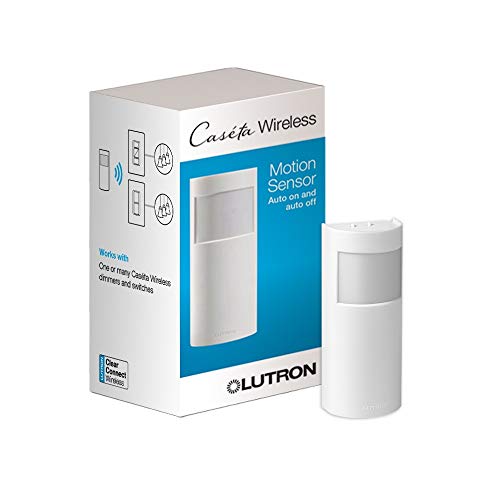
- Wireless setup with 10-year typical battery life
- Controls multiple Caseta devices within 60 feet
- App-configurable active hours and light levels
Best For: Caseta-equipped homes and indoor spaces needing flexible wireless control
Reliable Dual-Technology Option

- Combines PIR and ultrasonic sensing
- Covers approximately 1,000 sq. ft.
- Self-adjusting sensitivity and time delay
Best For: Medium-sized offices, classrooms, and indoor commercial rooms
Adjustable Multi-Pack Value

- Five-pack for multiple lighting zones
- 360-degree detection with a 24-ft range
- Adjustable delay, sensitivity, and light sensing
Best For: Multi-room commercial or utility-space installations
Best Overall Coverage
Leviton Multi-Technology Ceiling Sensor

- Covers up to 2,000 square feet
- Uses PIR and ultrasonic sensing
- Includes an isolated relay
Best For: Large indoor rooms and commercial lighting-control installations
Best Adjustable Controls
RAYZEEK 360-Degree Ceiling Sensor

- Covers up to 1,600 square feet
- Adjustable timing, sensitivity, and lux levels
- Requires a neutral wire
Best For: Indoor offices, warehouses, garages, and utility spaces
Best Commercial Value

- Combines sensing and switching in one unit
- Offers adjustable off-delay and light sensing
- Provides approximately 530 square feet of coverage
Best For: Commercial and institutional indoor installations
Best Long-Range Coverage
RAYZEEK 360° Microwave Occupancy Sensor

- Microwave Doppler sensing for subtle movement
- 20-foot range with 360° ceiling coverage
- Adjustable delay, sensitivity, and light sensing
Best For: Large rooms, garages, warehouses, and long hallways
Best Commercial PIR Pick
Sensor Switch CMR Extended-Range Sensor

- 360° PIR coverage for walking motion
- 24-foot radial range at 9-foot mounting height
- 30-second to 20-minute adjustable delay
Best For: Commercial offices and indoor rooms with standard ceiling installation
Best Flexible Lighting Compatibility

- Supports 120–277V lighting systems
- Compatible with many LED and legacy lamp types
- Adjustable delay, sensitivity, and light sensing
Best For: Indoor commercial, office, and residential lighting control
High-Coverage Commercial Pick – ENERLITES High Bay 360° Sensor
For large rooms, warehouses, and other commercial spaces, the ENERLITES high-bay sensor is one of the most coverage-focused occupancy sensors for large rooms. Its 360-degree PIR detection, interchangeable lenses, and stated coverage of up to 2,800 square feet make it suitable for high ceilings and broad floor plans.
Best For: Warehouses, manufacturing areas, factories, and large commercial spaces with ceilings from 8 to 50 feet.
Pros:
- Up to 2,800 square feet of coverage with a 360-degree field of view
- Two interchangeable Fresnel lenses support ceiling heights from 8 to 50 feet
- Adjustable sensitivity from 50% to 100% and compatibility with LED, incandescent, and CFL lighting
- Eight-pack format and 1/2-inch knockout installation design
Cons:
- Requires corded electrical installation rather than batteries
- Designed for commercial or industrial applications, so it may be more than needed for a small room
- Operation is limited to the listed 120–277VAC and lighting-load specifications
Choose this model when wide coverage and high-bay flexibility matter most. The lens options and adjustable sensitivity give installers useful control, while the eight-pack suits multi-room or multi-zone projects.
Smart-System Choice – Lutron Caseta Wireless Occupancy Sensor
The Lutron Caseta sensor is a wireless option for buyers who want occupancy-based control within a Caseta setup. It can control multiple Caseta switches, dimmers, fan controls, and Serena smart shades within 60 feet, making it useful when wiring a sensor into a room is inconvenient.
Best For: Indoor rooms that already use Lutron Caseta devices and need flexible, app-configured occupancy control.
Pros:
- Wireless, battery-powered design with a typical 10-year battery life
- Can control multiple compatible Caseta devices within 60 feet
- App customization includes active hours, controlled devices, and light levels
- Freestanding or wall/corner mounting options
Cons:
- Requires a Lutron Caseta Smart Hub for the listed customization features
- Compatible control is centered on Caseta switches, dimmers, fans, and Serena shades
- Its 180-degree field of view is narrower than a 360-degree ceiling sensor
This is a strong fit for smart-home installations rather than standalone commercial lighting circuits. Confirm that your existing Caseta hub and devices are compatible before choosing it for a large room.
Reliable Dual-Technology Option – Leviton Ceiling Sensor
The Leviton OSC10-M0W combines passive infrared and ultrasonic sensing for occupancy detection in spaces up to approximately 1,000 square feet. For buyers comparing occupancy sensors for large rooms, its self-adjusting digital circuitry and ceiling-mounted 360-degree rotation can help maintain consistent lighting control in medium-sized areas.
Best For: Offices, classrooms, and medium-sized indoor rooms requiring a hardwired low-voltage ceiling sensor.
Pros:
- Combines PIR and ultrasonic detection for increased sensitivity
- Approximately 1,000 square feet of coverage with a 180-degree field of view
- Self-adjusting microprocessor continually evaluates sensitivity and time delay
- Quick three-wire, low-voltage ceiling installation with twist-lock attachment
Cons:
- Requires a 24VDC, 35mA low-voltage connection
- Its stated coverage is smaller than the largest high-bay models in this roundup
- Limited to lighting-system control rather than wireless smart-home devices
Its dual-technology design makes it a practical choice when reliable occupancy detection is more important than maximum room size. Verify the low-voltage power and field-of-view requirements before installation.
Adjustable Multi-Pack Value – ECOELER High Bay Sensor
The ECOELER YM2511 is a five-pack of hardwired ceiling sensors designed for high-bay fixture mounting. Its 360-degree PIR detection, adjustable time delay, sensitivity, and light-level sensing make it a practical choice for distributing occupancy control across several rooms or lighting zones.
Best For: Multi-room installations such as hallways, storage areas, garages, closets, and other spaces using compatible 120/277VAC lighting.
Pros:
- Five sensors provide coverage for multiple locations
- 360-degree detection with a stated 24-foot detection range when installed at 20 feet
- Adjustable 15-second to 30-minute time delay and 20% to 100% sensitivity
- Compatible with LED, incandescent, fluorescent, CFL, and specified low-voltage lighting types
Cons:
- Neutral wire is required for installation
- Maximum listed detection range is 20 feet, so placement matters in very large rooms
- Hardwired installation is less flexible than a battery-powered wireless sensor
This pack offers useful adjustability for buyers outfitting several zones at once. It is best suited to rooms where the 20-foot installation and detection limits can be met and the required neutral wire is available.
Best Overall Coverage – Leviton Multi-Technology Ceiling Sensor
For shoppers comparing occupancy sensors for large rooms, the Leviton OSC20-RMW stands out with 2,000-square-foot coverage and dual PIR/ultrasonic technology. Its ceiling-mount design and isolated relay make it a practical option for integrating occupancy detection with lighting or security controls.
Best For: Large indoor rooms, commercial spaces, and installations that benefit from multi-technology detection and an isolated relay.
Pros:
- Coverage rated up to 2,000 square feet.
- Combines passive infrared and ultrasonic sensing.
- Includes an isolated relay and ceiling-mount design.
Cons:
- Requires corded electrical installation.
- The supplied notes do not specify detailed timing or sensitivity adjustments.
Choose this model when broad coverage is the priority. Its multi-technology approach offers a more comprehensive sensing setup than a basic PIR-only unit, though buyers should confirm wiring and control-system compatibility before installation.
Best Adjustable Controls – RAYZEEK 360-Degree Ceiling Sensor
The RAYZEEK RZ037-5A is a flexible choice among occupancy sensors for large rooms, covering up to 1,600 square feet with 360-degree ceiling detection. Adjustable timing, sensitivity, and light-level thresholds let you tailor automatic lighting control for offices, warehouses, garages, and utility areas.
Best For: Indoor spaces needing configurable automatic lighting control and compatibility with common bulb types or ceiling fans.
Pros:
- Provides 360-degree detection across up to 1,600 square feet.
- Offers adjustable timing from 15 seconds to 30 minutes.
- Supports incandescent, halogen, fluorescent, and LED loads, plus fans.
Cons:
- Requires a working neutral wire.
- Indoor use only.
- Load capacity is limited to 5 amps.
This sensor is a strong fit when customization matters more than maximum coverage. Before buying, verify that the installation has a neutral wire and that the connected lighting or fan load stays within the stated limits.
Best Commercial Value – Leviton PIR Ceiling Sensor
Leviton PIR Ceiling Mount Occupancy Sensor, 120-277V, 1000W, 570SF Field-of-View, ODC0S-I1W, White
Check Price On AmazonThe Leviton ODC0S-I1W is a cost-conscious PIR option for commercial and institutional spaces. It combines the sensor and switching relay in one unit, offers a 360-degree field of view, and provides adjustable shutoff and light-sensing controls for practical energy management.
Best For: Commercial or institutional indoor installations where straightforward PIR detection and integrated switching help reduce installation complexity.
Pros:
- Designed for commercial and institutional installations.
- Combines the sensor and switching relay in one unit.
- Includes adjustable off-delay and light-sensor settings.
Cons:
- Coverage is approximately 530 square feet when mounted at 8 feet.
- Uses PIR technology rather than multi-technology detection.
- Indoor use only.
This model makes sense for buyers who want a simpler, integrated PIR solution rather than the widest possible coverage. Its smaller field of view may require multiple sensors in especially large rooms.
Best Long-Range Coverage – RAYZEEK 360° Microwave Occupancy Sensor
For large rooms where subtle movement and long detection distances matter, the RAYZEEK ceiling-mounted sensor uses microwave Doppler technology for 360° coverage. It is a practical choice among occupancy sensors for large rooms, especially in garages, warehouses, and long hallways.
Best For: Large indoor spaces needing sensitive, long-range occupancy detection.
Pros:
- Microwave sensing detects subtle movement and works in light, darkness, and fog.
- Up to a 20-foot range and 360° ceiling coverage suit larger spaces.
- Offers adjustable delay, sensitivity, and light-level settings, plus two operating modes.
- Supports loads up to 10A and multiple lighting types.
Cons:
- Requires a neutral wire and 120V hardwired installation.
- Maximum operating temperature is listed as 40°C.
The RAYZEEK stands out when broad coverage and sensitivity are more important than a compact installation. Confirm wiring, load, and mounting requirements before choosing it.
Best Commercial PIR Pick – Sensor Switch CMR Extended-Range Sensor
The Sensor Switch CMR is a line-voltage PIR occupancy sensor designed for commercial indoor spaces. Its 360° coverage and extended 24-foot radial detection range, when mounted at 9 feet, make it a capable option among occupancy sensors for large rooms with walking traffic.
Best For: Commercial rooms and offices needing ceiling-mounted PIR automation.
Pros:
- 360° PIR coverage is optimized for large motion such as walking.
- Designed for 7- to 15-foot ceiling heights and several ceiling-box types.
- Adjustable time delay runs from 30 seconds to 20 minutes.
- Includes a self-contained relay, green LED indicator, and long battery life at default settings.
Cons:
- PIR sensing is focused on larger movement rather than subtle motion.
- Its listed 24-foot radial range depends on mounting at 9 feet.
- Installation is intended for indoor commercial applications.
Choose the CMR when predictable walking detection and contractor-friendly ceiling installation are priorities. Its mounting height and coverage assumptions should be checked against the room layout.
Best Flexible Lighting Compatibility – Maxxima 360° PIR Sensor
The Maxxima ceiling sensor combines 360° PIR detection with broad 120–277V lighting compatibility. For buyers comparing occupancy sensors for large rooms, its adjustable settings and 15-foot maximum mounting height make it a flexible fit for commercial buildings, offices, and homes.
Best For: Indoor spaces needing adjustable PIR control across varied lighting systems.
Pros:
- 360° detection supports ceiling-mounted lighting automation.
- Works with 120–277V systems and LED, fluorescent, CFL, incandescent, MLV, and ELV lighting.
- Adjustable sensitivity, light-level sensing, and 15-second to 30-minute delay.
- UL listed and supports mounting up to 15 feet high.
Cons:
- Requires a neutral wire and hardwired installation.
- Designed for indoor use only.
- Its listed maximum range is 15 feet.
The Maxxima is a sensible choice when voltage range and lighting compatibility are key selection criteria. Compare its 15-foot sensing specification with the room’s ceiling height and coverage needs.
How We Picked the Best Occupancy Sensors for Large Rooms
We focused on ceiling-mounted and high-bay models designed for broad coverage, along with one smart wireless option for buyers who want flexible installation and app-connected lighting control. We considered stated detection area, sensing technology, voltage and wiring requirements, load compatibility, installation style, and suitability for residential or commercial spaces.
Because room layout affects real-world performance, published coverage should be treated as a starting point rather than a guarantee. Partitions, furniture, ceiling height, heat sources, airflow, and occupant movement can all influence detection.
Quick Comparison
- Best for broad commercial coverage: Multi-technology ceiling sensors with PIR and ultrasonic detection.
- Best for high-bay fixtures: Dedicated 360-degree ceiling or fixture-mount sensors rated for the installation voltage.
- Best for straightforward hardwired control: PIR ceiling sensors with clearly specified switching capacity.
- Best for flexible smart-home installation: A wireless sensor designed to work within a compatible lighting ecosystem.
- Best for large open areas: Models advertising approximately 1,000 to 2,000 square feet of coverage, subject to installation conditions.
Key Buying Factors for Occupancy Sensors for Large Rooms
Coverage and Mounting Height
Check the sensor’s stated square-foot coverage and the ceiling height used to establish that figure. High-bay sensors may be better suited to tall ceilings, while standard ceiling-mount models can perform more predictably in offices, classrooms, and corridors. A single wide-range sensor is not always preferable to multiple strategically placed units.
PIR Versus Multi-Technology Detection
PIR sensors detect changes in infrared heat and generally work well when people move through the detection pattern. Multi-technology models combine PIR with ultrasonic sensing, which can help detect smaller or less direct movements. They may be a stronger choice for rooms where occupants sit still, but they can require more careful adjustment.
Electrical Compatibility
Verify voltage, neutral-wire requirements, switching capacity, and whether the sensor is intended for line-voltage or low-voltage control. Commercial models may support 120/277V systems, while other sensors require a separate power pack or compatible control module. Confirm the load type before installation, especially with LED fixtures.
Timeouts, Sensitivity, and Controls
Adjustable timeout and sensitivity settings can reduce nuisance switching and prevent lights from turning off while a room is occupied. If daylight harvesting, isolated relays, dimming, or remote control matters, choose a model that explicitly supports those functions rather than assuming they are included.
Who Should Buy Which Occupancy Sensors for Large Rooms?
Choose a high-bay or fixture-mount model for warehouses, workshops, and tall-ceiling spaces. Select a multi-technology sensor for conference rooms, classrooms, offices, and other areas where occupants may remain seated. PIR-only models are practical for active passageways and simpler installations. For homes or retrofit projects where new control wiring is difficult, a compatible wireless smart sensor can offer the easiest installation. Always check local electrical requirements and consider professional installation for line-voltage systems.