The best occupancy sensors with remote monitoring do more than detect motion. They can help automate lighting, track room activity, monitor comfort conditions, and alert you to problems when you are away.
This roundup compares 10 options across wireless smart-home systems, commercial lighting controls, and connected temperature, humidity, noise, and occupancy monitoring. Use the guide below to match coverage, connectivity, installation, and ongoing costs to your space.
Best 10 Occupancy Sensors with Remote Monitoring Picks for 2026
Smart-Home Comfort Pick

- Tracks temperature, humidity, and occupancy
- Pairs with Lux TQX via Zigbee 3.0
- Includes wall, corner, and tabletop mounting options
Best For: Compatible Lux TQX thermostat systems
Commercial Wall-Switch Pick
Leviton App-Configurable Occupancy Sensor

- Automatic and manual lighting control
- 180-degree detection with adjustable blinders
- Commercial-grade, no-neutral installation
Best For: Hardwired commercial lighting and fan control
Cellular Alert Pick
Necto Temperature and Humidity Monitor

- Includes two years of 4G LTE service
- Sends temperature, humidity, and outage alerts
- Provides up to three days of rechargeable backup
Best For: Off-site environmental and power monitoring
Smart Lighting Pick
Lutron Caseta Wireless Occupancy Sensor
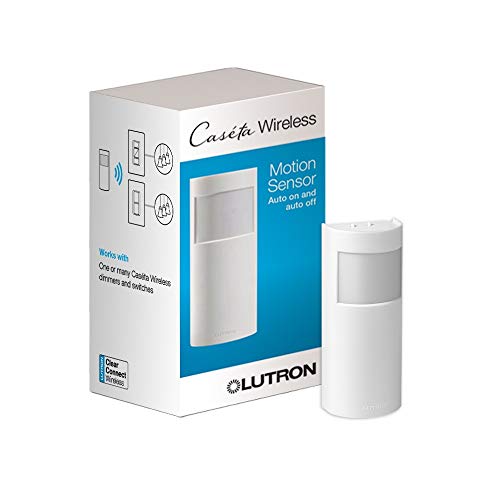
- Controls compatible Caseta devices wirelessly
- Offers 180-degree, fine-motion detection
- Provides flexible placement and long battery life
Best For: Caseta lighting, fan, and shade automation
Smart Property Monitor

- Remote occupancy, noise, and smoking alerts
- 12-month Starter Plan included
- Wireless, privacy-first climate monitoring
Best For: Short-term rental hosts and property managers
Dual-Tech Lighting Control
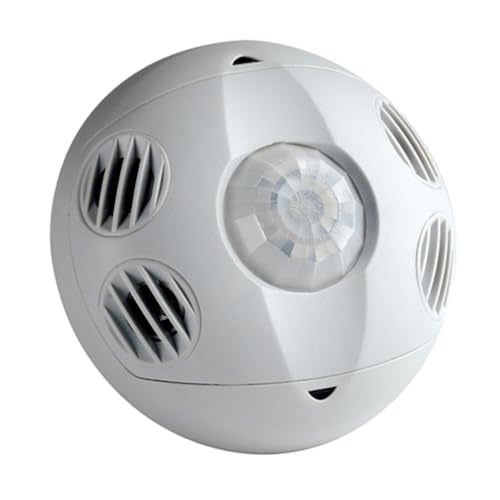
- PIR and ultrasonic occupancy detection
- Self-adjusting sensitivity and time delay
- Ceiling mount for low-voltage systems
Best For: Indoor lighting-control installations
Wide-Area Wall Sensor

- PIR detection for up to 2,500 square feet
- Wall-mounted Wideview design
- Works with compatible lights and security systems
Best For: Large indoor areas and walkways
Best Multi-Technology Coverage

- Multi-technology detection
- 500-square-foot coverage
- Self-adjusting with photocell
Best For: Offices, classrooms, and conference rooms
Best Commercial Retrofit Choice

- Integrated relay and sensor
- Approx. 530-square-foot coverage
- Adjustable delay and light sensor
Best For: Commercial and institutional indoor spaces
Best Simple PIR Installation

- 360-degree PIR detection
- 450-square-foot coverage
- Three-wire low-voltage connection
Best For: Walkways and compatible lighting systems
Smart-Home Comfort Pick – Lux TQX Remote Sensor
The QSZ Remote Sensor is a practical choice for occupancy sensors with remote monitoring in a Lux TQX smart thermostat system. It reports room temperature, humidity, and occupancy data so the thermostat can prioritize comfort in occupied spaces and support schedule learning.
Best For: Homeowners who want room-level occupancy and temperature data for a compatible Lux TQX thermostat.
Pros:
- Measures temperature, humidity, and occupancy.
- Uses Zigbee 3.0 connectivity and pairs with the TQX thermostat system.
- Includes wall and corner brackets plus a table stand for flexible placement.
- Magnetic swivel hinge simplifies battery replacement and sensor positioning.
Cons:
- Requires a compatible Lux TQX Smart Thermostat.
- Its remote-monitoring functions depend on the thermostat ecosystem and app.
This sensor is best viewed as an extension of a Lux smart thermostat rather than a standalone monitoring platform. It is a strong fit when occupancy-based comfort control is the priority.
Commercial Wall-Switch Pick – Leviton App-Configurable Occupancy Sensor
The Leviton ODS15-GHW is a commercial-grade wall sensor for occupancy-based lighting control. Among occupancy sensors with remote monitoring, it stands out for app configurability, adjustable detection, and automatic or manual operation, though the supplied information does not specify cloud history or cellular connectivity.
Best For: Commercial spaces needing a hardwired occupancy or vacancy sensor for lights, fans, and other wall-switch-controlled loads.
Pros:
- Automatically turns lights on when motion is detected and supports manual control.
- App-configurable with a 180-degree detection field.
- Adjustable blinders help limit unwanted peripheral signals.
- No neutral wire is required, and the unit is ETL, UL, and cULus listed.
Cons:
- Requires 120-277VAC installation and screw-terminal wiring.
- Its monitoring capability is motion-based rather than a documented remote environmental dashboard.
Choose this model when reliable in-wall occupancy switching matters more than standalone data logging. The ambient-light override and adjustable detection can help reduce unnecessary activation in commercial installations.
Cellular Alert Pick – Necto Temperature and Humidity Monitor
The Necto is a strong remote-monitoring option for temperature, humidity, and power outages. It uses cellular connectivity instead of Wi-Fi, sends configurable text and email alerts, and includes two years of 4G LTE service, making it useful where continuous off-site access is more important than occupancy detection.
Best For: Monitoring homes, RVs, cars, pets, or other indoor locations where cellular alerts and outage coverage are important.
Pros:
- Includes two years of cellular service with no Wi-Fi required.
- Sends real-time alerts for temperature, humidity, power loss, low battery, and network disconnection.
- Has a rechargeable battery rated for up to three days during an outage.
- Offers app and PC access, one year of server-stored readings, and CSV downloads.
Cons:
- It monitors environmental conditions and power status, not occupancy.
- Cellular service requires a paid renewal after the included two-year period.
- Designed for indoor use and intended to remain plugged in for continuous monitoring.
For buyers specifically seeking occupancy sensors with remote monitoring, this is not a direct occupancy-sensing substitute. It is better suited to alert-driven environmental monitoring when cellular independence and outage resilience are the deciding factors.
Smart Lighting Pick – Lutron Caseta Wireless Occupancy Sensor
The Lutron Caseta wireless motion sensor is designed for occupancy-based lighting and device control. It can automatically turn Caseta switches, dimmers, fan controls, and Serena shades on or off, while active-hour settings and app customization add scheduling flexibility to an occupancy-sensor setup.
Best For: Caseta households that want wire-free motion-based control across multiple lights, fans, dimmers, and shades.
Pros:
- Can control any number of compatible Caseta devices within 60 feet.
- Offers a 180-degree field of view and enhanced fine-motion detection.
- Supports active hours, selected devices, and light-level customization through the Lutron app.
- Mounts on a wall, in a corner, or freestanding, with a typical 10-year battery life.
Cons:
- Requires a Lutron Caseta Smart Hub for app-based customization.
- Compatibility is centered on Caseta switches, dimmers, fan controls, and Serena shades.
- It controls devices based on motion but does not provide documented occupancy-history reporting.
This is a convenient choice for extending Caseta automation without running wires. It fits buyers who want occupancy-triggered control throughout a smart-lighting system, while those needing detailed remote occupancy analytics may need a different platform.
Smart Property Monitor – Minut M3 Sensor
For hosts seeking occupancy sensors with remote monitoring, the Minut M3 combines people-count monitoring with noise, smoking, temperature, humidity, and mold-risk tracking. It sends threshold alerts remotely and can help manage house rules without recording audio or video.
Best For: Short-term rental hosts and property managers who want privacy-conscious remote oversight.
Pros:
- Alerts you when occupancy, noise, or smoking levels exceed configured thresholds.
- Includes 12 months of the Starter Plan for one property, with event logs, reporting, and automated guest messaging.
- Weatherproof, wireless, rechargeable, and rated for up to 12 months of battery life.
- No cameras or recordings; also tracks temperature and humidity for climate and mold-risk awareness.
Cons:
- Ongoing subscription renews annually after the included 12-month plan.
- Designed for property monitoring rather than directly switching lights or fans.
The M3 is the strongest fit here for remote, multi-purpose property oversight. Its subscription model adds recurring cost, but the combination of occupancy alerts, guest messaging, and environmental data is useful for off-site rental management.
Dual-Tech Lighting Control – Leviton OSC20-M0W
The Leviton OSC20-M0W is a wired ceiling-mounted choice for occupancy sensors with remote monitoring systems, using PIR and ultrasonic detection to help keep connected lights on while a room is occupied. Its self-adjusting circuitry is designed for consistent switching.
Best For: Indoor rooms where a compatible low-voltage lighting-control system needs ceiling-mounted occupancy detection.
Pros:
- Combines PIR and ultrasonic sensing for increased detection sensitivity.
- Self-adjusting microprocessor continually evaluates sensitivity and time delay.
- Ceiling installation includes a three-wire low-voltage connection and twist-lock attachment.
- Supports approximately 1,000 square feet of coverage according to the supplied product information.
Cons:
- Requires a 24VDC, 35mA low-voltage connection rather than standalone battery operation.
- Indoor ceiling mount limits placement flexibility.
- Remote monitoring capability depends on the connected control system; the sensor itself is not presented as an internet-connected monitor.
This Leviton sensor is best viewed as a dependable detection component for an integrated lighting system, not a standalone remote-monitoring device. Its dual-technology sensing and self-adjustment make it practical for reducing missed occupancy in indoor spaces.
Wide-Area Wall Sensor – Leviton OSWWV-I0W
Leviton Occupancy Sensor, Low Voltage, PIR, Wall Mount, Wideview, 2500SF, OSWWV-I0W, Off-white
Check Price On AmazonThe Leviton OSWWV-I0W is a low-voltage wall-mounted PIR sensor for occupancy sensors with remote monitoring setups. Its Wideview design covers up to 2,500 square feet according to the supplied listing and can work with compatible lights or security systems.
Best For: Walkways and large indoor areas that need wall-mounted PIR occupancy detection.
Pros:
- Wide-area coverage rated at up to 2,500 square feet.
- Wall-mount design suits spaces where ceiling installation is impractical.
- Compatible with lights and security systems.
- Uses a 24VDC wired power connection for integration with a compatible control setup.
Cons:
- Requires wired low-voltage power and is not a standalone wireless monitor.
- PIR-only detection may be less suitable where dual-technology sensing is preferred.
- Remote monitoring depends on the connected lighting or security system.
The OSWWV-I0W is a straightforward choice when broad wall-mounted coverage matters. Choose it for integration with an existing low-voltage control or security system, rather than for app-based monitoring on its own.
Best Multi-Technology Coverage – Leviton OSC05-M0W
The Leviton OSC05-M0W is a ceiling-mounted multi-technology sensor for rooms up to 500 square feet. Its self-adjusting settings, photocell, and compatibility with lighting systems make it a practical starting point for occupancy sensors with remote monitoring setups, provided a compatible monitoring or control system is added separately.
Best For: Offices, classrooms, and conference rooms needing ceiling-mounted occupancy detection and reduced nuisance shutoffs.
Pros:
- Multi-technology detection helps minimize annoying false-offs.
- Self-adjusting settings are saved in protected memory.
- Photocell helps prevent lights from turning on when natural light is sufficient.
- Supports coverage selection starting at 500 square feet, with other sizes available in the series.
Cons:
- Coverage is limited to 500 square feet for this model.
- Requires corded electrical power and a compatible lighting system.
- The supplied specifications do not describe built-in remote monitoring or networking.
Choose this model when minimizing false-offs and adapting automatically are more important than basic motion detection alone. For remote monitoring, confirm that its connected lighting system or control platform provides that capability.
Best Commercial Retrofit Choice – Leviton ODC0S-I1W
Leviton PIR Ceiling Mount Occupancy Sensor, 120-277V, 1000W, 570SF Field-of-View, ODC0S-I1W, White
Check Price On AmazonThe Leviton ODC0S-I1W combines a PIR occupancy sensor and switching relay in one ceiling-mounted unit. For occupancy sensors with remote monitoring, it can serve as a straightforward hardwired detection and lighting-control component, although the supplied specifications do not indicate built-in remote connectivity.
Best For: Commercial and institutional installations in storage areas, small bathrooms, copy rooms, and mop or sink closets.
Pros:
- Integrated sensor and switching relay can reduce installation labor and extra materials.
- 360-degree field of view provides approximately 530 square feet of coverage when mounted at 8 feet.
- Self-adjusting delayed-off time can be set from 20 seconds to 15 minutes.
- Adjustable light sensor helps avoid switching lights on when natural light is adequate.
Cons:
- Designed for indoor use only.
- Passive infrared detection may be less versatile than a multi-technology design in some spaces.
- Remote monitoring is not listed as a built-in feature.
This is a practical option when a single unit that detects occupancy and switches lighting can simplify a commercial installation. Pair it with a compatible monitoring platform if remote status or control is required.
Best Simple PIR Installation – Leviton OSC04-I0W
The Leviton OSC04-I0W is a ceiling-mounted PIR sensor with 360-degree coverage for areas up to 450 square feet. Its low-voltage three-wire connection, twist-lock attachment, photocell, and self-adjusting microprocessor make it a useful component for occupancy sensors with remote monitoring systems that support compatible lighting controls.
Best For: Walkways and other areas needing a compact, low-voltage PIR ceiling sensor.
Pros:
- 360-degree PIR coverage reaches up to 450 square feet.
- Easy ceiling mounting uses a three-wire low-voltage connection.
- Internal microprocessor continually analyzes and adjusts settings.
- Photocell helps prevent lights from turning on when natural light is sufficient.
Cons:
- Coverage is smaller than the 500-square-foot multi-technology model in this roundup.
- Requires a 24VDC input and compatible lighting equipment.
- Built-in remote monitoring is not specified.
Select this model when a simple, self-adjusting PIR sensor and low-voltage installation fit your control system. Verify wiring and monitoring compatibility before adding it to a remotely managed lighting setup.
How We Picked the Best Occupancy Sensors with Remote Monitoring
We evaluated these products by looking at the type of occupancy detection they use, how they connect to a control system or remote dashboard, installation requirements, coverage area, and the situations they are designed to handle. The selection includes dedicated occupancy sensors as well as connected environmental monitors that add occupancy data to temperature, humidity, noise, or power-outage alerts.
Because “remote monitoring” can mean different things, check the product’s required hub, app, subscription, gateway, or building-management connection before buying. Some sensors automate lights locally, while others are designed to send data and alerts over Wi-Fi, cellular service, or a dedicated smart-home platform.
Quick Comparison
| Best for | Look for | Products in this roundup |
|---|---|---|
| Smart-home lighting | Wireless setup, app control, and compatible hubs | Lutron Caseta sensor |
| Commercial lighting | Voltage compatibility, ceiling coverage, and control wiring | Leviton commercial sensors |
| Environmental and property monitoring | Remote alerts, cellular or cloud connectivity, and subscriptions | QSZ, Cellular Monitor, Minut M3 |
| Large rooms or open areas | Wide field of view and appropriate mounting height | Leviton wideview and 2,000-square-foot models |
Key Buying Factors for Occupancy Sensors with Remote Monitoring
Detection Technology and Accuracy
PIR sensors detect changes in infrared heat and are common, affordable choices for offices, hallways, and rooms where people move regularly. Multi-technology models combine PIR with another detection method to reduce missed occupancy, especially in spaces where people sit still. For fine-grained activity data, connected monitors may use additional sensors or software-based analysis.
Coverage and Placement
Match the stated coverage to the room’s size, ceiling height, furniture layout, and expected movement. A 360-degree ceiling sensor can suit an open room, while a wall-mounted wideview model may work better in a corridor or irregular space. Avoid assuming the maximum square-foot rating applies to every installation.
Remote Connectivity and Alerts
Confirm whether remote access requires Wi-Fi, cellular service, a hub, a building automation system, or a paid subscription. Review alert options as well: useful notifications may include occupancy changes, temperature or humidity thresholds, power loss, noise events, and low battery warnings.
Power, Wiring, and Compatibility
Check voltage, neutral-wire requirements, low-voltage wiring, load ratings, and compatibility with existing switches or lighting controls. Commercial models often need professional installation, while wireless smart-home sensors are typically easier to place but may depend on a specific ecosystem.
Who Should Buy Which Occupancy Sensors with Remote Monitoring?
Choose the Lutron Caseta option if your priority is simple wireless occupancy-based lighting in a compatible smart-home setup. Choose a Leviton commercial sensor when you need hardwired control, ceiling coverage, wall mounting, or integration with commercial electrical systems. The larger Leviton models are better suited to open offices and broad areas, while compact coverage models fit smaller rooms.
For remote property oversight, the Cellular Temperature Monitor is a practical choice where Wi-Fi may be unreliable and power-outage alerts matter. The Minut M3 suits rental or property managers who want occupancy insights alongside noise and climate monitoring, provided the subscription fits the budget. The QSZ sensor is worth considering when temperature, humidity, and occupancy data need to be viewed together.