Reliable backup power does not have to depend on gasoline, loud engines, or a permanent installation. Today’s off-grid portable backup generators combine large battery capacities, pure sine wave AC output, and solar charging in compact systems.
Our 10 selected models range from lightweight power banks for essential electronics to high-capacity solar generators capable of supporting appliances, tools, and emergency circuits. Use the guide below to match capacity, output, portability, and charging options to your needs.
Best 10 Off-Grid Portable Backup Generators Picks for 2026
Best Fast-Charging Pick
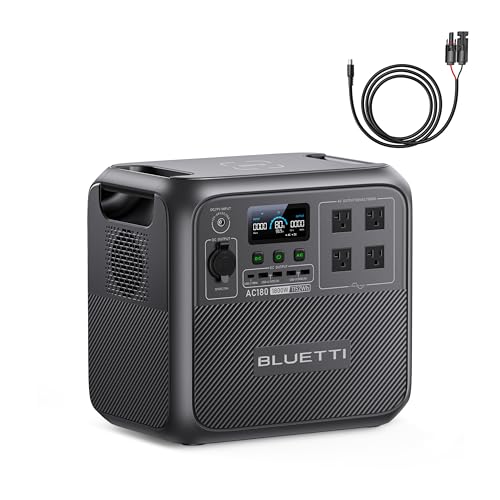
- 1,152Wh LiFePO4 battery with 1,800W output
- Full AC charge in about one hour
- Up to 500W solar input and UPS backup
Best For: Campers and homeowners needing fast, flexible emergency power
Best Large-Capacity Home Backup

- 3,584Wh capacity with 3,600W output
- Expandable storage and parallel output support
- Includes two 200W solar panels and rolling transport design
Best For: Households preparing for extended outages and heavy appliance loads
Best High-Output Solar Kit

- 2,073.6Wh battery with 2,600W output
- Includes a 200W solar panel
- 6,000-plus-cycle LiFePO4 battery and 3,900W lifting mode
Best For: Off-grid users needing durable, high-output solar backup
Best Lightweight Camping Option

- 292Wh capacity and 300W rated output
- About 7.1 pounds with a built-in handle
- Multiple USB, AC, and car-port charging options
Best For: Hikers, campers, and travelers powering small electronics
Best Solar Kit

- 2,600W continuous and 3,900W lifting output
- Includes two 200W solar panels
- 6,000+ cycles with LiFePO4 battery
Best For: Complete solar backup for off-grid living, RVs, and camping
Best High-Capacity Option

- 3,840Wh capacity expandable to 11,520Wh
- 3,600W output with 7,200W peak power
- 15 ports and three 200W solar panels
Best For: Extended home backup, RV use, and demanding off-grid power needs
Best Compact Fast-Charging Pick

- 1,800W output with 3,600W surge
- 0–80% AC charging in 45 minutes
- Includes a 220W bifacial solar panel
Best For: Camping, electronics backup, and shorter power interruptions
Best Whole-Home Backup

- 3,072Wh capacity and 3,600W AC output
- 20ms-or-less UPS for essential electronics
- Includes two 200W solar panels
Best For: Extended home outages and high-demand essentials
Best Lightweight Value
EM300 300W Portable Power Station
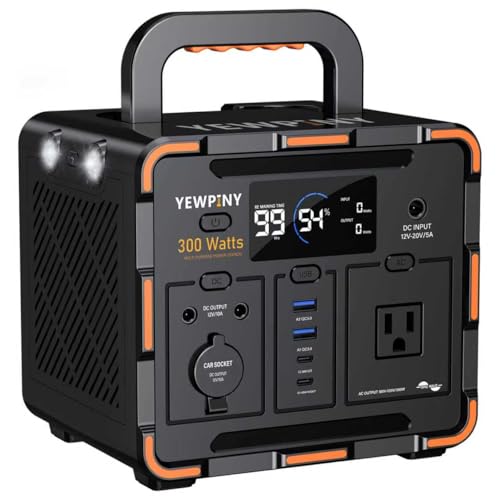
- 7.2-pound portable design
- 300W pure sine wave AC output
- Supports wall, car, and solar charging
Best For: Camping, travel, and small-device backup
Best Mid-Range Solar Kit
Jackery Solar Generator 1000 v2

- 1,070Wh capacity with 1,500W AC output
- Includes a 200W solar panel
- 23.8-pound design with app controls
Best For: Portable appliance backup, camping, and road trips
Best Fast-Charging Pick – BLUETTI AC180
The BLUETTI AC180 is a practical choice for off-grid portable backup generators when you want substantial output without handling fuel. Its 1,152Wh LiFePO4 battery, 1,800W rated output, and solar, AC, and car charging options suit camping, outages, and home backup.
Best For: Campers and homeowners who need fast charging, multiple outlets, and dependable emergency power.
Pros:
- Charges fully in about one hour through 1,440W AC input.
- Provides 1,800W continuous output, with up to 2,700W lifting power.
- Supports up to 500W solar input and offers UPS response in 20 ms or less.
- Includes 11 outlets and a 3,000-plus-cycle LiFePO4 battery.
Cons:
- At 37.4 pounds, it is less convenient for extended carrying.
- The included unit has 1,152Wh of capacity, so it is better suited to essentials than whole-home loads.
The AC180 balances fast recharge capability and useful appliance support in a relatively compact package. It is a strong middle-ground option for off-grid use, especially when solar charging and quick emergency availability matter.
Best Large-Capacity Home Backup – Jackery HomePower 3600 Plus
The Jackery HomePower 3600 Plus is built for demanding backup scenarios where smaller off-grid portable backup generators may fall short. Its 3,584Wh capacity, 3,600W output, included solar panels, and expandable storage make it suited to extended household outages.
Best For: Households that need high output for appliances, long runtimes, and a rollable power station.
Pros:
- Delivers 3,600W output and can reach 7,200W in parallel.
- Offers 3,584Wh capacity, expandable to 21kWh per unit.
- Supports hybrid AC+DC recharging from 0% to 100% in about two hours.
- Wheels and a telescoping handle improve portability for its 77.2-pound weight.
Cons:
- Its 77.2-pound weight makes lifting and transport difficult.
- Parallel operation is needed for the listed 240V capability and higher output.
- The larger format takes more storage space than compact power stations.
With its high capacity, appliance-friendly output, and expandable design, the HomePower 3600 Plus is the most home-oriented option in this group. The wheeled design helps, but its size is best suited to a planned backup location rather than frequent carry-in camping.
Best High-Output Solar Kit – BLUETTI Elite 200 V2
The BLUETTI Elite 200 V2 combines a 2,073.6Wh battery with a 200W solar panel, making it a capable option among off-grid portable backup generators for camping, RV use, and home emergencies. Its 2,600W output and 3,900W lifting mode can handle several higher-demand appliances.
Best For: Off-grid users who want a durable, high-output station with an included solar panel.
Pros:
- Provides 2,600W continuous output and 3,900W power lifting.
- Includes a 200W solar panel and supports up to 1,000W solar input.
- Uses an automotive-grade LiFePO4 battery rated for more than 6,000 cycles.
- Supports up to nine devices and UPS backup in 15 ms or less.
Cons:
- The included 200W panel takes about 13.5 hours for a full recharge under the stated conditions.
- At 53.4 pounds, it is substantial for frequent hand carrying.
- The station has four AC outlets, fewer than some larger models.
The Elite 200 V2 is a compelling fit when output capability and battery longevity matter more than minimum weight. Its included panel provides a starting point for solar charging, while additional solar capacity can substantially reduce recharge time.
Best Lightweight Camping Option – Jackery Explorer 300
The Jackery Explorer 300 is a compact entry point for off-grid portable backup generators, providing 292Wh of storage and 300W of rated output in a package weighing about 7.1 pounds. It is designed for portable electronics, cameras, laptops, and other modest loads rather than large appliances.
Best For: Hikers, campers, and travelers who prioritize low weight and device charging.
Pros:
- Weighs about 7.1 pounds and has an integrated carrying handle.
- Offers two AC outlets, USB-C, USB-A, and a 120W car port.
- Can provide 300W rated output with a 600W peak surge.
- Reaches about 80% charge in 2.8 hours with a 100W solar panel.
Cons:
- Its 292Wh capacity is limited for prolonged backup or high-wattage appliances.
- Solar panels are optional rather than included.
- Its 300W output is not intended for large heating, cooking, or motor loads.
The Explorer 300 is the easiest model here to carry and pack, making it particularly practical for mobile off-grid use. Choose it for communications, small electronics, and basic camping needs; consider a larger station for refrigeration or extended outages.
Best Solar Kit – BLUETTI Elite 200 V2
For shoppers comparing off-grid portable backup generators, the BLUETTI Elite 200 V2 stands out as a solar-ready kit with a 2,073.6Wh battery, two included 200W panels, and 2,600W of continuous AC output. Its 3,900W power-lifting mode can handle demanding appliances, while multiple charging options add flexibility for home backup, RV use, and camping.
Best For: Off-grid users who want a complete solar kit for running appliances and charging several devices.
Pros:
- Includes two 200W solar panels for renewable recharging.
- Provides 2,600W continuous output and 3,900W lifting power.
- LiFePO4 battery is rated for more than 6,000 cycles and a 17-year lifespan.
- Supports up to nine devices and offers UPS switching in 15ms or less.
Cons:
- At 53.4 pounds, it is less convenient to carry than smaller power stations.
- The included solar panels and power station may ship separately.
The Elite 200 V2 is a strong fit when appliance-running capability and long battery life matter more than minimum weight. Its included panels make it especially practical for longer off-grid stays.
Best High-Capacity Option – ABOK Ark3600
The ABOK Ark3600 is a high-capacity choice among off-grid portable backup generators, combining 3,840Wh of storage with 3,600W rated output and up to 7,200W peak power. Its three included 200W solar panels, broad port selection, and expandable battery design make it suitable for extended home backup and off-grid power needs.
Best For: Households, RV owners, and off-grid users who need substantial capacity and many connection options.
Pros:
- Large 3,840Wh capacity can expand to 11,520Wh.
- Offers 15 output ports, including a 30A RV port and 100W USB-C.
- Supports up to 3,500W combined AC and solar charging.
- Includes three 200W solar panels and app-based monitoring with scheduled charging.
Cons:
- Its larger capacity and output are likely to mean a bulkier setup than compact stations.
- Solar recharge performance depends on optimal sunlight and the available input configuration.
Choose the Ark3600 when runtime, expandability, and connectivity are priorities. It is particularly well suited to keeping several household or RV essentials operating during longer outages or remote stays.
Best Compact Fast-Charging Pick – EcoFlow DELTA 3 Classic
The EcoFlow DELTA 3 Classic offers a practical balance for shoppers seeking off-grid portable backup generators without stepping up to a very large system. It delivers 1,800W of output, includes a 220W bifacial solar panel, and can recharge from 0 to 80% in 45 minutes through AC power. A sub-10ms UPS helps protect connected electronics during interruptions.
Best For: Campers and home users who want a relatively compact solar generator for electronics, appliances, and backup power.
Pros:
- 1,800W output with 3,600W surge capacity handles many common appliances.
- AC charging reaches 80% in about 45 minutes.
- Includes a 220W bifacial panel with up to 25% conversion efficiency.
- LiFePO4 cells are rated for 10 or more years of daily use, with sub-10ms UPS switching.
Cons:
- Its 1,024Wh capacity is lower than the other options in this roundup.
- The included solar panel and power station may arrive separately.
- Solar charging with the included panel takes about 5.8 hours under stated conditions.
The DELTA 3 Classic is a sensible middle-ground pick for shorter outages, outdoor trips, and sensitive electronics. Its fast AC charging and UPS function are useful when readiness and continuity matter more than maximum storage.
Best Whole-Home Backup – Jackery HomePower 3000
For shoppers comparing off-grid portable backup generators, the Jackery HomePower 3000 is a high-capacity option designed to keep essential household devices running. Its 3,072Wh battery and 3,600W AC output can support appliances such as refrigerators, fans, lights, and Wi-Fi routers, while the included 2 × 200W solar panels provide a renewable recharging option.
Best For: Homeowners who need substantial emergency power for essential appliances, RV use, and extended outages.
Pros:
- 3,600W output with 7,200W surge capacity for demanding household essentials.
- 3,072Wh capacity can power a household for up to 15 hours and a refrigerator for one to two days, depending on usage.
- UL-certified UPS switches in 20ms or less for sensitive devices and essential electronics.
- LiFePO4 battery supports up to 4,000 cycles while retaining 70% capacity.
Cons:
- At 59.5 pounds, it is less convenient to move than smaller power stations.
- Solar charging to 80% takes up to nine hours with the included panels under stated conditions.
The HomePower 3000 stands out when capacity, appliance compatibility, and dependable outage backup matter more than ultra-light portability. Its multiple charging methods and included solar panels also make it practical for off-grid preparedness.
Best Lightweight Value – EM300 300W Portable Power Station
If portability is a priority when choosing off-grid portable backup generators, the EM300 offers a compact way to run smaller electronics and low-wattage equipment. Its 259Wh LiFePO4 battery, 300W pure sine wave output, and solar-ready design suit camping, road trips, emergency charging, and basic backup needs.
Best For: Campers and travelers who need a lightweight power source for laptops, drones, small devices, and compatible CPAP machines.
Pros:
- Weighs about 7.2 pounds and includes a built-in handle for easier transport.
- Provides 300W pure sine wave output with a 600W peak and seven listed ports.
- LiFePO4 battery is rated for more than 3,000 charge cycles.
- Supports wall, car, and solar charging, plus pass-through charging.
Cons:
- Its 259Wh capacity and 300W output are intended for smaller loads, not large appliances.
- The 100W solar panel required for solar charging is sold separately.
- It has a one-year warranty, shorter than some larger alternatives.
The EM300 is a sensible entry-level choice for mobile power and basic emergency use. Its low weight and flexible ports are appealing, but shoppers should match connected equipment carefully to its 300W output limit.
Best Mid-Range Solar Kit – Jackery Solar Generator 1000 v2
The Jackery Solar Generator 1000 v2 balances portability and usable output for shoppers seeking off-grid portable backup generators without stepping up to a full home-size system. With 1,070Wh of storage, 1,500W AC output, a 3,000W surge rating, and an included 200W solar panel, it can handle many camping, road-trip, and emergency-power tasks.
Best For: Users who want a portable solar kit for refrigerators, select AC units, electric pots, electronics, and general emergency use.
Pros:
- 1,500W output and 3,000W surge capacity support a range of household and outdoor appliances.
- At 23.8 pounds, it is substantially easier to transport than larger home-backup units.
- Includes a 200W solar panel and can reach 80% charge in six hours using solar under stated conditions.
- LiFePO4 battery is rated for 4,000 cycles while retaining more than 70% capacity.
Cons:
- The 1,070Wh capacity provides less runtime than the 3,072Wh HomePower 3000.
- One-hour full charging requires enabling emergency charging in the Jackery app; the default mode takes 1.7 hours.
- Solar charging depends on sunlight and takes longer than AC charging.
This model is a strong middle ground for buyers who want meaningful appliance support in a manageable package. App controls, quiet charging mode, and the included solar panel add flexibility for both routine outdoor use and short outages.
How We Picked the Best Off-Grid Portable Backup Generators
We compared these systems by looking at the specifications that matter most away from the grid: usable battery capacity, continuous and surge AC output, solar-input capability, charging flexibility, portability, and the types of devices each unit can realistically support. We also considered whether a package includes solar panels, since an all-in-one kit can be more convenient than buying components separately.
Battery capacity is listed in watt-hours (Wh), while inverter output is measured in watts (W). Together, these figures indicate both how long a generator can run your equipment and whether it can start or continuously power it.
Quick Comparison
- Smallest and most portable: The Jackery Explorer 300 and 300W LiFePO4 power station suit phones, laptops, lights, cameras, and other modest loads.
- Balanced everyday backup: The BLUETTI AC180, BLUETTI Elite 200 V2, and EcoFlow DELTA 3 Classic offer a useful middle ground for appliances, workstations, and camping.
- Longest runtime: The Jackery HomePower 3600 Plus, ABOK Ark3600, and Jackery HomePower 3000 provide roughly 3,000Wh or more for extended outages and demanding equipment.
- Solar-ready packages: Bundles with one or more included panels simplify off-grid setup, though real-world charging speed depends on sunlight, panel placement, and weather.
Key Buying Factors for Off-Grid Portable Backup Generators
Capacity and Runtime
Estimate your daily energy needs before choosing a model. A 60W refrigerator running for 10 hours uses about 600Wh, before accounting for inverter losses and startup demands. Larger batteries provide longer runtime but add weight and cost.
Continuous and Surge Output
Check both the running wattage and startup surge of your equipment. Refrigerators, pumps, compressors, and power tools may briefly require substantially more power than their normal rating. Choose an inverter with enough headroom rather than matching the load exactly.
Solar Charging and Included Panels
Solar input determines how quickly you can replenish the battery without grid power. More panel wattage can reduce recharge time, but panels need unobstructed sunlight and correct positioning. Confirm the generator’s maximum solar-input voltage and wattage before adding extra panels.
Portability, Safety, and Connectivity
Consider handles, weight, wheel kits, display controls, USB-C output, wireless monitoring, and pass-through or UPS features. LiFePO4 batteries are often preferred for their long cycle life. Keep every unit dry, ventilated, and within the manufacturer’s operating limits.
Who Should Buy Which Off-Grid Portable Backup Generators?
For occasional camping and personal electronics: Choose a compact 259Wh or 292Wh model if you mainly need phones, lights, tablets, cameras, or a laptop.
For home-office and essential-appliance backup: A roughly 1,000Wh to 2,000Wh unit with at least 1,500W of AC output is a practical starting point for networking equipment, refrigeration, medical electronics, and small appliances.
For extended outages or high-demand loads: Select a 3,000Wh-plus generator with a 3,000W-class inverter when you need longer runtime or want to support multiple appliances. These units are less convenient to move, so plan a storage location near the loads you intend to power.
For serious off-grid use: Prioritize high solar-input limits, expandable charging options, durable battery chemistry, and a panel bundle sized for your daily energy consumption. No portable generator replaces careful load planning: start with essential circuits, monitor consumption, and reserve capacity for overnight operation.