The best portable backup generators for camping balance dependable power, manageable weight, quiet operation, and practical runtime. The right choice depends on whether you need to recharge phones and lights or run a refrigerator, CPAP machine, RV appliance, or other demanding equipment.
This roundup compares battery power stations, solar-generator bundles, and fuel-powered inverter generators across several output levels. Use the guide below to narrow your options by capacity, noise, portability, fuel needs, and camping setup.
Best 10 Portable Backup Generators for Camping Picks for 2026
Best Lightweight Pick

- 7.5-pound design with 292Wh capacity
- Six-device charging with AC, USB, and car ports
- LiFePO4 battery rated for over 4,000 cycles
Best For: Lightweight camping power for personal electronics and CPAP equipment
Best High-Output Gas Option
Honda EU2200i 2200W Inverter Generator

- 2,200W output for appliances and RV use
- Quiet 48–57 dB(A) operating range
- Up to 8.1 hours per 0.95-gallon tank
Best For: Campsites and RVs needing gasoline-powered appliance support
Best for Heavy Loads
EcoFlow DELTA 3 Classic 1024Wh

- 1,800W output with 3,600W surge capacity
- 0–80% AC charging in about 45 minutes
- LiFePO4 battery rated for 10+ years of daily use
Best For: RV and vehicle-based camping with larger power demands
Best Solar Bundle
Jackery Explorer 300 with 40W Panel

- Includes a 292Wh power station and 40W solar panel
- 300W output with AC, USB, and car charging ports
- Portable setup for off-grid personal electronics
Best For: Campers wanting an included solar panel for basic off-grid charging
Best Quiet Gas Pick
2800W Portable Inverter Generator

- 2,000 running watts and 2,800 peak watts
- Under 58 dBA at 23 feet
- USB-C, ECO mode, and parallel function
Best For: Quiet campsite power and basic home backup
Best Lightweight Battery Pick
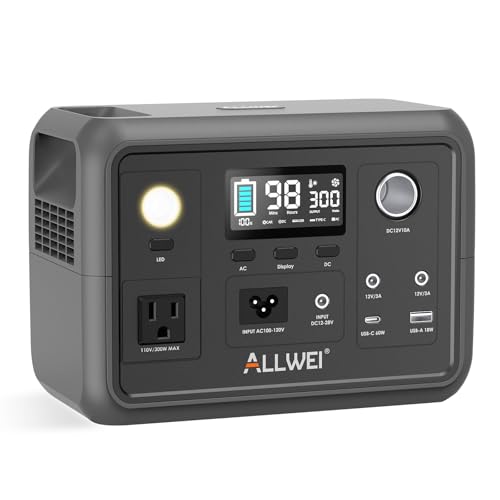
- 256Wh LiFePO4 battery and 300W output
- Only 6.4 pounds
- AC, car, and solar recharging options
Best For: Quiet power for small camping electronics
Best Long-Runtime Pick
2500W Quiet Inverter Generator

- Up to 17 hours at 25% load
- 1,900 running watts and clean inverter power
- CO sensor and 3-year warranty
Best For: Extended camping, RV, and emergency runtime
Best Lightweight Solar Backup

- 288Wh battery in a 9.5-pound power station
- 600W output with 1,500W Power Lifting Mode
- AC, solar, and car charging support
Best For: Light camping loads, electronics, CPAP machines, and emergency backup
Best Heavy-Duty Pick
Power Equipment 4400W Generator

- 3,400 running and 4,400 peak watts
- Up to 14 hours at 25% load with ECO mode
- RV port plus AC and DC outlets
Best For: RV camping and larger loads requiring sustained gasoline power
Best Budget Solar Kit

- Includes a 60W monocrystalline solar panel
- AC, DC, USB-A, and quick-charge USB outputs
- Built-in protections and SOS flashlight
Best For: Small electronics, lighting, and low-demand tent-camping accessories
Best Lightweight Pick – Jackery Explorer 300
The Jackery Explorer 300 is a practical choice among portable backup generators for camping when low weight and flexible device charging matter most. Its 292Wh capacity, 300W output, integrated handle, and multiple ports make it suitable for phones, cameras, laptops, and other smaller electronics.
Best For: Backpackers, campers, and anyone needing a lightweight CPAP or electronics battery for camping.
Pros:
- Weighs about 7.5 pounds and has an integrated carry handle.
- Offers two AC outlets, USB-C, two USB-A ports, and a 120W car port.
- LiFePO4 battery is rated for more than 4,000 charge cycles to 70% capacity.
- Can reach 80% charge in about 2.8 hours with an optional 100W solar panel.
Cons:
- Its 300W rated output is intended for smaller electronics rather than high-demand appliances.
- The solar panel is optional with the power station alone.
Choose this model when portability is more important than high output. It is especially convenient for personal electronics and low-power camping equipment, but users needing to run refrigerators or microwaves should consider a larger unit.
Best High-Output Gas Option – Honda EU2200i 2200W Inverter Generator
The Honda EU2200i is a gasoline-powered option for shoppers comparing portable backup generators for camping with enough output for larger appliances. Its 2,200W output, inverter technology, quiet operation, and up to 8.1-hour runtime make it suited to campsites, RVs, and occasional home backup.
Best For: Campers and RV users who need to power appliances such as microwaves, refrigerators, hair dryers, or small air conditioners.
Pros:
- Provides up to 2,200W of output for substantially heavier loads than small battery stations.
- Runs at approximately 48–57 dB(A), making it relatively quiet for a gas generator.
- Runs for about 3.2 to 8.1 hours on a 0.95-gallon fuel tank, depending on load.
- Includes Bluetooth and app-based monitoring plus CO-MINDER automatic shutdown protection.
Cons:
- Weighs over 47 pounds, so it is less convenient to carry than battery-powered models.
- Requires gasoline and produces engine emissions.
- Not available in California according to the supplied product notes.
This Honda is the stronger choice when wattage and appliance compatibility take priority over weight. Its quiet inverter design is camping-friendly, but fuel handling and the heavier body make it less convenient for remote, carry-in sites.
Best for Heavy Loads – EcoFlow DELTA 3 Classic 1024Wh
The EcoFlow DELTA 3 Classic is a high-capacity battery station for portable backup generators for camping buyers who want substantial output without gasoline. Its 1,024Wh battery, 1,800W AC output, fast charging, and optional solar input support both camping equipment and emergency backup needs.
Best For: RV campers and outdoor users who need to run larger electronics or appliances from a rechargeable power station.
Pros:
- Delivers 1,800W continuously with up to 3,600W surge capability.
- Reaches 80% charge in about 45 minutes using X-Stream AC charging.
- LiFePO4 cells are rated for 10 or more years of daily use.
- Supports optional 500W solar charging in approximately 2.5 hours.
Cons:
- At 26.7 pounds, it is considerably heavier than compact 300W power stations.
- The optional solar panel adds cost and equipment to the setup.
- It is not compatible with the specified DELTA 2 Smart Extra Battery or Delta 3 Series Smart Extra Battery.
The DELTA 3 Classic is a strong fit for power-hungry camping setups where battery operation, fast recharging, and long-term durability matter. Its larger capacity and output improve versatility, though the heavier form is better suited to vehicle-based camping than hiking.
Best Solar Bundle – Jackery Explorer 300 with 40W Panel
This Jackery bundle combines the Explorer 300 power station with a 40W solar panel, making it a convenient starter setup for portable backup generators for camping. The 292Wh battery and 300W output cover smaller electronics, while the included panel provides a way to recharge away from an outlet.
Best For: Campers who want a lightweight power station with an included solar panel for phones, cameras, laptops, and similar devices.
Pros:
- Includes both the Explorer 300 and a 40W Air Solar Panel.
- Weighs about 7.5 pounds for the power station and offers an integrated handle.
- Provides two AC outlets, 100W USB-C, two USB-A ports, and a 120W car port.
- LiFePO4 battery is rated for more than 4,000 charge cycles to 70% capacity.
Cons:
- The 40W panel reaches 80% capacity in about 7.5 hours under the supplied conditions.
- Its 300W rated output is not intended for high-wattage appliances.
- The complete bundle weighs about 12.9 pounds according to the supplied details.
This package is more convenient than buying the power station and panel separately when you want basic solar capability immediately. It is best for personal electronics and modest camping loads, not sustained appliance use.
Best Quiet Gas Pick – 2800W Portable Inverter Generator
For shoppers comparing portable backup generators for camping, this gas-powered inverter model offers a useful balance of output, runtime, and portability. It delivers 2,000 running watts, runs for up to 9 hours at 25% load, and weighs about 40 pounds.
Best For: Campers who need quiet, clean power for laptops, phones, cameras, and other sensitive electronics, with enough capacity for basic home backup.
Pros:
- Provides 2,800 peak watts and 2,000 running watts with less than 3% THD.
- Operates under 58 dBA from 23 feet away.
- Includes AC, DC, USB, and USB-C ports, plus ECO mode and parallel capability.
- Compact design, built-in handle, and 1.1-gallon tank support portable use.
Cons:
- Runs on gasoline, so it requires fuel storage and engine maintenance.
- A high-altitude kit may be needed above approximately 4,000 feet.
- The listed warranty is one year.
This generator is a practical choice when you want fuel-powered performance without excessive campsite noise. Its clean inverter output and broad port selection make it especially versatile, while the 40-pound weight remains manageable for transporting between a vehicle and campsite.
Best Lightweight Battery Pick – ALLWEI 300W Power Station
If you prefer fuel-free portable backup generators for camping, the ALLWEI power station is a compact battery option. Its 256Wh LiFePO4 battery supplies 300 watts continuously, weighs 6.4 pounds, and can recharge from an outlet, vehicle, or compatible solar panel.
Best For: Campers and road-trippers powering phones, laptops, small electronics, lights, or other modest loads without gasoline or engine noise.
Pros:
- Lightweight 6.4-pound design fits easily in a backpack or vehicle.
- LiFePO4 cells are rated for 3,000 charge-discharge cycles.
- Offers six output options, including AC, USB-A, USB-C PD, DC, and a car port.
- Supports wall, car, solar, and dual AC-plus-solar recharging.
Cons:
- Its 300-watt continuous output is suited to small devices rather than high-demand appliances.
- The solar panel is sold separately.
- Battery runtime depends on the connected load; the listed runtime is 45 minutes.
This is the most convenient choice for quiet, low-demand camping power. The LiFePO4 battery, multiple charging methods, built-in light, and 5-year warranty add everyday practicality, but shoppers should confirm that their devices stay within the 300-watt output limit.
Best Long-Runtime Pick – 2500W Quiet Inverter Generator
Among portable backup generators for camping, this SIOKIUU inverter generator stands out for its extended claimed runtime and relatively light 39.46-pound body. It produces 1,900 running watts, reaches 2,500 peak watts, and includes a CO sensor for added operating protection.
Best For: Campers, RV users, and homeowners who want gasoline-powered capacity with long operation between refueling stops.
Pros:
- Runs up to 17 hours at 25% load or 8.6 hours at 50% load.
- Produces clean power with less than 3% THD for sensitive electronics.
- Operates under 59 dBA from 23 feet away and weighs about 39.46 pounds.
- Includes ECO mode, parallel capability, a CO sensor, and a 3-year warranty.
Cons:
- Recoil start may be less convenient than an electric-start system.
- Gasoline operation requires fuel, ventilation, and routine maintenance.
- The 1.06-gallon tank and long runtime figures depend on the stated load levels.
The standout feature here is efficiency: the generator can stretch a tank significantly at lighter loads while still offering enough output for common camping equipment and electronics. Its CO sensor and 3-year warranty further strengthen its appeal for buyers prioritizing runtime and support.
Best Lightweight Solar Backup – BLUETTI Elite 30 V2
For shoppers comparing portable backup generators for camping, the BLUETTI Elite 30 V2 is a compact, quiet alternative to gas models. Its 288Wh battery, 600W continuous output, and solar, car, or AC charging support suit smaller camping and emergency-power needs.
Best For: Campers, road trippers, and anyone needing portable power for lights, phones, laptops, CPAP machines, or similar devices.
Pros:
- Lightweight 9.5-pound design with 288Wh capacity.
- 600W continuous output and up to 1,500W in Power Lifting Mode.
- Fast AC charging reaches 80% in 45 minutes and includes solar and car charging options.
- 10ms UPS switching can help keep compatible electronics powered during outages.
Cons:
- Its 288Wh capacity is better suited to smaller loads than extended high-power use.
- As an electric power station, it requires recharging rather than refueling.
The Elite 30 V2 stands out when portability, low-maintenance operation, and flexible recharging matter more than long-duration power for large appliances.
Best Heavy-Duty Pick – Power Equipment 4400W Generator
This gas-powered model is a strong choice among portable backup generators for camping when RV or larger-load power is the priority. It delivers 3,400 running watts, 4,400 peak watts, and includes an RV-ready outlet alongside standard AC and DC connections.
Best For: RV campers and households that need higher-output power for extended use, provided gasoline operation and generator noise are acceptable.
Pros:
- 3,400 running watts and 4,400 peak watts handle substantially larger loads than compact battery stations.
- Runs up to 14 hours at 25% load with ECO mode and a 2-gallon tank.
- Includes two 120V AC ports, a 12V DC port, and an RV port.
- Fuel gauge, low-oil shutdown, overload protection, and cold-start technology add practical convenience.
Cons:
- At 56 pounds, it is considerably heavier than the listed battery power stations.
- Its open-frame design is rated under 72 dBA from 23 feet, so it is not the quietest camping option.
- It requires gasoline and has a one-year manufacturer warranty.
Choose this generator when sustained wattage and RV compatibility outweigh quiet, lightweight portability. ECO mode can improve fuel efficiency, but campsite placement and noise should still be considered.
Best Budget Solar Kit – ZeroKor 300W Power Station
The ZeroKor 300W kit offers a straightforward entry point for portable backup generators for camping, pairing a compact power station with a 60W solar panel. It is designed for phones, tablets, laptops, cameras, and other modest camping electronics rather than heat-producing or compressor-driven appliances.
Best For: Tent campers and travelers who want solar charging for small electronics, lighting, and basic off-grid accessories.
Pros:
- Includes a 60W monocrystalline solar panel with up to 20.5% conversion efficiency.
- Provides AC, DC, USB-A, and quick-charge USB connections for multiple small devices.
- Can recharge through AC power, a 12V car port, or a compatible solar input with built-in MPPT.
- Built-in battery protections and an SOS/reading flashlight support outdoor use.
Cons:
- Devices over 300W may damage or disable the unit, limiting appliance compatibility.
- The solar panel junction box is not waterproof and must be kept dry.
- The battery should be periodically charged and discharged to help maintain performance.
For low-demand camping electronics, this bundle provides useful charging flexibility without adding a separate solar panel purchase. Its 300W ceiling makes careful device selection essential.
How We Picked the Best Portable Backup Generators for Camping
We evaluated these Portable Backup Generators for Camping by comparing usable power, battery or fuel capacity, portability, operating noise, charging flexibility, safety features, and likely camping applications. Battery power stations are typically the simplest option for tents, cabins, and quiet campgrounds because they produce no exhaust while operating. Gas-powered inverter generators offer longer runtime and faster refueling, but they must be used outdoors and kept well away from tents, vehicles, and enclosed spaces.
We also considered whether each model supports solar charging, includes useful accessories, offers inverter power for sensitive electronics, and provides features such as eco modes, carbon-monoxide protection, low-fuel shutoff, or LiFePO4 battery chemistry.
Quick Comparison
- Best for small electronics: Compact 256Wh to 292Wh power stations can handle phones, lights, cameras, laptops, and other modest loads.
- Best for longer battery runtime: A 1,024Wh-class power station provides substantially more capacity for multiple devices, medical equipment, or short outages.
- Best for high-demand appliances: Gas inverter generators in the 2,200W to 4,400W range are better suited to refrigerators, tools, RV equipment, and larger startup loads.
- Best for solar flexibility: Solar-generator kits pair a power station with a panel, making them convenient for off-grid recharging when sunlight is available.
Key Buying Factors for Portable Backup Generators for Camping
Output and Surge Capacity
Check both continuous watts and peak or starting watts. Motors in refrigerators, pumps, and some tools may require a brief surge that exceeds their running wattage. Add the running requirements of devices you may use simultaneously, then leave extra headroom.
Capacity and Runtime
Battery capacity is usually listed in watt-hours. Divide watt-hours by the device’s watt draw for a rough runtime estimate, then account for inverter and charging losses. Fuel generators are better for extended operation because refueling is faster than waiting for a battery to recharge.
Noise, Weight, and Charging
For established campgrounds, prioritize quiet inverter technology and low weight. Solar input is useful for multi-day trips, but charging speed depends heavily on panel size and weather. Confirm the unit’s recharge time and whether solar panels are included.
Safety and Proper Use
Never operate a fuel generator inside a tent, vehicle, garage, or other enclosed area. Look for CO shutoff protection, overload protection, grounded outlets, and clear ventilation requirements. Keep battery stations dry unless they are specifically rated for water exposure.
Who Should Buy Which Portable Backup Generators for Camping?
Choose a compact battery station if you mainly need phones, lights, cameras, laptops, or a CPAP machine and want quiet, exhaust-free operation. Choose a solar bundle if you camp away from electrical hookups and want a convenient way to extend battery use during sunny days.
Choose a 1,000Wh-class power station for longer trips, several users, or heavier electronics without carrying fuel. Choose a 2,200W to 2,800W inverter generator when you need dependable appliance power in a relatively portable package. Choose a 4,400W open-frame generator for RV use, tools, or emergency home backup when maximum output matters more than the smallest size or lowest noise.