Power tools need more than a basic battery pack. The right portable power station can keep drills, saws, lights, and chargers running on job sites, in garages, and during backup power outages.
Below, we focus on options that make sense for demanding tool use, from compact units for light duty to high-output models built for heavier loads.
Best 10 Portable Power Station for Power Tools Picks for 2026
Fastest Recharge for Jobsite Use
Anker SOLIX C1000 Portable Power Station

- 1800W output, 2400W surge for many tools
- 80% charge in 43 minutes; full charge in under an hour
- 1056Wh LiFePO4 battery with 3,000-cycle lifespan
Best For: Contractors, DIYers, and homeowners who want quick recharging and solid tool-running power.
Best for Milwaukee Users
Azocek 220W Battery Power Inverter
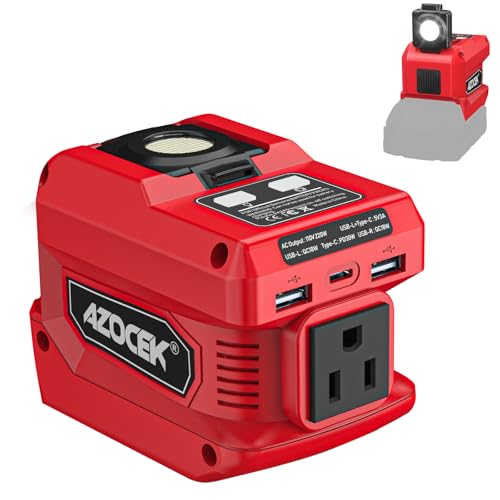
- Uses compatible Milwaukee 18V batteries
- 1 AC outlet plus USB-A and USB-C charging
- Built-in 400LM LED work light
Best For: Milwaukee battery owners who want portable backup power for small devices and light-duty use.
Best Lightweight Pick
Jackery Explorer 300 Portable Power Station

- 7.5-lb design is easy to carry anywhere
- 292Wh LiFePO4 battery with 4,000+ cycles
- 300W output for light-duty tools and devices
Best For: Light-duty tool charging, camping, and portable backup power for users who prioritize low weight.
Best Pocket-Size Pick
Ecarke 220W DeWALT Battery Inverter
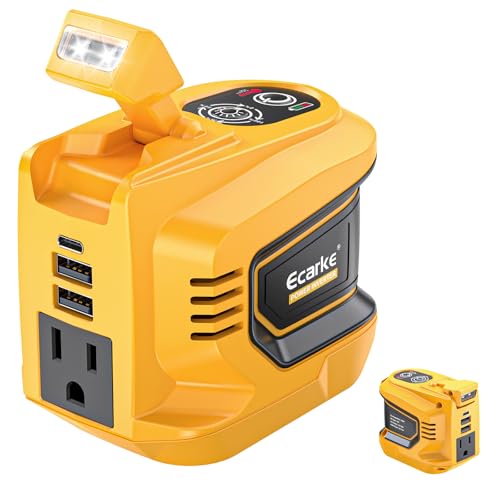
- Pocketable 0.68 lb design for tool bags and travel
- 220W continuous / 250W peak output
- AC, dual USB-A, Type-C, and LED work light
Best For: DeWALT 20V battery owners who need ultra-compact backup power for light-duty tasks and charging.
Best for Fast Recharge
Jackery Explorer 1000 v2 1070Wh Portable Power Station

- 1,500W AC output with 3,000W surge
- 1-hour emergency recharge via app
- Lightweight 23.8-lb build with LiFePO4 battery
Best For: DIYers and campers who want quick-recharging backup power for tools and devices.
Best Fast-Charging

- 49-minute AC recharge with HyperFlash tech
- 2,000W output and 3,000W peak for tools and backup
- Compact LiFePO4 design with long cycle life
Best For: People who need a quick-charging, portable power station for tools, outages, and travel.
Best Compact All-Rounder
GRECELL 330W Portable Power Station
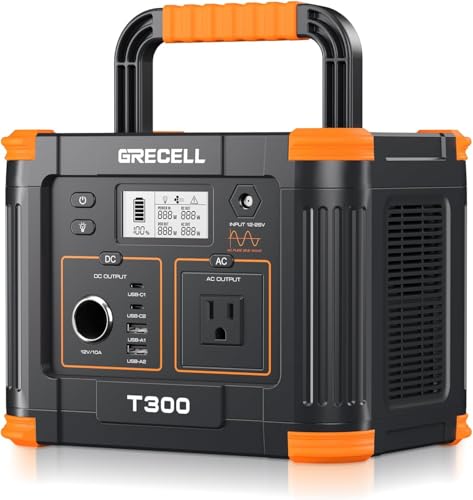
- 330W pure sine wave output with 600W surge
- 60W USB-C PD and 8-device charging versatility
- Solar-ready with built-in MPPT controller
Best For: Light-duty power-tool charging, camping, and compact emergency backup.
Best for Heavy-Duty Tools
EF ECOFLOW DELTA 3 Max Portable Power Station

- 3400W X-Boost output for demanding tools and appliances
- 0–80% recharge in about 1.13 hours
- LiFePO4 battery with 10ms transfer time for backup use
Best For: Contractors, DIYers, and homeowners who need tool-ready portable backup power.
Best for Light-Duty Tool Backup
HOWEASY 120W Portable Power Station

- Compact 88Wh battery for easy carry
- AC, DC, USB, and LED light included
- Good for small tools and emergency backup
Best For: DIYers who want a lightweight backup for small tools, lights, and quick off-grid charging.
Fastest Recharge for Jobsite Use – Anker SOLIX C1000 Portable Power Station
If you need a portable power station for power tools, the Anker SOLIX C1000 is a strong all-around pick thanks to its 1800W output, 2400W surge capacity, and very fast AC recharge time. It has enough headroom for many corded tools and jobsite gear, while the 1056Wh LiFePO4 battery makes it a practical option for backup power and weekend work.
Best For: Contractors, DIYers, and homeowners who want quick recharging and enough output for common power tools and jobsite essentials.
Pros:
- 1800W continuous output with 2400W surge for many tools and appliances
- Charges to 80% in 43 minutes and fully in under an hour with AC input
- LiFePO4 battery is rated for 3,000 cycles and long-term reliability
- 11 ports plus app control add flexibility for mixed loads
Cons:
- Not the highest-capacity choice for long runtime on heavier tools
- Fast charging requires the right AC setup and app-enabled UltraFast mode
- Solar input is good, but not enough to make it a full off-grid solution for every user
Overall, the Anker SOLIX C1000 stands out when you want a portable power station for power tools that balances speed, output, and durability. It is especially appealing if your priority is getting back to work quickly after charging rather than maximizing battery size alone.
Best for Milwaukee Users – Azocek 220W Battery Power Inverter
If you already own Milwaukee 18V batteries, this Azocek unit is a handy portable power station for power tools setups that also keeps small electronics charged. It turns a compatible battery into a compact 110V outlet, USB charging hub, and LED work light for jobsites, travel, and backup use.
Best For: Milwaukee battery owners who want a simple grab-and-go backup power option for phones, tablets, lights, and light-duty tools.
Pros:
- Directly uses Milwaukee 18V batteries for portable power without a separate battery pack.
- Includes 1 AC outlet, 2 USB-A ports, and 1 USB-C PD port for charging multiple devices.
- Built-in 400-lumen LED work light with adjustable angles and strobe mode.
- Safety protections and a cooling fan help support more reliable operation.
Cons:
- Battery is not included, so you need compatible Milwaukee packs to use it.
- 220W output is enough for small electronics, but not for heavy power tools or larger appliances.
For buyers who want a compact portable power station for power tools-related downtime and emergency charging, this is more of a battery-powered inverter than a full-size generator replacement. It makes the most sense as a lightweight add-on for Milwaukee users who value convenience over high wattage.
Best Lightweight Pick – Jackery Explorer 300 Portable Power Station
If you want a portable power station for power tools that is easy to carry and simple to use, the Jackery Explorer 300 is a practical compact option. Its 292Wh LiFePO4 battery, 300W rated output, and multiple ports make it better suited to light-duty tools, charging batteries, and keeping small jobsite gear running off-grid.
Best For: DIYers, campers, and travelers who need a lightweight backup power source for smaller power tools and electronics.
Pros:
- Only 7.5 lbs with an integrated handle, so it’s easy to move between the truck, campsite, and work area.
- LiFePO4 battery is rated for 4,000+ cycles, giving it strong long-term durability.
- Offers two AC outlets plus USB-C, USB-A, and car charging for flexible everyday use.
- Can be paired with solar panels for off-grid charging when you’re away from outlets.
Cons:
- 300W output is too limited for most full-size power tools and heavy startup loads.
- Solar panel is optional, so off-grid charging requires an extra purchase.
- 292Wh capacity is best for short sessions, not all-day jobsite power.
For buyers who value portability first, this Jackery is a sensible portable power station for power tools when the tools are small, the runtime needs are modest, and easy transport matters more than raw output.
Best Pocket-Size Pick – Ecarke 220W DeWALT Battery Inverter
If you already own a compatible DeWALT 20V battery, this compact inverter is a practical portable power station for power tools support and small electronics on the go. It trades big battery capacity for grab-and-go convenience, giving you AC, USB, and Type-C output in a tool-bag-friendly form factor.
Best For: DeWALT battery owners who want a lightweight backup power option for charging devices, running small essentials, and handling quick jobsite or camping needs.
Pros:
- Extremely compact and lightweight at just 0.68 lb for easy carry
- 220W continuous output with a 250W peak for small electronics and light tools
- Built-in LED work light with adjustable angles and SOS mode
- Charges up to three devices at once with AC, USB-A, and Type-C ports
Cons:
- Battery and charger are not included
- Not suitable for high-draw power tools or heavy-duty appliances
- Requires a compatible DeWALT 20V battery to use
For buyers who want a no-fuss portable power station for power tools support without carrying a bulky generator, this is a smart add-on. It is best viewed as an ultra-portable inverter for light-duty power, device charging, and emergency lighting rather than a full jobsite power solution.
Best for Fast Recharge – Jackery Explorer 1000 v2 1070Wh Portable Power Station
If you want a portable power station for power tools that can also pull double duty for camping and backup use, the Jackery Explorer 1000 v2 is a strong all-around pick. Its 1,500W AC output, 3,000W surge, and 1,070Wh LiFePO4 battery give it enough headroom for many corded tools while staying relatively compact and easy to carry.
Best For: DIYers, campers, and homeowners who want fast recharging, solid outlet variety, and a lightweight backup power source.
Pros:
- 1,500W AC output with 3,000W surge for demanding tools and small appliances
- Fast 1-hour emergency recharge via the Jackery app, with a quieter default mode
- Lightweight 23.8-lb design with a foldable handle for easier transport
- LiFePO4 battery rated for long life and 4,000+ charge cycles
Cons:
- Solar panel is optional and sold separately
- 1,500W output may not cover the heaviest shop tools
- Fastest charging requires app setup and emergency mode activation
For buyers comparing a portable power station for power tools, this Jackery stands out most for speed, portability, and practical everyday versatility rather than raw workshop muscle. It’s a smart choice if you need dependable mid-range power without lugging around a much heavier unit.
Best for Jump-Starting – VTOMAN Jump 600X Portable Power Station
If you want a portable power station for power tools that also pulls double duty in a roadside emergency, the VTOMAN Jump 600X is a smart hybrid option. Its 600W output, LiFePO4 battery, and built-in jump-start function make it useful for small jobsite loads, camping gear, and backup charging without carrying two separate devices.
Best For: Buyers who want a compact power station for light power tools, vehicle emergencies, and RV or camping use.
Pros:
- Built-in jump-start function adds real emergency value beyond basic portable power
- 600W AC output with 1200W surge is useful for smaller tools and everyday devices
- LiFePO4 battery offers long cycle life for repeated use
- Can charge up to 9 devices at once, including USB-C PD 60W
Cons:
- 299Wh capacity is modest for heavier power-tool workloads
- Jumper cables are sold separately
- Not ideal for larger tools that need sustained high wattage
For shoppers prioritizing flexibility over raw capacity, this portable power station for power tools makes more sense as a compact emergency-and-off-grid companion than a full jobsite workhorse. It’s a practical pick when you need portable AC power, 12V output, and jump-start backup in one unit.
Best Fast-Charging – Anker SOLIX C1000 Gen 2
If you want a portable power station for power tools that also doubles as a reliable home-backup unit, the Anker SOLIX C1000 Gen 2 is a strong all-around pick. Its 2,000W output, 3,000W peak, and 1,024Wh LiFePO4 battery give it enough muscle for many jobsite essentials, while the compact, lighter design makes it easier to move between garage, truck, RV, and campsite.
Best For: Buyers who want fast recharging, solid surge output, and a compact power station for tools, backup, and travel.
Pros:
- 49-minute ultra-fast AC charging helps it get back in service quickly.
- 2,000W output with 10 ports can handle a wide range of tools and gear.
- LiFePO4 battery and 4,000-cycle rating are built for long-term use.
- Compact, lighter build is easier to carry than many comparable stations.
Cons:
- High-wattage tools may still drain the 1,024Wh battery quickly.
- Fast charging and top performance rely on app settings and proper power input.
For shoppers comparing a portable power station for power tools, this model stands out for speed, portability, and practical backup features rather than raw battery size. It is a smart choice if you want a versatile unit that can move from tool duty to outage prep without much hassle.
Best Compact All-Rounder – GRECELL 330W Portable Power Station
If you want a practical portable power station for power tools and everyday backup needs, the GRECELL 288.6Wh unit is a compact option with enough output for lighter-duty gear, charging, and small essentials. Its 330W pure sine wave AC outlet, USB-C PD fast charging, and multiple ports make it a flexible pick for camping, travel, and emergency use.
Best For: Light power-tool charging, mobile work setups, camping trips, and compact home backup for small electronics.
Pros:
- 330W pure sine wave output with 600W surge for versatile small-device support
- 60W USB-C PD plus multiple USB-A, DC, car, and wireless charging options
- Built-in MPPT controller supports solar charging and faster recharge flexibility
- Upgraded battery management and dual cooling fans add extra protection
Cons:
- 330W capacity is too low for most full-size power tools and high-draw equipment
- Best suited to light-duty or battery charging rather than heavy jobsite use
This is a smart choice if you need a portable power station for power tools in the light-duty range, but it shines most as a compact, well-equipped backup for charging batteries and running small electronics.
Best for Heavy-Duty Tools – EF ECOFLOW DELTA 3 Max Portable Power Station
If you need a portable power station for power tools, the EcoFlow DELTA 3 Max stands out for its high 3400W X-Boost output and fast recharge speed. It’s a practical pick for jobsite backups, RV travel, and home outages when you want tool-ready power without long downtime.
Best For: Contractors, DIYers, and homeowners who want a fast-charging backup unit that can handle demanding tools and appliances.
Pros:
- 3400W X-Boost output is strong enough for many power tools and other heavy loads
- Charges from 0–80% in about 1.13 hours for quick turnaround
- LiFePO4 battery and 5-year service add long-term durability
- 10ms transfer time helps keep backup power seamless during outages
Cons:
- Higher-output performance usually means a bigger upfront investment
- Not the lightest option if you plan to move it frequently
For buyers comparing a portable power station for power tools, this model is appealing because it balances fast charging, strong surge-ready output, and dependable backup features. It’s especially useful if you want one unit that can do double duty for work, emergencies, and camping.
Best for Light-Duty Tool Backup – HOWEASY 120W Portable Power Station
If you need a compact portable power station for power tools, the HOWEASY 88Wh unit is better suited to light-duty jobs, quick top-offs, and emergency backup than heavy construction use. Its 110V AC outlet, DC output, USB ports, and built-in LED light make it a practical grab-and-go option for short tasks, camping, and roadside needs.
Best For: Charging small drills, inflating gear, powering lights, and keeping essential devices running during quick jobs or outages.
Pros:
- Compact 88Wh design is easy to carry and store.
- Includes AC, DC, USB, and LED light for flexible use.
- Useful for light tool charging and emergency backup.
- Solar panel compatibility adds off-grid convenience.
Cons:
- 120W output is too limited for most full-size power tools.
- Battery capacity is small for extended runtime.
- Best suited to low-draw gear rather than demanding worksite loads.
For buyers comparing a portable power station for power tools, this model makes sense when portability matters more than raw output. It’s a budget-friendly support battery for smaller tools and essentials, but not the right choice for long runtimes or high-wattage equipment.
How We Picked the Best Portable Power Station for Power Tools
To choose the best Portable Power Station for Power Tools, we looked at the features that matter most in real use: AC output, surge capability, battery capacity, recharge speed, battery chemistry, outlet variety, and overall portability. We also considered whether a model is better suited for tool charging, running corded equipment, or serving as a backup power source for mixed loads.
Quick Comparison
Smaller units are best for charging tool batteries, phones, and lights, while mid-size stations can handle compact saws, inflators, and more frequent use. High-output models are the right fit if you want to run multiple tools, heavier accessories, or power-hungry equipment with fewer interruptions. If runtime matters most, focus on watt-hours; if tool performance matters most, focus on continuous watts and surge watts.
Key Buying Factors for a Portable Power Station for Power Tools
Output and Surge Capacity
Check the continuous watt rating first, then the peak or surge rating. Many tools draw extra power at startup, so a station that looks powerful on paper may still fall short if its surge limit is too low.
Battery Capacity and Chemistry
Larger watt-hour ratings mean longer runtime and more recharges for tool batteries. LiFePO4 batteries are especially appealing for frequent use because they tend to offer strong cycle life and better long-term value.
Charging Speed
Fast recharging is useful if you work through the day or need a quick turnaround between tasks. Solar input can help, but wall charging is usually the fastest and most reliable option for job-site planning.
Ports and Compatibility
Look for AC outlets for chargers and corded tools, plus USB-C and USB-A for accessories. Some compact inverter-style products are designed specifically to work with existing tool batteries, which can be a smart budget option for brand loyalists.
Size and Portability
If you move the unit often, weight and handle design matter. Larger stations deliver more capability, but smaller models may be more practical if your main goal is keeping tool batteries topped off between tasks.
Who Should Buy Which Portable Power Station for Power Tools?
If you mainly need to charge drill, impact driver, or multitool batteries, a smaller portable station or battery-compatible inverter can be enough. For occasional cutting, inflating, or light site work, a mid-capacity unit offers a good balance of price and flexibility. If you want to power several tools, run longer sessions, or maintain backup power for the home and workshop, choose a higher-capacity, higher-output station with fast recharge and LiFePO4 chemistry.
In short, match the station to the tools you use most, not just the biggest watt number you see. That approach will help you get a Portable Power Station for Power Tools that feels dependable on day one and still makes sense a year from now.