Clean conduit bends depend on the right shoe size, accurate markings, and a tool that stays rigid under pressure. This roundup compares 10 precision conduit benders for common EMT, IMC, and rigid conduit applications.
Whether you need a compact 1/2-inch bender, a dual-size tool, or a larger 1-1/4-inch option, use the guide below to match capacity and construction to your workload.
Best 10 Precision Conduit Benders Picks for 2026
Angle-Setter Precision Pick
Klein Tools 3/4-Inch Aluminum Bender

- Angle Setter supports repeatable bends
- Works with 3/4-inch EMT and 1/2-inch RMC/IMC
- Wide foot pedal and bold cast markings
Best For: Repetitive, accurately aligned conduit bends
Reliable Everyday Choice
Southwire 3/4-Inch Conduit Bender

- Aluminum head with grooved hook
- Handles common bend types
- Includes a one-year manufacturer warranty
Best For: Routine conduit bending with a conventional handheld tool
Versatile Dual-Size Value

- Bends 1/2- and 3/4-inch EMT
- Handles 1/2-inch rigid and IMC
- Offset multiplier chart on handle
Best For: Mixed-size conduit work with fewer tools
Compact EMT Accuracy Pick
Klein Tools 1/2-Inch Aluminum Bender

- Angle Setter supports repeatable bends
- Clear markings aid common layouts
- Includes a conduit clamp for cutting
Best For: Accurate, repetitive 1/2-inch EMT installations
Heavy-Duty Choice
IDEAL 3/4-Inch Ductile Iron EMT Bender

- Ductile iron construction for heavy daily use
- Works with 3/4-inch EMT and 1/2-inch rigid or IMC
- Raised markings and anti-slip surfaces
Best For: Fleet and plant maintenance
Offset Specialist
TEMCo TH3030 Dual-Size EMT Offset Bender
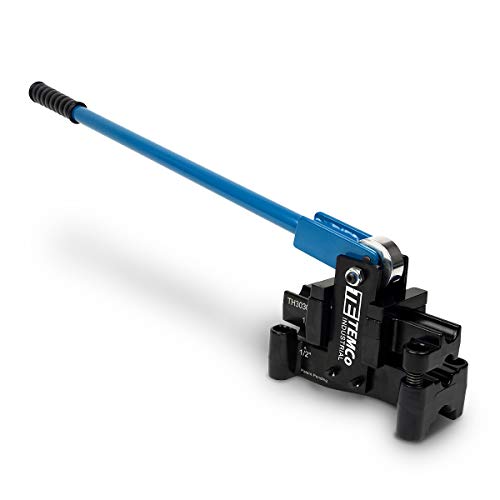
- Bends both 1/2-inch and 3/4-inch EMT
- Creates offsets in one motion
- Tool-free die changes in under one minute
Best For: Accurate electrical box offsets
Lightweight Performer
IDEAL 3/4-Inch Aluminum EMT Bender

- Lightweight aluminum construction
- Heat-treated head with reinforced stress points
- Visible markings and anti-slip hook design
Best For: Portable 3/4-inch EMT bending
Versatile Three-Size Pick
Aluminum EMT Conduit Bender Set

- Three heads for 1/2-inch, 3/4-inch, and 1-inch conduit
- Engraved angle markings support precise bends
- Serrated grip helps prevent slipping
Best For: Multi-size EMT, IMC, and RMC projects
Heavy-Duty Single-Size Pick
IDEAL 1-Inch Ductile Iron Bender
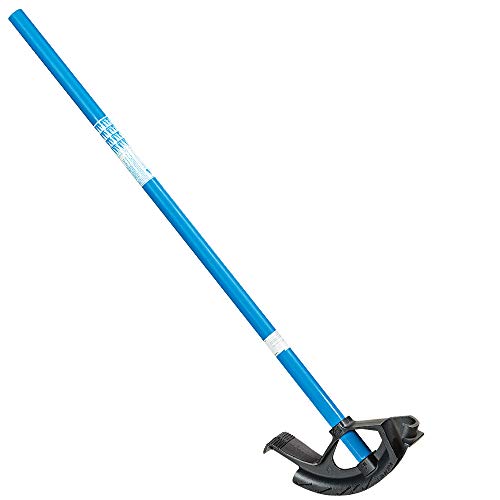
- Designed for 1-inch EMT conduit
- Also supports 3/4-inch rigid and IMC
- Ductile iron head supports heavy daily use
Best For: Frequent 1-inch EMT bending
Large-Conduit Specialist
IDEAL 1-1/4-Inch Ductile Iron Bender

- Designed for 1-1/4-inch EMT
- Also handles 1-inch rigid and IMC
- Raised markings and anti-slip surfaces aid control
Best For: Large-conduit fleet and plant maintenance
Angle-Setter Precision Pick – Klein Tools 3/4-Inch Aluminum Bender
For electricians comparing precision conduit benders, the Klein Tools 51607 combines an aluminum head with Angle Setter technology for repeatable bends in 3/4-inch EMT and 1/2-inch RMC or IMC. Cast markings, a stable foot pedal, and an interior hook help simplify common bending work.
Best For: Repeated, accurate bends on 3/4-inch EMT with support for 1/2-inch rigid conduit.
Pros:
- Angle Setter supports repeated 10-, 22.5-, 30-, and 45-degree bends while accounting for spring back.
- Bold markings and offset multipliers help with alignment and layout.
- Wide foot pedal improves stability, leverage, and comfort.
- Interior hook surface helps prevent conduit from rolling or twisting.
Cons:
- Its 3/4-inch EMT size is not intended as a universal solution for every conduit size.
- At 5.12 pounds, it is heavier than some compact hand benders.
The 51607 is a strong choice when consistent bend angles matter more than minimizing tool weight. Its included Angle Setter and clear markings make it particularly useful for repetitive installation work.
Reliable Everyday Choice – Southwire 3/4-Inch Conduit Bender
The Southwire conduit bender is a practical option for installers seeking precision conduit benders for common electrical bends. Its durable aluminum head and grooved hook are designed to provide control while handling 3/4-inch conduit.
Best For: Routine stub-up, offset, back-to-back, and saddle bends where a straightforward handheld tool is preferred.
Pros:
- Durable aluminum head is built for regular jobsite use.
- Grooved hook helps provide a non-slip grip on conduit.
- Handles common stub-up, offset, back-to-back, and saddle bends.
- Includes a one-year manufacturer warranty.
Cons:
- The supplied notes do not mention angle-setting stops or dedicated repeated-angle technology.
- Its listed model details identify a 1/2-inch style despite the product title describing a 3/4-inch bender, so buyers should verify sizing before purchase.
This Southwire model suits buyers who want a conventional bender for common conduit layouts. Confirm the exact conduit size before ordering, particularly because the supplied specifications and title differ.
Versatile Dual-Size Value – TEMCo 2-in-1 Conduit Bender
TEMCo 2 in 1 Dual Shoe Conduit Bender - 1/2" & 3/4" EMT, 1/2" Rigid - 2 Benders in 1 Tool
Check Price On AmazonFor crews that work across multiple conduit sizes, the TEMCo dual-shoe tool stands out among precision conduit benders by combining two bending capacities in one body. It handles 1/2- and 3/4-inch EMT plus 1/2-inch rigid and IMC.
Best For: Installers who want one tool for several common EMT, rigid, and IMC sizes.
Pros:
- Dual-shoe design bends both 1/2- and 3/4-inch EMT.
- Also bends 1/2-inch rigid and IMC.
- Uses the same bend radius as a standard bender.
- Includes an offset multiplier chart on the handle.
Cons:
- At 7 pounds, it is the heaviest listed option in this group.
- The two-in-one design may be less convenient than a single-size bender for dedicated repetitive work.
The TEMCo is compelling when reducing the number of tools in a kit is a priority. Its broad size compatibility adds flexibility, while the included five-year limited warranty and one-year no-questions-asked return policy provide additional purchase support.
Compact EMT Accuracy Pick – Klein Tools 1/2-Inch Aluminum Bender
The Klein Tools 51606 is designed for 1/2-inch EMT work and brings Angle Setter technology to precision conduit benders. Its cast markings, wide foot pedal, and interior hook support accurate alignment and stable handling across common bend types.
Best For: Repetitive 1/2-inch EMT installations requiring consistent angles and secure conduit control.
Pros:
- Angle Setter creates a hard stop for repeatable 10-, 22.5-, 30-, and 45-degree bends.
- Bold markings and multipliers support fast alignment for offsets, saddles, and back-to-back bends.
- Wide foot pedal provides stability, leverage, and comfort.
- Interior clamp can hold conduit securely while cutting with a hacksaw.
Cons:
- Designed for 1/2-inch EMT rather than multiple conduit sizes.
- Its 4.4-pound weight may be more than buyers seeking the lightest possible bender.
The 51606 is a focused choice for 1/2-inch EMT specialists. It offers the same repeatability-oriented Angle Setter concept as the larger Klein model while adding a useful conduit-holding clamp for cutting tasks.
Heavy-Duty Choice – IDEAL 3/4-Inch Ductile Iron EMT Bender
For precision conduit benders built for demanding routine work, this IDEAL model combines ductile iron strength with clear, raised markings. It handles 3/4-inch EMT as well as 1/2-inch rigid and IMC conduit, making it a versatile hand-powered option.
Best For: Fleet and plant maintenance, plus professionals who prioritize durability and secure handling.
Pros:
- Ductile iron construction is stronger than malleable iron or aluminum.
- Compatible with 3/4-inch EMT and 1/2-inch rigid and IMC conduit.
- Raised markings are visible on both sides of the bender head.
- Serrated step and internal hook surface help prevent slippage.
Cons:
- Its ductile iron construction may be less convenient to carry than a lightweight aluminum design.
- It is sized for specific conduit types rather than multiple EMT sizes.
This is a strong pick when long service life and dependable grip matter more than minimizing tool weight. Its visible markings also support consistent manual bends on the job.
Offset Specialist – TEMCo TH3030 Dual-Size EMT Offset Bender
Among precision conduit benders, the TEMCo TH3030 stands out for making electrical box offsets in both 1/2-inch and 3/4-inch EMT. Its dual-size design produces quick, repeatable offsets in one motion, reducing the need for double bending with a hand bender.
Best For: Electricians and DIY users who regularly make accurate offsets in two common EMT sizes.
Pros:
- One tool handles both 1/2-inch and 3/4-inch EMT.
- Makes quick, accurate offsets with a single motion.
- Die changes require no tools and can be completed in less than one minute.
- Lightweight aluminum construction supports easier movement around the jobsite.
Cons:
- It is specialized for offset bends rather than general-purpose conduit bending.
- Its 12.07-pound weight is substantial compared with simpler hand benders.
The TH3030 is especially practical when offset work is frequent. The interchangeable dies add flexibility without requiring separate benders for each supported EMT size.
Lightweight Performer – IDEAL 3/4-Inch Aluminum EMT Bender
This IDEAL aluminum model is one of the more portable precision conduit benders for 3/4-inch EMT. Its heat-treated head, raised markings, stable hook, and deeply serrated step are designed to support controlled bends and dependable handling on the jobsite.
Best For: Jobsite work where easy transport, visible markings, and a corrosion-resistant handle are priorities.
Pros:
- Lightweight aluminum construction is easier to transport.
- Heat-treated head and reinforced stress points support durability.
- Raised markings on both sides improve visibility.
- Grooved hook and serrated step help reduce slippage.
Cons:
- It is designed for 3/4-inch EMT rather than multiple conduit sizes.
- It lacks the ductile iron construction of heavier-duty alternatives.
- The supplied specifications list a corded-electric power source despite describing a manual conduit bender.
Choose this model when portability matters and your work centers on 3/4-inch EMT. Its stable hook and readable markings make it a practical everyday option for controlled manual bending.
Versatile Three-Size Pick – Aluminum EMT Conduit Bender Set
For projects involving several common conduit sizes, this three-piece set gives precision conduit benders in 1/2-inch, 3/4-inch, and 1-inch formats. Engraved angle markings, serrated gripping surfaces, and aluminum heads help support controlled manual bends across compatible EMT, IMC, and RMC applications.
Best For: Electricians and DIY users who need multiple common conduit sizes in one set.
Pros:
- Includes 1/2-inch, 3/4-inch, and 1-inch bender heads.
- Clearly engraved angle markings provide visual bend reference.
- Serrated designs help reduce pipe slipping during bends.
- Heat-treated construction combines aluminum heads with carbon-steel handles.
Cons:
- It is a relatively heavy set at 15.67 pounds.
- Compatibility is size-specific; it is not intended for every steel tube.
This set is a practical choice when versatility matters more than carrying a single lightweight bender. Confirm your conduit type and size before buying, especially for applications beyond the listed EMT, IMC, and RMC specifications.
Heavy-Duty Single-Size Pick – IDEAL 1-Inch Ductile Iron Bender
This IDEAL bender is a focused option for precision conduit benders in 1-inch EMT work, while also supporting 3/4-inch rigid and IMC conduit. Its ductile iron head, raised markings, serrated step, and internal hook are designed for durable, controlled manual bending.
Best For: Professionals who regularly bend 1-inch EMT and want a durable single-size tool.
Pros:
- Ductile iron construction provides more strength than malleable iron or aluminum.
- Raised markings on both sides improve visibility while working.
- Serrated step and internal hook surface help prevent slippage.
- Baked-on blue enamel handle finish resists corrosion.
Cons:
- It handles fewer conduit sizes than a multi-head set.
- The product listing specifies no warranty.
Choose this model when your work centers on its listed 1-inch EMT capacity and durability is a priority. Its dedicated design avoids the compromise of a general-purpose set, but it is less flexible for mixed-size jobs.
Large-Conduit Specialist – IDEAL 1-1/4-Inch Ductile Iron Bender
For larger electrical conduit, this IDEAL model provides a dedicated precision conduit bender for 1-1/4-inch EMT and 1-inch rigid or IMC. The ductile iron construction, raised markings, and anti-slip contact points make it suited to controlled manual bending in demanding maintenance or installation work.
Best For: Fleet, plant, and electrical maintenance tasks involving larger conduit.
Pros:
- Compatible with 1-1/4-inch EMT and 1-inch rigid or IMC conduit.
- Ductile iron construction is designed for heavy daily use.
- Raised markings on both sides improve bend visibility.
- Serrated step and internal hook help limit slippage.
Cons:
- Its single size limits versatility for smaller conduit.
- It is a specialized tool rather than a multi-size kit.
This bender makes the most sense when 1-1/4-inch EMT is a regular requirement. If your projects use several smaller sizes, pair it with additional dedicated benders rather than expecting one tool to cover the full range.
How We Picked These Precision Conduit Benders
We focused on tools suited to practical electrical installation work, comparing conduit capacity, compatible materials, construction, handle and shoe design, and overall versatility. The selection includes aluminum and ductile iron models, single-size and dual-size benders, and a multi-piece set for users who need broader coverage.
Priority goes to clear reference markings, secure conduit engagement, durable pivot and hook areas, and designs that can produce repeatable bends without unnecessary complexity. Always confirm the manufacturer’s specifications before using a bender with a conduit type or size outside its listed range.
Quick Comparison
| Best For | Look For | Most Suitable Option Types |
|---|---|---|
| Lightweight daily work | Aluminum head and comfortable handle | Single-size aluminum benders |
| Multiple common sizes | Dual shoes or a complete set | Dual-size and three-piece models |
| Heavy-duty use | Ductile iron construction and rigid handle | IDEAL ductile iron benders |
| Large conduit | 1-inch or 1-1/4-inch capacity | Large-size dedicated benders |
Key Buying Factors for Precision Conduit Benders
Conduit Size and Compatibility
Choose a bender based on the conduit’s trade size and material, not just the outside diameter. EMT, IMC, and rigid conduit can require different shoes and bending characteristics. A correctly matched tool helps prevent flattening, kinks, and inaccurate take-up measurements.
Single-Size Versus Multi-Size Design
A dedicated bender is often simpler and faster when most of your work uses one size. Dual-size tools and multi-piece sets cost more initially but can reduce the need to carry several separate tools. Check whether the design supports every size you regularly install.
Construction and Handling
Aluminum heads are generally easier to carry, while ductile iron models favor ruggedness and resistance to job-site abuse. Evaluate the handle length, grip, balance, hook shape, and visibility of degree markings. A comfortable, rigid tool is easier to control during repeated bends.
Markings and Bend Control
Reference marks for common angles, saddles, and offsets can improve consistency, but technique still matters. Look for sharply defined markings and a shoe that holds conduit securely throughout the bend.
Who Should Buy Which Precision Conduit Benders?
Choose a single-size aluminum model if you mainly install 1/2- or 3/4-inch EMT and want a light, straightforward tool. A dual-size bender is a better fit for service technicians and electricians who frequently switch between common conduit sizes. Consider a multi-piece set when your work spans 1/2-, 3/4-, and 1-inch EMT or includes IMC and rigid pipe.
For demanding commercial or industrial environments, a ductile iron bender may be worth the extra weight. Users working with larger conduit should select a dedicated 1-inch or 1-1/4-inch model rather than forcing a smaller shoe beyond its intended capacity. Regardless of style, verify capacity, markings, and replacement-handle or shoe availability before buying.