Low water pressure can make a standard reverse osmosis system slow, wasteful, and frustrating. The right pump-assisted or low-pressure-friendly model can restore practical flow while delivering cleaner, better-tasting drinking water.
We compared 10 leading under-sink systems across pressure support, production rate, efficiency, filtration stages, tankless design, and remineralization features to help you choose with confidence.
Best 10 Reverse Osmosis Systems for Low Water Pressure Picks for 2026
Best Overall
iSpring RCC7P-AK Alkaline RO System

- Electric booster pump for low-pressure homes
- Six-stage filtration with alkaline remineralization
- Reduces up to 99% of 1,000+ listed contaminants
Best For: Households wanting pumped, alkaline-filtered RO water
Best Tankless Option
iSpring RCC1DP 150 GPD RO/DI System

- Tankless design with built-in low-pressure pump
- 150 GPD membrane for faster filtration
- DI stage targets 0–1 ppm TDS output
Best For: Aquariums, labs, and specialized low-TDS water needs
Best Waste-Saving Design
APEC RO-PERM Permeate Pump RO System

- Non-electric permeate pump for low-pressure homes
- May reduce wastewater by up to 80%
- Five-stage filtration with a storage tank
Best For: Households prioritizing tank speed and water efficiency
Best High-Capacity Pick
iSpring RCS5T 500 GPD Tankless RO System
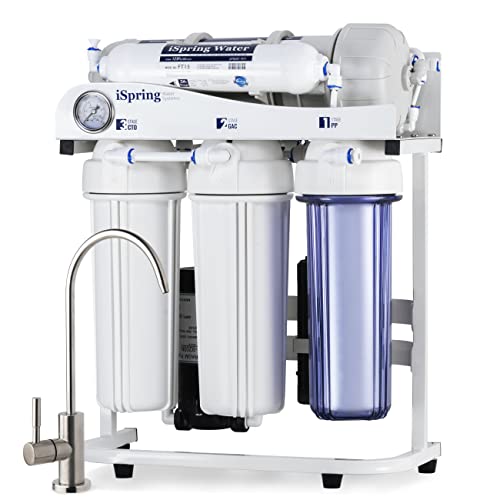
- Built-in booster pump for low water pressure
- 500 GPD membrane with 1.5:1 pure-to-drain ratio
- Pressure gauge supports easier monitoring
Best For: Light commercial spaces needing higher RO capacity
Best Alkaline Upgrade

- 10-stage filtration with alkaline remineralization
- 0.8 gpm maximum flow rate and storage tank
- Manual operation with leak detection
Best For: Alkaline water seekers wanting a tank-based, DIY-friendly system
Best for Everyday Use

- 600 GPD tankless system with 2:1 drain ratio
- Smart faucet tracks TDS and filter life
- NSF/ANSI 58 certified for TDS reduction
Best For: High-use households with power available under the sink
Best Certified Alkaline System

- NSF/ANSI 58-certified six-stage filtration
- Alkaline remineralization adds natural minerals
- Power-free design with top-mounted faucet installation
Best For: Certification-focused buyers wanting alkaline water without an outlet
Best with Extra Features
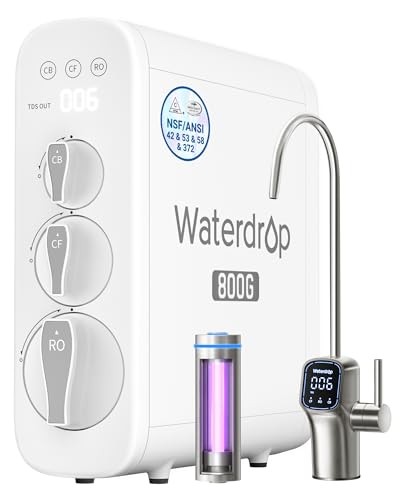
- 800 GPD tankless output for high demand
- 10-stage filtration with multiple NSF certifications
- Smart faucet and 3:1 pure-to-drain ratio
Best For: Large households prioritizing fast, on-demand filtered water
Best No-Power Option

- No electricity required for operation
- NSF/ANSI 58 certified five-stage filtration
- 75 GPD tank system with brushed-nickel faucet
Best For: Homes wanting stored RO water without a powered unit
Best Remineralizing Design

- 220 GPD output with faster bottle filling
- Adds potassium, calcium, sodium, and magnesium
- Compact body with quick all-in-one filter changes
Best For: Smaller households wanting faster flow and mineral-enhanced taste
Best Overall – iSpring RCC7P-AK Alkaline RO System
For households seeking reverse osmosis systems for low water pressure, the iSpring RCC7P-AK combines an electric booster pump with six-stage filtration. It also adds alkaline remineralization, making it a practical under-sink option for homes that want higher filtration performance and a mineral-balanced taste.
Best For: Homes with low water pressure that want alkaline remineralized drinking water.
Pros:
- Booster pump supports consistent filtration in low-pressure homes and can reduce wastewater.
- Six-stage system reduces up to 99% of more than 1,000 listed contaminants.
- Alkaline stage restores minerals and balances the water’s taste.
- Transparent first-stage housing makes filter condition easier to monitor.
Cons:
- Requires a nearby electrical outlet for the corded pump.
- Its 15-by-8-by-18-inch footprint may be substantial for crowded cabinets.
The RCC7P-AK is a strong all-around choice when low pressure is the main concern but alkaline water and broad contaminant reduction are also priorities. Its registered warranty and lifetime technical support add reassurance for installation and ownership.
Best Tankless Option – iSpring RCC1DP 150 GPD RO/DI System
The iSpring RCC1DP is a tankless RO/DI system built for consistent performance where water pressure is limited. Its integrated pump supports filtration, while the 150 GPD membrane and deionization stage are designed for especially low-TDS output in aquariums, laboratories, and other demanding applications.
Best For: Aquariums, laboratories, dental facilities, and users needing tankless 0–1 ppm TDS water.
Pros:
- Built-in pump is designed to maintain performance in low-pressure environments.
- Tankless design saves storage space under the sink.
- 150 GPD membrane supports faster filtration than lower-capacity systems.
- DI stage is specified to produce water at 0–1 ppm TDS for suitable applications.
Cons:
- The deionization-focused design may be more specialized than a typical household drinking-water system.
- It requires corded electricity and does not provide alkaline remineralization.
Choose the RCC1DP when tankless operation, pumped performance, and very low TDS matter more than a conventional household setup. Its stated applications make it particularly compelling for technical and aquarium use.
Best Waste-Saving Design – APEC RO-PERM Permeate Pump RO System
The APEC RO-PERM is one of the reverse osmosis systems for low water pressure that uses a non-electric permeate pump rather than a powered booster pump. It is designed to improve delivery pressure, fill its storage tank faster, and reduce wastewater, making it suitable for homes that want a more efficient traditional tank-based system.
Best For: Low-pressure homes that want a tank system with improved pressure and lower wastewater.
Pros:
- Permeate pump helps low-pressure homes use RO filtration effectively.
- Claimed to fill the storage tank 2–3 times faster and reduce wastewater by up to 80%.
- Five-stage filtration reduces up to 99% of listed impurities.
- Non-electric design avoids adding a powered booster pump.
Cons:
- Uses a storage tank, so it needs more cabinet space than a tankless system.
- Does not include alkaline remineralization or deionization.
The RO-PERM stands out for efficiency-minded buyers who prefer a conventional tank system but need help with low pressure. Its permeate pump improves system operation without requiring an electric power source.
Best High-Capacity Pick – iSpring RCS5T 500 GPD Tankless RO System
The iSpring RCS5T is a high-capacity choice among reverse osmosis systems for low water pressure, pairing a built-in booster pump with a 500 GPD membrane. Its 1.5:1 pure-to-drain ratio and pressure gauge make it especially suited to light commercial settings that need higher output and visible pressure monitoring.
Best For: Restaurants, salons, labs, offices, and high-volume under-sink filtration.
Pros:
- Built-in booster pump raises pressure to support RO production in low-pressure conditions.
- 500 GPD membrane provides substantially higher stated capacity.
- 1.5:1 pure-to-drain ratio is designed to reduce water waste.
- Included pressure gauge makes system pressure easier to monitor.
Cons:
- The 0.3 GPM maximum flow rate may not suit every high-demand application.
- Its commercial-oriented design may be more system than a small household needs.
- Requires AC power for the booster pump.
The RCS5T is a sensible pick when low pressure and production capacity are both important. Its booster pump, pressure gauge, and low-waste ratio give it a clear advantage for light commercial or higher-volume use.
Best Alkaline Upgrade – Express Water ROALK10D
The Express Water ROALK10D is a practical option for households comparing reverse osmosis systems for low water pressure. Its 10-stage design includes alkaline remineralization, a storage tank, and a maximum flow rate of 0.8 gpm, while its manual operation avoids an under-sink electrical requirement.
Best For: Users who want alkaline remineralization, a tank-based design, and straightforward DIY installation.
Pros:
- 10-stage filtration reduces a broad range of listed contaminants, including lead, chlorine, fluoride, nitrates, and arsenic.
- Alkaline filter adds calcium, potassium, magnesium, and other minerals.
- Includes leak detection, a storage tank, faucet, and a 1-year warranty.
- Quick-connect fittings support future customization with optional filtration attachments.
Cons:
- The under-sink tank requires more cabinet space than a tankless design.
- Its listed capacity is 100 gallons, lower than the 600 GPD rating of the Waterdrop system in this roundup.
With no electrical power requirement and a built-in tank, this Express Water model is a sensible fit where installation simplicity matters. Confirm available cabinet space and household water conditions before choosing it for a low-pressure setup.
Best for Everyday Use – Waterdrop G3P600
The Waterdrop G3P600 stands out among reverse osmosis systems for low water pressure with its high-capacity, tankless design and fast stated dispensing performance. It produces up to 600 gallons per day, uses an 8-stage filtration process, and has a 2:1 pure-to-drain ratio, but it does require under-sink electricity.
Best For: Households prioritizing high output, compact tankless storage, and water-quality monitoring.
Pros:
- 600 GPD capacity and a stated 0.42 gpm maximum flow rate support frequent use.
- Tankless construction saves 70% of under-sink space compared with the product’s referenced tank design.
- Smart display faucet shows TDS and filter-life information.
- NSF/ANSI 58 certification covers TDS reduction, with additional certifications for lead-free materials and chlorine reduction.
Cons:
- Requires under-sink electricity.
- The listed operating pressure range is 87 psi, so buyers should verify compatibility with their plumbing conditions.
- Its electronic tankless design may be less suitable for installations without a nearby outlet.
This is the most capacity-focused option here and offers useful monitoring through its display faucet. Its pressure requirement and electrical dependency deserve special attention when shopping for a low-pressure installation.
Best Certified Alkaline System – iSpring RCC7AK-BN
The iSpring RCC7AK-BN is a 6-stage alkaline reverse osmosis system for shoppers evaluating reverse osmosis systems for low water pressure. It operates without power, includes a storage tank, and is certified to NSF/ANSI 58 for the complete filtration system. Its listed operating pressure is 70 psi, making pressure verification especially important before purchase.
Best For: Buyers seeking full-system NSF/ANSI 58 certification, mineral remineralization, and a power-free under-sink setup.
Pros:
- NSF/ANSI 58 certification applies to the entire RO system.
- Alkaline AK stage adds natural minerals and supports a balanced pH.
- Top-mounted faucet fastener and quick fittings simplify installation from above the sink.
- Transparent first-stage housing makes filter buildup easy to inspect.
Cons:
- The listed operating pressure is 70 psi, so it may require careful pressure matching in a low-pressure home.
- Its 75 GPD capacity is lower than the Waterdrop G3P600’s 600 GPD rating.
- The storage tank takes up cabinet space.
The RCC7AK-BN combines strong certification credentials with alkaline remineralization and no electrical requirement. Still, its 70 psi operating-pressure listing means buyers should confirm their home’s pressure or plan for appropriate support before installation.
Best with Extra Features – Waterdrop G3P800
For households comparing reverse osmosis systems for low water pressure, the Waterdrop G3P800 stands out for its high production rate and tankless design. It produces up to 800 gallons per day, dispenses a cup in about five seconds, and uses a 3:1 pure-to-drain ratio. Its powered design may be especially useful where faster flow is a priority, though installation requires drilling two holes.
Best For: Large families that want fast, on-demand filtration and a space-saving under-sink system.
Pros:
- 800 GPD capacity and fast dispensing performance.
- 10-stage filtration with SGS testing and NSF/ANSI 42, 53, 58, and 372 certifications.
- Tankless design saves under-sink space and produces only one cup of wastewater per three cups filtered.
- Smart faucet displays TDS and water quality at a glance.
Cons:
- Requires drilling separate holes for the faucet and drain connection.
- Uses corded electric power, unlike non-powered systems.
- Specified maximum feed-water TDS is 500 ppm.
The G3P800 is a strong fit when low-pressure conditions make production speed and consistent availability important. Its extensive certifications and smart faucet add reassurance, while the electrical connection and drilling requirements make installation more involved than simpler systems.
Best No-Power Option – iSpring RCC7-BN
The iSpring RCC7-BN is a practical choice among reverse osmosis systems for low water pressure when you prefer a traditional storage-tank setup that needs no electricity. Its five-stage system is NSF/ANSI 58 certified, reduces up to 99% of more than 1,000 listed contaminants, and includes a brushed-nickel faucet with a top-mounted design intended to simplify installation.
Best For: Homeowners seeking a non-powered, high-capacity under-sink RO system with stored purified water.
Pros:
- Requires no power source.
- NSF/ANSI 58 certified and designed to reduce contaminants including PFAS, fluoride, lead, and arsenic.
- Storage-tank design provides a 75-gallon-per-day capacity.
- Transparent first-stage housing makes filter inspection easier.
Cons:
- Tank-based design occupies more under-sink space than compact tankless models.
- Its stated 75 GPD capacity is considerably lower than the other listed Waterdrop systems.
- Installation requires an under-sink setup with multiple housings, tubing, and a faucet.
Because it stores filtered water and does not need electricity, the RCC7-BN can be a sensible option where pressure or power availability is a concern. Choose it if storage capacity and straightforward, established filtration matter more than compact dimensions or maximum dispensing speed.
Best Remineralizing Design – Waterdrop T3-T
For shoppers evaluating reverse osmosis systems for low water pressure, the Waterdrop T3-T combines a 220 GPD production rate with a compact design and an integrated remineralization stage. It can fill five 16.9-ounce bottles in about one minute, uses a 2:1 pure-to-drain ratio, and has a seven-stage system tested by SGS according to NSF/ANSI 58 standards.
Best For: Smaller households that want faster flow, mineral-enhanced taste, and easy filter replacement.
Pros:
- 220 GPD output helps reduce waiting compared with traditional 75 GPD systems.
- Remineralizes water with potassium, calcium, sodium, and magnesium.
- Compact 12.6-by-6.1-by-14.69-inch design preserves under-sink storage.
- All-in-one filters twist out quickly, and NFC reminders help track replacement.
Cons:
- Faucet installation requires drilling a countertop hole.
- Lower production capacity than the 800 GPD model in this roundup.
- The supplied notes indicate an additional CF filter with a stated life of up to six months, so replacement planning is still required.
The T3-T is appealing when you want a compact RO system that addresses taste as well as contaminant reduction. Its faster-than-traditional flow and efficient water ratio suit everyday use, while the drilled-faucet installation remains a consideration for renters or anyone avoiding countertop modifications.
How We Picked the Best Reverse Osmosis Systems for Low Water Pressure
We focused on systems that are better suited to homes with weak or inconsistent incoming pressure. That includes models with built-in booster or permeate pumps, pressure gauges, high production ratings, and designs intended to improve recovery or reduce drain-water waste.
We also considered filtration configuration, installation format, replacement-filter availability, certification claims, remineralization, footprint, and day-to-day convenience. A high gallon-per-day rating is useful, but it does not automatically guarantee fast output when source pressure is poor.
Quick Comparison
- Best all-around pump-assisted option: iSpring RCC7P-AK combines a booster pump with alkaline remineralization.
- Best for efficiency: APEC Water RO-PERM uses a permeate pump to improve tank filling and reduce wastewater.
- Best tankless choices: Waterdrop G3P600 and G3P800 offer compact designs and high rated output.
- Best commercial-style capacity: iSpring RCS5T is built for faster production and includes a pressure gauge.
- Best for remineralized water: iSpring RCC7AK-BN, Express Water ROALK10D, and Waterdrop T3-T add mineral-focused finishing stages.
Key Buying Factors for Reverse Osmosis Systems for Low Water Pressure
Booster or Permeate Pump
A booster pump actively raises pressure before filtration and is generally the strongest choice when incoming pressure is substantially low. A permeate pump can improve efficiency and tank performance by using existing hydraulic energy, but it is not a substitute for a powered booster in every installation.
Rated Production and Real-World Flow
Look beyond the advertised GPD figure. Membrane ratings are commonly measured under favorable conditions, and colder water, clogged filters, low temperature, or weak pressure can reduce actual output. Tankless models provide on-demand flow, while tank systems store purified water for quicker dispensing.
Waste Ratio and Operating Cost
Reverse osmosis creates concentrate water during filtration. Models with pumps or improved membrane technology may reduce the pure-to-drain ratio, helping conserve water. Check replacement membrane and cartridge costs before buying, not just the initial system price.
Size, Noise, and Installation
Tankless units save cabinet space but need power and may produce pump noise. Traditional tank systems need more room but can continue dispensing stored water during brief periods of low pressure or high demand. Confirm tubing, faucet, drain, and electrical requirements before installation.
Who Should Buy Which Reverse Osmosis Systems for Low Water Pressure?
Choose a pump-assisted system such as the iSpring RCC7P-AK or RCC1DP if low pressure is your primary concern. Pick the APEC RO-PERM when efficiency and improved storage-tank performance matter most. For a compact, modern setup, consider the Waterdrop G3P600, G3P800, or T3-T tankless models.
Buy the iSpring RCS5T if you need higher capacity or commercial-style monitoring. If you want alkaline or remineralized water, compare the RCC7AK-BN, Express Water ROALK10D, RCC7P-AK, and Waterdrop T3-T based on space, output, and maintenance costs. Before installation, verify your actual water pressure and follow the manufacturer’s minimum-pressure requirements.