Choosing among reverse osmosis systems for whole-house use means balancing contaminant reduction, flow rate, water waste, maintenance, and installation requirements. The right setup can improve drinking water while also addressing sediment, hardness, iron, manganese, PFAS, or heavy metals throughout your home.
Our roundup includes tankless and under-sink RO systems alongside whole-house filter and softener bundles, helping you match the equipment to your water quality, household size, and available plumbing space.
Best 10 Reverse Osmosis Systems for Whole-House Use Picks for 2026
Commercial High-Flow Pick

- Produces up to 1,000 GPD
- Four-stage commercial filtration
- Best for high-volume RO demand
Best For: Large homes and light commercial applications
Iron and Manganese Specialist

- Treats water at the main supply line
- Reduces iron and manganese
- Maintains healthy minerals and does not reduce TDS
Best For: Homes with iron, manganese, sediment, or chlorine concerns
Water-Saving Under-Sink Pick

- Produces up to 300 GPD
- Uses a 1.5:1 pure-to-drain ratio
- Built-in booster pump and pressure gauge
Best For: High-demand kitchen and light-commercial RO water
Complete Home Treatment Bundle

- Combines softening and RO treatment
- Designed for 1 to 6 bathrooms
- Programmable automatic control head
Best For: Homes needing softened water plus dedicated RO drinking water
Commercial Capacity Pick
iSpring RCS5T Tankless RO System
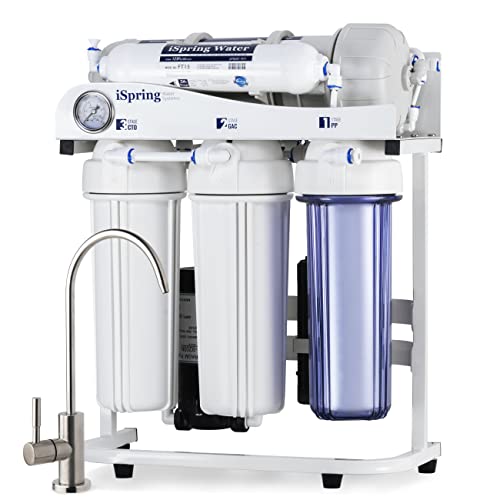
- 500 GPD capacity with a 1.5:1 pure-to-drain ratio
- Booster pump supports low-pressure installations
- Five-stage filtration with included faucet and pressure gauge
Best For: Light commercial use or high-demand under-sink purification
Whole-Home PFAS Pick
iSpring WGB21B-PFKS Filter System
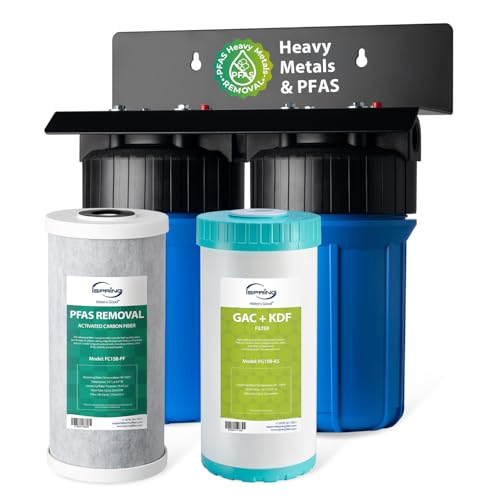
- SGS-tested media reduces up to 99% of PFAS
- Two-stage filtration targets metals, chlorine, odor, and sediment
- 50,000-gallon or 12-month cartridge life
Best For: Whole-home PFAS and heavy-metal reduction with minerals retained
Smart Under-Sink Pick

- 600 GPD output with a 2:1 pure-to-drain ratio
- Smart faucet shows TDS and filter-life status
- Compact tankless design with tool-free filter changes
Best For: Fast, monitored RO water at the kitchen faucet
Best Whole-Home Bundle
Aquasure 64,000-Grain Softener with 75 GPD RO

- Sized for four to five bathrooms and up to six people
- 64,000-grain softening capacity
- Includes 75 GPD RO filtration and long-term support
Best For: Larger households wanting softened water and RO drinking water in one bundle
Best Under-Sink RO Option
iSpring 6-Stage Alkaline RO System

- NSF/ANSI 58 certified complete RO system
- Adds minerals with an alkaline remineralization stage
- Top-mounted faucet design supports easier installation
Best For: Point-of-use drinking-water filtration rather than whole-home treatment
Best Compact Whole-Home Bundle
Aquasure 32,000-Grain Softener with 75 GPD RO

- Sized for one to two bathrooms and up to three people
- 32,000-grain softening capacity
- Combines whole-home treatment with a 75 GPD RO system
Best For: Smaller households needing softened water and RO drinking water
Commercial High-Flow Pick – 1,000 GPD Tankless RO System
For homes with unusually high purified-water demand, the iSpring CRO1000 is one of the more capable reverse osmosis systems for whole-house use, though it is best understood as a high-output point-of-use or connected-water system rather than a complete whole-home treatment setup. Its tankless design produces up to 1,000 gallons per day and provides on-demand filtration.
Best For: Large households, home businesses, restaurants, and other applications needing high-volume RO water.
Pros:
- High 1,000 GPD capacity with a 0.7 GPM flow rate.
- Four-stage filtration includes sediment, two carbon filters, and a commercial RO membrane.
- Tankless, wheeled frame includes inlet and outlet pressure gauges.
- Designed to connect with faucets, refrigerators, ice makers, dispensers, and similar equipment.
Cons:
- Requires adequate incoming pressure; a booster pump is recommended below 80 psi.
- Its commercial size and freestanding frame may be excessive for modest residential needs.
- It treats connected RO-water outlets rather than automatically filtering every household fixture.
The CRO1000 stands out for production capacity and commercial-grade construction. Confirm your plumbing layout, available water pressure, and intended outlets before treating it as a whole-house solution.
Iron and Manganese Specialist – 3-Stage Whole-House Filter
The iSpring WGB32BM is a whole-house companion to reverse osmosis systems for whole-house use, not an RO membrane system itself. Installed at the main water line, it targets iron, manganese, sediment, chlorine, rust, odors, and other listed impurities while maintaining healthy minerals instead of reducing TDS.
Best For: Homes with iron or manganese concerns that need treated water at every fixture.
Pros:
- Whole-house installation treats water throughout the home.
- Third-stage media is rated to reduce iron up to 3.0 ppm and manganese up to 1.0 ppm.
- Supports flow rates up to 15 GPM through 1-inch inlet and outlet connections.
- 100,000-gallon capacity and cartridges lasting up to 12 months are suited to family use.
Cons:
- It is not an RO system and does not reduce TDS.
- It does not provide the dissolved-solids reduction associated with reverse osmosis.
- Actual cartridge life depends on water quality and usage.
Choose the WGB32BM when whole-home flow and iron reduction matter more than TDS removal. For drinking-water RO treatment, pair a main-line filter like this with a separate RO system at the desired outlet.
Water-Saving Under-Sink Pick – 300 GPD Tankless RO
The iSpring RCB3P is a compact, high-capacity option for targeted drinking-water treatment. Among reverse osmosis systems for whole-house use, it is better suited to an under-sink or dedicated light-commercial installation, delivering up to 300 gallons per day while using a stated 1.5:1 pure-to-drain ratio.
Best For: Kitchens, offices, restaurants, salons, and other locations needing high-output RO water from selected fixtures.
Pros:
- Produces up to 300 gallons of purified water per day.
- Built-in booster pump helps increase production and supports a 1.5:1 pure-to-drain ratio.
- Reduces up to 99% of more than 1,000 listed contaminants, including PFAS, lead, fluoride, and arsenic.
- Includes a stainless steel frame and pressure gauge for installation and monitoring.
Cons:
- It is designed for under-sink or selected-use installation, not whole-home fixture coverage.
- The storage tank is compatible but not included.
- Maximum listed flow is 0.2 GPM, so dispensing speed may be limited at the faucet.
The RCB3P makes sense when you want strong RO performance without a large storage tank or excessive wastewater. Verify cabinet space, electrical access, and whether the included configuration meets your storage needs.
Complete Home Treatment Bundle – Softener and 75 GPD RO Bundle
The Aquasure bundle combines whole-home softening and prefiltration with a 75 GPD, four-stage RO system. It is a practical choice for shoppers comparing reverse osmosis systems for whole-house use because it addresses hard water throughout the home while adding RO filtration for cleaner drinking water, although the RO portion is not intended to supply every fixture.
Best For: Homes with up to six bathrooms that need softened whole-house water plus dedicated RO drinking water.
Pros:
- Combines a 72,000-grain-class softener setup with a 75 GPD RO system.
- Prefilters target sediment, chlorine, VOCs, odors, taste, rust, and other listed contaminants.
- Programmable digital control head automates regeneration, backwash, and flushing functions.
- Designed for whole-home use and includes support plus an extended warranty after online activation.
Cons:
- The RO output is 75 GPD, lower than the commercial systems in this roundup.
- Installation is listed as under-sink for the RO portion, so it does not independently provide RO water at every outlet.
- Softener and RO components require separate space and ongoing filter maintenance.
This bundle is the most comprehensive fit for households dealing with both hardness and drinking-water quality concerns. Its value comes from combining whole-home softening with targeted RO treatment rather than replacing a dedicated whole-house RO distribution system.
Commercial Capacity Pick – iSpring RCS5T Tankless RO System
For shoppers comparing reverse osmosis systems for whole-house use, the iSpring RCS5T is better suited to high-demand point-of-use applications than full-home filtration. Its 500 GPD capacity, booster pump, and 1.5:1 pure-to-drain ratio make it a practical option for restaurants, salons, labs, offices, or households needing substantial purified water at one drinking-water station.
Best For: Light commercial settings and homes with low water pressure that need high-capacity under-sink RO filtration.
Pros:
- 500 GPD membrane and a relatively low 1.5:1 pure-to-drain ratio.
- Booster pump helps improve production when incoming water pressure is low.
- Five-stage filtration addresses sediment, chlorine, odors, PFAS, heavy metals, and pesticide residues.
- Includes a swivel faucet and easy-to-read pressure gauge.
Cons:
- It is an under-sink system, not a complete whole-house filtration setup.
- Requires AC power and has a listed maximum flow rate of 0.3 GPM.
- The supplied warranty is limited to 30 days against manufacturer defects.
The RCS5T stands out when output and pressure assistance matter more than compact simplicity. However, buyers seeking filtration at every household tap will need to pair it with, or choose instead, a dedicated whole-house system.
Whole-Home PFAS Pick – iSpring WGB21B-PFKS Filter System
Among reverse osmosis systems for whole-house use, the iSpring WGB21B-PFKS fills a different role: it is a whole-house, two-stage filter rather than an RO membrane system. Its 1-inch ports, compact wall-mount design, and PFAS-focused second stage make it a practical choice for treating water throughout a smaller home, apartment, vacation property, or well-water setup.
Best For: Whole-home reduction of PFAS, chlorine, sediment, and heavy metals while retaining essential minerals.
Pros:
- SGS-tested second-stage media reduces up to 99% of PFAS, including PFOA and PFOS.
- First-stage KDF and GAC media target chlorine, chloramine, lead, mercury, odors, pesticides, and sediment.
- 50,000-gallon or 12-month filter life helps limit replacement frequency.
- Standard 1-inch NPT ports and installation guides support DIY setup.
Cons:
- It is not a reverse osmosis system and does not provide TDS-free water.
- The listed maximum supported TDS is 300 ppm.
- Replacement cartridges are needed about every 12 months under the stated service-life guidance.
This system is a strong whole-home complement for buyers focused on PFAS and heavy-metal reduction without removing minerals. For lower-TDS drinking water, the manufacturer suggests pairing it with a separate under-sink RO system.
Smart Under-Sink Pick – Waterdrop G3P600 Tankless RO
The Waterdrop G3P600 is a compact under-sink option for shoppers researching reverse osmosis systems for whole-house use but primarily needing purified water at the kitchen faucet. Its 600 GPD output, tankless footprint, smart display faucet, and 2:1 pure-to-drain ratio provide convenient, high-throughput drinking-water filtration without treating every tap in the home.
Best For: Kitchens needing fast, monitored RO water in a space-saving under-sink design.
Pros:
- 600 GPD capacity and a 2:1 pure-to-drain ratio support efficient daily use.
- Eight-stage filtration is tested to reduce TDS, PFAS, fluoride, arsenic, chlorine, and other listed contaminants.
- Smart faucet displays TDS and filter-life information.
- Tankless design saves under-sink space, with tool-free filter changes.
Cons:
- It is an under-sink point-of-use system, not whole-house filtration.
- Requires electricity under the sink.
- Its 87 PSI operating-pressure requirement may limit compatibility with some plumbing setups.
The G3P600 is appealing when speed, compact installation, and filter monitoring are priorities. Buyers wanting treated water from every fixture should view it as a kitchen RO solution and pair it with a separate whole-house prefilter if needed.
Best Whole-Home Bundle – Aquasure 64,000-Grain Softener with 75 GPD RO
For larger households comparing reverse osmosis systems for whole-house use, this Aquasure bundle combines a 64,000-grain water softener with a 75 GPD reverse osmosis drinking-water system. It is sized for homes with four to five bathrooms and up to six family members, while its metered control head is designed to help manage water use and maintenance.
Best For: Larger families seeking softened household water plus purified drinking water from one bundled system.
Pros:
- Designed for homes with four to five bathrooms and up to six family members.
- 64,000-grain capacity targets hardness minerals such as iron and magnesium.
- Includes a 75 GPD RO system and up to five years of manufacturer warranty with lifetime technical support.
Cons:
- Its 64-inch height may require substantial installation space.
- The listed maximum flow rate is 1.33 GPM.
- It is a larger-capacity option than smaller households may need.
This is a practical choice when whole-home softening capacity matters as much as drinking-water filtration. Confirm available space, water pressure, and installation requirements before buying.
Best Under-Sink RO Option – iSpring 6-Stage Alkaline RO System
Although it is not a whole-home installation, this iSpring system is worth considering when your priority is filtered drinking water at a dedicated faucet. The six-stage design combines reverse osmosis, activated carbon, carbon block, and alkaline remineralization, with an NSF/ANSI 58 certification for the complete system.
Best For: Households that want an under-sink drinking-water system with alkaline remineralization and a DIY-friendly installation design.
Pros:
- NSF/ANSI 58 certified as a complete RO system.
- Alkaline stage adds minerals and supports a balanced pH.
- Top-mounted faucet fastener, clear first-stage housing, and step-by-step setup materials simplify installation and maintenance.
Cons:
- Under-sink installation does not provide whole-house treatment.
- Replacement filters have different service intervals, ranging from six months to three years depending on the set.
- Maximum supported TDS is listed as 750 ppm.
Choose this model if you need point-of-use RO performance rather than softened water throughout the home. Its transparent housing and available replacement sets make ongoing filter care easier to plan.
Best Compact Whole-Home Bundle – Aquasure 32,000-Grain Softener with 75 GPD RO
For smaller homes evaluating reverse osmosis systems for whole-house use, this Aquasure bundle pairs a 32,000-grain metered softener with a 75 GPD RO drinking-water system. It is designed for one to two bathrooms and households of up to three people, offering a more compact configuration than the larger Aquasure bundle.
Best For: Smaller households that want whole-home hardness reduction together with purified drinking water.
Pros:
- Designed for one to two bathrooms and up to three family members.
- 32,000-grain capacity targets hard-water minerals including iron and magnesium.
- Includes a 75 GPD RO system and up to five years of manufacturer warranty with lifetime technical support.
Cons:
- The smaller capacity may be insufficient for larger households.
- It is listed as a freestanding installation rather than an integrated under-sink unit.
- The supplied specifications do not list a maximum flow rate.
This bundle fits buyers who need a smaller whole-home softening setup without giving up a dedicated RO drinking-water component. Match its capacity to your household size and expected water hardness.
How We Picked the Best Reverse Osmosis Systems for Whole-House Use
We selected systems across several realistic buying scenarios rather than treating every RO unit as interchangeable. Our comparison considers filtration stages, rated production capacity, tankless versus storage-tank design, stated contaminant-reduction goals, water-efficiency claims, included prefiltration, softening equipment, controls, certifications, and installation complexity.
Because whole-house RO can require substantial flow capacity and careful pretreatment, we also included complete bundles and complementary filtration systems. Product claims should be verified against current manufacturer documentation and your independent water test before purchase.
Quick Comparison
| Best For | System Type | Notable Consideration |
|---|---|---|
| High-demand homes or light commercial use | High-capacity tankless RO | Prioritize flow rate, pressure, and pretreatment |
| Homes with hard water | Softener and RO bundle | Reduces scale before RO membranes |
| PFAS or heavy-metal concerns | Specialized whole-house filtration | Confirm the exact reduction claim and certification |
| Point-of-use drinking water | Under-sink RO | Lower cost and simpler installation than whole-house RO |
| Limited cabinet space | Tankless RO | Requires suitable power, pressure, and drain access |
Key Buying Factors for Reverse Osmosis Systems for Whole-House Use
Capacity, Pressure, and Flow
Check gallons per day alongside real-time flow and pressure requirements. A system sized only for drinking water may not support showers, laundry, appliances, and multiple fixtures. Tankless designs save space but typically depend on adequate incoming pressure and electricity.
Pretreatment and Water Chemistry
Sediment, chlorine, iron, manganese, hardness, and biological contamination can shorten membrane life or reduce performance. A sediment or carbon stage may be sufficient for some homes, while others need iron filtration, a softener, or specialized treatment. Test well or municipal water before selecting equipment.
Wastewater, Storage, and Maintenance
Compare the stated pure-to-drain ratio, storage capacity, filter-replacement schedule, and access to replacement cartridges. Even efficient RO systems produce reject water. Plan a suitable drain connection and budget for recurring filters, sanitization, and possible membrane replacement.
Certification and Installation
Look for independently verified certifications when a specific health or contaminant claim matters. Confirm pipe size, drain and power requirements, shutoff locations, and whether a licensed plumber is recommended. Whole-house systems may also require a bypass loop and a dedicated installation area.
Who Should Buy Which Reverse Osmosis Systems for Whole-House Use?
Choose a whole-house bundle if you need softened water and RO treatment together, especially with hard water or scale concerns. Choose a high-capacity tankless unit for larger households or demanding applications, provided your plumbing can supply the required pressure and flow.
For PFAS, lead, or heavy-metal concerns, select a system specifically tested or certified for the contaminant in question. If your goal is primarily better drinking and cooking water, an under-sink RO system is usually more economical and easier to maintain than treating every household outlet. Homes with iron or manganese should address those problems with dedicated pretreatment before relying on an RO membrane.