Choosing among reverse osmosis systems means balancing filtration performance, water delivery, installation space, and long-term filter costs. The right model can provide cleaner-tasting drinking and cooking water without relying on bottled water.
This roundup compares 10 options ranging from traditional tank-based units to fast-flowing tankless designs, including systems with alkaline remineralization, UV treatment, and certified filtration claims.
Best 10 Reverse Osmosis Systems Picks for 2026
Best Certified Value
iSpring RCC7-BN 5-Stage RO System

- NSF/ANSI 58 certified filtration
- 75 GPD capacity with 0.0001-micron membrane
- No power required; includes brushed-nickel faucet
Best For: Households seeking certified, conventional under-sink filtration
Best Tankless Alkaline Pick
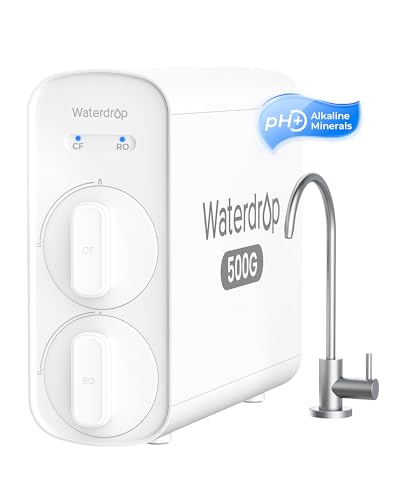
- 500 GPD tankless design
- Eight-stage filtration with alkaline minerals
- 2:1 pure-to-drain ratio
Best For: Busy kitchens needing fast flow and space savings
Best Alkaline Filtration Value
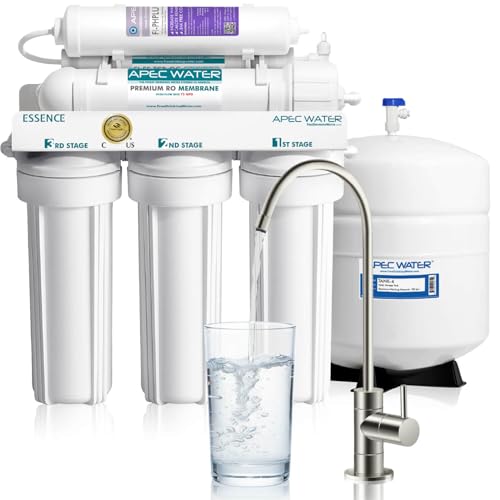
- Six-stage, 75 GPD filtration
- Adds calcium for alkaline enhancement
- Supports up to 2,000 ppm TDS
Best For: Tank-style alkaline filtration for tap or well water
Best High-Flow Tankless Pick

- 800 GPD direct-flow capacity
- Leak detection and automatic shutoff
- Compact tankless design with two-year warranty
Best For: High-demand kitchens needing fast, monitored filtration
Best DIY Value

- 50 GPD five-stage filtration
- Includes tank, faucet, and installation kit
- DIY-friendly quick-connect design
Best For: Households wanting dependable under-sink filtration with straightforward installation
Best High-Capacity Tankless

- 600 GPD production with fast dispensing
- 2:1 low drain ratio
- Smart faucet tracks TDS and filter life
Best For: Households seeking fast, space-saving filtration with lower wastewater
Best Alkaline Option

- Six-stage filtration with alkaline remineralization
- NSF/ANSI 58 certified full system
- Includes stylish black faucet and DIY fittings
Best For: Users who prefer remineralized, alkaline-tasting RO water
Best Space-Saving Pick
Waterdrop G2 400 GPD Tankless RO

- 400 GPD output with a 1:1 pure-to-drain ratio
- Tankless build saves substantial under-sink space
- Twist-and-pull filter replacement takes about three seconds
Best For: Kitchens needing fast, compact, low-waste filtration
Best Feature-Rich Pick

- NSF/ANSI 58 and 372 certified whole-system design
- Adds alkaline remineralization and mercury-free LED UV
- Top-mounted faucet design supports easier installation
Best For: Households wanting filtration, minerals, and UV protection together
Best Remineralizing Pick

- 220 GPD output fills five bottles in about one minute
- Adds potassium, calcium, sodium, and magnesium
- 2:1 pure-to-drain ratio with NFC filter reminders
Best For: Busy households wanting fast, mineral-enhanced drinking water
Best Certified Value – iSpring RCC7-BN 5-Stage RO System
The iSpring RCC7-BN is a practical choice for shoppers comparing reverse osmosis systems for dependable under-sink filtration. Its 75 GPD, five-stage design reduces up to 99% of more than 1,000 listed contaminants, while the included brushed-nickel faucet and no-power-required setup support everyday kitchen use.
Best For: Households wanting certified, high-capacity filtration with a conventional tank-style design.
Pros:
- NSF/ANSI 58 certified and designed to reduce contaminants including lead, fluoride, arsenic, PFAS, chlorine, and sodium.
- 75 GPD capacity with filtration down to 0.0001 microns.
- Compact under-sink installation requires no power and includes a lead-free designer faucet.
- Transparent first-stage housing makes filter inspection easier.
Cons:
- The tank-style system occupies more under-sink space than a tankless model.
- It has a 750 ppm maximum supported water TDS level.
With a one-year warranty, lifetime personalized support, and a focus on low-maintenance components, the RCC7-BN is a well-rounded option for standard residential drinking-water needs.
Best Tankless Alkaline Pick – Waterdrop G5P500A 8-Stage RO
The Waterdrop G5P500A stands out among reverse osmosis systems for its slim tankless format, high 500 GPD capacity, and alkaline mineralization stage. It is designed to provide fast access to purified water while using less cabinet space than a traditional tank system.
Best For: Busy kitchens that want fast, tankless filtration and added minerals.
Pros:
- Eight-stage filtration with a 0.0001 μm RO membrane reduces listed contaminants such as PFOA, PFOS, lead, fluoride, and heavy metals.
- Alkaline mineralization adds calcium, magnesium, sodium, and potassium ions.
- 500 GPD output can fill a six-ounce cup in about eight seconds.
- Tankless design frees up to 70% of under-sink space and offers a 2:1 pure-to-drain ratio.
Cons:
- It requires corded electricity.
- Faucet installation requires drilling a countertop hole.
- The maximum supported water TDS level is 500 ppm.
This model combines strong flow with a compact footprint and mineral enhancement, making it especially appealing where cabinet space and quick dispensing matter.
Best Alkaline Filtration Value – APEC ROES-PH75 6-Stage RO
The APEC ROES-PH75 is a traditional under-sink option for shoppers comparing reverse osmosis systems with alkaline enhancement. Its six-stage, 75 GPD configuration is designed to reduce up to 99% of listed impurities while adding calcium minerals for improved alkalinity and taste.
Best For: Users who prefer a proven tank-style system with calcium-based alkaline enhancement.
Pros:
- WQA-certified system with NSF certifications listed for standards 372 and 58.
- Six-stage filtration targets chlorine, odors, VOCs, fluoride, arsenic, lead, heavy metals, and other impurities.
- Calcium-based mineral cartridge supports alkaline water and improved taste.
- Supports feed water with up to 2,000 ppm TDS and includes tank, faucet, tubing, and installation hardware.
Cons:
- The listed maximum flow rate is 0.05 gpm, so dispensing may be slower than high-flow tankless systems.
- The under-sink tank configuration requires cabinet space.
Its broad TDS support, premium-component construction, and included installation parts make the ROES-PH75 a sensible fit for buyers prioritizing alkaline output and long-term conventional use.
Best High-Flow Tankless Pick – A. O. Smith 800 GPD RO System
The A. O. Smith AOS-DFRO800-BN is built for shoppers who want high-capacity reverse osmosis systems without a storage tank. Its 800 GPD direct-flow design, compact footprint, leak detection, and automatic shutoff make it a strong fit for frequent kitchen use.
Best For: High-demand households wanting fast tankless dispensing and automated protection features.
Pros:
- 800 GPD direct-flow capacity supports drinking, cooking, coffee, tea, and filling pitchers.
- Slim 17.3-by-5.1-by-15.5-inch design helps preserve under-sink space.
- IAPMO certified to NSF/ANSI 58 and 372, with listed NSF/ANSI 42 certification as well.
- Built-in leak detection, auto shutoff, automatic flushing, and tool-free filter changes simplify ownership.
Cons:
- It requires corded electricity and an operating pressure range of 60–125 psi.
- The stated maximum flow rate is 0.56 gpm despite its 800 GPD capacity.
For buyers who value speed, compact installation, and safety monitoring, this model offers a feature-rich tankless design backed by a two-year limited warranty.
Best DIY Value – APEC ROES-50
The APEC ROES-50 is a practical choice for shoppers seeking reliable reverse osmosis systems without a tankless or electrically complex design. Its five-stage filtration setup is rated for 50 gallons per day and is designed for under-sink installation.
Best For: Households wanting a DIY-friendly system with broad contaminant reduction and included installation components.
Pros:
- Five-stage filtration reduces up to 99% of impurities, including lead, fluoride, arsenic, chlorine, and heavy metals.
- Includes a tank, brushed nickel faucet, filter set, installation kit, and instructions.
- Quick-connect fittings and colored tubing simplify installation and maintenance.
- NSF Certified 372 and 58, according to the supplied product details.
Cons:
- The 50-gallon-per-day capacity is lower than the high-capacity systems in this roundup.
- Its under-sink tank requires more cabinet space than a tankless design.
- Filters are generally replaced every 6–24 months, depending on incoming water quality.
Choose the ROES-50 if straightforward ownership, included hardware, and established residential filtration experience matter more than maximum flow speed or a compact tankless footprint.
Best High-Capacity Tankless – Waterdrop G3P600
The Waterdrop G3P600 stands out among reverse osmosis systems for its 600-gallon-per-day rating, tankless cabinet-saving design, and smart display faucet. It is built for shoppers who want fast dispensing and visible filter-status information.
Best For: Larger households that prioritize rapid water production, a compact tankless setup, and reduced wastewater.
Pros:
- Produces up to 600 gallons per day and fills an 8-ounce cup in about eight seconds, according to the supplied notes.
- Its 2:1 pure-water-to-drain ratio uses less wastewater than many traditional designs.
- Smart faucet displays TDS information and filter life.
- Eight-stage filtration is tested or certified for reduction of multiple contaminants, including TDS, chlorine, fluoride, PFAS, and arsenic.
Cons:
- Requires under-sink electricity.
- The listed operating pressure is 87 psi, so water-pressure compatibility should be checked.
- Cabinet dimensions should be measured before purchase despite the space-saving tankless format.
The G3P600 is the strongest fit when speed and efficiency are priorities. Its electrical requirement and higher pressure specification make installation planning especially important.
Best Alkaline Option – iSpring RCC7AK-BLK
The iSpring RCC7AK-BLK is an appealing option for shoppers comparing reverse osmosis systems with mineral remineralization. Its six-stage design adds an alkaline filter after reverse osmosis and includes a modern black faucet for an upgraded under-sink installation.
Best For: Users who want broad contaminant reduction plus restored alkalinity and minerals in their filtered water.
Pros:
- Six-stage filtration reduces up to 99% of more than 1,000 contaminants, according to the supplied notes.
- The alkaline stage restores minerals and alkalinity for a different taste profile than standard RO water.
- Full-system NSF/ANSI 58 certification is listed for reductions including TDS, lead, fluoride, arsenic, and other contaminants.
- DIY-focused design includes quick fittings, instructional resources, and lifetime technical support.
Cons:
- Its 75-gallon capacity is below the Waterdrop system’s 600 GPD rating.
- The supplied dimensions indicate a relatively wide under-sink footprint, so cabinet space should be checked.
- The listed maximum supported TDS level is 97 ppm, which may limit suitability for some higher-TDS water supplies.
Pick the RCC7AK-BLK if taste and remineralization are central to your buying decision. It combines certified contaminant reduction with an alkaline finishing stage, but careful space and water-quality checks are worthwhile.
Best Space-Saving Pick – Waterdrop G2 400 GPD Tankless RO
The Waterdrop G2 is a practical choice for shoppers seeking reverse osmosis systems with fast output and a compact, tankless design. Its 400 GPD capacity, 1:1 pure-to-drain ratio, and integrated filter housing suit households that want convenient filtration without giving up much under-sink storage.
Best For: Kitchens needing fast, space-saving filtration and simple filter changes.
Pros:
- Produces up to 400 gallons per day, with a cup filled in about 12 seconds.
- Tankless design saves over 70% more under-sink space than ordinary systems.
- Twist-and-pull filters can be replaced in about three seconds.
- Uses a 1:1 pure-to-drain ratio and includes two pre-installed filters.
Cons:
- Requires an electrical outlet under the sink.
- Countertop drilling may be required for installation.
- Designed for source water with a maximum TDS level of 300 ppm.
Choose the G2 if speed, compact dimensions, and reduced water waste matter more to you than a non-electric setup. Confirm that your sink area has power and can accommodate the required faucet installation.
Best Feature-Rich Pick – iSpring RCC7AK-UV 7-Stage RO
The iSpring RCC7AK-UV is a feature-rich option among reverse osmosis systems, combining seven-stage filtration with alkaline remineralization and an LED UV stage. Its whole-system NSF/ANSI 58 and 372 certification and top-mounted faucet design make it a strong fit for shoppers prioritizing tested filtration and easier installation access.
Best For: Households wanting alkaline remineralization, UV protection, and broad certification coverage.
Pros:
- The entire system is NSF/ANSI 58 and 372 certified, according to the supplied notes.
- Includes alkaline remineralization for added calcium, magnesium, sodium, and potassium.
- Mercury-free LED UV protection activates when water flows.
- Top-mounted faucet fastener and transparent first-stage housing simplify installation and monitoring.
Cons:
- Its 75-gallon capacity and listed flow rate are lower than the faster tankless options in this roundup.
- The under-sink system requires corded electricity.
- Includes a one-year limited manufacturer warranty.
This system is a good match for buyers who value layered filtration, mineral enhancement, and UV treatment in one package. Its larger under-sink footprint makes measuring the available cabinet space especially important.
Best Remineralizing Pick – Waterdrop T3-T 220 GPD RO
The Waterdrop T3-T is designed for shoppers comparing reverse osmosis systems that deliver faster-than-traditional flow while adding minerals back into purified water. Its 220 GPD production rate, compact tankless form, 2:1 pure-to-drain ratio, and NFC filter reminders emphasize everyday convenience.
Best For: Families wanting faster filling, remineralized water, and streamlined maintenance.
Pros:
- Produces up to 220 gallons per day and can fill five 16.9-ounce bottles in about one minute.
- Remineralizes water with potassium, calcium, sodium, and magnesium.
- Uses a 2:1 pure-to-drain ratio to reduce water waste compared with conventional systems.
- Compact dimensions, three-second filter replacement, and NFC reminders simplify ownership.
Cons:
- Faucet installation requires drilling holes in the countertop.
- Requires electricity for operation and includes multiple maintenance components.
- The supplied notes do not provide complete filter-life details.
The T3-T stands out when taste, refill speed, and maintenance convenience are priorities. Consider it for a busy kitchen, but verify faucet placement and the installation requirements before ordering.
How We Picked These Reverse Osmosis Systems
We focused on specifications that matter in daily use: filtration stages, rated production capacity, certification information, tank or tankless design, remineralization, UV treatment, faucet and installation features, and expected maintenance. We also included several flow rates and form factors so shoppers can match a system to household size, available cabinet space, and water-use habits.
Capacity ratings are useful for comparison, but real-world output depends on water pressure, temperature, feed-water quality, and filter condition. Certification claims should be checked against the manufacturer’s current documentation before purchase.
Quick Comparison
| Type | Best suited to | Main advantage | Potential trade-off |
|---|---|---|---|
| Tank-based under-sink | Most households | Proven design and stored water | Uses more cabinet space |
| Tankless | Small kitchens or high demand | Compact footprint and fast flow | Often costs more upfront |
| Alkaline/remineralizing | People who prefer a different water profile | Adds minerals after RO filtration | Extra filter replacement cost |
| UV-equipped | Homes prioritizing added microbial treatment | Additional treatment stage | Needs power and more maintenance |
Key Buying Factors for Reverse Osmosis Systems
Filtration and Certification
Look beyond the number of stages. A five-stage system may be sufficient, while additional alkaline or UV stages address specific preferences or water concerns. NSF/ANSI references can help verify performance claims, but confirm exactly which components and contaminants are covered.
Capacity and Recovery
Choose a higher-rated system if several people regularly fill bottles, cook with filtered water, or use an ice maker. Traditional tank systems store treated water, while tankless models produce it on demand. RO systems also reject some water during filtration, so compare published wastewater ratios when efficiency matters.
Space, Installation, and Plumbing
Measure the area beneath the sink, including room for filter changes and tubing. Tankless units can free cabinet space but require an electrical outlet. Check compatibility with your faucet hole, drain connection, water pressure, and any refrigerator or ice-maker connection.
Filter Costs and Upkeep
Replacement schedules vary by filter type and water quality. Price the complete replacement set—not only the initial system—and check how easily filters can be ordered. Sanitizing the system and replacing cartridges on schedule helps preserve water quality and flow.
Who Should Buy Which Reverse Osmosis Systems?
Choose a conventional tank-based model if you want a familiar under-sink setup, stored water, and generally lower entry cost. A tankless system is a better fit for compact cabinets, modern kitchens, or households that want faster dispensing and a cleaner installation footprint.
Consider an alkaline model if you specifically want remineralization after RO treatment, and choose a UV-equipped option when that additional treatment stage suits your water source and maintenance routine. For occasional use, a lower-capacity system may be adequate; larger households should prioritize higher output, storage, or faster recovery.