Choosing rigid solar panels for home backup means balancing wattage, efficiency, system voltage, roof or ground-mount space, and long-term durability. The right setup can help keep essential loads running during outages without relying entirely on a portable generator.
This roundup includes individual high-output panels as well as complete solar kits with inverters and batteries. Use the buying guide below to match the equipment to your backup goals, available space, and electrical system.
Best 10 Rigid Solar Panels for Home Backup Picks for 2026
High-Yield Pick
SUNGOLDPOWER 450W Bifacial Panel Set
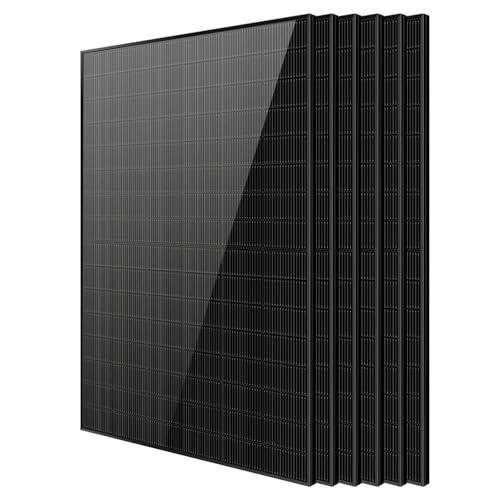
- 2,700W total output from six 450W panels
- Bifacial design may add up to 30% rear-side energy
- UL 61730, CEC listed, and long performance warranty
Best For: Higher-output home, farm, and off-grid arrays
Complete-System Pick
ECO-WORTHY 10kW Off-Grid Solar Kit

- Includes panels, 10kW split-phase inverter, and 16.1kWh battery
- 120V/240V output supports common household appliances
- Wi-Fi monitoring and expandable battery capability
Best For: Planned whole-home off-grid or backup installations
Compact Array Pick
JJN 850W Bifacial Rigid Panel Pair

- Two 425W panels deliver 850W total
- 25% stated efficiency with UL61730 certification
- Drainage clips and dual-glass bifacial construction
Best For: Compact backup, storage, farm, or EV-charging arrays
Whole-Home Backup Pick
12kW Hybrid Solar Power System

- Includes 26 panels, 12kW hybrid inverter, and LiFePO4 battery
- 120V/240V split-phase output with dual 200A MPPT
- 8,000+ cycle-rated battery with Wi-Fi monitoring
Best For: Professionally installed whole-home backup and off-grid power
High-Yield Pair
JJN 850W Bifacial Solar Panels

- 850W total output from two rigid panels
- N-type 16BB bifacial design
- IP68 connectors and 30-year output warranty
Best For: High-output home and off-grid panel additions
Complete Off-Grid Kit
ECO-WORTHY 2340W Solar Power System
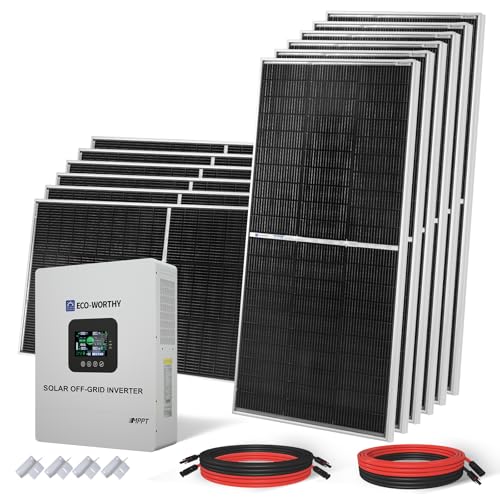
- Includes 12 panels and a 5000W inverter
- 48V system with 100A MPPT controller
- Parallel support for up to six units
Best For: Off-grid cabins, sheds, farms, and backup power projects
Single-Panel Efficiency Pick
JJN 425W Bifacial Rigid Solar Panel
- 425W output and 25% stated efficiency
- UL61730-certified 16BB N-type panel
- Bifacial design with drainage clips
Best For: Modular rooftop and emergency-backup arrays
High-Output Choice

- 435W output from one rigid panel
- Bifacial design captures front and reflected rear light
- Built for fixed outdoor and off-grid installations
Best For: Home backup, cabins, sheds, patios, and ground racks
Large-System Pick

- Eight panels deliver 3,600W total rated power
- Half-cell design offers improved shade tolerance
- Listed for 12V, 24V, 36V, and 48V systems
Best For: Large rooftops, farms, and substantial off-grid arrays
Flexible Space-Saver
Callsun 2-Piece 200W Bifacial Panels

- Two panels provide 400W total rated output
- N-type 16BB cells offer up to 25.6% efficiency
- Dual-module design helps reduce partial-shade impact
Best For: Compact rooftops, RVs, vans, and compatible power stations
High-Yield Pick – SUNGOLDPOWER 450W Bifacial Panel Set
For shoppers comparing rigid solar panels for home backup, this six-panel SUNGOLDPOWER set emphasizes high output, bifacial energy capture, and long-term durability. It provides 2,700W of total rated power and is designed for rooftop, ground-mount, on-grid, and off-grid installations.
Best For: Homeowners and farm operators building a higher-output backup or hybrid solar array.
Pros:
- Six 450W N-Type panels provide 2,700W of rated capacity.
- Bifacial design can produce up to 30% additional energy from rear-side reflection.
- Dual-glass construction is designed for harsh weather and reduced degradation.
- ETL-certified to UL 61730 standards, CEC listed, with 12-year materials and 30-year linear performance warranties.
Cons:
- Each panel weighs 53.4 pounds, so installation may require additional help.
- The large 69.37-by-44.65-inch panels require substantial mounting space.
- Bifacial gains depend on suitable rear-side reflected light and installation conditions.
With strong rated capacity and a long performance warranty, this is a practical choice when your priority is maximizing array output. Plan carefully for the panels’ size and weight, and use a compatible mounting and backup-power system.
Complete-System Pick – ECO-WORTHY 10kW Off-Grid Solar Kit
This ECO-WORTHY package takes a whole-system approach to rigid solar panels for home backup, combining five 590W panels with a 10kW split-phase inverter and a 48V, 16.1kWh LiFePO4 battery. It is intended for substantial household power support rather than a small portable setup.
Best For: Homeowners seeking an integrated 120V/240V off-grid or backup system with substantial battery storage.
Pros:
- Includes 2,950W of solar panels, a 10,000W continuous inverter, and approximately 16.1kWh of battery capacity.
- Supports 120V/240V split-phase output for common household appliances.
- Battery includes a 200A BMS, display, Bluetooth, Wi-Fi, and PC connectivity.
- Inverter offers dual MPPT controllers, battery-free operation, and parallel support for up to six units.
Cons:
- The large panels and battery ship on a pallet by truck, so delivery access must be arranged.
- Professional installation is recommended and novice installation is specifically discouraged.
- The listed 10kW inverter capacity is substantially higher than the included 2,950W PV array.
This kit is appealing if you want the major power components bundled together and need split-phase output plus meaningful storage. Its shipping requirements, system scale, and installation complexity make it better suited to a planned permanent installation.
Compact Array Pick – JJN 850W Bifacial Rigid Panel Pair
For a smaller solar build, this two-panel JJN set offers 850W of rated capacity in rigid, dual-glass modules. These rigid solar panels for home backup use 16BB N-Type cells, bifacial construction, and a stated 25% efficiency rating for rooftop, yard, farm, carport, or off-grid applications.
Best For: Buyers adding a compact two-panel array to a 12V, 24V, or 48V backup, storage, or EV-charging system.
Pros:
- Two 425W panels provide 850W of total rated power.
- UL61730 certification and 25% stated efficiency support a performance-focused design.
- Bifacial dual-glass construction can deliver up to 30% more energy with favorable rear-side conditions.
- Drainage clips help reduce water and dust buildup around the panels.
Cons:
- The pair weighs 103.2 pounds total, making handling and mounting a two-person task for many installations.
- Rear-side energy gains depend on mounting height, surface reflectivity, and sunlight conditions.
- An 850W array may be insufficient by itself for large household backup loads.
This pair is a sensible starting point when roof or ground space is limited and you want efficient, durable modules. For whole-home backup, expect to combine it with additional panels, a battery, and an appropriately sized inverter.
Whole-Home Backup Pick – 12kW Hybrid Solar Power System
This bundled system pairs 26 rigid 120W monocrystalline panels with a 12kW split-phase hybrid inverter and a 51.2V LiFePO4 battery. For shoppers seeking rigid solar panels for home backup, it offers a complete architecture for off-grid cabins, whole-home backup, and energy storage rather than standalone panels.
Best For: Households planning a professionally installed 120V/240V backup or off-grid system with integrated battery monitoring.
Pros:
- Complete package includes 26 panels, a 12,000W inverter, and a 12KWh-class LiFePO4 battery.
- UL1741-certified inverter provides 120V/240V split-phase pure-sine output.
- Dual 200A MPPT controllers claim 99.9% tracking efficiency and support multiple charging modes.
- Battery offers 8,000+ cycle-rated cells, touchscreen and Wi-Fi monitoring, and rolling or wall-mount installation.
Cons:
- The complete system weighs 910 pounds, creating significant delivery and installation demands.
- Qualified electrician installation is required or strongly recommended.
- The 26 smaller 120W panels require more mounting connections and layout planning than fewer high-wattage modules.
This is the most comprehensive option in the group for buyers who want the inverter, battery, and array specified together. Its high capacity and heavy construction are best matched with a carefully designed, permanent installation handled by a qualified professional.
High-Yield Pair – JJN 850W Bifacial Solar Panels
For homeowners comparing rigid solar panels for home backup, this two-panel JJN package offers 850 watts of rated power, N-type 16BB cells, and bifacial generation. It is a panel-only purchase, so you will need compatible mounting hardware, wiring, and a suitable charge or storage system.
Best For: Home, RV, boat, farm, and off-grid installations seeking a high-output two-panel array.
Pros:
- 850W total rated output with up to 25% stated efficiency.
- Bifacial transparent-backsheet design can generate power from both sides.
- Corrosion-resistant aluminum frames, tempered glass, IP65 junction boxes, and IP68 connectors.
- Pre-drilled mounting holes and a transferable 30-year power-output warranty.
Cons:
- Includes PV panels only, not an inverter, batteries, or mounting system.
- The two-panel package weighs 94.6 pounds, which may require careful handling.
- Bifacial gains depend on rear-side light and installation conditions.
This is a strong choice when you want substantial panel capacity in a compact two-panel package, but confirm system voltage, roof space, and the rest of your backup components before ordering.
Complete Off-Grid Kit – ECO-WORTHY 2340W Solar Power System
Unlike panel-only options, this ECO-WORTHY system combines 12 rigid 195W panels with a 5000W pure-sine inverter and 100A MPPT controller. For rigid solar panels for home backup, it is a more complete starting point for sheds, cabins, farms, and other off-grid locations, though professional installation is recommended.
Best For: Off-grid homes and outbuildings that need a packaged 48V solar generation and inverter system.
Pros:
- Includes 2340W of panels, a 5000W inverter, MPPT controller, brackets, and accessories.
- Panels use N-type 18BB cells with stated 25% conversion efficiency and bifacial generation.
- Pure-sine inverter supports solar/mains hybrid charging and multiple charging modes.
- Supports parallel operation of up to six units, with a stated 30kW maximum.
Cons:
- Professional installation is recommended; the system is not intended for novice installation.
- It is an off-grid system, so compatibility with a specific grid-tied home backup setup must be verified.
- Battery storage is not listed among the included components.
This kit is the most practical option here if you want panels and power-conversion hardware together. Plan for qualified installation and verify battery, load, wiring, and local electrical requirements before purchase.
Single-Panel Efficiency Pick – JJN 425W Bifacial Rigid Solar Panel
This UL61730-certified JJN panel is a focused option for expanding a backup array one panel at a time. Its 425W rating, 25% stated efficiency, and bifacial dual-glass construction make it worth considering among rigid solar panels for home backup, provided its electrical specifications match your inverter or charge controller.
Best For: Rooftops, yards, farms, carports, yachts, and modular off-grid or emergency-backup arrays.
Pros:
- 425W output with 25% stated efficiency and 16BB monocrystalline cells.
- UL61730 certification and EL-tested A+ grade cells.
- Bifacial design can deliver up to 30% more energy yield under suitable conditions.
- Designed for a stated 30-year lifespan with low degradation and drainage clips.
Cons:
- Sold as a single PV panel without an inverter, battery, or mounting system.
- Bifacial performance depends on available light behind the panel.
- Its 67.8-by-44.6-inch footprint requires adequate installation space.
Choose this model when certification, modular expansion, and heat-oriented performance matter more than receiving a complete backup system. Match the panel’s voltage and current characteristics to the rest of your equipment before installation.
High-Output Choice – LIVOSUN 435W N-Type Panel
For homeowners building rigid solar panels for home backup, the LIVOSUN 435W panel offers substantial output from a single module. Its bifacial N-type design, rigid aluminum frame, and pre-drilled mounting points suit fixed installations for homes, cabins, sheds, patios, and off-grid systems.
Best For: Home backup systems, cabins, sheds, patios, and ground-rack installations where fewer panels are preferred.
Pros:
- 435W rated output can support lighting, refrigeration, charging, and small appliances in a properly configured system.
- Bifacial construction can capture reflected light from the rear in suitable open installations.
- Tempered glass, an aluminum frame, MC4 connectors, and pre-drilled mounting points support outdoor installation.
- Advertised with up to a 30-year power-output lifespan and a 10-year quality warranty.
Cons:
- At 68 by 45 inches, it requires substantial mounting space.
- The listing includes the solar panel only, so mounting hardware and supporting equipment must be purchased separately.
- Actual daily production depends on sunlight, temperature, installation angle, and system configuration.
Choose this panel when maximizing power per module matters more than portability. Its 435W capacity and bifacial design make it a practical foundation for a larger home backup setup, provided your charge controller and battery system match its electrical specifications.
Large-System Pick – SUNGOLDPOWER 8-Piece 450W Set
For a higher-capacity array of rigid solar panels for home backup, this SUNGOLDPOWER package includes eight 450W monocrystalline panels for 3,600W total rated power. Half-cell technology, pre-drilled frames, and series-or-parallel compatibility make it suited to substantial 12V, 24V, 36V, or 48V systems.
Best For: Rooftops, farms, and larger on-grid or off-grid battery systems that need a complete multi-panel array.
Pros:
- Eight panels provide 3,600W of combined rated power while using fewer modules than smaller-panel alternatives.
- Half-cell construction is designed to improve shade tolerance and module performance.
- Tempered glass, EVA materials, waterproof film, and anodized aluminum frames support extended outdoor use.
- UL61730 and CEC listed, with stated output warranties extending to 25 years.
Cons:
- The eight-panel package requires significant roof or ground-mount space.
- Each panel weighs 49.2 pounds, which can make handling and installation more demanding.
- Its size and total capacity may be excessive for small backup systems.
This is the strongest fit when you are designing a full-size solar array rather than adding one panel at a time. Confirm available mounting area, structural support, and charge-controller compatibility before choosing this high-capacity package.
Flexible Space-Saver – Callsun 2-Piece 200W Bifacial Panels
These Callsun panels are a practical option for rigid solar panels for home backup when roof or mounting space is limited. The two 200W modules provide 400W total, while N-type 16BB cells, bifacial generation, and a dual-module design help support consistent production in suitable RV, rooftop, marine, and off-grid installations.
Best For: Compact home backup systems, rooftops, RVs, vans, and portable power stations with compatible solar-input limits.
Pros:
- Two 200W panels can be connected in series for 400W total output and are designed for many 60V-class portable power stations.
- Up to 25.6% stated efficiency and bifacial construction support strong energy capture in suitable conditions.
- Dual-module parallel design helps limit the effect of partial shade on the unshaded section.
- Compact 51.3-by-30.3-inch panels, tempered glass, an aluminum frame, and an IP68 junction box suit outdoor use.
Cons:
- The 400W total output is lower than the larger single-panel and eight-panel options.
- Bifacial gains depend on installation conditions and reflected light behind the panels.
- Electrical compatibility must be checked carefully, particularly for portable power stations and series connections.
This set balances output with manageable panel dimensions, making it easier to fit into space-constrained backup and off-grid systems. It is especially appealing when partial-shade resilience and portable-power compatibility are more important than maximum array size.
How We Picked the Best Rigid Solar Panels for Home Backup
We focused on output, panel technology, electrical compatibility, safety certifications, and practical use in residential backup systems. The selection includes monocrystalline and bifacial N-type panels, multi-panel bundles, and complete off-grid kits with batteries and split-phase inverters.
For Rigid Solar Panels for Home Backup, published wattage is only a starting point. We also considered whether each option can fit a 12V, 24V, or 48V architecture, support common charge controllers or hybrid inverters, and scale into a larger array. Buyers should verify current specifications, included components, and installation requirements before ordering.
Quick Comparison
| Option Type | Best For | What to Check |
|---|---|---|
| 400W–450W individual panels | Building a custom backup array | Voltage, dimensions, mounting, and inverter limits |
| Two-panel or multi-panel bundles | Faster array expansion | Series/parallel wiring and available roof space |
| Complete solar kits | Off-grid or whole-system projects | Battery capacity, inverter output, and included hardware |
Key Buying Factors for Rigid Solar Panels for Home Backup
Wattage and Usable Energy
Higher-wattage panels can produce more energy per module, but daily output depends on sunlight, orientation, shading, temperature, and local weather. Estimate the watt-hours needed for essential loads such as refrigeration, networking equipment, lighting, and medical devices before choosing the array size.
Panel Efficiency and Technology
N-type monocrystalline cells and bifacial designs can improve production in suitable conditions. Bifacial panels work best where the rear side receives reflected light from bright roofing, gravel, or a raised ground mount. Do not assume the advertised rear-side gain will occur on a closely mounted roof.
Electrical Compatibility
Match panel voltage and current to the MPPT charge controller or hybrid inverter. Confirm maximum PV input voltage, current, and total array wattage, particularly when connecting panels in series. A 48V battery system is often more practical for larger backup arrays because it reduces cable current and associated losses.
Durability and Installation
Look for recognized safety certifications such as UL 61730, sturdy frames, weather resistance, and mounting hardware appropriate to the installation surface. Rigid panels are heavier and less portable than folding models, so roof structure, wind exposure, snow load, grounding, and local permitting may matter.
Battery and Inverter Sizing
Panels produce energy; the battery stores it, and the inverter converts it for household loads. A large panel array cannot compensate for an undersized battery or inverter. Check continuous and surge output, split-phase requirements, battery chemistry, usable capacity, and whether the kit includes communications and protection equipment.
Who Should Buy Which Rigid Solar Panels for Home Backup?
Choose individual 400W–450W panels if you already own a compatible charge controller, inverter, and battery, or want to expand gradually. Two-panel bundles suit buyers assembling a compact array with consistent modules. Multi-panel packages are better for larger cabins, workshops, and dedicated backup circuits.
Choose a complete kit when you want coordinated components and a simpler system design, but confirm that its battery capacity and inverter output match your actual loads. For essential-home backup, prioritize certified equipment, professional installation where required, and a system sized around critical circuits rather than every appliance in the house.