Cloudy weather does not make rooftop solar impractical, but it does make panel efficiency, system sizing, and installation quality more important. The right setup can continue producing useful power through diffuse sunlight while leaving enough capacity for less productive days.
This roundup compares high-efficiency panels, complete off-grid systems, and roof-mounting hardware for different budgets and installation goals. Use the buying guide below to match the equipment to your roof, energy needs, and backup-power plans.
Best 10 Rooftop Solar Panel Kits for Cloudy Climates Picks for 2026
Compact High-Efficiency Pick

- 25% efficient N-Type 16BB cells
- Works with 12V or 24V batteries
- Compact format with long warranty coverage
Best For: Space-limited RV, van, cabin, and off-grid installations
Budget Expandable Kit

- Two 100W panels with half-cell layout
- Includes brackets, clips, and 5 m cable
- Designed to reduce shading losses
Best For: Small RV, boat, cabin, and 12V rooftop systems
Shade-Tolerant Bifacial Pick
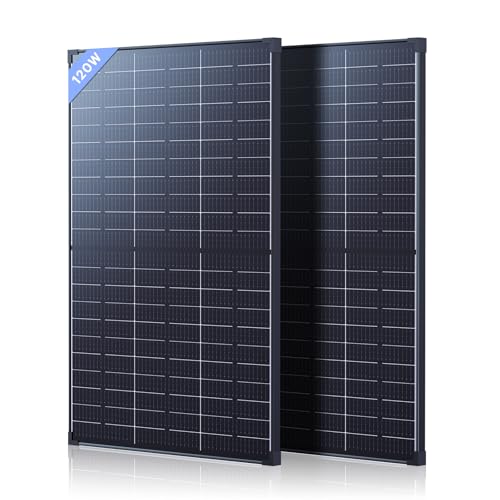
- Two 120W N-Type 16BB panels
- Anti-shade circuitry for partial obstructions
- Bifacial design can capture reflected light
Best For: Mobile rooftops and decks with shade or reflective surfaces
Whole-Home Power System

- 2,950W PV array with 10kW split-phase inverter
- 16.1kWh 48V LiFePO4 battery included
- Dual MPPT and expandable battery architecture
Best For: Large off-grid homes and substantial backup-power installations
Expandable Roof Mount

- Complete hardware set for four to five framed panels
- Extendable rails support flexible array layouts
- Fits 30-35 mm panel frames
Best For: DIY roof, RV, cabin, boat, and small off-grid installations
Whole-Home Off-Grid Power

- 10,620W PV array with 18 590W panels
- 32.2 kWh combined LiFePO4 storage
- 120V/240V split-phase 10kW inverter
Best For: Professionally installed, high-capacity off-grid home power
Compact RV Mount
Four-Panel Aluminum Bracket Set

- Mounts four panels in a parallel layout
- Fits standard 30-35 mm framed panels
- Includes rails, clamps, seals, and screws
Best For: Compact RV, boat, and household rooftop arrays
Cloud-Ready Power
400W Bifacial N-Type Solar Panel Kit

- Up to 25% efficient N-type 16BB cells
- Bifacial design helps use reflected and low light
- Weather-resistant build with a 30-year warranty
Best For: Rooftops and off-grid systems in variable or cloudy conditions
Secure Rooftop Mounting
Aluminum L-Bracket Roof Mounting Kit

- Eight aluminum brackets with flashing and hardware
- EPDM gaskets help protect against roof leaks
- Designed for asphalt shingle and composite tile roofs
Best For: Residential rooftop arrays needing secure rail mounting
Compact Starter System
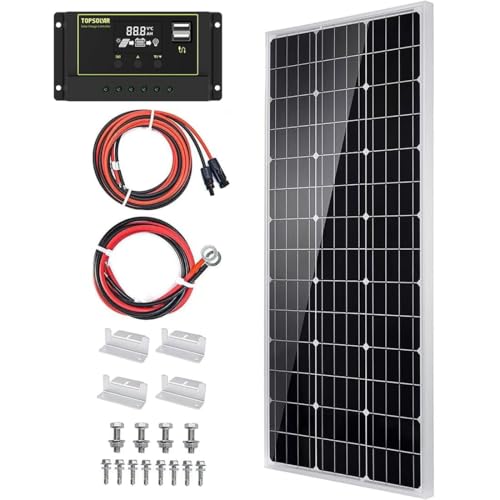
- Includes 30A PWM controller, cables, and Z-brackets
- Supports 12V battery charging for small systems
- Expandable to 260W at 12V or 520W at 24V
Best For: Small RV, cabin, boat, and backup-power installations
Compact High-Efficiency Pick – Renogy 200W N-Type Panel
For rooftop solar panel kits for cloudy climates, this Renogy panel is a compact single-module option with 25% efficiency, 16BB N-Type cells, and a 24V operating design intended to reduce current loss. It can work with 12V or 24V battery systems and fits space-conscious installations such as Class B vans.
Best For: RV, van, marine, cabin, and other off-grid setups where roof space is limited and a single high-efficiency panel is preferred.
Pros:
- 25% cell efficiency and N-Type 16BB construction.
- Compact 49.7-by-30.1-inch format for constrained roof space.
- Compatible with both 12V and 24V battery systems.
- Includes a 10-year workmanship warranty and 25-year performance guarantee at 80% output.
Cons:
- This listing is for one 200W panel rather than a complete kit.
- A controller, battery, and other system hardware are not identified as included.
- At 23.4 pounds, it may require careful roof mounting.
The Renogy is a strong panel-level choice for cloudy or variable conditions, but buyers building a full rooftop system will need to budget for the remaining balance-of-system components.
Budget Expandable Kit – DOKIO 200W Two-Panel Set
This DOKIO 200W kit offers two 100W panels, mounting brackets, and extended cabling for rooftop solar panel kits for cloudy climates. Its half-cell layout and bypass diodes are designed to reduce shading losses and overheating, though a charge controller must be purchased separately.
Best For: RVs, boats, cabins, and small roof projects that need a straightforward two-panel 12V charging setup.
Pros:
- Includes two 100W panels for flexible placement across a roof.
- Half-cell construction and bypass diodes help limit shading losses.
- Includes Z-brackets, battery clips, and a 5 m MC4 cable.
- Aluminum frames and tempered glass are designed for snow and high-wind conditions.
Cons:
- The PWM or MPPT charge controller is not included.
- It is a 200W kit, so output is more limited than larger whole-home systems.
- Users must confirm cable polarity before connecting the system.
DOKIO provides useful mounting and wiring basics in one package, making it approachable for smaller installations. The separate controller requirement should be included in the project budget.
Shade-Tolerant Bifacial Pick – Callsun 240W Dual Panel Kit
For rooftop solar panel kits for cloudy climates, this 240W Callsun kit combines two 120W N-Type 16BB bifacial panels with dual-module anti-shade circuitry. The design can continue producing power when part of a panel is shaded and may capture reflected light from the rear on suitable surfaces.
Best For: RV roofs, van roofs, boat decks, truck racks, and other mobile installations exposed to partial shade or reflective surroundings.
Pros:
- 25% efficiency with N-Type 16BB cells.
- Dual-module circuitry is designed to maintain power flow under partial shade.
- Bifacial construction can use reflected light from both sides.
- Reinforced, IP68-rated construction is specified for demanding outdoor use.
Cons:
- The bifacial benefit depends on reflected light and installation clearance beneath the panels.
- The listing provides panels and solar connector cables, but not a full battery or controller system.
- At 43.31 by 22.76 inches per panel, buyers should verify available roof space.
This kit is particularly compelling where roof obstructions, trees, or low-angle winter light are concerns. Its performance advantages will be most useful when the installation allows light to reach the rear side.
Whole-Home Power System – ECO-WORTHY 10kW Off-Grid Kit
This ECO-WORTHY package is a complete off-grid system rather than a small rooftop array: it combines five 590W panels, a 10kW split-phase inverter, and a 48V 314Ah LiFePO4 battery. For rooftop solar panel kits for cloudy climates, its higher system capacity and dual MPPT inverter provide a substantially larger energy platform, although installation requires careful planning and professional help.
Best For: Whole-home or substantial off-grid installations needing 120V/240V output, significant battery storage, and expandable system capacity.
Pros:
- Includes 2,950W of solar panels, a 10kW inverter, and approximately 16.1kWh of battery storage.
- Supports 120V/240V split-phase output and up to 10,000W continuous power.
- Dual MPPT controllers and improved panel shading tolerance support varied roof conditions.
- Battery offers display, Bluetooth, Wi-Fi, and scalable parallel operation.
Cons:
- This is a large, heavy pallet-shipped system requiring delivery access.
- Professional installation is recommended; it is not suited to casual plug-and-play use.
- The listed 11.8 kWh daily generation is stated for optimal conditions, so cloudy output will be lower.
The ECO-WORTHY kit is the most capable option here for serious backup or off-grid power, but its size, electrical complexity, and installation requirements make it excessive for small RV or cabin projects.
Expandable Roof Mount – 4-5 Panel Rail Kit
For shoppers comparing rooftop solar panel kits for cloudy climates, this Anbte kit focuses on secure, organized panel mounting rather than power generation. Its extendable rails and included hardware support arrays of four to five framed panels on roofs, RVs, cabins, boats, garages, and other small off-grid installations.
Best For: DIY homeowners, RV owners, and installers mounting 30-35 mm framed solar panels in a compact multi-panel array.
Pros:
- Includes rails, connectors, mid clamps, end clamps, brackets, cable clips, and grounding clamps for a 4-5 panel setup.
- Extendable 47.2-inch rails help accommodate wider or adjusted panel layouts.
- Aluminum components and supplied screws provide a stable outdoor mounting base.
- Cable clips support a cleaner, more organized finished installation.
Cons:
- Designed for framed panels measuring 30-35 mm, so frame compatibility should be confirmed first.
- It is a mounting kit, not a complete solar power system or panel package.
This is a practical hardware choice when you already have compatible panels and need a more complete mounting solution. The rail connectors add layout flexibility, while the included clamps and clips reduce the need to source small installation parts separately.
Whole-Home Off-Grid Power – 10kW Split-Phase Solar Kit
Among rooftop solar panel kits for cloudy climates, this ECO-WORTHY package stands out as a full off-grid power system with substantial battery storage for handling variable solar production. It combines 18 high-output panels, a 10kW split-phase inverter, and two 48V LiFePO4 batteries for home energy support.
Best For: Homeowners seeking a large, professionally installed off-grid system with 120V/240V output and extended battery capacity.
Pros:
- Includes 18 590W monocrystalline panels for 10,620W of stated PV capacity.
- Two 48V 314Ah LiFePO4 batteries provide 32.2 kWh of combined energy storage.
- 10kW inverter supports 120V/240V split-phase output, 20,000W peak output, and dual MPPT controllers.
- Battery monitoring includes a display, Bluetooth, Wi-Fi, and PC connectivity.
Cons:
- Professional installation is required; the product is not recommended for novices or nonprofessional electricians.
- Large pallet shipment requires an address capable of receiving truck delivery.
- The system requires substantial space for its panels, batteries, and supporting equipment.
This is a serious off-grid package rather than a small rooftop starter kit. Its large battery bank can help bridge periods of reduced solar output, but the size, delivery requirements, and installation complexity make professional planning essential.
Compact RV Mount – Four-Panel Aluminum Bracket Set
This compact mounting set is a straightforward option for rooftop solar panel kits for cloudy climates when the goal is to position four standard framed panels securely on an RV, ship, or roof. It includes short rails, clamps, rubber seals, and self-drilling screws, with adjustable support for 30-35 mm panel frames.
Best For: RV, boat, and household installations needing parallel mounting for four standard framed solar panels.
Pros:
- Includes short rails, rubber seals, end clamps, mid clamps, and self-drilling screws.
- Supports parallel installation of four panels and accommodates 30-35 mm frames.
- Anodized aluminum with a black baked finish is designed for rust and corrosion resistance.
- Suitable for flat and pitched roofs, including tile, asphalt shingle, ceramic tile, and standing-seam surfaces.
Cons:
- It provides mounting hardware only and does not include panels, inverter, battery, or wiring system.
- The short 4.72-inch rails may offer less layout flexibility than longer rail systems.
- Compatibility with the specific roof surface and panel dimensions should be checked before installation.
With its compact parts list and broad roof-surface compatibility, this kit suits smaller mobile or residential arrays. The adjustable clamps and included seals simplify the hardware selection, while the four-panel capacity keeps the installation relatively focused.
Cloud-Ready Power – 400W Bifacial N-Type Solar Panel Kit
For rooftop solar panel kits for cloudy climates, this two-panel bifacial setup is designed to make better use of limited and reflected sunlight. Its N-type 16BB cells offer up to 25% conversion efficiency, while the weather-resistant construction suits rooftops and other off-grid installations.
Best For: Home rooftops, RVs, boats, cabins, and off-grid systems that need higher output in variable or low-light conditions.
Pros:
- Bifacial design can capture light from both sides in low-light or reflected environments.
- Up to 25% conversion efficiency from N-type 16BB monocrystalline cells.
- IP65 junction box, IP67 connectors, and a durable aluminum-and-tempered-glass construction.
- Pre-drilled holes support installation with 12V/24V battery systems and most charge controllers.
Cons:
- This listing includes panels only; mounting hardware, controller, battery, and inverter are not included.
- The bifacial benefit depends on available reflected light behind the panels.
Choose this option when cloudy-weather performance and long-term outdoor durability matter more than getting a complete, ready-to-connect kit. The 30-year warranty adds reassurance for a permanent rooftop or off-grid investment.
Secure Rooftop Mounting – Aluminum L-Bracket Roof Mounting Kit
When planning rooftop solar panel kits for cloudy climates, dependable mounting is essential because panels must remain secure through changing weather. This eight-bracket kit is made for asphalt shingle and composite tile roofs and includes flashing, hardware, and EPDM gaskets for a weather-conscious installation.
Best For: Residential rooftop solar installations using common photovoltaic rails on sloped asphalt shingle or composite tile roofs.
Pros:
- Includes eight aluminum L-brackets, flash baffles, bolts, and installation hardware.
- EPDM rubber gaskets and aluminum flashing help limit rainwater penetration.
- Each bracket is rated for 571 pounds of upward force and 536 pounds of downward force.
- Designed for relatively quick DIY or professional installation.
Cons:
- This is a mounting kit, not a solar panel or complete power-generation system.
- Compatibility is focused on asphalt shingle and composite tile roofs.
- Rails and solar panels are not included.
This kit makes sense as the structural component of a rooftop array, particularly where water protection and resistance to wind pressure are priorities. Confirm roof type, rail compatibility, and layout before buying.
Compact Starter System – 100W 12V Solar Panel Kit
For smaller rooftop solar panel kits for cloudy climates, this 100W system offers a straightforward starting point for 12V battery charging. It combines a monocrystalline panel with a 30A PWM charge controller, solar cable, and Z-brackets, making it more complete than a panel-only option for modest backup or off-grid needs.
Best For: RVs, boats, cabins, small homes, and remote 12V battery-charging applications.
Pros:
- Includes a 100W monocrystalline panel, 30A 12V/24V PWM controller, cables, and Z-brackets.
- Controller provides protection against overcharging, overvoltage, excessive discharge, short circuits, and reversed polarity.
- Can expand to up to 260W on a 12V system or 520W on a 24V system.
- Tempered glass and an aluminum frame are rated for high winds and snow loads.
Cons:
- At 100W and 19.5% efficiency, it is better suited to modest loads than whole-home rooftop power.
- The included PWM controller is less advanced than an MPPT controller.
- Cloudy conditions can reduce available output, so battery and load expectations should remain conservative.
This is a practical entry-level kit when you need a small, protected 12V charging system rather than a high-output rooftop array. Its included controller and mounting accessories simplify setup, while the expansion limit leaves room for future capacity.
How We Picked the Best Rooftop Solar Panel Kits for Cloudy Climates
We focused on the features that matter most when direct sunlight is limited: monocrystalline and N-type cell designs, stated efficiency, bifacial capability, weather resistance, system voltage, included hardware, and expansion potential. The selection includes individual panels for custom builds, compact kits for RVs or small loads, mounting rails and brackets, and complete off-grid systems with batteries and split-phase inverters.
Because listed wattage is measured under ideal test conditions, no panel guarantees a specific output in cloudy weather. Actual production depends on cloud density, roof orientation, shading, temperature, wiring, and charge-controller or inverter losses.
Quick Comparison
| Best For | Recommended Type | What to Check |
|---|---|---|
| Small backup loads | 100W to 200W panel or compact kit | Charge controller, battery voltage, and cable length |
| Higher output in limited roof space | High-efficiency N-type or bifacial panels | Roof clearance and rear-light conditions |
| DIY rooftop arrays | Individual panels plus mounting hardware | Rail spacing, roof material, fasteners, and compatibility |
| Whole-home off-grid power | Complete 48V system with inverter and battery | Continuous wattage, surge rating, storage capacity, and permits |
Key Buying Factors for Rooftop Solar Panel Kits for Cloudy Climates
Efficiency and Cell Design
Choose efficient monocrystalline panels when roof space is limited. N-type and multi-busbar designs can improve performance and reduce losses, making them attractive for overcast locations. Bifacial panels may help when the rear side receives reflected light, but their benefit is smaller on opaque roofs or tightly mounted arrays.
Array Size and Realistic Production
Oversize the array rather than relying on peak wattage alone. A 200W panel will usually produce far less than 200W during heavy cloud cover, so estimate your daily energy use and include seasonal and conversion losses. A battery helps shift energy into the evening but does not create additional solar generation.
Mounting, Roof Safety, and Weather Protection
Verify that rails or L-brackets fit the panel frame and roof type. Use approved flashing or attachment points where required, maintain drainage and ventilation, and confirm wind and snow ratings. Look for waterproof connectors, sealed junction boxes, and appropriately rated outdoor cables.
Electrical Compatibility
Match panel voltage and current to the charge controller, battery bank, and inverter. Larger 48V systems require careful series-parallel planning, correctly sized overcurrent protection, grounding, and professional installation where local rules require it.
Who Should Buy Which Rooftop Solar Panel Kits for Cloudy Climates?
- For a small shed, cabin, or emergency setup: Choose a 100W to 200W kit with a compatible controller and battery.
- For a space-constrained rooftop: Favor high-efficiency N-type panels, then add properly matched rails and roof attachments.
- For an RV, boat, or portable build: Look for compact panels, included brackets, manageable cable runs, and a controller suited to the battery.
- For a full off-grid home: Consider a complete 48V system only after calculating daily loads, peak starting demand, storage needs, and installation requirements.
- For a custom expansion: Buy panels and mounting components separately, but keep voltage, connector, frame, and hardware specifications consistent across the array.