Reliable solar power can make an off-grid cabin more comfortable without depending on a utility connection or noisy generator. The best system balances roof space, daily energy use, battery storage, and the appliances you need to run.
These 10 kits range from compact 12V systems for lights and small electronics to larger battery-backed setups designed for substantial cabin loads. Use the guide below to narrow your choice by capacity, voltage, installation needs, and budget.
Best 10 Rooftop Solar Panel Kits for Off-Grid Cabins Picks for 2026
High-Capacity RV Cabin Power

- Four 195W bifacial panels
- 7.168kWh lithium storage
- 3,000W UPS inverter charger
Best For: 12V cabins, RVs, and off-grid backup power
Expanded 24V Cabin System

- Six 195W bifacial panels
- 7.168kWh lithium battery storage
- 3,000W pure sine inverter
Best For: 24V cabins, sheds, trailers, and energy backup
Starter Cabin Setup
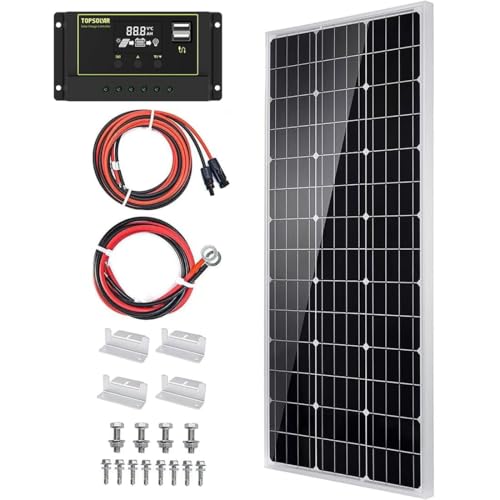
- 100W monocrystalline panel
- 30A PWM charge controller
- Mounting brackets and cable included
Best For: Small 12V cabins and light battery charging
Whole-Cabin Power System

- Twelve 195W bifacial panels
- 10kW 120V/240V inverter
- 48V lithium batteries with app monitoring
Best For: Large cabins and high-demand off-grid properties
Best Compact Cabin Starter
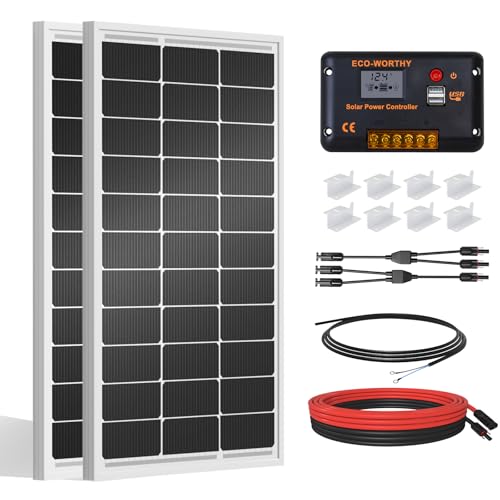
- Includes two 100W panels, controller, brackets, and cables
- Supports 12V parallel or 24V series wiring
- Designed for modest off-grid and backup power needs
Best For: Small cabins, sheds, RVs, and light electrical loads
Best Complete Mid-Size System

- Combines 2,340W of panels with a 5kW inverter
- Includes a 51.2V 100Ah Cubix LiFePO4 battery
- Provides 120V AC power and stored energy
Best For: Cabins needing appliances, backup power, and overnight storage
Best High-Capacity Cabin Power

- Includes 10,620W of panels and 32.2kWh of storage
- Provides 120V/240V split-phase 10kW output
- Professional installation and truck delivery are recommended
Best For: Large cabins or off-grid homes with substantial appliance loads
Balanced Cabin Power

- 400W bifacial panel array with stated 1.6kWh daily output
- Two 12V 100Ah lithium batteries and 2,000W inverter
- Bluetooth monitoring and 40A MPPT controller included
Best For: Moderate-load cabins, sheds, RVs, and backup power
Whole-Cabin Capacity

- 2,950W PV array with five 590W panels
- 16.1kWh 48V LiFePO4 battery included
- 10kW 120V/240V inverter supports split-phase loads
Best For: Large cabins or homes with high electrical demand
Starter-Friendly Choice

- 200W solar array with stated 800Wh daily output
- 50Ah LiFePO4 battery and 600W pure sine inverter
- Integrated 30A charger and UPS auto-switch
Best For: Small cabins and beginners with modest power needs
High-Capacity RV Cabin Power – 780W Complete Solar Kit
For shoppers comparing rooftop solar panel kits for off-grid cabins, this ECO-WORTHY system stands out as a bundled, battery-backed setup rather than a panel-only package. It includes four 195W bifacial panels, two 12.8V 280Ah lithium batteries, a 60A MPPT controller, and a 3,000W inverter charger, with UPS functionality and mains charging for added flexibility.
Best For: RVs, cabins, and off-grid users who want a substantial 12V system with included storage and inverter equipment.
Pros:
- Complete package includes panels, lithium batteries, MPPT controller, inverter charger, Bluetooth module, and cables.
- Four bifacial 195W panels use 25.2% high-efficiency solar cells.
- 7.168kWh battery storage and a 3,000W inverter support many common RV and cabin appliances.
- Designed around a four-step installation process with technical support.
Cons:
- The 12V architecture may be less suitable for larger cabin systems than a higher-voltage design.
- The advertised generation depends on sunlight, shading, orientation, and other site conditions.
This is a convenient choice when you want most of the major components matched in one kit. Confirm roof space, battery placement, wiring requirements, and expected loads before installation.
Expanded 24V Cabin System – 1,170W Lithium Solar Kit
Among rooftop solar panel kits for off-grid cabins, this 24V ECO-WORTHY package offers more panel capacity than a compact starter system while retaining integrated battery storage. It combines six 195W panels with two 12.8V 280Ah lithium batteries, a 60A MPPT controller, and a 3,000W pure sine wave inverter.
Best For: Cabins, sheds, travel trailers, and backup applications needing a 24V system with substantial storage.
Pros:
- Six 195W panels provide a listed 1,170W array using high-efficiency bifacial cell technology.
- Two lithium batteries provide 7.168kWh of stated storage capacity.
- Includes a 60A MPPT controller and 3,000W pure sine wave inverter.
- Bluetooth monitoring and a claimed 99% MPPT tracking efficiency add operational visibility.
Cons:
- The full array requires considerable roof or ground-mount space.
- Actual daily production varies with sunlight intensity, tilt, orientation, weather, and shading.
The 24V layout is a practical middle ground for a cabin that needs more capacity than a small 12V kit. Check that your appliances, battery configuration, mounting area, and installation plan are compatible with the supplied components.
Starter Cabin Setup – 100W 12V Solar Panel Kit
If you are evaluating rooftop solar panel kits for off-grid cabins and only need a modest charging system, this Topsolar kit is a simpler starting point. It pairs one 100W monocrystalline panel with a 30A PWM charge controller, mounting brackets, and solar cable for charging a compatible 12V battery.
Best For: Small cabins, RVs, boats, and basic 12V battery-charging or backup applications.
Pros:
- Compact 100W panel is easier to accommodate than a multi-panel array.
- Includes a 30A controller with overcharge, overvoltage, discharge, short-circuit, and reverse-polarity protection.
- Pre-drilled panel holes, Z-brackets, and included cable simplify mounting and setup.
- Can expand to a stated maximum of 260W in a 12V system or 520W in a 24V system.
Cons:
- It is a panel-and-controller kit, so a battery and other system components are not included.
- At 100W, it is intended for lighter loads rather than whole-cabin appliance power.
- PWM charging is less sophisticated than the MPPT approach used in larger systems.
This kit makes sense for a small, low-demand setup or as an entry point for gradually expanding a battery system. Plan around the modest output and verify the controller, battery, wiring, and future expansion limits before buying.
Whole-Cabin Power System – 2,340W 10kW Solar Kit
For larger properties considering rooftop solar panel kits for off-grid cabins, this ECO-WORTHY package is built around a 48V battery bank and split-phase output. It includes twelve 195W bifacial panels, two 48V 100Ah lithium batteries, and a 10kW 120V/240V inverter, targeting higher-demand cabin, home, farm, or shed applications.
Best For: Larger cabins and off-grid properties with substantial AC loads and access to professional installation.
Pros:
- 2,340W of listed panel capacity and 9.36kWh ideal daily output under four hours of full sunshine.
- 10kW inverter supplies 120V/240V AC output for higher-power appliances.
- 48V batteries support CAN/RS485 communication plus Bluetooth and Wi-Fi monitoring.
- UL 1741 inverter certification and listed UL1973, UL9540A, and CEC testing provide useful safety credentials.
Cons:
- Twelve panels and a 48V split-phase system require substantial space and careful planning.
- Professional installation is recommended; the listing does not position this as a novice DIY system.
- Actual production depends on sunlight, shading, panel orientation, weather, and other conditions.
This is the most capable option in the group for powering larger cabin loads, including listed 240V appliances. Its size, electrical complexity, and professional-installation recommendation make a site assessment and load calculation especially important.
Best Compact Cabin Starter – 200W 12V/24V Solar Panel Kit
For shoppers comparing rooftop solar panel kits for off-grid cabins, this 200-watt ECO-WORTHY setup is a compact starting point for modest electrical needs. It includes two 100W monocrystalline panels, a 30A PWM charge controller, mounting brackets, and solar cables, with wiring options for 12V or 24V installations.
Best For: Small cabins, sheds, RVs, and other off-grid applications needing basic daily charging and backup power.
Pros:
- Includes panels, controller, brackets, connectors, and cables for a straightforward installation.
- Can be connected in series for 24V or parallel for 12V systems.
- Monocrystalline panels are rated up to 21.5% efficiency in suitable conditions.
- Aluminum frames and an IP65-rated junction box support outdoor use.
Cons:
- The 200W capacity is intended for modest loads rather than whole-cabin power.
- The included controller is PWM rather than MPPT.
- Daily output depends on receiving about four hours of full sunshine.
This is a practical entry-level kit when your cabin requirements center on charging and lighter loads. For larger appliances or overnight energy storage, you would need additional system components beyond those included.
Best Complete Mid-Size System – 2.34kW Off-Grid Solar Kit
This ECO-WORTHY package is a more complete choice among rooftop solar panel kits for off-grid cabins, combining 2,340W of solar capacity with a 5kW 48V inverter and a 51.2V 100Ah LiFePO4 battery. It is designed to provide both daytime generation and stored energy for nighttime use.
Best For: Off-grid cabins, RVs, sheds, and backup systems that need stored energy and 120V AC power for lights, appliances, TVs, or refrigerators.
Pros:
- Complete package includes 12 195W panels, a 5kW inverter, and a 100Ah lithium battery.
- 48V architecture is suited to a larger off-grid installation than a basic 12V kit.
- LiFePO4 battery provides deep-cycle storage for nighttime or backup use.
- Panels are specified for roof, ground, or shed mounting.
Cons:
- The 12-panel array requires substantially more mounting space than compact kits.
- Installation involves configuring a 48V battery, inverter, wiring, and multiple panels.
- Actual solar production varies with sunlight, orientation, shading, and weather.
Compared with a small starter kit, this system offers a stronger balance of generation, conversion, and storage in one package. Verify available roof area, expected loads, and installation requirements before committing to the larger 48V design.
Best High-Capacity Cabin Power – 10kW Split-Phase Solar System
For large cabins or full-property power demands, this ECO-WORTHY system goes well beyond a basic rooftop solar panel kit for off-grid cabins. It pairs 18 590W panels for 10,620W of PV capacity with a 10kW 120V/240V split-phase inverter and two 48V 314Ah LiFePO4 batteries providing 32.2kWh of listed storage.
Best For: Large off-grid homes or cabins that need substantial 120V/240V power, high-capacity storage, and support for common household appliances.
Pros:
- Offers 10kW continuous inverter output with 120V/240V split-phase support.
- Includes 10,620W of solar panels and 32.2kWh of listed battery storage.
- Battery monitoring includes a display, Bluetooth, Wi-Fi, and PC connectivity.
- Dual MPPT controllers, time-slot management, and parallel-inverter support add system flexibility.
Cons:
- Professional installation is recommended; it is not aimed at novice DIY installers.
- The large shipment arrives by truck on a pallet, so delivery access must be suitable.
- The system requires considerable roof or ground space for 18 large panels.
This is the most capable option in the group for high-demand off-grid living, but its scale brings greater installation, space, and delivery planning requirements. It makes the most sense when you genuinely need split-phase power and extensive energy storage rather than a small cabin starter system.
Balanced Cabin Power – 400W 12V Solar Kit
For shoppers comparing rooftop solar panel kits for off-grid cabins, this 400W ECO-WORTHY package offers a ready-to-use 12V system with lithium storage, an MPPT controller, and a pure sine wave inverter. Its stated 1.6kWh daily output under four hours of sunlight makes it a practical fit for moderate cabin or backup loads.
Best For: Off-grid cabins, sheds, RVs, and backup power users who need lithium storage and up to 2,000W of inverter-rated AC power.
Pros:
- Includes four 100W bifacial panels, two 12V 100Ah lithium batteries, a 40A MPPT controller, and a 2,000W pure sine wave inverter.
- Built-in Bluetooth monitoring adds visibility into system operation.
- Lithium batteries are rated for more than 3,000 deep cycles and include battery management protection.
- Bifacial panels use 12BB cells and are listed with a 23% conversion rate.
Cons:
- The 12V architecture is better suited to moderate loads than a large whole-cabin electrical system.
- Daily production depends on receiving approximately four hours of sunlight under ideal conditions.
- The kit’s larger appliances are limited by the inverter’s stated 2,000W rating.
This is a well-rounded choice when you want a complete 12V package rather than sourcing batteries, inverter, and charge controller separately. Confirm your expected loads and roof space before choosing it for a full-time cabin.
Whole-Cabin Capacity – 10kW Split-Phase Solar System
Among rooftop solar panel kits for off-grid cabins, this ECO-WORTHY system is designed for substantially larger electrical demands. It combines five 590W panels, a 48V 314Ah LiFePO4 battery, and a 10kW inverter with 120V/240V split-phase support, but its scale calls for careful planning and professional installation.
Best For: Large off-grid homes or cabins needing high-output split-phase power, substantial energy storage, and room to expand the battery bank.
Pros:
- Provides a 10,000W continuous inverter output with up to 20,000W peak output.
- Includes 2,950W of solar panels and a 16.1kWh 48V LiFePO4 battery.
- Supports 120V/240V split-phase output for common household appliances.
- Battery offers display, Bluetooth, Wi-Fi, PC connectivity, wheels, handles, and parallel expansion support.
Cons:
- The pallet shipment requires an address that can accommodate truck delivery.
- The manufacturer recommends professional installation; it is not intended for novice installation.
- The system is much larger and more complex than a typical small cabin setup.
This is the most capable option in the group for powering a whole cabin, especially where split-phase loads are important. Its installation, delivery requirements, and system scale should be treated as part of the purchase decision.
Starter-Friendly Choice – 200W 12V Solar Kit
If you are evaluating rooftop solar panel kits for off-grid cabins and want a simpler entry point, this 200W 12V starter kit includes the key components for a small system. It pairs solar panels with a 50Ah LiFePO4 battery and a combined 600W inverter and 30A charger for basic lighting, device charging, and other modest loads.
Best For: Small cabins, campers, boats, and beginners who need compact 12V power for electronics and light-duty off-grid use.
Pros:
- Includes 200W of solar panels, a 50Ah LiFePO4 battery, and a 600W pure sine wave inverter.
- The integrated unit combines a 30A charger with a 20ms UPS auto-switch.
- Panels use N-Type cells, are listed at up to 25% efficiency, and can capture reflected light from both sides.
- LiFePO4 battery is rated for 4,000–15,000 recharge cycles.
Cons:
- With 200W of panel capacity and a 50Ah battery, it is intended for smaller loads rather than whole-cabin power.
- The inverter’s 600W rating limits the appliances it can run.
- The battery’s XT60 interface has a stated 30A maximum input and output current.
This kit makes sense when ease of setup and modest power needs matter more than high capacity. For a cabin with refrigerators, heating equipment, or other larger appliances, consider a system with more panel, battery, and inverter capacity.
How We Picked the Best Rooftop Solar Panel Kits for Off-Grid Cabins
We compared the selected systems by panel wattage, nominal voltage, battery capacity, inverter output, included charge-control equipment, and intended use. We also considered whether a kit is best suited to a small weekend cabin, an RV-style setup, or a larger property with several AC appliances.
Specifications can vary by package and seller, so confirm the current parts list, battery chemistry, inverter features, certifications, and mounting hardware before ordering. A complete-looking kit may still require roof attachments, wiring, breakers, grounding equipment, and professional installation.
Quick Comparison
| System type | Best for | Typical priority |
|---|---|---|
| 100W–200W, 12V | Lighting, phones, small electronics | Low cost and simple installation |
| 400W–800W, 12V | Weekend cabins and modest DC loads | More daily generation and storage |
| 1,200W–2,340W, 24V | Full-time or larger off-grid use | Higher efficiency and inverter capacity |
| 48V, 10kW-class systems | Large cabins and heavier AC loads | Whole-property capability |
Key Buying Factors for Rooftop Solar Panel Kits for Off-Grid Cabins
Daily Energy Demand
List every load, including lights, refrigerator, water pump, internet equipment, tools, and seasonal heating or cooling. Multiply each device’s watts by its daily hours, then add a reserve for cloudy weather and system losses. Panel wattage alone does not determine how much usable power you will have at night.
Battery Capacity and Chemistry
Battery storage determines how long the cabin can operate after sunset or during poor weather. Lithium batteries generally provide more usable capacity, lower weight, and longer cycle life than lead-acid options, but they cost more initially. Match battery voltage to the inverter and charge controller.
Roof, Shading, and Installation
Measure usable roof area and check its orientation, pitch, structural condition, and shading from trees or nearby buildings. Partial shade can reduce output, especially when panels are connected in a string. Verify that the kit includes compatible mounting rails, roof penetrations, weatherproof connectors, and appropriately sized cabling—or budget for them separately.
Inverter and Electrical Safety
Choose an inverter with enough continuous wattage for normal loads and enough surge capacity for motors, pumps, and refrigerators. Larger split-phase systems may be needed for 240V equipment. Use correctly rated overcurrent protection, disconnects, grounding, and battery safeguards, and have a qualified electrician review permanent cabin wiring.
Who Should Buy Which Rooftop Solar Panel Kits for Off-Grid Cabins?
Choose a 100W or 200W starter kit if you mainly need lights, device charging, ventilation, or other modest loads. Choose a 400W–800W system for a small weekend cabin with a refrigerator, more lighting, and occasional electronics. Choose a 1,200W–2,340W system when you need reliable daily AC power, more battery reserve, or several simultaneous loads.
Choose a 48V, high-capacity system only when your energy audit justifies its cost and installation complexity. These larger kits are better for full-time occupancy, substantial appliances, workshops, or whole-cabin backup. If winter production, extended cloudy periods, or high-demand heating is important, plan for additional panels, storage, load management, or a backup generator.