As homeowners increasingly seek energy independence, smart critical load panels are becoming essential. These devices not only enhance energy management but also offer real-time monitoring and customizable options. With advancements on the horizon for 2026, you’ll want to know which models stand out. From reliable power management systems to innovative smart home solutions, the choices can be overwhelming. Let’s explore the top contenders that can transform your energy experience.
Generac 7006 100 Amp Load Manager for Reliable Power Management

If you’re looking for a reliable way to manage your power during outages, the Generac 7006 100 Amp Load Manager is an excellent choice. This innovative device uses efficient wire-free technology, allowing self-aware modules to operate independently. You can easily customize load prioritization, ensuring your essential items stay powered when it matters most. Plus, the enhanced lock-out feature keeps specific loads off when using generator power. With convenient external LED indicators, monitoring load status becomes effortless. Weighing just 5.8 pounds, it’s lightweight yet powerful, supporting up to 12,000 watts. Experience peace of mind with this essential tool for energy management.
Best For: Homeowners seeking reliable power management solutions during outages.
Pros:
- Efficient Load Management: Automatically prioritizes essential loads, ensuring critical appliances remain powered during outages.
- User-Friendly Features: External LED indicators provide easy monitoring of load status without needing to open the electrical box.
- Lightweight Design: At only 5.8 pounds, it’s easy to install and handle.
Cons:
- Limited to 100 Amps: May not support larger homes or extensive electrical systems that require more power.
- Manual Power Source: Requires manual intervention, which may not be as convenient as fully automated systems.
- Customer Support Limitations: Manufacturer warranty details are only available upon request, which may be inconvenient for users needing immediate assistance.
SIEMENS Inhab Load Manager, Intelligent Energy Management System

The SIEMENS Inhab Load Manager is ideal for homeowners seeking an efficient way to manage energy consumption without the hassle of costly panel upgrades. This programmable energy management system maximizes your existing electrical panel capacity, using real-time data to prevent overloads by disconnecting power to specific loads when necessary. It’s compatible with any brand load center, managing 2-pole loads up to 60A, including EV chargers and air conditioners. With NEMA Type 3R outdoor enclosure and easy installation, it’s perfect for both existing homes and new builds. Plus, it comes with a standard limited warranty for added peace of mind.
Best For: Homeowners looking to efficiently manage energy consumption while avoiding expensive electrical panel upgrades.
Pros:
- Maximizes existing electrical panel capacity, saving on potential upgrade costs.
- Compatible with a variety of 2-pole loads, including EV chargers and air conditioners.
- Easy installation process compliant with National Electrical Code.
Cons:
- May require professional installation, leading to additional labor costs.
- Limited customer reviews with a modest rating of 3.6 out of 5 stars.
- IP00 rating indicates it may not be suitable for environments exposed to moisture or dust.
EcoFlow Smart Gateway (200A) with Remote-control Circuits

For homeowners looking to optimize their energy management, the EcoFlow Smart Gateway (200A) stands out with its intelligent design and six remote-control circuits. This panel is compatible with DELTA Pro Ultra X, solar systems, EV chargers, and generators, making it versatile for various setups. It automatically sheds non-essential loads, ensuring seamless backup during outages, with a switching time under 20 ms for rapid response. The compact dimensions and durable materials enhance its functionality. Plus, with a 5-year warranty and a flexible return policy, you can invest in reliable energy management without worry. It’s truly a smart choice for modern homes.
Best For: Homeowners seeking an efficient and reliable energy management solution for optimizing power use across various systems.
Pros:
- Versatile Compatibility: Works seamlessly with DELTA Pro Ultra X, solar systems, EV chargers, and generators.
- Automatic Load Shedding: Efficiently manages energy by shedding non-essential loads during outages for uninterrupted backup.
- Rapid Switching Time: Offers a swift response with a switching time of under 20 ms, ensuring minimal downtime.
Cons:
- Limited Circuits: Only provides six remote-control circuits, which may not be sufficient for larger homes or more extensive setups.
- Single Phase Only: Designed for single-phase systems, limiting its use in multi-phase applications.
- Market Rank: Currently ranked #1,017,353 in Tools & Home Improvement, indicating lower visibility and potential competition in the market.
EF ECOFLOW DELTA Pro Ultra Power Station
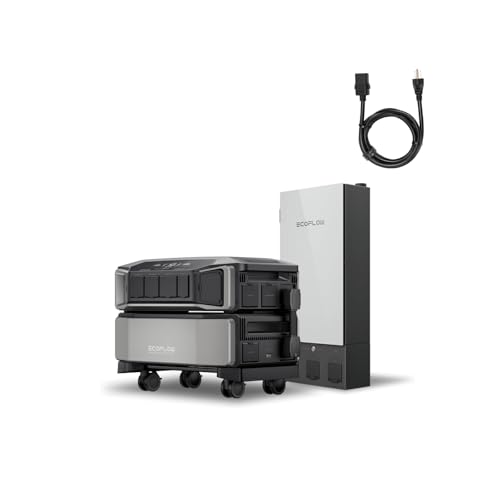
Looking for a powerful, reliable backup solution for your home? The EF ECOFLOW DELTA Pro Ultra Power Station is your go-to option. With a massive 6144Wh capacity and 7200W AC output, it can handle heavy appliances like a 3-ton central air conditioner. You can recharge the battery in just two hours, faster than any other solar generator of its size. The EcoFlow Smart Home Panel 2 integrates seamlessly, offering auto-switchover for uninterrupted power and circuit control via the app. This powerful system guarantees you stay prepared during outages while optimizing energy usage and reducing bills.
Best For: Homeowners seeking a robust and efficient backup power solution for heavy appliances and seamless energy management during outages.
Pros:
- Fast Recharge Time: Fully recharges in just two hours, making it quicker than other solar generators of its size.
- High Power Output: Capable of running heavy appliances, including a 3-ton central air conditioner, with a 7200W output.
- Smart Energy Management: The EcoFlow Smart Home Panel 2 provides circuit control and auto-switchover for uninterrupted power.
Cons:
- Cost: High initial investment may not be feasible for all homeowners.
- Separate Shipping: DELTA Pro Ultra Power Station and Smart Home Panel 2 are shipped separately, which may cause inconvenience.
- Weight: The unit may be heavy and cumbersome for some users to handle and install.
EF ECOFLOW Smart Home Panel 3

Designed for homeowners seeking reliable energy management solutions, the EF ECOFLOW Smart Home Panel 3 offers a seamless backup experience in under 20 milliseconds. With 32 circuits, it serves as the heart of your whole-home backup system, compatible with the DELTA Pro Ultra X. You can extend your backup time by up to 42%, ensuring peace of mind during power outages. This battery-powered panel delivers an impressive 12,000 watts of power. Though installation is required, its portability and robust features make it a solid choice. Plus, you’ll benefit from a 5-year manufacturer warranty for added assurance.
Best For: Homeowners looking for a reliable and efficient whole-home backup energy management solution.
Pros:
- Seamless backup capability in under 20 milliseconds ensures minimal disruption during power outages.
- Extends backup time by up to 42%, providing longer support during emergencies.
- Portable design allows for flexible installation options and easy relocation if needed.
Cons:
- Installation required before use, which may require professional assistance.
- Customer feedback shows a mixed rating of 3.1 out of 5 stars, indicating potential concerns with performance or user experience.
- Best Sellers Rank suggests it may not be a top choice among consumers in its category.
PN Series 200 Amp Trailer Panel with Main Breaker

The PN Series 200 Amp Trailer Panel with Main Breaker stands out for its plug-on neutral design, making it an ideal choice for contractors and DIY enthusiasts who prioritize quick and efficient installation. This Siemens model features ample wire bending space and two factory-installed ground bars, ensuring flexibility during setup. With a robust interrupt rating of 22,000 AIC and a durable NEMA Type 3R enclosure for outdoor use, it’s built to last. Customers appreciate its labor-saving features, reflected in its impressive 4.7-star rating. Plus, you can take advantage of the Amazon 30-Day Return Guarantee for added peace of mind.
Best For: Contractors and DIY enthusiasts looking for a quick and efficient installation of a reliable trailer panel.
Pros:
- Plug-on neutral design allows for rapid setup, saving time on installation.
- Ample wire bending space and two factory-installed ground bars provide flexibility during installation.
- High interrupt rating of 22,000 AIC and durable NEMA Type 3R enclosure ensure reliability and longevity for outdoor use.
Cons:
- Limited to a 200 Amp capacity, which may not be sufficient for larger projects.
- Some users may find the dimensions (24.8L x 15.8W x 5.3H) bulky for tight spaces.
- Warranty information is not explicitly detailed, requiring additional inquiry for specifics.
Anker SOLIX E10 Smart Inlet Box

For homeowners seeking an efficient energy management solution, the Anker SOLIX E10 Smart Inlet Box stands out with its ability to reduce energy bills by up to 80%. This device combines a 6kWh battery, expandable to 30kWh, with a 9kW solar capacity, ensuring you have power when you need it. Its smart features let you control whole-home backup, charge during off-peak hours, and store energy for peak usage. Plus, it’s weatherproof and built for easy installation. With a 10-year lifespan and excellent customer support, the Anker SOLIX E10 is a smart investment for modern energy management.
Best For: Homeowners looking for an efficient and cost-effective energy management solution to reduce their electricity bills.
Pros:
- Significant Cost Savings: Can reduce energy bills by up to 80%.
- Expandable Battery Capacity: Starts with 6kWh and can be expanded to 30kWh for greater energy storage.
- Weatherproof Design: Built to withstand outdoor conditions with NEMA 4 and 3R ratings.
Cons:
- Initial Investment: The upfront cost may be high for some homeowners.
- Weight: At 60.6 pounds, the installation may require assistance.
- Limited Warranty on E10: Only a 5-year warranty for the E10 power module compared to a longer warranty for the Smart Inlet Box.
50 Amp Load Manager for Generac 7000

When managing energy demands, the 50 Amp Load Manager for the Generac 7000 stands out as a top choice for homeowners looking to optimize their power usage. With its Smart Management Module, you can control up to 8 zones, ensuring critical equipment like refrigeration and medical systems get priority during outages. The unit operates autonomously, unloading non-essential loads to protect your generator from overload. Real-time LED monitoring keeps you informed of your system’s status, while wire-free technology enhances convenience. Plus, the lock feature allows you to disable non-essential circuits, making power allocation more efficient when you need it most.
Best For: Homeowners looking to optimize power usage and prioritize critical equipment during outages.
Pros:
- Autonomous operation unloads non-essential loads to prevent generator overload and aids in recovery.
- Smart Management Module allows control over up to 8 zones, ensuring efficient energy distribution.
- Real-time LED monitoring provides clear status updates on system performance during outages.
Cons:
- May require professional installation for optimal setup and integration with existing systems.
- Limited to compatibility with Generac 7000, which may not suit all users’ generator models.
- Initial investment cost could be high for some homeowners compared to simpler load management solutions.
EF ECOFLOW Smart Home Panel 2

Designed for homeowners seeking a reliable energy management solution, the EF ECOFLOW Smart Home Panel 2 stands out with its ability to seamlessly integrate multiple energy sources, including solar and gas. This panel serves as a hub for your whole-home backup system, managing energy efficiently during outages. With support for up to 36kWh of energy storage, you’ll easily power all household appliances. Its 20-ms auto-switchover feature guarantees continuous power without hassle. Plus, compatibility with DELTA Pro systems and gas generators ensures versatility. Rated 4.0 stars by users, it’s a smart choice for enhancing your energy independence.
Best For: Homeowners looking for a reliable and versatile energy management solution that integrates multiple energy sources for backup power during outages.
Pros:
- Efficiently manages both solar and gas energy sources for cost-effective power usage.
- Supports a large energy storage capacity, providing the ability to power all household appliances.
- Features a quick 20-ms auto-switchover for seamless transition to backup power during outages.
Cons:
- Weighs 40 pounds, which may make installation challenging for some users.
- Higher upfront costs associated with purchasing additional batteries or generators for optimal setup.
- Limited customer reviews (83) may not provide a comprehensive insight into long-term reliability and performance.
Jackery Solar Generator 5000 Plus

The Jackery Solar Generator 5000 Plus stands out as an ideal choice for homeowners seeking reliable energy management solutions during blackouts or off-grid adventures. With a robust 5040Wh LiFePO4 power station, it can expand output from 7200W to 14400W, accommodating various needs. You can power your entire home for over a day or extend it to 15 days with additional units. It effortlessly supports heavy-duty devices, RVs, and essential electronics. Plus, its smart features let you monitor usage in real-time via the Jackery App, ensuring efficient energy management. Enjoy peace of mind with this sustainable, quiet solution.
Best For: Homeowners looking for a reliable and sustainable energy solution during blackouts or off-grid experiences.
Pros:
- Versatile output capabilities, expandable up to 14400W, accommodating various power needs.
- Powers heavy-duty devices and essential electronics, ensuring uninterrupted service.
- Smart features for real-time monitoring and energy management via the Jackery App.
Cons:
- High initial investment compared to traditional generators.
- Limited portability due to its size and weight, making it less ideal for frequent travel.
- Charging time may vary depending on solar conditions and usage rates.
Factors to Consider When Choosing Smart Critical Load Panels
When you’re choosing smart critical load panels, you need to take into account several key factors. Look at load management efficiency, compatibility with your existing systems, and how user-friendly the interface is. Don’t forget to check the installation requirements and warranty support to guarantee a smooth experience.
Load Management Efficiency
Choosing the right smart critical load panel for effective load management efficiency hinges on several key factors. First, look for systems that utilize wire-free technology, enabling autonomous operation and real-time adjustments based on demand fluctuations. This adaptability is essential for prioritizing critical devices during outages while shedding non-essential loads to prevent generator overload. Advanced solutions supporting multiple circuits and heavy-duty loads can enhance large-scale energy management, especially when integrating solar with backup generators. Additionally, opt for panels with external LED indicators to provide immediate visual feedback on load status, aiding quick decisions during outages. Finally, the ability to customize load priorities greatly boosts energy usage efficiency, reducing waste and optimizing power allocation during peak times or generator recovery.
Compatibility With Systems
Finding a smart critical load panel that seamlessly integrates with your existing electrical systems is vital for ideal performance. First, confirm compatibility with your load centers and circuit breakers to facilitate smooth integration. Look for a panel that can handle various loads and voltages, allowing you to manage different appliances effectively. It’s also important to verify compatibility with renewable energy sources, like solar panels or wind turbines, to boost your energy efficiency. Make certain the panel supports communication protocols for remote monitoring and control, enhancing your ability to manage energy usage. Finally, consider systems that can connect with multiple power sources, such as generators and battery backups, guaranteeing reliable power during emergencies.
User-Friendly Interface
An effective user-friendly interface is crucial for managing smart critical load panels effortlessly, making it easier for you to navigate and control essential features. Look for visual indicators like LED lights or touchscreen displays that provide real-time feedback on load status and operational conditions. Intuitive design elements, including simplified menus and icons, can greatly reduce the learning curve if you’re new to energy management systems. The ability to customize load prioritization through the interface allows you to tailor power distribution to your specific needs during outages. Additionally, remote access via mobile apps enhances usability, letting you monitor and manage your energy consumption from anywhere, giving you peace of mind and greater control over your energy management.
Installation Requirements
When managing your energy consumption effectively, understanding the installation requirements for smart critical load panels is key. First, you’ll need a qualified electrician to guarantee everything meets the National Electrical Code and local regulations. Most panels must connect to a compatible load center, which may require modifications to your existing electrical infrastructure. Check that the panel you choose supports the specific circuit types and ratings, like 120V or 240V, based on your appliances. Additionally, verify you have enough space for the panel’s dimensions and weight, as these can vary. Finally, proper installation includes adequate wire bending space and grounding, especially for outdoor panels that must withstand various environmental conditions.
Warranty and Support
Considering the potential complexities of smart critical load panels, warranty and support should be top of mind. Look for warranties that cover a reasonable period—some panels offer standard limited warranties, while others might provide extended coverage upon request. Evaluate the manufacturer’s customer support options too; prompt assistance can be essential for installation issues or product inquiries. It’s wise to check for a return policy, like a 30-day return guarantee, for added flexibility if the product doesn’t meet your needs. Also, examine detailed warranty information about specific components, as different parts may have varying coverage. Finally, don’t overlook customer reviews; they can shed light on the reliability of warranty claims and the responsiveness of support services.