When the power goes out, the right backup depends on what must keep running—and for how long. A phone, router, refrigerator, and medical device place very different demands on a battery.
These 10 options span compact emergency chargers and larger power stations, several bundled with solar panels. Use the buying guide below to match capacity, output, and charging speed to your outage plan.
Best 10 Solar Battery Backup for Emergencies Picks for 2026
Best for Expandable Home Backup

- 3,584Wh capacity; 3,600W AC output
- Expandable to 21kWh per unit
- Two 200W panels included
Best For: Households planning larger, expandable backup setups
Best for Essential-Appliance Backup

- 3,072Wh capacity; 3,600W AC output
- UPS switching within 20ms
- Two 200W panels included
Best For: Fridges, lights, Wi-Fi, and compatible UPS-connected devices
Best Mid-Size Portable Backup

- 2,042Wh capacity; 2,200W AC output
- 20ms UPS switching
- Two 200W panels included
Best For: Portable backup for selected devices and outdoor use
Best Lightweight Emergency Kit
Jackery Solar Generator 1000 v2

- 1,070Wh capacity; 1,500W AC output
- Power station weighs 23.8 pounds
- One 200W panel included
Best For: Short outages and easy-to-carry backup power
Best Compact Station
DaranEner 300W with 30W Solar Panel

- 192Wh capacity; 300W AC output
- Includes a 30W solar panel
- About 5.8 pounds with a built-in light
Best For: Portable backup for small essentials
Best Phone Backup
BLAVOR 20000mAh Solar Hand-Crank Power Bank

- 20000mAh battery for mobile devices
- Built-in cables plus wireless charging
- Hand crank supports emergency lighting
Best For: Phones and USB-charged essentials
Best Appliance Backup
EcoFlow DELTA 3 Classic with 220W Solar Panel

- 1024Wh capacity; 1800W output
- Includes a 220W solar panel
- Under-10ms UPS switching
Best For: Selected appliances and sensitive electronics
High-Capacity Home Backup
PECRON F3000LFP with 300W Solar Panel

- 3,072Wh LiFePO4 battery; 3,600W output
- 300W solar panel included
- 13 ports and UPS switchover
Best For: Higher-power household outage essentials
Built-In Solar Convenience
BLAVOR S1600 1024Wh Power Station

- 1,024Wh battery; 1,600W rated output
- Unfolding 40W panel built in
- External solar input up to 200W
Best For: Simple solar setup at home or on trips
Compact Essentials Backup
EM300 259Wh Portable Power Station
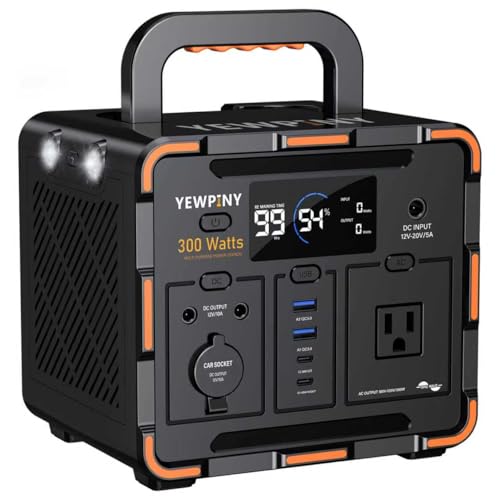
- 259Wh capacity; 300W rated output
- About 7.2 pounds with a carry handle
- Solar-ready; panel sold separately
Best For: Portable backup for smaller devices
Best for Expandable Home Backup – Jackery HomePower 3600 Plus
For solar battery backup for emergencies that can grow beyond a single power station, the Jackery HomePower 3600 Plus pairs a 3,584Wh battery and 3,600W AC output with two 200W solar panels.
Best For: Households planning to back up larger appliances and add battery capacity over time.
Pros:
- Expandable to 21kWh per unit, according to Jackery.
- Wheels and a telescopic handle help move the 77.2-pound station.
- Supports AC, solar, hybrid AC/DC, and generator charging.
Cons:
- 240V output requires a parallel setup; the single unit is rated for 120V.
- At 77.2 pounds, it is still substantial to lift.
This is the capacity-focused choice of the four. Plan for the additional equipment and cost if your backup goals depend on expansion, parallel output, or home integration.
Best for Essential-Appliance Backup – Jackery HomePower 3000
The Jackery HomePower 3000 is a solar battery backup for emergencies built around keeping essentials such as a fridge, lights, and Wi-Fi running. It combines 3,072Wh of capacity, 3,600W AC output, and two 200W solar panels.
Best For: Households prioritizing essential appliances and automatic backup for compatible plugged-in devices.
Pros:
- UPS switches within 20ms, according to Jackery.
- Includes AC, USB, DC, and TT-30 RV connections.
- Rated for 4,000 battery cycles to 70% capacity.
Cons:
- With the included 400W of panels, the stated solar charge time is up to 80% in nine hours.
- Its 59.5-pound weight makes it less convenient to carry than smaller models.
Choose this over the larger 3600 Plus if UPS functionality and essential-appliance coverage matter more to you than the 3600 Plus’s stated expansion options. Actual runtime will depend on what you plug in.
Best Mid-Size Portable Backup – Jackery Explorer 2000 v2
If you want solar battery backup for emergencies without moving up to a 3kWh station, the Jackery Explorer 2000 v2 offers 2,042Wh of capacity, 2,200W AC output, and two 200W panels.
Best For: Buyers who want a portable backup for selected household devices, camping, or small-business use.
Pros:
- Three AC outlets and a 100W USB-C PD port cover common devices.
- Offers 20ms UPS switching and an app-activated emergency charging mode.
- Jackery states a six-hour solar charge time with 400W of panels.
Cons:
- Its 2,042Wh battery provides less stored energy than either HomePower model here.
- Solar connection requires the straight DC8020 plug rather than the L-shaped DC7909 plug.
This is a practical middle ground when portability matters but a 1kWh battery feels limiting. Check your devices’ wattage and energy needs before relying on it through a long outage.
Best Lightweight Emergency Kit – Jackery Solar Generator 1000 v2
For solar battery backup for emergencies that is easier to carry and store, the Jackery Solar Generator 1000 v2 pairs a 1,070Wh battery and 1,500W AC output with one 200W panel. The power station weighs 23.8 pounds.
Best For: Short outages, charging electronics, and portable power for camping or road trips.
Pros:
- Foldable handle and 23.8-pound station make it the lightest unit in this roundup.
- Three AC outlets, USB ports, a car port, and LED lights add versatility.
- App-activated emergency charging can fully recharge the station in one hour from AC power.
Cons:
- 1,070Wh capacity offers less outage runtime than the larger models.
- With its included 200W panel, Jackery states about six hours to reach 80% charge.
Pick this kit when carrying the station and covering a modest set of essentials matter most. The one-hour charge requires enabling emergency mode in the app; standard AC charging defaults to 1.7 hours.
Best Compact Station – DaranEner 300W with 30W Solar Panel
If you want a solar battery backup for emergencies that is easy to carry and store, this DaranEner bundle pairs a 192Wh power station with an included 30W panel. Its 300W AC output suits small essentials, while the built-in light is useful when the power goes out.
Best For: Portable backup for phones, laptops, lighting, and other devices within its 300W output limit.
Pros:
- Weighs about 5.8 pounds and includes a 30W solar panel.
- Offers two AC outlets, USB-C and USB-A ports, and DC outputs.
- LiFePO4 battery is rated for 3,500+ cycles to 80% capacity.
Cons:
- 192Wh capacity and 300W running output limit how long and what it can power.
- The included panel is rated at just 30W, so solar replenishment may be slow.
Choose this for a grab-and-go kit rather than whole-home backup. Check your devices’ wattage and expected runtime against its 300W output and 192Wh capacity.
Best Phone Backup – BLAVOR 20000mAh Solar Hand-Crank Power Bank
For a solar battery backup for emergencies focused on phones rather than household appliances, this BLAVOR power bank combines a 20000mAh battery, solar charging, and a hand crank. Built-in cables and wireless charging give you several ways to keep mobile devices connected.
Best For: Keeping phones and other USB-charged essentials available during outages or travel.
Pros:
- Four built-in cables, three ports, and wireless charging provide flexible connections.
- Hand crank can supply emergency lighting when other charging options are unavailable.
- Includes a flashlight, camping lantern, and outdoor-oriented protective shell.
Cons:
- No AC outlet for standard household plugs.
- The stated hand-crank benefit is emergency lighting, not a substitute for charging the full battery.
This is the pocket-device option in the roundup. Charge it ahead of a storm, and treat its solar and crank features as supplemental ways to stay prepared.
Best Appliance Backup – EcoFlow DELTA 3 Classic with 220W Solar Panel
For a solar battery backup for emergencies that can handle more than personal electronics, the EcoFlow DELTA 3 Classic bundle provides 1024Wh of capacity, 1800W output, and an included 220W solar panel. It is the strongest fit here for higher-wattage household essentials.
Best For: Backing up selected appliances and electronics during outages, with solar recharging available.
Pros:
- 1800W output and 3600W surge accommodate a wider range of loads.
- Includes a 220W panel; the stated solar recharge time is 5.8 hours.
- Under-10ms UPS switching helps protect connected sensitive electronics.
- AC charging is stated to reach 80% in 45 minutes.
Cons:
- Its 1024Wh capacity still requires runtime planning for sustained appliance use.
- The power station and solar panel may arrive separately.
Prioritize this bundle if your outage plan includes appliances or equipment that benefits from fast switchover. Confirm each load’s wattage and estimate how long the 1024Wh battery will need to support it.
High-Capacity Home Backup – PECRON F3000LFP with 300W Solar Panel
For solar battery backup for emergencies that can handle larger household loads, the PECRON F3000LFP pairs a 3,072Wh LiFePO4 battery and 3,600W output with an included 300W solar panel.
Best For: Households that want substantial outage capacity and enough output for appliances within the station’s power limits.
Pros:
- Six AC outlets and seven additional ports can power up to 13 devices at once.
- Supports up to 1,600W solar input and offers an 8–20ms UPS switchover.
- AC charging is rated for a full recharge in about two hours.
Cons:
- At 63.3 pounds, it is less convenient to move than smaller stations.
- The included 300W panel cannot take advantage of the full 1,600W solar-input limit by itself.
This is the strongest fit here for higher-power home essentials. Actual backup time depends on what you run, and the panel and power station may arrive separately.
Built-In Solar Convenience – BLAVOR S1600 1024Wh Power Station
The BLAVOR S1600 makes solar battery backup for emergencies simpler to set up: its 40W panel unfolds from the station, so there is no separate panel to carry for basic solar charging. Its 1,024Wh battery and 1,600W rated output suit a range of essentials within those limits.
Best For: Buyers who value an integrated solar panel for outages, camping, or RV trips.
Pros:
- Built-in 40W panel allows solar charging without a separate accessory.
- LiFePO4 battery is rated for more than 3,500 charge cycles.
- Offers eight output ports, including a bidirectional 100W USB-C port.
Cons:
- The 40W built-in panel offers limited charging power; an external panel is needed for up to 200W solar input.
- The compatible external panel is sold separately.
Its integrated panel is the practical draw, but solar recharge speed will depend on sunlight and the panel setup. An external panel is the better match if faster solar charging matters.
Compact Essentials Backup – EM300 259Wh Portable Power Station
If you need solar battery backup for emergencies primarily for smaller devices, the EM300 offers a 259Wh LiFePO4 battery and 300W rated output in a roughly 7.2-pound package. It supports solar charging, but a panel is not included.
Best For: Portable backup for phones, laptops, and other devices that stay within the 300W output limit.
Pros:
- Compact size and built-in handle make it easy to carry.
- Supports wall, car, and solar charging, plus pass-through charging.
- Includes a 65W USB-C port and a battery rated for more than 3,000 cycles.
Cons:
- 259Wh capacity and 300W output limit its usefulness for larger loads.
- A solar panel must be purchased separately.
Choose this one for portable essentials rather than extended household backup. The supplied specifications conflict on AC voltage and waveform, so confirm outlet compatibility before relying on it for an AC device.
How We Picked the Best Solar Battery Backup for Emergencies
We focused on the specifications that matter during an outage: battery capacity in watt-hours (Wh), AC output in watts (W), included solar equipment, and portability. The selection covers small devices, mid-size stations, and higher-capacity home-backup options so buyers can compare equipment for different needs. Listed specifications are a starting point, not a guarantee of runtime or solar charging performance.
Quick Comparison: Match the Battery to the Job
For phone and small-USB-device charging, a power bank or compact station may be enough. A station around 1,000Wh offers more flexibility for a router, lights, and occasional appliance use. Roughly 2,000Wh to 3,500Wh models provide more stored energy for longer outages or multiple essentials, but cost and weight typically rise. Compare AC output separately from capacity: output determines what can run at once; capacity helps determine how long it runs.
Key Buying Factors for Solar Battery Backup for Emergencies
Capacity and Realistic Runtime
List your essentials and estimate each device’s power draw and hours of use. Multiply watts by hours to estimate Wh needed, then allow extra capacity for inverter losses and uncertainty. For example, a 50W device running for 10 hours uses about 500Wh before those losses. Check a refrigerator’s actual energy use rather than relying only on its running wattage, since compressors cycle on and off.
AC Output and Startup Surges
Make sure the station’s continuous AC rating exceeds the combined load of devices you plan to run simultaneously. Refrigerators, pumps, and other motor-driven appliances can draw substantially more power when starting; check the manufacturer’s surge rating and your appliance requirements. Small USB power banks cannot substitute for an AC power station when a device needs a wall outlet.
Solar Panels and Recharge Time
A bundled panel makes a kit easier to plan, but panel wattage is a best-case rating. Cloud cover, shade, sun angle, and short winter days reduce real-world production. Compare the panels’ total rated wattage with the station’s supported solar-input range, and check connectors before adding panels. For time-sensitive preparedness, charge the battery from a wall outlet before a forecast outage; treat solar as a way to extend or replenish power, not a promise of a full daily recharge.
Practical Setup
Consider weight, storage space, outlet types, charging time, and whether the unit supports the specific backup or pass-through behavior you need. Check the battery chemistry, warranty, and storage-maintenance instructions. If you rely on powered medical equipment, confirm compatibility and arrange a backup plan beyond a single battery.
Who Should Buy Which Solar Battery Backup for Emergencies?
Choose a compact power bank if your priority is keeping phones available; a small portable station if you also need limited AC power. Look at approximately 1,000Wh options for a few modest essentials, or 2,000Wh-plus stations when runtime and higher-output appliances matter more than portability. For broader household needs, calculate your loads first: even a large portable station is not a whole-home generator. The best Solar Battery Backup for Emergencies is the one whose usable capacity, output, and realistic recharge options fit your essential devices.