A solar generator can add a few emergency miles to an EV, but it is not a substitute for a dedicated home charger. Battery capacity, AC output, and your vehicle’s charging settings determine whether a portable station can charge your car at all—and how much range it can add.
These five options span compact backup power to larger, expandable systems. Here’s how to choose one that fits your EV and your expectations for solar recharging.
Best 5 Solar Generator Ev Charging Setup Picks for 2026
Expandable Solar Backup

- 3,584Wh capacity; 3,600W AC output
- Two 200W solar panels included
- Dedicated EV outlet not specified
Best For: Expandable home backup with included solar panels
Direct EV Charging Pick

- NEMA 14-50 EV charging connection
- 3,840Wh storage; 6,000W AC output
- Solar panels not listed as included
Best For: A specified EV charging outlet and expandable storage
Quiet Solar Backup
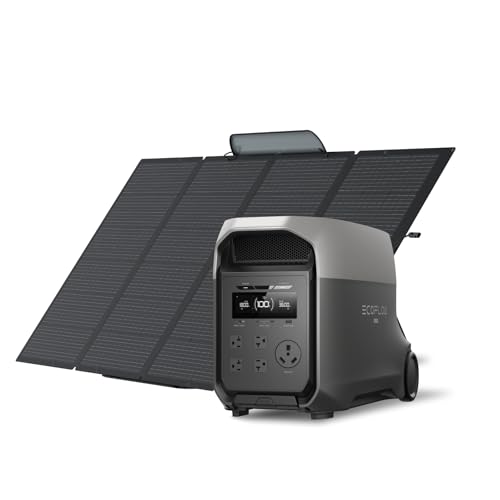
- 3,072Wh capacity; 3,600W output
- 400W solar panel included
- EV charging compatibility not specified
Best For: Quiet backup power with an included solar panel
Expandable Compact Pick

- 1,024Wh base capacity; expandable with extra batteries
- 2,000W AC output and up to 1,200W solar input
- 34.4 pounds with app control
Best For: Portable backup with room to expand
Higher-Capacity Pick

- 3,072Wh built-in LiFePO4 capacity
- 3,600W AC output across six AC outlets
- Up to 1,600W solar input; weighs 63.3 pounds
Best For: Larger home or RV backup loads
Expandable Solar Backup – Jackery HomePower 3600 Plus
For a solar generator EV charging setup that also needs to serve as home backup, the Jackery HomePower 3600 Plus offers 3,584Wh of storage, 3,600W AC output, and two included 200W solar panels. Its supplied specifications do not confirm a dedicated EV charging outlet, so check your vehicle charger’s plug and power requirements before treating it as an EV charging solution.
Best For: Buyers prioritizing expandable home backup and included solar panels who can verify EV charger compatibility separately.
Pros:
- Includes two 200W solar panels and supports solar recharging.
- Capacity is expandable to 21kWh per unit, according to the supplied specifications.
- Wheels and a telescopic handle help move the 77.2-pound unit.
Cons:
- No dedicated EV charging outlet is identified in the supplied specifications.
- 240V output requires a parallel configuration rather than a single unit.
This is the home-backup-oriented pick of the three: useful if solar collection and future battery expansion matter more than a clearly specified plug-in EV charging connection.
If your solar generator EV charging setup needs an explicitly specified EV connection, the Anker SOLIX F3800 stands out: its NEMA 14-50 port is described for charging an EV with a compatible charging cable at up to 6,000W. The station starts with 3,840Wh of storage, delivers 120V/240V output, and supports up to 2,400W solar input; solar panels are not listed among its included components.
Best For: Buyers seeking a portable power station with a specified NEMA 14-50 EV charging connection.
Pros:
- NEMA 14-50 port supports direct EV charging with a compatible cable.
- 6,000W AC output and 120V/240V capability provide flexibility for other loads.
- Expandable from 3.84kWh to 26.9kWh with additional battery packs.
Cons:
- Solar panels are not listed in the box, despite the station’s solar-input capability.
- At 132.3 pounds, it is relatively heavy to reposition.
The F3800 is the clearest fit here for EV charging, but its base battery capacity still limits how much energy it can add to a vehicle; expansion batteries and solar hardware are separate planning decisions.
The EcoFlow DELTA 3 Ultra pairs a 3,072Wh power station with a 400W solar panel, making it a practical backup-power component to consider alongside a solar generator EV charging setup. It delivers 3,600W continuous AC output, but the supplied specifications do not identify an EV charging port or confirm compatibility with a vehicle charger.
Best For: Buyers who want an included solar panel and quiet backup power for household or RV essentials rather than a confirmed EV charging connection.
Pros:
- Includes a 400W solar panel.
- 3,600W continuous output with a stated 7,200W surge rating.
- Under-10ms UPS switching and a stated 25dB noise level under load suit sensitive or overnight uses.
Cons:
- No EV charging port or vehicle-charger compatibility is specified.
- The power station and solar panel ship in separate packages.
Choose this bundle for its included panel and backup features, not on the assumption that it can charge an EV; verify your charger’s electrical requirements before making that part of the plan.
Expandable Compact Pick – Dabbsson DBS1000 Pro
For a solar generator ev charging setup, the Dabbsson DBS1000 Pro is a compact power source to consider for supporting gear—not a confirmed EV charger. It starts with 1,024Wh of storage, 2,000W of 120V AC output, and up to 1,200W of solar input.
Best For: Buyers who want portable backup power now and the option to add battery capacity later.
Pros:
- Expandable from 1,024Wh to a stated 10,240Wh with additional DBS2000B batteries.
- Four pure sine wave AC outputs for compatible 120V devices.
- 34.4-pound unit supports app monitoring and control.
Cons:
- Base 1,024Wh capacity is modest for high-energy loads.
- Higher capacity and the stated higher-output configurations require additional hardware.
The DBS1000 Pro makes most sense as a flexible power station for accessories, camping, or backup. Its supplied specifications do not establish EV charging compatibility, so verify your vehicle, charging equipment, and power requirements before treating it as an EV charging source.
If your solar generator ev charging setup also needs substantial power for other equipment, the PECRON F3000LFP offers a 3,072Wh LiFePO4 battery, 3,600W of 120V pure sine wave AC output, and up to 1,600W solar input. Those figures do not, by themselves, confirm that it can charge an EV.
Best For: Buyers prioritizing higher-capacity home or RV backup and multiple AC-powered devices.
Pros:
- 3,072Wh built-in capacity, expandable to a stated 10,752Wh.
- Six AC outlets among 13 output ports.
- Supports AC, solar, and car charging; includes app monitoring and UPS mode.
Cons:
- At 63.3 pounds, it is less convenient to move than a smaller power station.
- Expansion with the specified EP3800-48V battery requires a separately sold cascade cable.
The F3000LFP offers more onboard storage and AC output than the Dabbsson unit, making it the stronger fit for larger general-purpose loads. Before using any AC outlet with EV charging equipment, confirm electrical compatibility and expected runtime; neither is established by the supplied specifications.
How We Picked the Best Solar Generator Ev Charging Setup
We focused on the specifications that matter for EV charging: usable battery capacity, continuous AC output, solar input, and the ability to support a compatible portable EV charger. We also considered whether each unit arrives with panels or requires a separate solar purchase. Published watt-hours and inverter ratings are starting points, not promises of driving range; conversion losses, vehicle efficiency, and charging behavior vary.
Quick Comparison: Which Size Makes Sense?
The Anker SOLIX F3800 has the largest stated battery in this group at 3,840Wh. The Jackery HomePower 3600 Plus follows at 3,584Wh and includes two 200W panels. The EF ECOFLOW DELTA 3 Ultra and PECRON F3000LFP each list 3,072Wh; the ECOFLOW bundle includes a 400W panel. The Dabbsson DBS1000 Pro is the smaller, more portable choice at 1,024Wh. Check each model’s current configuration and expansion options before buying.
As a rough ceiling, a 3kWh battery holds three units of electricity before inverter and charging losses. Actual range gained depends on your EV’s energy use, so expect a modest top-up rather than a full charge.
Key Buying Factors for a Solar Generator Ev Charging Setup
Confirm Your EV Can Charge from It
Match the generator’s continuous AC rating and outlet to your portable EV charging equipment. Some vehicles or charging cables may reject power from a portable inverter because of grounding or outlet requirements. Confirm compatibility with the generator and EVSE manufacturers; do not bypass safety protections or improvise adapters.
Set a Realistic Charging Rate
Your EV charger’s minimum current matters as much as the power station’s peak wattage. For example, 120V at 12A draws about 1,440W before losses. Choose an EVSE that lets you select a supported current, and leave headroom below the station’s continuous output rating. A higher-wattage inverter will not create extra energy from a small battery.
Size the Solar Side Separately
Panel wattage is a best-case rating; weather, angle, season, and charging losses reduce real output. A 400W panel may take many good-sun hours to refill a multi-kWh battery. Verify the station’s solar-input voltage and connector limits before adding panels, and decide whether you need solar charging while the EV is drawing power.
Who Should Buy Which Solar Generator Ev Charging Setup?
Choose the Anker if maximum listed battery capacity is your priority. Consider the Jackery if you want a larger-capacity package with panels included, or the ECOFLOW if a 3,072Wh bundle with one 400W panel suits your setup. The PECRON is worth considering if you want a 3,072Wh starting point and plan to check expansion options. Pick the smaller Dabbsson primarily for portable backup and limited EV top-ups. For routine daily driving, a properly installed home EV charger—and, if desired, a separately designed home solar system—is usually the more practical solution.