A whole-house backup setup needs more than a large battery. Its inverter must deliver the right voltage and enough power for the circuits you plan to run, while the battery determines how long those loads can stay on.
These 10 packages range from smaller essential-load kits to higher-capacity systems. Use the guide below to narrow your options before checking electrical compatibility, installation requirements, and current specifications.
Best 10 Whole House Battery Inverter Picks for 2026
High-Capacity Single Battery
ECO-WORTHY Powermega 16.1kWh Kit

- 16.1kWh battery with 10kW inverter
- UL 1973-certified battery
- Bluetooth and Wi-Fi battery monitoring
Best For: Home backup with one large battery
Smart-Panel Pick
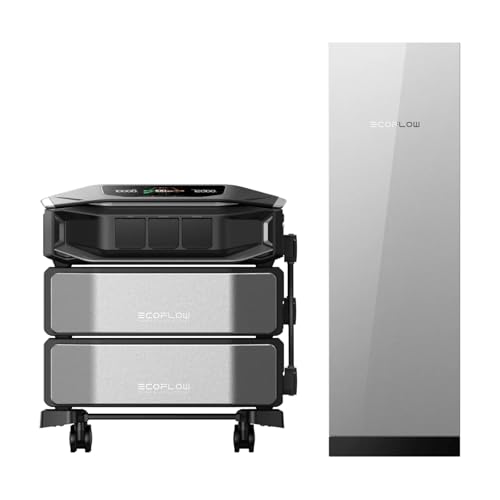
- 12,288Wh listed capacity
- 12kW output with expandable storage
- Smart panel requires professional installation
Best For: Automated backup and circuit management
Solar-Input Pick
WattCycle 12kW Rack Battery Kit

- 10.24kWh included storage
- 12kW split-phase inverter
- Up to 24kW PV input
Best For: Expandable rack-based solar backup
Expandable ECO-WORTHY Kit
10kW Inverter and Dual Rack Batteries

- 10.24kWh across two batteries
- 10kW inverter with dual MPPT
- Battery and inverter passed listed UL tests
Best For: Starting small with expansion in mind
Compact Starter Kit
WattCycle 6kW Hybrid Inverter and 5.12kWh Battery

- 6kW, 120/240V split-phase output
- 5.12kWh LiFePO4 rack battery included
- 9,000W MPPT and ≤10ms UPS transfer
Best For: Expandable essential-load backup with solar capability
High-Capacity Rack System
ECO-WORTHY Cubix100 30.72kWh Kit

- 30.72kWh across six rack batteries
- Two 5,000W off-grid inverters included
- Listed inverter output is 120V
Best For: Longer-duration backup where 120V output fits the plan
Single-Battery Split-Phase Kit
HumsiENK 16.1kWh and 8kW Hybrid Inverter

- 16.1kWh in one wheeled LiFePO4 battery
- 8kW native 120/240V split-phase inverter
- Pallet freight delivery; verify surge rating
Best For: Substantial single-battery backup with split-phase output
Best for Expandable 120V Backup
ECO-WORTHY 10.24kWh Battery Kit

- 10.24kWh storage; 5,000W inverter
- Integrated 100A MPPT controller
- 240V requires multiple inverters
Best For: Expandable backup for essential household loads
Best for Split-Phase Starter Systems
HumsiENK 8,000W Wall-Mount Kit

- Native 120/240V split-phase output
- 5.12kWh wall-mounted battery
- Second battery advised above ~5,500W sustained
Best For: Split-phase backup with planned battery expansion
Best for Larger Starter Storage

- Approximately 16kWh battery capacity
- 12kW split-phase hybrid inverter
- Battery discharge limited to about 7.68kW
Best For: Larger-capacity backup with planned freight delivery
High-Capacity Single Battery – ECO-WORTHY Powermega 16.1kWh Kit
If you want a whole house battery inverter kit with substantial storage in one battery, this ECO-WORTHY pairing combines a 10kW hybrid inverter with a 51.2V 314Ah LiFePO4 battery rated at 16.1kWh.
Best For: Buyers planning solar storage or home backup who prefer one large battery over multiple rack batteries.
Pros:
- 10kW inverter supports 120V single-phase and 120V/240V split-phase output.
- Battery is UL 1973 certified and includes active balancing, a breaker, and an aerosol fire suppression module.
- LCD, Bluetooth, and Wi-Fi provide battery monitoring options.
Cons:
- The 293.2-pound battery ships by pallet freight; confirm truck access at your address.
- The inverter’s exterior version may vary with inventory.
The larger single-battery capacity is the draw here. Check the weight, delivery requirements, and installation plan before choosing it.
The EcoFlow DELTA Pro Ultra X is a whole house battery inverter option for buyers who want circuit-level control through the included Smart Home Panel 3. This configuration lists 12,288Wh of storage and 12kW output, with expansion available within the DELTA Pro Ultra X system.
Best For: Homes prioritizing automatic backup switching, managed circuits, and future storage expansion.
Pros:
- Smart Home Panel 3 provides automatic switchover and circuit control.
- Listed transfer time is under 20 milliseconds during a grid outage.
- System specifications describe expansion up to 180kWh of storage.
Cons:
- The Smart Home Panel 3 requires professional installation before operation.
- The inverter, battery, and panel ship in separate packages.
This is the more integrated choice for managing household circuits, rather than simply pairing a standalone inverter with batteries. Budget for panel installation and assess how much storage your outage plan needs.
For a solar-focused whole house battery inverter build, this WattCycle kit pairs two 48V 100Ah server-rack batteries with a 12kW split-phase inverter. The included batteries total 10.24kWh, while dual MPPT controllers support up to 24kW of PV input.
Best For: Buyers building a rack-based solar backup system with room to add batteries or inverter capacity later.
Pros:
- Provides 120V/240V pure sine wave output and a listed UPS transfer time under 10 milliseconds.
- Dual MPPT controllers accommodate up to 24kW of solar input.
- Supports parallel expansion to as many as 20 batteries and six inverters.
Cons:
- The included 10.24kWh of storage may call for added batteries for longer outages.
- Rack-form batteries require space in your installation plan.
The standout specification is solar-input capacity, not the amount of storage in the base bundle. Size the battery bank against your expected loads before planning a large PV array.
This whole house battery inverter kit combines two 51.2V 100Ah LiFePO4 server-rack batteries for 10.24kWh of storage with a 10kW inverter. It suits buyers who want to start with two batteries and retain options for a larger installation.
Best For: Home backup buyers seeking a dual-battery starter kit with substantial stated expansion limits.
Pros:
- The listing states the battery and inverter passed UL 1973 and UL 1741 testing, respectively.
- Includes CAN/RS485 battery communication plus Bluetooth and Wi-Fi monitoring.
- Supports up to 32 parallel batteries and six parallel inverters, according to the supplied specifications.
Cons:
- At 10.24kWh included, runtime depends heavily on which household loads you run.
- Kit components ship separately and may arrive at different times.
Its appeal is a defined path from the included dual-battery setup to a larger system. Confirm the output configuration and installation requirements for your intended setup before ordering.
Compact Starter Kit – WattCycle 6kW Hybrid Inverter and 5.12kWh Battery
The WattCycle kit is a practical whole house battery inverter starting point if you want split-phase power without assembling a battery-and-inverter pairing yourself. It combines a 6kW hybrid inverter with one 5.12kWh LiFePO4 rack battery, so storage capacity—not inverter output—is the key limit to plan around.
Best For: Buyers prioritizing essential-load backup now with room to expand their solar and battery system later.
Pros:
- 120/240V split-phase output supports a wider range of household circuits than a 120V-only unit.
- Integrated 9,000W MPPT solar charger, battery charger, and ≤10ms UPS transfer.
- WiFi and Bluetooth monitoring; the battery and inverter support expansion when configured appropriately.
Cons:
- The included 5.12kWh battery may be modest for lengthy, high-demand outages.
- 120V single-phase output is rated up to 4,800W, below the 6,000W split-phase rating.
Choose this kit for a compact, expandable backup foundation, but size your expected outage loads against the single included battery before treating it as a whole-home solution.
High-Capacity Rack System – ECO-WORTHY Cubix100 30.72kWh Kit
The ECO-WORTHY Cubix100 takes a storage-heavy approach to a whole house battery inverter setup: six 51.2V 100Ah batteries provide 30.72kWh of stated capacity, paired with two 5,000W off-grid inverters and a rack cabinet. It is worth a closer look when outage duration matters as much as power rating.
Best For: Households seeking substantial rack-mounted battery storage and 120V off-grid inverter output.
Pros:
- Six batteries deliver 30.72kWh of stated storage capacity.
- Includes two 5,000W pure sine wave inverters and a server rack cabinet.
- Battery monitoring via Bluetooth and WiFi, plus CAN/RS485 communication; the listing reports UL9540 and UL1741 testing.
Cons:
- The supplied inverter specifications list 120V output; they do not establish native 120/240V split-phase service.
- Components ship separately, adding deliveries to track and coordinate.
This kit stands out for included energy storage, but confirm the inverter configuration meets your home’s voltage and installation requirements before buying for whole-house backup.
Single-Battery Split-Phase Kit – HumsiENK 16.1kWh and 8kW Hybrid Inverter
The HumsiENK kit pairs a single 16.1kWh LiFePO4 battery with an 8,000W, 120/240V split-phase hybrid inverter. For shoppers comparing whole house battery inverter options, that combination offers more included storage than a small starter battery without requiring multiple batteries to be wired together initially.
Best For: Buyers wanting substantial single-battery storage and native split-phase output for home backup.
Pros:
- 16.1kWh of stated storage in one 48V 314Ah battery with a 200A BMS.
- 8,000W split-phase inverter with a built-in 10,000W MPPT controller and ≤10ms transfer.
- Built-in battery wheels, Bluetooth monitoring, and an LCD touchscreen.
Cons:
- The 294 lb battery arrives by pallet freight, so delivery access and placement need planning.
- The supplied notes give conflicting surge figures—10,000W in the bullets and 12,000W in the details—so verify the specification before sizing startup loads.
Its single large battery simplifies the initial battery layout, but confirm surge capacity and have a safe freight-delivery and installation plan before committing.
Best for Expandable 120V Backup – ECO-WORTHY 10.24kWh Battery Kit
This whole house battery inverter kit pairs two 51.2V 100Ah LiFePO4 batteries with a 5,000W pure sine wave inverter, providing 10.24kWh of storage for essential household loads during an outage.
Best For: Buyers who want substantial starter storage and plan to expand their backup system over time.
Pros:
- Includes 10.24kWh of battery storage and a 5,000W inverter with an integrated 100A MPPT controller.
- Battery monitoring is available through the ECO-WORTHY app via Bluetooth and Wi-Fi.
- Supports parallel expansion of up to six inverters and 32 batteries.
Cons:
- A single inverter supplies 120V; 208V or 240V output requires multiple inverters.
- The listed kit weight is 223.8 pounds, so placement and handling need planning.
The included storage is the draw here, but check your voltage requirements before treating this as a solution for every household circuit.
Best for Split-Phase Starter Systems – HumsiENK 8,000W Wall-Mount Kit
If your whole house battery inverter setup needs 120/240V output from one inverter, this HumsiENK kit offers a practical starting point. It combines a wall-mounted 5.12kWh LiFePO4 battery with an 8,000W hybrid inverter.
Best For: Homes needing split-phase backup now, with room to add batteries for longer runtimes or heavier sustained loads.
Pros:
- Native 120/240V split-phase output from the included inverter.
- Wall-mounted battery saves floor space; mounting hardware is included.
- Supports battery expansion to 15 units and includes app-based monitoring.
Cons:
- The included battery stores 5.12kWh, less than the capacity of the other kits here.
- The seller recommends a second battery for sustained loads above approximately 5,500W.
The 8,000W inverter provides flexibility, but inverter rating and available battery power are different limits. Size the battery bank around the loads you expect to run continuously.
Best for Larger Starter Storage – Dawnice 16kWh Hybrid System
This whole house battery inverter package combines a roughly 16kWh, 51.2V 314Ah LiFePO4 battery with a 12kW split-phase hybrid inverter. It is worth considering when starting storage capacity matters more than a compact kit.
Best For: Buyers planning a larger home backup installation who can accommodate freight delivery and verify their load requirements.
Pros:
- Includes approximately 16kWh of battery storage.
- 12kW split-phase hybrid inverter supports solar, battery backup, and grid-connected operating modes.
- The inverter has an IP65 rating, and the listing supports paralleling up to three inverters.
Cons:
- The included battery is rated for a maximum 150A discharge, or about 7,680W at 51.2V, so it cannot sustain the inverter’s full 12kW from battery power alone.
- The seller describes sea freight and an estimated 35–45-day delivery process, with tracking provided later in transit.
Its storage capacity stands out, but match the battery’s discharge limit—not just the inverter’s headline wattage—to your planned outage loads.
How We Picked the Best Whole House Battery Inverter
We focused on packages that pair home-backup batteries with an inverter or an integrated power system. To make the options useful to compare, we considered stated battery capacity, inverter output, 120/240V split-phase support where specified, and practical installation differences such as rack, wall-mount, cabinet, or portable designs. Listed specifications are a starting point, not a guarantee that a system can back up every circuit in a home.
Quick Comparison: Which Size Fits Your Backup Plan?
The roughly 5.12kWh options are a starting point for selected essentials, such as lighting, networking, and refrigeration. Kits around 10.24kWh provide more stored energy, but runtime still depends on what you run. The approximately 15–16kWh packages and the larger ECO-WORTHY Cubix100 configuration are better candidates when you want more overnight reserve or plan to support more circuits.
Output is a separate decision. The listed kits span approximately 5kW to 12kW of inverter power. A higher output rating can help with simultaneous loads, but it does not add battery runtime. The EcoFlow DELTA Pro Ultra X with Smart Home Panel 3 offers a different, more integrated approach; compare its panel and expansion requirements against the conventional 48V kits before choosing.
Key Whole House Battery Inverter Buying Factors
Start with a Load List
Record each circuit’s running watts and the startup demand of motors such as well pumps or air conditioners. Check the inverter’s continuous and surge ratings, and confirm that it supports the voltage your loads need. A 120/240V split-phase output matters for many North American household circuits; do not assume every package includes it solely because it is marketed for home backup.
Estimate Runtime Separately
Battery capacity is measured in kWh; inverter power is measured in kW. As a rough planning example, a 10kWh battery running a steady 1kW load will last less than 10 hours after conversion losses and usable-capacity limits. Solar input, if supported and installed, can extend backup time, but sunlight and charging limits vary.
Check the Complete Installation
Verify battery-to-inverter compatibility, required breakers and disconnects, transfer equipment, outdoor or indoor placement ratings, and whether monitoring or expansion accessories are included. Check the current certifications for the exact battery and inverter models, plus local permit and utility requirements. Have a qualified installer assess any connection to household wiring.
Who Should Buy Which Whole House Battery Inverter?
Choose a roughly 5kWh kit if your goal is a modest essential-circuit backup and you can manage loads carefully. Consider a 10kWh-class package for a longer reserve or a broader essentials panel. Look at the 15–16kWh and larger configurations if your load calculations justify extra storage, while comparing 10–12kW inverter options for heavier simultaneous demand. If you value an integrated power station and matching home panel, investigate the EcoFlow option; if you prefer a conventional 48V battery-and-inverter installation, compare the rack, wall-mount, wheeled, and cabinet packages against your available space and installer’s requirements.