As we move closer to 2025, the demand for whole house energy monitors is set to rise considerably. These devices provide real-time insights into energy consumption, helping you manage your usage more efficiently. You’ll find options like the Emporia Vue 3 and Sense Energy Monitor offer innovative features. But how do you choose the right one for your needs? Let’s explore the top contenders and what makes each unique.
Emporia Vue 3 Home Energy Monitor

If you’re looking for a reliable way to monitor your home’s energy usage, the Emporia Vue 3 Home Energy Monitor stands out as a top choice. This UL Listed device guarantees safety and compliance while providing real-time monitoring through clamp-on sensors. It installs easily in your circuit panel and supports various electrical systems. With the Emporia Energy App, you can manage energy consumption 24/7, track appliances, and even optimize for solar usage. Plus, you’ll receive real-time insights to help cut costs effectively. Overall, it’s a smart investment for anyone serious about energy management and efficiency.
Best For: Homeowners looking to efficiently monitor and manage their energy consumption in real-time.
Pros:
- Real-time energy monitoring with accurate data tracking for critical appliances.
- Easy installation in most homes with clamp-on sensors and compatibility with various electrical systems.
- User-friendly app for 24/7 energy management and cost-saving capabilities.
Cons:
- Requires a 2.4 GHz Wi-Fi connection for full functionality, which may limit accessibility in some homes.
- Additional sensors may be needed for certain 3-phase systems, increasing initial setup costs.
- Some users may find the app interface less intuitive than expected.
Smart Home Energy Monitor with 16x60A Circuit Sensors

The Refoss Smart Home Energy Monitor with 16x60A circuit sensors is the perfect choice for homeowners and businesses looking to gain precise control over their energy consumption. With real-time tracking via the Refoss app, you can monitor power usage, current, voltage, and power factor, helping you save 10%-20% on energy bills. Its clamp-on design allows easy installation in various electrical systems, and the device integrates seamlessly with Home Assistant. Plus, personalized alerts for unusual energy spikes keep you informed. With data stored locally, you maintain privacy while enjoying detailed insights into your energy usage.
Best For: Homeowners and businesses seeking to optimize energy consumption and reduce electricity bills.
Pros:
- Real-time energy tracking via the Refoss app allows for accurate monitoring of power usage and savings.
- Easy installation with a clamp-on design suitable for various electrical system configurations.
- Personalized alerts for unusual energy spikes help users manage their consumption effectively.
Cons:
- API support is not available, limiting integration with other third-party systems.
- Requires firmware update for compatibility with Home Assistant, which may be a barrier for some users.
- No cloud processing, meaning all data is stored locally, which may be a concern for users who prefer remote access.
Sense Energy Monitor – Track Electricity Usage in Real Time
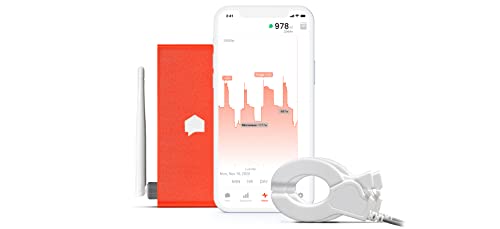
For homeowners looking to take control of their energy consumption, the Sense Energy Monitor stands out as an excellent choice. This device tracks electricity usage in real time, helping you save energy and money. Complying with rigorous safety standards, it’s designed for installation inside electrical panels in the U.S. and Canada. With its user-friendly app, you can monitor energy use from anywhere, track when family members arrive home, and receive custom notifications for critical devices. By identifying patterns in your energy consumption, Sense promotes family efficiency and enhances security, making informed decisions easier than ever.
Best For: Homeowners in the U.S. and Canada looking to monitor and optimize their electricity usage in real time.
Pros:
- Provides real-time tracking of electricity consumption, helping users save money.
- User-friendly app allows monitoring from anywhere via iOS, Android, or web applications.
- Custom notifications for critical devices enhance safety and prevent disasters.
Cons:
- Currently only available for installation in the United States and Canada.
- Requires installation inside electrical panels, which may necessitate professional assistance.
- May not be compatible with all home devices or systems, limiting some users’ experience.
Eyedro Home Energy Monitor – Real-Time Electricity Usage Monitor

Looking to take control of your electricity usage? The Eyedro Home Energy Monitor lets you track real-time power consumption and production effortlessly. With two 200A sensors, it provides instant insights through the MyEyedro cloud, helping you spot energy waste and reduce utility bills. Its compatibility with solar and grid systems means you can monitor costs in dollars, watts, amps, and volts. Plus, you can connect via WiFi or wired Ethernet without any subscription fees. Ideal for energy-conscious homeowners and DIY enthusiasts, the Eyedro makes optimizing your energy use straightforward and effective. Take charge of your electricity today!
Best For: Homeowners, energy-conscious individuals, and DIY enthusiasts looking to optimize their electricity usage.
Pros:
- Real-time tracking of electricity consumption and production helps identify energy waste.
- Compatible with solar, grid, and net metering, providing versatile monitoring options.
- No subscription fees for accessing MyEyedro cloud, making it cost-effective.
Cons:
- Requires installation of sensors, which may be challenging for some users.
- Limited to WiFi (2.4 GHz) and wired Ethernet connections; no support for 5 GHz WiFi.
- The warranty is only a 30-day return policy, which may not provide long-term assurance.
Smart Home Energy Monitor with Bi-Directional Power Tracking
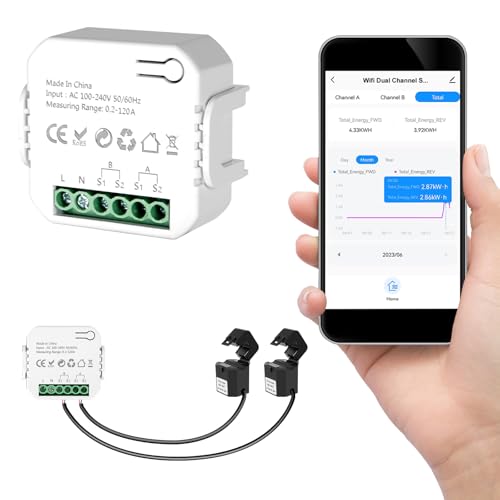
With bi-directional power tracking, the Smart Home Energy Monitor is perfect for homeowners who want precise control over their energy consumption and generation. Equipped with two 120A CT sensors, it accurately measures electricity usage from major appliances like air conditioners and heaters. You can track real-time data on power, voltage, and current, while accessing historical records to manage your consumption better. Installation is a breeze—just clamp the sensors, connect to 2.4GHz Wi-Fi, and use the Tuya or Smart Life apps. Whether you’re using solar systems or city grid connections, this monitor offers versatile energy management solutions.
Best For: Homeowners seeking precise energy management and monitoring for both consumption and generation.
Pros:
- Accurate Monitoring: Real-time tracking of power, voltage, and current for major appliances.
- Easy Installation: Lightweight design that allows for quick setup without professional help.
- Versatile Compatibility: Works seamlessly with solar systems and traditional grid connections.
Cons:
- Wi-Fi Dependency: Requires a stable 2.4GHz Wi-Fi connection for functionality.
- Limited to 120A: May not be suitable for larger appliances that exceed the 120A capacity.
- App Reliance: Full functionality depends on the use of specific apps (Tuya or Smart Life).
SIEMENS Inhab Smart Home Energy Monitor

The SIEMENS Inhab Smart Home Energy Monitor stands out for homeowners seeking extensive energy management, as it provides real-time monitoring of both main and circuit-level energy usage. With sensors capable of tracking 16 branch circuits and main currents up to 200 amps, you can easily keep tabs on your electricity consumption 24/7. The mobile app, available in the USA and Canada, offers personalized energy notifications and alerts for savings opportunities. Additionally, it supports advanced features like Time of Use Management and load shedding for smart devices, ensuring you optimize energy use efficiently while staying compliant with safety standards.
Best For: Homeowners looking for comprehensive energy management and real-time monitoring of their electricity usage.
Pros:
- Provides detailed tracking of both main and circuit-level energy usage, allowing for better energy management.
- The mobile app offers personalized notifications and alerts for energy savings opportunities.
- Supports advanced features such as Time of Use Management and load shedding for smart devices.
Cons:
- Currently available only in the USA and Canada, limiting its accessibility for international customers.
- Requires installation at the electrical panel, which may necessitate professional assistance.
- May be considered expensive compared to basic energy monitors on the market.
2 Pack Upgraded Watt Meter for Home Energy Monitoring

If you’re seeking an effective way to manage your household energy consumption, the 2 Pack Upgraded Watt Meter is an ideal choice. This versatile tool monitors power, energy, volts, amps, and more, allowing you to switch between eight display modes for clear insights. With overload protection and KWH alarms, you’ll be alerted when you exceed safe limits. Plus, its data management features retain your settings, even during power outages. The backlit LCD guarantees easy reading, while the durable design fits standard US appliances. Take control of your energy usage and cut costs with this user-friendly watt meter.
Best For: Homeowners looking to monitor and manage their energy consumption effectively while reducing electricity costs.
Pros:
- Comprehensive Monitoring: Provides detailed insights into power usage, energy costs, and various electrical parameters.
- Safety Features: Equipped with overload protection and KWH alarms to prevent excessive energy usage.
- Durable Design: Made from high-quality materials, ensuring longevity and compatibility with standard US appliances.
Cons:
- Limited to US Appliances: Only compatible with standard US sockets, which may not suit international users.
- Backlight Timing: The backlight turns off after 10 minutes of inactivity, which may be inconvenient for some users.
- Initial Learning Curve: Users may need some time to familiarize themselves with the multiple display modes and settings.
Leviton Whole Home Energy Monitor (LWHEM-2R)

For homeowners looking to take control of their energy consumption, the Leviton Whole Home Energy Monitor (LWHEM-2R) stands out with its seamless Wi-Fi connectivity and real-time tracking capabilities. With the My Leviton app, you can monitor energy usage from anywhere, track active power sources, and even receive firmware updates. You’ll appreciate the ability to remotely control Leviton Smart Circuit Breakers, setting schedules to optimize energy use and cut costs. Plus, when paired with a backup power system, it automatically manages essential circuits during outages, ensuring your critical needs are met. Enjoy unified smart home management for a smarter energy experience!
Best For: Homeowners seeking to monitor and optimize their energy consumption with smart technology.
Pros:
- Real-time energy monitoring allows users to track consumption and production instantly.
- Remote control capabilities let users manage Leviton Smart Circuit Breakers from anywhere, enhancing convenience.
- Integration with backup systems ensures critical circuits are prioritized during power outages.
Cons:
- Requires Wi-Fi connectivity which may not be available for all users.
- Compatibility limited to Leviton products, potentially restricting choices for some smart home setups.
- Initial setup may require technical knowledge to install the monitor and connect to the app.
Smart Home Energy Monitor with Live Electricity Usage Tracking
Looking to gain real-time insights into your home’s energy usage? The Smart Home Energy Monitor with live electricity usage tracking is your solution. Featuring two 120A CTs, it accurately tracks voltage, current, and total energy consumption while supporting bi-directional power monitoring. Installation’s a breeze with pluggable terminals and compact split-core CTs, eliminating complex wiring. Plus, it integrates seamlessly with the Smart Life app, providing real-time data analysis and customizable alerts. With support for Dynamic Load Balancing and zero grid export mode, you can optimize energy efficiency and cut down on electricity costs, making it a smart choice for any homeowner.
Best For: Homeowners looking to monitor and optimize their energy usage in real-time.
Pros:
- Accurate tracking of voltage, current, power, and total energy consumption.
- Easy installation with pluggable terminals and compact split-core CTs.
- Seamless integration with the Smart Life app for advanced features and automation.
Cons:
- Limited to single-phase 3-wire systems, which may not be suitable for all homes.
- Requires a 2.4GHz Wi-Fi connection, potentially limiting performance in areas with weak signals.
- Customization options may be overwhelming for users unfamiliar with smart home technology.
AC 80-260V Multi-Function Power Monitor with LCD Display

The AC 80-260V Multi-Function Power Monitor with LCD Display stands out as an excellent choice for homeowners and small business owners who want to keep a close eye on their energy consumption. This monitor tracks voltage, current, and energy usage, providing essential insights at a glance. Its large LCD display guarantees you can read information from any angle. With one-button control, you can easily manage backlight settings and reset energy data. Plus, the overload alarm keeps you informed if your preset limits are exceeded. Ideal for various applications, it simplifies energy management, helping you optimize your usage efficiently.
Best For: Homeowners and small business owners looking to monitor and manage their energy consumption effectively.
Pros:
- Large LCD display with a 180° viewing angle for easy readability.
- One-button control for convenient features like backlight management and energy reset.
- Overload alarm function ensures users are alerted when power limits are exceeded.
Cons:
- May require professional installation of split current transformers for some users.
- Limited to monitoring within the AC 80-260V range, which may not suit all applications.
- Some users might find the data management features overly simplistic for advanced energy analysis.
Factors to Consider When Choosing Whole House Energy Monitors
When choosing a whole house energy monitor, you’ll want to contemplate several key factors. Think about the installation complexity, how well it integrates with your existing systems, and the accuracy of the data it provides. Additionally, explore its energy management features and whether it offers mobile app integration for easier monitoring.
Installation Complexity
While choosing a whole house energy monitor, it is crucial to take into account installation complexity, as it can vary widely among different models. Some monitors require professional installation, especially those that integrate with circuit panels, while others feature clamp-on designs for easier DIY setups. If you’re working with a single-phase system, expect simpler installation compared to three-phase setups, which may need extra sensors and complex wiring. Wi-Fi connectivity can also add complications, particularly if your network isn’t stable. Additionally, monitors with multiple sensors might require more effort to distribute throughout your electrical system. Look for user-friendly features like pluggable terminals and compact split-core sensors to simplify the installation process.
Compatibility With Systems
Choosing a whole house energy monitor means considering its compatibility with your electrical system to secure peak performance. Make certain the monitor matches your home’s configuration—whether it’s single-phase, split-phase, or three-phase. It’s essential to find models that support various current ratings, like 200A for main circuits and lower ratings for branch circuits, so you can accurately track energy consumption across all appliances.
Also, verify that the device integrates seamlessly with your existing smart home ecosystem or app for real-time monitoring. Look for options that support both Wi-Fi and wired connections to guarantee reliable data transmission. If you’re using renewable energy, consider monitors with solar integration and net metering capabilities for enhanced energy management and cost savings.
Data Accuracy Levels
Compatibility with your home’s electrical system sets the foundation, but data accuracy levels are just as important when selecting a whole house energy monitor. These monitors typically offer accuracy ranging from ±2% to 98%, greatly affecting the reliability of your energy consumption insights. Real-time tracking capabilities enhance this process, with some devices storing up to 36 months of historical data for thorough analysis. Installation methods matter too; clamp-on sensors tend to yield more precise measurements than traditional wired connections. Additionally, monitors that track energy across multiple circuits provide detailed insights into individual appliance usage. Finally, prioritize calibration and certification standards, as compliance guarantees better data reliability and accuracy for your energy management needs.
Energy Management Features
When selecting a whole house energy monitor, it’s crucial to focus on energy management features that empower you to optimize your energy usage. Look for devices that enable 24/7 monitoring and control of real power consumption, allowing you to adjust your habits throughout the day. Automation features like time-of-use management, peak demand management, and excess solar management can help lower your electricity costs. Choose a monitor that offers real-time insights and actionable notifications to help you spot and reduce energy waste. Advanced systems may also integrate with solar energy setups and net metering for improved efficiency. Additionally, the ability to set personalized usage targets and receive alerts for unusual spikes can greatly enhance your energy management efforts.
Mobile App Integration
Many homeowners find that mobile app integration is a game-changer when it comes to managing energy consumption. With real-time monitoring and access to historical data, you can keep an eye on your usage from anywhere using your smartphone or tablet. Many energy monitors work seamlessly with popular smart home apps, allowing you to control various devices in one place. You can set custom notifications and alerts to proactively manage your energy usage and spot unusual spikes. Some monitors even support firmware updates via their apps, ensuring you always have the latest features. Additionally, advanced analytics and reporting capabilities help you analyze your energy patterns, making it easier to optimize your consumption effectively.
Safety Certifications
After exploring the advantages of mobile app integration, it’s important to take into account safety certifications when selecting a whole house energy monitor. Look for certifications like UL Listing or ETL/Intertek approval, which indicate that the device has undergone rigorous testing for safety. Monitors with these certifications have been evaluated for safe installation and operation, ensuring they won’t pose hazards like overheating or fire. Additionally, certified devices typically feature protections against electrical faults, safeguarding both the monitor and your home’s electrical system. Choosing a safety-certified monitor gives you peace of mind, knowing the product adheres to industry safety regulations. Generally, these certified products are more reliable and trustworthy due to independent testing for safety and performance standards.
Cost and Warranty
Considering the cost and warranty of whole house energy monitors is essential for making a smart investment. The initial purchase price can vary widely based on features and sensor capabilities, so assess your needs before buying. Don’t forget to factor in installation costs, especially if you need professional help. A longer warranty can give you peace of mind about the device’s longevity and reliability, so choose wisely. Evaluate potential savings on energy bills, as optimizing appliance usage can offset your initial investment over time. Finally, check for any subscription fees for cloud services or extra features, as these ongoing costs can affect the overall affordability of your energy monitor. Make a well-informed choice to maximize your savings.