Tracing an unknown circuit, buried cable, or intermittent wiring fault can turn a routine inspection into a time-consuming investigation. The right tracer helps you identify paths, separate circuits, and verify wiring with less guesswork.
This roundup compares 10 wire tracers for home inspectors, from breaker finders and tone generators to underground cable locators. Use the guide below to match the tool’s detection method, range, and included testing features to the inspections you perform most often.
Best 10 Wire Tracers for Home Inspectors Picks for 2026
Best Overall
Klein Tools ET450 Circuit Tracer Kit

- Traces energized and non-energized circuits
- Adjustable sensitivity with NCV and flashlight
- Complete kit with adapters and carrying case
Best For: Comprehensive residential electrical inspections
Best Budget Tone Kit
PTE Wire Tracer and Circuit Tester
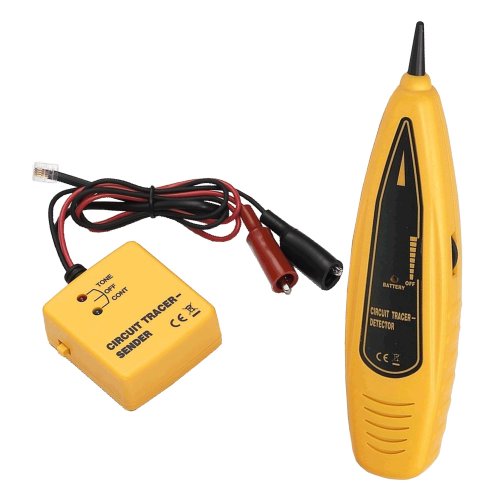
- Traces non-live electrical and low-voltage cables
- Adjustable sensitivity isolates nearby wires
- Includes continuity and RJ11 telephone testing
Best For: Basic cable tracing on a compact budget
Best Multifunction Option
NF-8301 Underground Wire Locator

- Combines wire tracing with a digital multimeter
- Stated range reaches 9.84 feet deep
- Rechargeable with NCV, flashlight, and color LCD
Best For: Inspections requiring tracing and electrical measurements
Best Professional Underground Locator
TEMPO 551 Dual-Frequency Tracer

- Locates buried utilities up to 1 mile and 20 feet deep
- Dual frequencies with IntelliTrack noise rejection
- Includes peak, null, direct, clamp, and antenna modes
Best For: Large-property and interference-prone underground utility locating
Best All-in-One Electrical Tester
Circuit Finder, GFCI Tester & Multimeter

- Combines breaker finder, GFCI tester, and multimeter
- Checks common outlet wiring faults
- Adds NCV detection and broad measurement functions
Best For: Home inspections requiring versatile electrical diagnostics
Best Portable Wire Tracer
Rechargeable Underground Wire Locator

- Tracks up to 1,000 feet and 3 feet deep in stated conditions
- Includes flashlight, headphones, and storage toolkit
- Tests non-energized single- and dual-core cables
Best For: Portable residential and landscape wire inspections
Best Deep-Range Locator
VEVOR TS552 Underground Cable Locator

- Supports 12–600V AC and DC cable applications
- Lists detection up to 8.5 feet deep and 6,561 feet long
- Adds NCV, LCD displays, sound alerts, and flashlights
Best For: Electrical, communication, pipeline, and buried-cable inspections
Best Overall – Klein Tools ET450 Circuit Tracer Kit
For home inspectors comparing wire tracers for home inspectors, the Klein Tools ET450 is a versatile choice for identifying energized and non-energized breakers, fuses, wires, and conduit. Adjustable sensitivity, voltage indicators, audible and visual feedback, and an NCV function support practical electrical inspection work.
Best For: Home inspectors who want a complete, portable tracer kit for residential electrical identification.
Pros:
- Traces energized and non-energized breakers, fuses, and wires.
- Adjustable sensitivity helps trace through drywall, cement block, shielded cable, or underground applications.
- Includes NCV detection, a flashlight, multiple adapters, batteries, and a carrying case.
- Transmitter displays several AC/DC voltage levels from 12V to 480V.
Cons:
- The kit weighs about 2 pounds and has a relatively large case.
- Underground and shielded-cable tracing requires following the manual’s instructions.
The ET450 stands out when you need broad compatibility and a ready-to-use kit rather than a basic tone probe. Its combination of tracing, voltage indication, NCV testing, and included accessories makes it a strong all-around inspection tool.
Best for Underground Runs – NOYAFA NF-826 Cable Locator
The NOYAFA NF-826 is designed for inspectors who need to follow buried cables, locate breaks, or identify metal pipes in walls and underground areas. Its receiver can locate runs up to 3–4 feet deep and up to 2,000 feet long, while adjustable sensitivity and automatic frequency sweeping support fault-finding work.
Best For: Home inspectors and maintenance professionals checking buried cables, wall wiring, communication lines, and underfloor heating circuits.
Pros:
- Locates buried cables and pipelines and helps identify wire breaks and short-circuit faults.
- Supports single-core and multi-core cables, metal pipes, and several low-current wiring applications.
- Rechargeable 1,400mAh battery provides a stated 6–10 hours of operation.
- Includes flashlight, backlight, mute mode, self-checking, and automatic shutoff features.
Cons:
- The short-circuit locator requires knowing the shorted core before testing.
- The stated locating depth is more limited than some specialized underground locators.
The NF-826 is a practical pick when locating the path or fault matters more than general breaker identification. Its rechargeable design and dedicated underground-cable features make it convenient for repeated inspection and troubleshooting tasks.
Best Budget Tone Kit – PTE Wire Tracer and Circuit Tester
The PTE Wire Tracer is a compact tone generator and probe kit for tracing non-live electrical wires, telephone lines, coaxial cables, and automotive wiring. For home inspectors seeking wire tracers for home inspectors on a budget, its adjustable sensitivity and continuity mode provide useful basic testing without the size of a full underground locator.
Best For: Inspectors who primarily trace non-energized low-voltage, telephone, coaxial, and automotive cables.
Pros:
- Traces buried, single-strand, broken, electrical, telephone, coaxial, and automotive cables.
- Variable sensitivity helps isolate one wire among nearby conductors.
- Continuity mode checks short and open circuits, while the RJ11 plug supports telephone-line testing.
- Compact, lightweight design with alligator clips and a one-year warranty.
Cons:
- It is not intended for live electrical wires.
- Signal performance can vary with wall thickness and building materials.
- The instructions recommend using only one alligator clip in tone mode.
This PTE kit is best viewed as a straightforward low-voltage tracer rather than a mains circuit finder. Its small size and basic continuity features make it useful for targeted cable identification when live-circuit testing is not required.
Best Multifunction Option – NF-8301 Underground Wire Locator
The NF-8301 combines an underground wire locator, breaker finder, and digital multimeter in one rechargeable kit. It is a capable option for home inspectors who need to trace hidden or buried wiring, locate breaks, and take electrical measurements while working in dark or difficult areas.
Best For: Inspectors and maintenance users who want tracing, fault location, and multimeter functions in a single device.
Pros:
- Locates hidden wires and buried cables up to a stated 9.84 feet deep and 1,640 feet long.
- Three transmit-power levels and eight receiver-sensitivity levels support adjustable tracing.
- Built-in multimeter measures AC/DC voltage, continuity, resistance, current, and frequency.
- Includes NCV detection, dual LED flashlights, a backlit color LCD, and USB-C charging.
Cons:
- The supplied notes do not specify separate accuracy ratings for the multimeter functions.
- The larger feature set may be more than needed for simple wire identification.
The NF-8301 is appealing when carrying separate tracing and measurement tools would be inconvenient. Its broad locating range, adjustable signal controls, and integrated multimeter make it the most multifunctional choice in this roundup.
Best Budget Wire Tracer – Tone Generator & Probe Kit
For home inspectors who need a straightforward option among wire tracers for home inspectors, this battery-powered kit helps identify cables and check continuity without requiring the probe to touch the wire. It includes RJ11 and alligator-clip connections for several common testing tasks.
Best For: Tracing network, telephone, coaxial, and other low-voltage cables, plus checking open or short circuits.
Pros:
- Non-contact probe audibly identifies the selected wire or cable.
- Supports network, telephone, coaxial, and continuity testing.
- Includes an RJ11 plug and a pair of alligator clips.
Cons:
- Requires two 9V batteries, which are not included.
- Not intended for live AC wires or commercial-building work.
This is a compact, accessible choice for low-voltage troubleshooting and basic inspection work. Its limitations around live AC and commercial applications should be considered before purchase.
Best Professional Underground Locator – TEMPO 551 Dual-Frequency Tracer
For demanding home inspections involving buried infrastructure, the TEMPO 551 is a professional-grade option among wire tracers for home inspectors. It is designed to locate underground electrical lines, telecom cables, irrigation wires, and metallic pipes at substantial distances and depths.
Best For: Inspectors and field professionals tracing buried utilities across large properties or challenging, interference-prone environments.
Pros:
- Traces utilities over 1 mile and at depths up to 20 feet, according to the supplied specifications.
- Dual frequencies and IntelliTrack filtering help address AC interference.
- Offers peak and null receiver modes for different locating approaches.
- Supports direct connection, inductive clamp, and built-in antenna use.
Cons:
- At 9.6 pounds, it is considerably less compact than basic cable tracers.
- Its professional feature set may be more than needed for simple indoor wire checks.
With a rugged IP54-rated design, carrying case, and multiple connection methods, the TEMPO 551 is built for serious field locating. Its size and professional positioning make it best suited to inspectors who regularly handle underground utility work.
Best All-in-One Electrical Tester – Circuit Finder, GFCI Tester & Multimeter
This three-piece kit broadens the usual wire-tracing workflow for home inspectors by combining circuit-breaker finding with GFCI testing, NCV detection, and digital multimeter functions. Its LCD displays and portable case help keep several electrical diagnostic tools together.
Best For: Home inspectors who need circuit tracing alongside outlet wiring checks, voltage detection, continuity testing, and general electrical measurements.
Pros:
- Helps identify the breaker controlling an outlet or light fixture.
- GFCI tester checks for common wiring conditions such as open neutral, open ground, and reversed polarity.
- Multimeter measures AC/DC voltage, resistance, capacitance, diodes, transistors, continuity, and battery voltage.
- Includes NCV detection and a carrying case.
Cons:
- The supplied notes do not specify the included battery configuration.
- It is a broader diagnostic kit rather than a dedicated underground locator.
Choose this set when an inspection requires more than locating a breaker. Its combination of tracing, outlet diagnosis, non-contact voltage detection, and multimeter functions offers wider everyday coverage than a single-purpose tracer.
Best Budget Fence Tracer – F02 Underground Cable Locator
For home inspectors seeking straightforward wire tracers for home inspectors, the F02 is designed to locate buried or hidden single-strand wires and parallel double-strand wires. It can trace lines up to 2–3 feet deep and 1,000 feet long, making it useful for fence, irrigation, and basic circuit-identification work.
Best For: Inspectors and DIY users tracing non-energized or low-voltage single- and dual-wire installations.
Pros:
- Tracks wires up to 1,000 feet in length and 2–3 feet deep.
- Useful for pet fences, irrigation wires, electrical wires, and metal wires or pipes.
- Includes an earphone for easier listening in noisy areas.
Cons:
- Not suitable for multistrand wire.
- Designed mainly for non-energized or low-voltage wiring below 24V.
- Should not be used on live circuits.
The F02 is a focused, budget-friendly option when an inspection involves simple buried or concealed wiring. Its limitations around energized and multistrand cables should be checked against the job before purchase.
Best Portable Wire Tracer – Rechargeable Underground Wire Locator
This rechargeable underground wire locator is a practical choice among wire tracers for home inspectors who need portability and clear tracking in varied settings. It is designed for non-energized single- and dual-core cables, with a stated range of up to 1,000 feet and depths up to 3 feet in open muddy environments.
Best For: Inspectors tracing sprinkler, invisible-fence, buried-wall, and communication wires in dark or noisy areas.
Pros:
- Tracks cables up to 1,000 feet and up to 3 feet deep under stated conditions.
- Built-in flashlight helps with work in basements, ceilings, walls, and outdoor areas.
- Rechargeable design includes headphones, a toolkit, and alligator-clip leads.
- Transmitter supports a 1–30V battery polarity test.
Cons:
- Not intended for mult core, bundled, or stranded wires.
- Designed for non-energized wires only.
- Signal depth can decrease in steel, iron, and PVC pipe environments.
With its flashlight, headphone jack, rechargeable battery, and included accessories, this model is well suited to routine field inspections. Confirm the cable construction and expected surroundings because its range varies with the installation.
Best Deep-Range Locator – VEVOR TS552 Underground Cable Locator
For inspectors who need broader voltage compatibility and longer-distance detection, the VEVOR TS552 is one of the more capable wire tracers for home inspectors in this group. It supports 12–600V linear AC and DC cables, offers non-contact voltage measurement, and lists maximum detection figures of 8.5 feet in a double-pole application and 6,561 feet in length.
Best For: Maintenance professionals and inspectors working with electrical circuits, pipelines, communications cables, and buried wiring.
Pros:
- Supports 12–600V AC and DC cable applications.
- Provides non-contact voltage measurement for quick electrical checks.
- Offers stated maximum detection of 8.5 feet deep and 6,561 feet long in specified applications.
- Transmitter and receiver include backlit LCD screens, sound alerts, rechargeable batteries, and LED flashlights.
Cons:
- Its maximum depth and length depend on the application and conditions.
- At about 2 pounds, it is less lightweight than simpler tracers.
- More feature-rich than needed for basic low-voltage fence-wire locating.
The TS552 is the strongest fit here for broader electrical inspection work, especially when voltage range, non-contact checking, and extended detection distance matter. Its additional capabilities may be unnecessary for simple fence or irrigation jobs.
How We Picked These Wire Tracers for Home Inspectors
We focused on tools that address common inspection tasks: identifying breakers, tracing wires through walls or panels, checking continuity, locating buried conductors, and testing low-voltage systems. We also considered the included transmitter and receiver design, probe or clamp options, audible and visual feedback, detection depth, compatibility with energized circuits, and practical accessories.
Because no single tracer excels at every job, the selection includes dedicated circuit breaker finders, general-purpose tone-and-probe kits, underground locators, and combination diagnostic sets. Product claims such as maximum range or depth should be treated as best-case figures; soil, insulation, wiring layout, interference, and conductor condition can substantially affect results.
Quick Comparison
| Tool type | Best suited to | What to check |
|---|---|---|
| Breaker finder | Matching receptacles to service-panel breakers | Outlet compatibility, automatic calibration, GFCI support |
| Tone generator and probe | Following accessible telephone, network, and electrical conductors | Continuity testing, clip leads, probe sensitivity |
| Underground locator | Buried cables, dog fences, irrigation, and utility wiring | Detection depth, frequency options, headphones, weather resistance |
| Combination diagnostic kit | Inspections requiring several basic tests | Multimeter range, outlet tester, safety ratings, included leads |
Key Buying Factors for Wire Tracers for Home Inspectors
Match the Tracer to the Wiring Task
A breaker finder is convenient for identifying a circuit at an outlet but is not a substitute for an underground locator. Tone-and-probe kits are versatile when you can access both ends of a cable or attach clips. For buried conductors, choose a locator designed for underground use rather than relying on a basic inductive probe.
Check Signal Method and Circuit Conditions
Some tools trace energized circuits, while others use a transmitter signal on de-energized or disconnected wires. Read the operating limits carefully, especially around live panels, high-voltage conductors, shared neutrals, and shielded or heavily insulated cable. Never treat a tracer as proof that a circuit is safe to touch.
Consider Depth, Range, and Interference
Stated detection distances are useful for comparison but vary in real properties. Adjustable sensitivity, multiple frequencies, visual signal strength, and an earphone connection can make it easier to distinguish the target from nearby wiring. A durable, weather-resistant housing matters when inspecting unfinished areas or outdoor runs.
Value the Accessories You Will Actually Use
Clip leads, interchangeable probes, outlet adapters, GFCI testers, headphones, carrying cases, and spare batteries can save time in the field. A multimeter adds useful diagnostic capability, but only when its measurement functions and safety category suit your work.
Who Should Buy Which Wire Tracers for Home Inspectors?
- Choose a breaker finder if your priority is quickly mapping receptacles to breakers during standard residential inspections.
- Choose a tone-and-probe kit if you frequently trace accessible low-voltage, telephone, network, or disconnected wiring.
- Choose an underground cable locator for buried dog-fence, irrigation, landscape, or utility-cable investigations.
- Choose a combination kit if you want one case containing tracing and basic electrical-testing functions, and can accept that it may be less specialized than a dedicated locator.
For most inspectors, the best setup depends on the inspection mix: a breaker finder for routine panel mapping, a tone-and-probe tool for accessible conductors, or a dedicated underground locator for exterior troubleshooting. Prioritize safe operating limits and dependable signal control over headline range numbers.