A portable power station can keep an electric blanket warm when you’re camping or facing a power outage. The right size depends less on the blanket’s maximum wattage than on how much electricity it uses over a full night.
These seven options range from compact, easy-to-carry stations to larger batteries suited to longer use. Check your blanket’s wattage and plug type before choosing.
Best 7 Portable Power Station for Electric Blanket Picks for 2026
Best for Longer Runtime

- 1,024Wh LiFePO4 battery
- Two pure sine wave AC outlets
- About 23.3 lb; Jackery-only solar compatibility
Best For: Longer blanket use when weight is less important
Best Lightweight Fast Charger

- 288Wh battery; 600W continuous output
- 9.4 lb carry weight
- Claimed 0–80% wall charge in 45 minutes
Best For: Short outings with access to quick recharging
Best Compact LFP Pick
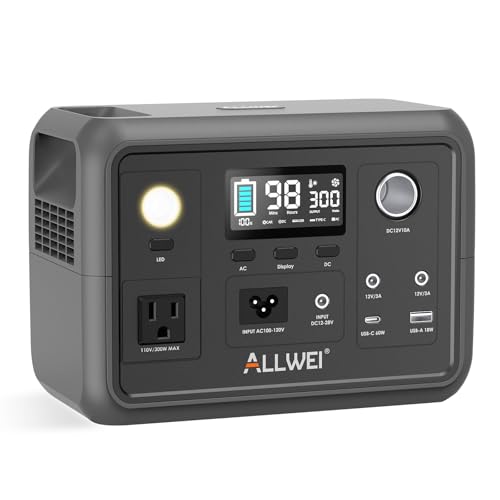
- 256Wh LiFePO4 battery
- 6.4 lb with one pure sine wave AC outlet
- 300W continuous output
Best For: Low-wattage blankets and light packing
Best Two-Outlet Compact Pick

- 296Wh capacity; 300W AC output
- Two pure sine wave AC outlets
- Lithium-ion cells rated for over 1,000 cycles
Best For: Small setups needing two AC sockets
Best for Quiet Nights

- 1,024Wh LFP battery
- Stated noise as low as 26 dB
- 80% AC recharge in 37 minutes
Best For: Quiet RV and camper-van nights
Best for Extended Backup

- 2,010Wh LFP battery
- 1,500W continuous output
- 35.7 lb; no 12V DC port
Best For: Longer stays and multi-device backup
Best Compact Option

- 183Wh battery; 200W running output
- Weighs 5 lb
- Two 120V AC outlets
Best For: Portable power for low-wattage blankets
Best for Longer Runtime – Jackery Explorer 1000 v2
If you want a portable power station for electric blanket use over a longer stretch, the Jackery Explorer 1000 v2 offers the largest battery in this lineup at 1,024Wh. Its two pure sine wave AC outlets let you plug in an AC blanket while keeping another outlet available.
Best For: Campers and households prioritizing battery capacity over a lightweight pack.
Pros:
- 1,024Wh LiFePO4 battery and 1,500W AC output.
- Two AC outlets plus USB and car-port outputs.
- App-controlled quiet charging mode and fast wall charging.
Cons:
- At about 23.3 pounds, it is substantially heavier than the smaller options here.
- Solar charging works only with Jackery solar panels.
The extra capacity makes this the strongest choice here when runtime matters, but check your blanket’s wattage to estimate how many hours you can expect; the 1,500W output rating alone does not tell you runtime.
Best Lightweight Fast Charger – BLUETTI Elite 30 V2
For a portable power station for electric blanket use on shorter outings, the BLUETTI Elite 30 V2 pairs a 288Wh battery with a 600W continuous output in a 9.4-pound unit. Compare your blanket’s running wattage with that 600W rating before plugging it in.
Best For: Short trips or emergency backup where quick recharging and manageable carry weight matter.
Pros:
- 288Wh capacity and 600W continuous output.
- Charges from 0% to 80% in a claimed 45 minutes using wall power.
- Supports wall, solar, and car charging; includes a car charging cable.
Cons:
- The 288Wh battery offers less potential blanket runtime than the 1,024Wh Jackery.
- The stated 1,500W Power Lifting Mode should not be mistaken for the 600W continuous rating.
This is a practical middle ground for portability and output. For overnight warmth, calculate runtime from your blanket’s actual draw rather than assuming a full night from the battery capacity.
Best Compact LFP Pick – ALLWEI 300W Power Station
The ALLWEI is a compact portable power station for electric blanket use when your blanket draws no more than its 300W continuous AC rating. Its 256Wh LiFePO4 battery and 6.4-pound weight make it easier to carry than a larger-capacity station, with a corresponding trade-off in runtime.
Best For: Light-packing campers with a low-wattage AC blanket.
Pros:
- 256Wh LiFePO4 battery rated for 3,000 charge-discharge cycles.
- Pure sine wave AC output and six output ports.
- Supports wall, car, solar, and combined AC-plus-solar charging.
Cons:
- One AC outlet limits how many plug-in devices you can use at once.
- 300W continuous output may not suit higher-wattage blankets; solar panel sold separately.
Choose this for easy transport and LFP battery longevity, not maximum hours of heat. Check the blanket’s power label and allow for AC conversion losses when estimating runtime.
Best Two-Outlet Compact Pick – EnginStar 300W Power Station
If you need a portable power station for electric blanket use alongside another AC device, the EnginStar provides two pure sine wave outlets in a compact unit. Its 296Wh capacity and 300W AC output make blanket wattage—and total simultaneous draw—important checks.
Best For: Campers who want two AC sockets in a small backup battery.
Pros:
- Two 110V pure sine wave AC outlets and eight output ports overall.
- 296Wh capacity in a roughly 6.5-pound unit, according to the product bullets.
- Can recharge from a wall outlet, car socket, or compatible solar panel.
Cons:
- 300W AC output limits the combined load on the outlets.
- Uses lithium-ion cells rated for more than 1,000 cycles, rather than the LFP chemistry listed for several other picks.
- Solar panel is not included.
The second AC socket adds flexibility, but it does not double the available wattage. Use your blanket’s rated draw to judge both compatibility and likely runtime.
Best for Quiet Nights – DJI Power 1000 V2
If you want a portable power station for electric blanket use in an RV or camper van, the DJI Power 1000 V2 pairs a 1,024Wh LFP battery with a stated operating noise as low as 26 dB. Its 2,600W output provides ample capacity for a typical blanket, though actual runtime depends on the blanket’s power draw.
Best For: Campers who prioritize quiet nighttime operation and fast recharging.
Pros:
- 1,024Wh battery offers more capacity than a compact grab-and-go unit.
- Recharges to 80% in a stated 37 minutes from AC power.
- Quiet operation suits overnight use in an RV or camper van.
Cons:
- Solar and car charging require separate compatible adapters.
- Its 2,600W output may be more than you need for a blanket alone.
This is a strong fit when a blanket is just one part of your camping power setup. Check your blanket’s wattage to estimate how long the battery will last overnight.
Best for Extended Backup – Anker SOLIX S2000
The Anker SOLIX S2000 is a portable power station for electric blanket use when a larger energy reserve matters more than packing light. Its 2,010Wh LFP battery and 1,500W continuous output can support a blanket alongside other essentials, subject to their combined power draw.
Best For: Home backup or longer camping stays where you want capacity for multiple devices.
Pros:
- 2,010Wh capacity provides a substantial reserve for overnight use.
- Stated 6W idle draw helps limit power consumed by the station itself.
- Offers up to 400W solar input and multiple charging options.
Cons:
- At 35.7 lb, it is less convenient to carry than a small power station.
- There is no 12V DC output port.
Choose this model if you also need to run other essentials; for a blanket alone, its capacity may be more than necessary. Runtime will depend on your blanket’s wattage and the other devices connected.
Best Compact Option – Westinghouse iGen400s
At 5 lb, the Westinghouse iGen400s is a portable power station for electric blanket use when easy carrying is the priority. Its 183Wh battery and 200W running output make it important to check your blanket’s wattage and expected runtime before relying on it through the night.
Best For: Short trips or low-wattage blankets when portability matters most.
Pros:
- Compact 5 lb design with a carry handle.
- Two 120V AC outlets let you plug in a compatible blanket.
- Quiet, fume-free battery operation works indoors or at camp.
Cons:
- 183Wh capacity limits runtime compared with larger stations.
- A blanket drawing more than 200W exceeds its running output.
- No AC power adapter or solar panel is included.
This is the easiest of the three to carry, but it is better suited to modest, shorter-duration heating needs than all-night backup. Compare your blanket’s wattage with both its 200W output limit and 183Wh capacity.
How We Picked the Best Portable Power Station for Electric Blanket
We compared the seven selected models on stated battery capacity, AC output, portability, and suitability for a typical plug-in electric blanket. Capacity matters for overnight use, while output determines whether the station can power the blanket at all. We also considered whether a smaller, lighter unit or a larger reserve makes more sense for different trips and backup needs. Manufacturer watt-hour ratings are not a guarantee of runtime: AC conversion losses, temperature, and the blanket’s thermostat all affect results.
Quick Comparison: Capacity and Intended Use
For a short evening or occasional warming, the 183Wh Westinghouse iGen400s is the smallest-capacity option here. The 256Wh ALLWEI, 288Wh BLUETTI Elite 30 V2, and 296Wh EnginStar offer a step up without moving into the 1kWh class. The 1,024Wh Jackery Explorer 1000 v2 and DJI Power 1000 V2 are more plausible choices for extended use or sharing power with other essentials. At 2,010Wh, the Anker SOLIX S2000 provides the largest stated energy reserve in this lineup, with a corresponding trade-off in size. These are capacity comparisons, not promised blanket runtimes.
Key Buying Factors for a Portable Power Station for Electric Blanket Use
Estimate Energy, Not Just Peak Watts
Look at your blanket’s label for its rated watts, then estimate watt-hours by multiplying its average power draw by the hours you need. For example, a steady 60W draw over eight hours would require 480Wh before AC losses. Many blankets cycle on and off, so actual consumption may be lower—but you should not assume it will be. A plug-in energy meter can give you a more useful overnight estimate at your preferred setting.
Check the Outlet and Output Rating
Confirm that your station has a compatible AC outlet and that its continuous AC rating exceeds the blanket’s rated input. Check the blanket’s instructions as well: some heated bedding has restrictions on use with generators or inverters. If you plan to power multiple devices, add their simultaneous loads rather than comparing the station’s rating with the blanket alone.
Leave a Runtime Margin
Because not all rated battery energy reaches an AC outlet, choose more capacity than your basic calculation suggests. Cold conditions can also reduce usable battery performance, so keep the station dry and within its specified operating-temperature range. Do not cover it with bedding or block its ventilation. If recharging matters, check the charging options and timing for the specific model rather than assuming a solar panel will refill it during a short winter day.
Who Should Buy Which Portable Power Station for Electric Blanket?
Choose a compact sub-300Wh model if low carrying weight matters most and you only need brief warmth or have measured a very low blanket draw. Start with a 1,024Wh option if overnight use is your priority, then compare its size and charging setup with your needs. Consider the 2,010Wh Anker if you want a larger reserve for longer use or additional devices. For any Portable Power Station for Electric Blanket use, the best final check is to test your own blanket and station together before relying on them during a cold night.