Power outages can last minutes or several days, and the right backup option depends on what you need to run, how long you need it, and whether fuel or quiet battery power is more practical.
This roundup compares 10 portable generators and power stations across output, capacity, fuel flexibility, portability, and emergency-home features so you can choose with confidence.
Best 10 Portable Backup Generators for Power Outages Picks for 2026
High-Output Fuel Flexibility

- 9,500 running watts on gasoline
- Dual-fuel gasoline and propane operation
- Remote start and transfer-switch-ready outlet
Best For: High-demand residential backup
Quiet Expandable Home Backup

- 3,600W output with parallel expansion
- 3,584Wh capacity with expandable storage
- AC, solar, hybrid, and generator charging
Best For: Quiet household battery backup
Maximum Fuel Versatility

- 11,500 running watts on gasoline
- Gasoline, propane, and natural gas support
- Up to 19 hours at 25% load
Best For: Large-home, extended-outage backup
Compact Silent Emergency Power

- 2,200W AC output and 2,042Wh capacity
- 39.5-pound portable battery design
- Fast AC, solar, and UPS-style backup
Best For: Quiet backup for essential devices
Best Gas-Powered Value
4400W Open-Frame Inverter Generator

- 4,400 peak and 3,400 running watts
- Up to 14 hours at 25% load with ECO mode
- RV-ready ports and 56-pound design
Best For: Home backup, RV use, and camping
Best for Whole-Home Essentials

- 1,800W output with 3,600W surge
- Under-10ms UPS for sensitive electronics
- 45-minute AC charge to 80%
Best For: Quiet backup for essential appliances and electronics
Best Lightweight Power Station

- 1,500W output and 3,000W surge peak
- 23.8 pounds with a foldable handle
- 1,070Wh LFP battery with 4,000+ cycles
Best For: Portable emergency backup, camping, and electronics
High-Capacity Home Backup
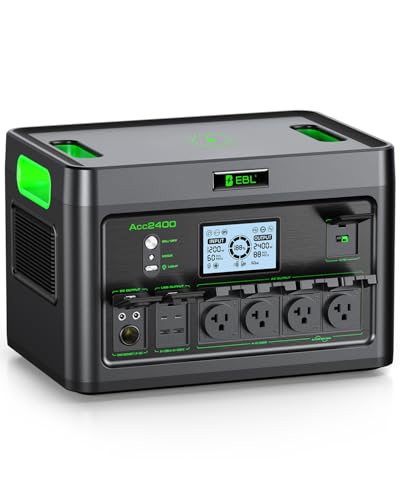
- 1,843.2Wh capacity and 2,400W output
- 12 charging and power ports
- 0.1-second emergency backup mode
Best For: Home backup, jobsites, and group camping
Lightweight Outdoor Backup

- 292Wh capacity with 300W rated output
- Weighs about 7.1-7.5 pounds
- Supports solar charging with optional panels
Best For: Travel, camping, and small electronics
Fast UPS Backup

- 640Wh capacity with 600W output
- 10ms UPS for outage transitions
- Full AC recharge in about 1.5 hours
Best For: Indoor essentials, CPAP, and sensitive electronics
High-Output Fuel Flexibility – Westinghouse WGen9500DF
For whole-home needs during outages, this Westinghouse model is one of the more capable portable backup generators for power outages. It delivers up to 9,500 running watts on gasoline, supports propane, and includes remote, electric, and recoil starting.
Best For: Homeowners who need high output, dual-fuel flexibility, and transfer-switch-ready connectivity.
Pros:
- Produces 9,500 running watts and 12,500 peak watts on gasoline.
- Runs on gasoline or propane and offers up to 12 hours of runtime on a full gasoline tank.
- Includes remote start, a 50A RV-ready outlet, and a transfer-switch-ready 30A outlet.
- Digital voltage, frequency, and lifetime-hour information helps monitor operation.
Cons:
- Its open-frame design is likely less quiet than a battery power station.
- The large fuel-powered unit requires fuel storage, ventilation, and setup space.
- Transfer-switch installation may require additional equipment or professional help.
With strong output and practical dual-fuel operation, the WGen9500DF is suited to demanding residential backup. Its 3-year limited warranty and included startup accessories add convenience, but buyers should plan for the size and fuel requirements.
Quiet Expandable Home Backup – Jackery HomePower 3600 Plus
The Jackery HomePower 3600 Plus is a battery-powered alternative to portable backup generators for power outages, providing quiet, fume-free energy for household essentials. Its 3,600-watt output can expand through parallel operation, while the wheeled design makes repositioning easier.
Best For: Households seeking quiet, expandable battery backup with multiple charging options.
Pros:
- Provides 3,600 watts of output, with up to 7,200 watts in parallel.
- Its 3,584Wh capacity can be expanded substantially with compatible configurations.
- Supports hybrid AC+DC, AC, solar, and gas-generator charging.
- Wheels and a telescoping handle improve portability for a 77.2-pound unit.
Cons:
- It has only two listed outlets, which may limit simultaneous connections.
- Expanding capacity or adding parallel capability requires additional compatible equipment.
- Battery backup depends on recharging rather than continuous refueling.
This model stands out when quiet operation and indoor-friendly, battery-based backup matter more than extended fuel runtime. Its five-year manufacturer warranty and rapid hybrid charging add appeal for planned outage preparation.
Maximum Fuel Versatility – Westinghouse WGen11500TFc
For larger homes and demanding loads, this tri-fuel Westinghouse is a powerful option among portable backup generators for power outages. It supplies up to 11,500 running watts on gasoline and can also use propane or natural gas, with remote and push-button starting.
Best For: Large-home backup where high output, tri-fuel flexibility, and extended runtime are priorities.
Pros:
- Delivers 11,500 running watts and 14,500 peak watts on gasoline.
- Accepts gasoline, propane, or natural gas for flexible fuel planning.
- Runs up to 19 hours at 25% load on its 9.5-gallon gasoline tank.
- Includes less-than-5% THD output, a CO sensor, low-oil shutdown, and remote start.
Cons:
- At 230 pounds, it is substantially less portable than battery-powered alternatives.
- The automatic transfer switch and other connection hardware are sold separately.
- Fuel-powered operation requires outdoor placement, ventilation, and fuel management.
The WGen11500TFc is a strong choice when a home needs substantial capacity and multiple fuel options. Its long runtime and safety features are useful for extended outages, though the weight and separate transfer equipment make installation planning important.
Compact Silent Emergency Power – Jackery Explorer 2000 v2
The Jackery Explorer 2000 v2 offers a compact, quiet alternative to fuel-powered portable backup generators for power outages. It combines a 2,042Wh battery with 2,200 watts of AC output, fast charging, and a 20ms seamless switching feature for connected essentials.
Best For: Users who want lightweight, quiet backup for electronics, appliances, and short-term outage needs.
Pros:
- Supplies 2,200 watts through three AC ports, plus a 100W USB-C PD port.
- At 39.5 pounds, it is considerably easier to move than a conventional fuel generator.
- AC charging can reach 80% in 66 minutes, while 400W solar charging is also supported.
- LiFePO4 battery chemistry, a stated 10-year lifespan, and silent charging below 30dB add convenience.
Cons:
- Its 2,042Wh capacity is better suited to essential or shorter-duration loads than whole-home demand.
- Battery runtime depends on the connected load and requires recharging after depletion.
- It provides 120V output rather than the 240V capability offered by larger home generators.
This is a practical pick for indoor-friendly, low-noise backup and portable power. The UPS-style switching and fast recharge features are especially useful for electronics, while higher-demand household circuits may require a larger system.
Best Gas-Powered Value – 4400W Open-Frame Inverter Generator
For shoppers comparing portable backup generators for power outages, this gas-powered inverter model offers a practical mix of output and portability. It provides 4,400 peak watts and 3,400 running watts, with an RV-ready outlet and ECO mode for longer operation.
Best For: Home backup, RV use, and camping when you need higher output from a conventional gasoline generator.
Pros:
- Produces 3,400 running watts and 4,400 peak watts.
- Runs for up to 14 hours at 25% load with ECO mode.
- Includes two 120V AC ports, a 12V DC port, and an RV port.
- At 56 pounds, it is relatively easy to move.
Cons:
- Requires gasoline and outdoor operation with appropriate ventilation.
- Its open-frame design is rated under 72 dBA from 23 feet, so it is not the quietest option.
- The one-year manufacturer warranty is shorter than some competing power stations.
This is a strong fit when wattage, RV compatibility, and extended fuel-based runtime matter more than silent operation. The fuel gauge, low-oil shutdown, and overload protection add useful convenience for outage preparedness.
Best for Whole-Home Essentials – EcoFlow DELTA 3 Classic
The EcoFlow DELTA 3 Classic is a quiet, fuel-free choice among portable backup generators for power outages. Its 1,024Wh battery delivers 1,800 watts of output, while UPS switching, fast AC charging, and optional solar recharging make it useful for essential electronics and appliances.
Best For: Backup power for refrigerators, microwaves, computers, medical devices, and other sensitive electronics.
Pros:
- Supplies 1,800 watts with a 3,600-watt surge rating.
- Reaches 80% charge in 45 minutes using AC charging.
- Under-10ms UPS switching helps prevent interruptions and data loss.
- LiFePO4 cells are rated for more than 10 years of daily use.
Cons:
- Optional solar panels are required for solar recharging.
- It is not compatible with the DELTA 2 Smart Extra Battery or DELTA 3 Series Smart Extra Battery.
- Battery runtime depends heavily on the connected load.
Choose this model if clean, quiet power and automatic backup switching are priorities. Its app control and optional 500W solar input add flexibility, although the fixed 1,024Wh capacity may not suit extended high-wattage outages.
Best Lightweight Power Station – Jackery Explorer 1000 v2
The Jackery Explorer 1000 v2 is a compact battery option for shoppers seeking portable backup generators for power outages without gasoline or engine noise. It combines a 1,070Wh capacity with 1,500 watts of AC output, a 3,000-watt surge peak, and a foldable handle in a 23.8-pound package.
Best For: Lightweight emergency backup, camping, road trips, and powering several smaller devices at once.
Pros:
- Provides 1,500 watts of running output and 3,000 watts of surge power.
- Lightweight 23.8-pound design includes a foldable handle.
- LFP battery supports over 4,000 charge cycles and a claimed lifespan exceeding 10 years.
- Offers three AC outlets, USB-C, USB-A, and a DC car port.
Cons:
- The one-hour full-charge mode must be activated through the Jackery App; the default is 1.7 hours.
- Solar charging is compatible only with Jackery solar panels.
- Its listed runtime is 42 minutes, so high-draw appliances can deplete it quickly.
This is a convenient choice when portability and low-maintenance battery power outweigh the longer runtime of a fuel generator. App controls, a 30 dB quiet charging mode, and 100W USB-C output make it especially practical for electronics and overnight use.
High-Capacity Home Backup – EBL Acc2400
For shoppers comparing portable backup generators for power outages, the EBL Acc2400 stands out as a high-capacity battery power station. Its 1,843.2Wh battery and 2,400W output can support everything from electronics and camping equipment to selected high-wattage appliances, while its emergency power mode switches to backup in 0.1 seconds.
Best For: Home emergency backup, jobsites, group camping, and users who need substantial capacity and many connection options.
Pros:
- Large 1,843.2Wh capacity with 2,400W running output and 4,800W starting wattage.
- Supports up to 12 devices through AC, USB, car, DC, and wireless charging options.
- LiFePO4 battery is rated for more than 3,500 cycles and a 10+ year service life.
- 0.1-second emergency backup mode helps protect computers and file devices during outages.
Cons:
- At about 54-55 pounds, it is less convenient to carry than compact power stations.
- Its large capacity and output come with a larger footprint than travel-focused models.
The Acc2400 is a strong choice when outage preparedness and appliance flexibility matter more than minimum weight. Dual handles improve portability, but this is best treated as a substantial home-backup or equipment power station rather than an ultralight camping unit.
Lightweight Outdoor Backup – Jackery Explorer 300
The Jackery Explorer 300 is a compact option among portable backup generators for power outages, especially for powering smaller essentials. With a 292Wh capacity, 300W rated output, and 600W peak surge, it can run devices such as laptops, cameras, drones, and other low-power gear while remaining easy to carry.
Best For: Camping, travel, hiking, small electronics, and backup power users who prioritize low weight.
Pros:
- Weighs about 7.1-7.5 pounds and has an integrated carrying handle.
- Provides six-device connectivity through AC, USB-C, USB-A, and a 120W car port.
- LiFePO4 battery is rated for more than 4,000 cycles before reaching 70% capacity.
- Can reach approximately 80% charge in 2.8 hours with a compatible 100W solar panel.
Cons:
- Its 292Wh capacity and 300W output are not intended for larger appliances.
- The solar panel is optional, so solar charging requires additional equipment.
The Explorer 300 is better suited to personal electronics and smaller backup needs than whole-home outage support. Its light weight, useful port selection, and long cycle rating make it a practical grab-and-go choice for travel or short-duration power interruptions.
Fast UPS Backup – 640Wh Portable Power Station
This 640Wh power station offers a balanced option for shoppers seeking portable backup generators for power outages. Its 600W output, 1,200W surge capability, and built-in 10ms UPS can keep devices such as Wi-Fi routers, CPAP machines, laptops, and other essentials powered with minimal interruption.
Best For: Indoor emergency backup, sensitive electronics, CPAP users, and campers who need fast recharging in dry conditions.
Pros:
- Built-in 10ms UPS automatically switches to battery power during an outage.
- Fast AC charging can fully recharge the unit in approximately 1.5 hours.
- Pure sine wave output is designed for sensitive electronics and medical devices such as CPAP machines.
- LiFePO4 battery is rated for more than 4,000 cycles, and the unit includes a five-year warranty.
Cons:
- 600W running output is less suitable for high-wattage appliances.
- The unit is labeled for indoor use only and must be kept dry and away from rain or moisture.
With rapid charging and UPS functionality, this model is particularly useful for essential electronics and short-term outage protection. Its indoor-use limitation should be taken seriously, so outdoor use requires a dry, well-ventilated environment and clear weather.
How We Picked the Best Portable Backup Generators for Power Outages
We focused on products that can provide useful emergency power at home, while also covering camping, RV, and portable-work needs. The selection includes high-output dual- and tri-fuel generators for transfer-switch-ready home backup, inverter generators for cleaner and quieter operation, and battery power stations for indoor use without gasoline, fumes, or routine engine maintenance.
We compared rated and peak output, usable battery capacity, charging options, portability, noise considerations, fuel flexibility, and the types of devices each model can realistically support. Always confirm specifications, outlet types, grounding requirements, and local installation rules before connecting any generator to home circuits.
Quick Comparison
- Best for whole-home essentials: High-output dual- or tri-fuel generators with transfer-switch compatibility.
- Best for quiet indoor backup: Battery power stations, especially when solar or wall charging is available.
- Best for refrigerators, pumps, and demanding appliances: Models with substantial continuous wattage and sufficient surge capacity.
- Best for electronics and sensitive devices: Inverter generators and power stations with stable, clean power output.
- Best for occasional use and portability: Compact power stations or smaller inverter generators.
Key Buying Factors for Portable Backup Generators for Power Outages
Output and Startup Surge
Add the running watts of the devices you expect to use, then allow extra capacity for startup surges from refrigerators, sump pumps, furnaces, and power tools. A high peak-watt figure does not replace adequate continuous output.
Fuel, Charging, and Runtime
Gasoline is widely available but requires safe outdoor storage and refueling. Propane stores longer and burns cleanly, while tri-fuel models offer additional flexibility. Battery stations avoid fuel entirely, but runtime depends on load and recharge access. Solar charging can extend an outage, although it is weather- and panel-dependent.
Safety and Connection
Never operate a fuel-burning generator indoors, in a garage, or near doors and windows. Use a properly rated outdoor extension cord or have a qualified electrician install a transfer switch or inlet. Battery stations are typically suitable for indoor use, but follow ventilation, charging, and circuit guidance in the manual.
Portability and Noise
Check the unit’s actual weight, wheels, handles, and storage footprint. Battery power stations are often quieter, while open-frame generators may deliver more power for less money but create more noise and vibration.
Who Should Buy Which Portable Backup Generators for Power Outages?
Choose a dual- or tri-fuel generator if you need to run several essential home circuits, a well pump, heating equipment, or large appliances during extended outages. These are strongest for high demand, but they require outdoor operation, fuel management, and more maintenance.
Choose a battery power station if quiet, fume-free backup matters most or you need power for networking equipment, phones, lights, medical electronics, refrigerators, and other moderate loads. Select capacity based on runtime rather than peak wattage alone.
Choose a compact power station for short outages, apartment use, travel, or charging small electronics. For frequent outages or critical appliances, step up to a larger battery, higher inverter output, or a fuel-powered model with appropriate home integration.