Electrical outlet testers can help maintenance teams identify wiring faults, verify receptacle conditions, and trace circuits before equipment troubleshooting begins. The right model can save time while adding a useful layer of safety to routine inspections.
We compared 10 testers and circuit-finding tools across fault detection, GFCI testing, voltage indication, usability, and job-site practicality. This guide explains which features matter most and which type of tester best fits your maintenance work.
Best 10 Electrical Outlet Testers for Industrial Maintenance Picks for 2026
Rugged GFCI Verification
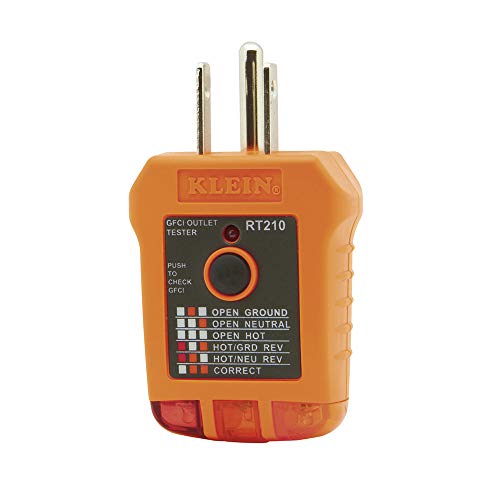
- Checks standard and GFCI receptacles
- Tests GFCI operation
- Drop-resistant 6.6-foot design
Best For: Routine North American outlet and GFCI checks
Seven-Fault Socket Screening
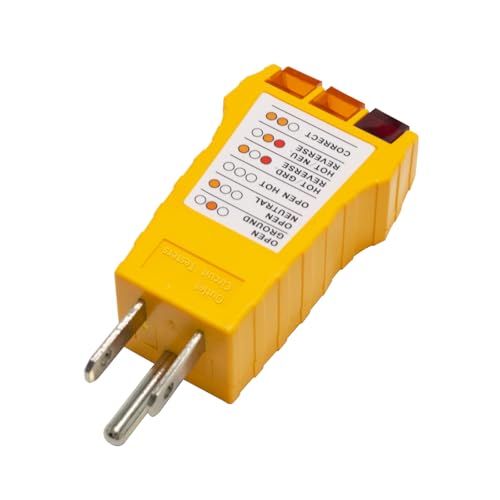
- Checks seven common wiring conditions
- Screens 120V three-prong outlets
- Impact-resistant ergonomic housing
Best For: Fast grounding and receptacle fault screening
Breaker Identification and GFCI Testing
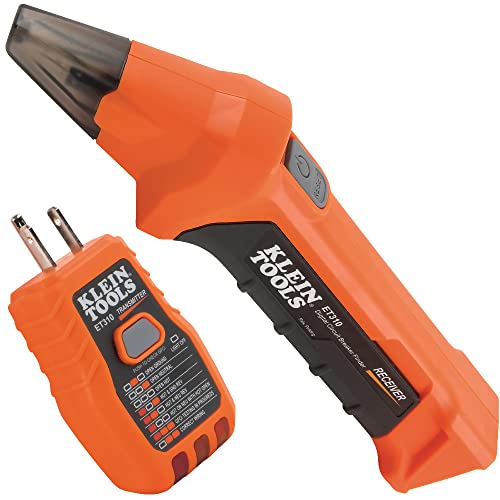
- Locates the matching circuit breaker
- Uses visual and audible signals
- Includes a GFCI tester
Best For: Outlet testing combined with breaker identification
LCD Fault Diagnosis

- Shows voltage and wiring status on an LCD
- Detects seven common wiring faults
- Includes auto-hold and GFCI testing
Best For: Readable outlet diagnostics in tight or dim spaces
Reliable Receptacle Check

- Clear light sequence identifies wiring issues
- Supports 110/125V AC three-wire outlets
- Drop-tested and CSA/UL standard compliant
Best For: Routine checks of standard North American receptacles
GFCI Circuit Analysis

- Tests outlets, GFCI receptacles, and extension cords
- Checks seven wiring conditions
- Trips GFCI protection at 6–9 mA
Best For: Basic GFCI and receptacle troubleshooting
Two-Tool Safety Kit
Klein Tools 80025 Outlet Tester Kit

- Combines GFCI and non-contact voltage testers
- Checks standard and GFCI receptacle wiring
- Provides LED and audible voltage alerts
Best For: Technicians needing outlet and voltage detection tools together
Compact Wiring Check

- Checks seven common outlet conditions
- LED indicators simplify results
- For 125V North American outlets
Best For: Fast routine receptacle screening
Breaker Tracing Kit

- Locates the matching circuit breaker
- Includes GFCI and outlet testing
- Comes with adapters and a case
Best For: Circuit tracing on 90–120V systems
LCD Circuit Diagnosis
KAIWEETS KT301P Circuit Finder

- LCD shows voltage and wiring status
- Tests GFCI and seven wiring faults
- Includes NCV testing and accessories
Best For: Detailed 120V circuit troubleshooting
Rugged GFCI Verification – Klein Tools RT210
For electrical outlet testers for industrial maintenance, the Klein Tools RT210 is a straightforward choice for checking common wiring problems in North American 110/125V AC standard and GFCI receptacles. Its dedicated GFCI test function and durable housing suit routine safety checks.
Best For: Maintenance teams needing quick standard-outlet and GFCI verification.
Pros:
- Detects common wiring problems in standard and GFCI receptacles.
- Tests whether GFCI protection operates properly.
- Designed to withstand a 6.6-foot drop.
- Supports 110/125V AC, 50/60Hz, three-wire outlets.
Cons:
- Intended for North American receptacles rather than broad international use.
- Its specified operating range begins at 32°F and ends at 140°F.
The RT210 focuses on fast, basic receptacle diagnostics without adding circuit-location features. Its compact 1.9-ounce design and drop resistance make it practical for carrying between maintenance checks.
Seven-Fault Socket Screening – North American Outlet Tester
Outlet Tester with Electrical Receptacle Test,Socket Tester for North American Outlets (Yellow)
Check Price On AmazonThis compact tester is useful for electrical outlet testers for industrial maintenance when the job calls for a quick screen of 120V three-prong North American outlets. Its indicator pattern identifies several wiring and grounding conditions before equipment is connected.
Best For: Basic receptacle grounding and wiring checks across 120V outlets.
Pros:
- Detects open ground, open neutral, open hot, reversed conductors, and correct wiring.
- Helps verify grounding before using grounding products.
- Uses a compact, ergonomic, impact-resistant housing.
- UL-certified according to the supplied specifications.
Cons:
- Designed for 120V North American three-prong outlets.
- Provides indicator-based diagnosis rather than the LCD voltage display found on some testers.
The yellow socket tester offers a simple way to identify common receptacle faults without a complicated setup. It is best treated as a fast screening tool for compatible outlets.
Breaker Identification and GFCI Testing – Klein Tools ET310
Among electrical outlet testers for industrial maintenance, the Klein Tools ET310 stands out when outlet testing must be paired with circuit identification. Its transmitter plugs into a 90–120V AC outlet, while the receiver scans the panel and signals the matching breaker.
Best For: Maintenance work that combines receptacle checks with locating the correct circuit breaker.
Pros:
- Uses a two-part transmitter-and-receiver system to identify breakers.
- Provides visual and audible indications at the matching breaker.
- Includes a built-in GFCI tester in the transmitter.
- Works on 90–120V AC circuits.
Cons:
- Requires batteries for operation.
- Its operating range is limited to 90–120V AC circuits.
- More equipment to carry than a plug-in-only receptacle tester.
The ET310 is a specialized choice for troubleshooting and panel work rather than only checking outlet wiring. The integrated GFCI function adds useful receptacle testing to its primary breaker-finding role.
LCD Fault Diagnosis – KAIWEETS KT301T
The KAIWEETS KT301T adds a color LCD and real-time voltage display to the usual outlet checks, making it a capable option among electrical outlet testers for industrial maintenance. It tests North American 120V three-wire outlets, identifies seven common wiring faults, and includes a one-click GFCI test.
Best For: Technicians who want clearly displayed voltage and wiring results in tight or dim locations.
Pros:
- Displays wiring status and voltage on a color LCD with bottom indicators.
- Detects seven common wiring conditions, including open conductors and reversals.
- Includes a button-operated GFCI test.
- Auto-hold captures results for hard-to-reach outlets.
Cons:
- Specified for North American 120V AC outlets.
- GFCI testing requires careful use because it can trip the circuit.
- Requires two AAA batteries.
With its readable display, auto-hold function, and three-year warranty, the KT301T is oriented toward convenient documentation and interpretation of outlet results. It offers more on-screen information than a basic indicator-only tester.
Reliable Receptacle Check – Klein Tools RT110
Klein Tools RT110 AC Electrical Outlet Tester | For North American Electrical Receptacles
Check Price On AmazonFor electrical outlet testers for industrial maintenance, the Klein Tools RT110 offers a straightforward way to check common wiring problems in standard North American 110/125V AC, three-wire receptacles. Its clear light sequence makes results easy to interpret in routine inspection work.
Best For: Maintenance technicians checking standard receptacles in typical indoor working conditions.
Pros:
- Indicates correct wiring and common wiring faults with a clear light sequence.
- Supports 110/125V AC at 50/60Hz in three-wire outlets.
- Built to withstand a 6.6-foot drop and operates from 32°F to 140°F.
- Conforms to UL 1436 and is certified to CSA C22.2 #160.
Cons:
- Designed for standard North American receptacles rather than a broad range of outlet types.
- Its listed operating range is limited to 110/125V AC systems.
The RT110 is a practical, durable choice when the task is quickly identifying common receptacle wiring issues without adding extra measurement functions.
GFCI Circuit Analysis – GARDNER BENDER GFI-3501
Among electrical outlet testers for industrial maintenance, the nVent GARDNER BENDER GFI-3501 is suited to checking standard outlets, GFCI outlets, and extension cords. Its three-light display helps identify circuit status and several common wiring errors on 110–125V AC systems.
Best For: Technicians who need basic GFCI testing and multi-condition receptacle checks.
Pros:
- Tests standard outlets, GFCI outlets, and extension cords.
- Checks open ground, open neutral, open hot, polarity reversals, and correct wiring.
- Trips GFCI protection between 6 and 9 mA.
- Compact design with yellow and red light indications.
Cons:
- Limited to 110–125V AC receptacles.
- Light-based results may require referring to the indicated wiring condition.
The GFI-3501 adds GFCI functionality to a compact receptacle tester, making it a useful option for maintenance rounds involving both ordinary and ground-fault-protected outlets.
Two-Tool Safety Kit – Klein Tools 80025 Outlet Tester Kit
For electrical outlet testers for industrial maintenance, the Klein Tools 80025 combines a GFCI outlet tester with a non-contact voltage tester pen. This pairing supports receptacle checks while also providing non-contact voltage detection for cables, breakers, fixtures, and switches.
Best For: Maintenance teams wanting outlet testing and basic non-contact voltage checks in one kit.
Pros:
- Includes the RT210 GFCI tester and NCVT1P non-contact voltage tester.
- Identifies common wiring problems in standard and GFCI receptacles.
- Confirms operation of GFCI protective devices.
- Uses a green status LED plus red LED and warning tone for voltage detection.
Cons:
- The outlet tester is specified for systems up to 125V AC.
- The kit combines basic testers rather than providing advanced electrical measurements.
- The listed dimensions are relatively large for a compact tester kit.
The 80025 is the most versatile choice of these options when a technician needs both receptacle/GFCI testing and a separate non-contact voltage check.
Compact Wiring Check – Standard Outlet Tester
For basic electrical outlet testers for industrial maintenance, this compact plug-in model provides a quick way to check standard North American three-wire receptacles. Its LED light pattern identifies several common wiring conditions without requiring a separate meter.
Best For: Maintenance staff who need fast, straightforward checks of 125V AC standard outlets.
Pros:
- Detects open ground, open neutral, open hot, reversed wiring, GFCI-related conditions, and correct wiring.
- Simple plug-in operation with easy-to-read LED indicators.
- Compact ABS housing and stated ETL and UL specifications.
Cons:
- Designed for standard North American 125V AC, 50/60Hz three-wire outlets.
- Does not provide the circuit-breaker locating or accessory versatility of a circuit tracer kit.
This is a focused option when the priority is rapid receptacle screening rather than broader circuit diagnosis. Its compact design makes it convenient for routine outlet checks across a maintenance area.
Breaker Tracing Kit – AstroAI Circuit Finder
Among electrical outlet testers for industrial maintenance, the AstroAI combines outlet and GFCI checks with circuit-breaker identification. The transmitter plugs into an outlet or light socket while the receiver scans the panel and provides audio-visual confirmation.
Best For: Maintenance and electrical workers who need to match outlets or light sockets to their breakers on 90–120V AC systems.
Pros:
- Receiver beeps and flashes red when the correct breaker is located.
- Integrated outlet tester checks wiring conditions and GFCI functionality.
- Built-in panel light, low-battery alert, auto-shutdown, and multiple adapters support field use.
Cons:
- Voltage compatibility is limited to 90–120V AC, 50/60Hz systems.
- Battery powered, so battery condition can affect availability during maintenance work.
This kit is more versatile than a basic receptacle tester because it helps identify the correct breaker as well as evaluate outlet wiring. It is a practical choice when circuit tracing is part of the maintenance workflow.
LCD Circuit Diagnosis – KAIWEETS KT301P Circuit Finder
For teams comparing electrical outlet testers for industrial maintenance, the KAIWEETS KT301P adds an LCD display, GFCI testing, circuit tracing, and non-contact voltage detection. It is designed for North American 120V AC circuit troubleshooting in residential or commercial settings.
Best For: Professionals who want detailed outlet readings and multiple circuit-diagnosis functions in one portable kit.
Pros:
- Backlit LCD displays voltage from 30–150V, wiring status, and signal strength.
- Tests GFCI protection and identifies seven common wiring faults.
- Adds non-contact voltage testing, flashlight functionality, adapters, and a carrying case.
Cons:
- Its broader feature set may be more than needed for simple outlet screening.
- The supplied details specify North American 120V AC circuit use rather than a wider voltage range.
The KT301P suits maintenance tasks that require more information than basic LED pass/fault indicators provide. Its display, auto-hold function, and accessory kit can make troubleshooting in dim or restrictive spaces more convenient.
How We Picked the Best Electrical Outlet Testers for Industrial Maintenance
We focused on tools that provide practical information during electrical maintenance rather than simply confirming that an outlet has power. The selection includes dedicated receptacle testers, GFCI analyzers, circuit breaker finders, and combination tools with features such as LCD readouts, non-contact voltage detection, and built-in flashlights.
Our comparison emphasizes testing functions, clarity of indications, compatibility with common North American 120V outlets, portability, and the likelihood that a tool will be useful across service calls. A receptacle tester can identify common wiring problems, but it does not replace a qualified electrician, a meter, or a complete de-energization and lockout/tagout procedure.
Quick Comparison
Basic plug-in testers are generally the simplest and fastest choice for checking outlet wiring and GFCI operation. Models with clearly labeled lights are useful for routine inspection rounds. LCD-equipped testers can provide more detailed voltage or wiring information, while breaker finders add a way to match an outlet to its circuit at the panel.
For broad maintenance coverage, consider pairing a dedicated outlet tester with a circuit tracer. Combination kits are convenient, but specialized tools may offer clearer results or better ergonomics for frequent use.
Key Buying Factors for Electrical Outlet Testers for Industrial Maintenance
Testing Functions
Look for the fault conditions you actually need to identify, including open ground, open neutral, reversed polarity, and missing or miswired hot connections. If GFCI-protected circuits are common in your facility, choose a tester with a clearly labeled GFCI test function.
Readability and Feedback
Indicator-light patterns should be easy to interpret in dim mechanical rooms or bright outdoor areas. LCD displays may provide voltage readings and more precise feedback, but they can add complexity and require batteries. Audible alerts and large controls can also help when wearing work gloves.
Circuit Tracing and Voltage Safety
A breaker finder is valuable when panels are crowded or circuit labels are outdated. Some combination tools include non-contact voltage detection, but this feature should be treated as a screening aid—not proof that a circuit is de-energized. Always follow site safety procedures and verify conditions with approved equipment.
Durability and Compatibility
Choose a compact, rugged tool that fits standard North American receptacles and can withstand regular transport in a maintenance bag. Check the product’s voltage range and intended use before testing unfamiliar circuits, especially in industrial environments with nonstandard or higher-voltage systems.
Who Should Buy Which Electrical Outlet Testers for Industrial Maintenance?
Choose a basic receptacle tester for quick inspection rounds, property maintenance, and straightforward troubleshooting. Select a GFCI-focused analyzer when protected outlets are a major part of the job. A breaker finder makes more sense for technicians who frequently trace outlets back to electrical panels. For mixed tasks, a kit or combination tester with voltage detection can reduce the number of tools carried, provided its limitations are understood.