A car that sits for weeks can end up with a weak battery. A small solar maintainer can help offset normal battery drain when the vehicle is parked in a sunny spot with no convenient outlet.
The 10 kits here cover compact trickle chargers, portable panels, and larger systems. The right choice depends on whether you want to maintain a starter battery or power additional equipment.
Best 10 Car Solar Panel Kits Picks for 2026
Compact Battery Maintainer
SUNAPEX 1.8W 12V Solar Charger

- 1.8W 12V battery maintainer
- Controller helps prevent overcharging
- Window suction cups and two connection options
Best For: Infrequently used vehicle batteries
Adjustable-Mount Maintainer

- 20W monocrystalline panel
- 10A MPPT controller included
- 360-degree adjustable mounting bracket
Best For: Mounted 12V battery maintenance
Off-Grid Vehicle Kit
ECO-WORTHY 200W Solar Panel Kit
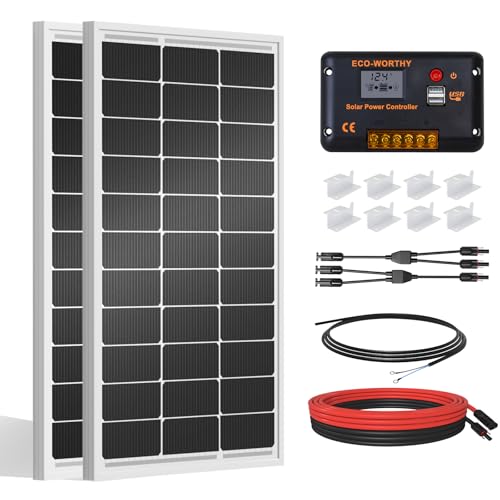
- Two 100W monocrystalline panels
- 12V or 24V configuration
- 30A PWM controller and mounting parts
Best For: Mounted RV and camper solar setups
Mid-Size Mounted Charger

- 100W monocrystalline panel
- Controller and Z brackets included
- Alligator clips for battery connection
Best For: Mounted 12V charging on trailers or RVs
Best for Outdoor Mounting
ECO-WORTHY 25W Solar Battery Maintainer

- 25W monocrystalline panel
- Waterproof controller with protective features
- Bracket, clips, and ring terminals included
Best For: Mounted outdoor upkeep of a 12V vehicle or equipment battery
Best Compact Plug-In Option
OYMSAE 12W Portable Solar Maintainer

- Compact 12W panel
- Cigarette-lighter plug and battery clips
- LED charging-status indicators
Best For: Simple 12V battery maintenance on an intermittently used vehicle
Best Higher-Power Pick
SUNER POWER 50W MPPT Solar Maintainer

- 50W panel with MPPT controller
- Selectable 12V, AGM, and lithium modes
- Charge-level display and three-stage charging
Best For: Higher-wattage maintenance across compatible 12V battery types
Adjustable Mount Pick
20W Smart MPPT Solar Maintainer

- 20W output with smart MPPT controller
- 360° adjustable aluminum bracket
- IP68-rated panel and controller
Best For: Mounted outdoor 12V battery maintenance
Connection Options Pick

- 15W solar battery maintainer
- OBD-II, clips and SAE connections listed
- Charging-status and error indicators
Best For: Flexible connections for a 12V vehicle battery
Portable Panel Pick
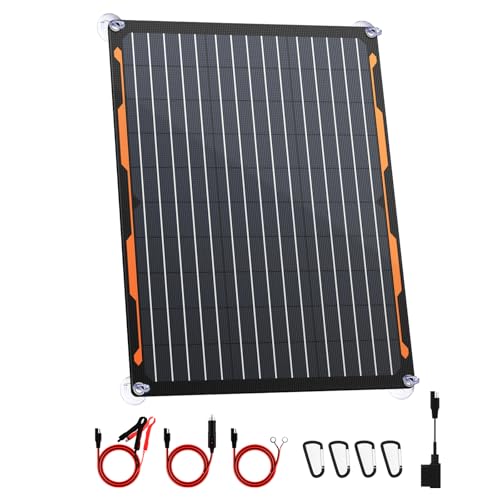
- 20W monocrystalline panel
- Built-in charge controller
- Listed weight of 380g
Best For: Lightweight, movable 12V battery maintenance
Compact Battery Maintainer – SUNAPEX 1.8W 12V Solar Charger
Among car solar panel kits, this compact SUNAPEX option is intended to maintain a 12V battery in a vehicle that sits between uses. It includes both a cigarette-lighter plug and alligator clips for connection.
Best For: Keeping an infrequently used car, boat, or lawnmower battery maintained.
Pros:
- Built-in controller stops charging when the battery is full and resumes when voltage drops.
- Includes suction cups for window mounting and indicator lights for sunlight and charging status.
- Sealed waterproof design with a PV-glass surface and ABS frame.
Cons:
- Rated at just 1.8W, so it is a maintenance option rather than a kit for substantial power needs.
- Window placement requires a suitable sun-facing spot.
Choose this for simple battery upkeep, not for running accessories or quickly replenishing a depleted battery.
Adjustable-Mount Maintainer – SOLPERK 20W 12V Solar Kit
For shoppers comparing car solar panel kits for a parked vehicle, the SOLPERK 20W kit offers more rated panel power than a small trickle panel. Its adjustable bracket lets you aim the panel toward the sun, and the kit includes a charge controller.
Best For: Maintaining a 12V battery where a fixed panel can be mounted and angled toward sunlight.
Pros:
- 20W monocrystalline panel comes with a 10A MPPT controller featuring three-stage charging.
- 360-degree adjustable bracket, pre-drilled holes, and plug-and-play cable connections simplify setup.
- Tempered-glass panel and corrosion-resistant aluminum frame are designed for outdoor use.
Cons:
- Mounting the bracket takes more setup than placing a portable panel in a window.
- 20W is intended for battery charging and maintenance, not a larger off-grid power system.
This is a practical middle ground if panel positioning matters and you want the controller and mounting hardware in the box.
Off-Grid Vehicle Kit – ECO-WORTHY 200W Solar Panel Kit
Unlike car solar panel kits built primarily for trickle charging, this ECO-WORTHY package is a 200W setup for RVs, campers, and other off-grid applications. It supplies two 100W panels and the hardware needed to configure them for a 12V or 24V system.
Best For: An RV or camper owner planning a mounted solar installation rather than a small car-battery maintainer.
Pros:
- Two 100W monocrystalline panels can be connected in parallel for 12V or series for 24V.
- Includes a 30A PWM controller, Z brackets, cables, and connectors.
- Aluminum frames and IP65-rated junction boxes suit outdoor installations.
Cons:
- At a listed 31.6 pounds for the kit, it is less convenient for portable use.
- Its two-panel installation is more involved than connecting a small battery maintainer.
Consider this when your vehicle setup calls for a mounted 200W array; it is more kit than most parked-car batteries need.
Mid-Size Mounted Charger – SOLPERK 100W 12V Solar Kit
For buyers looking beyond compact car solar panel kits, this SOLPERK 100W package pairs a monocrystalline panel with a charge controller and Z mounting brackets. The stated output is 400Wh per day under four hours of full sunlight.
Best For: A 12V solar charging setup on a trailer, boat, RV, or similar vehicle with room for a mounted panel.
Pros:
- 100W panel offers greater rated capacity than the smaller maintenance kits in this roundup.
- Includes a 10A charge controller, alligator clips, and mounting hardware.
- Pre-drilled holes and plug-and-play cabling help with installation.
Cons:
- A mounted 100W panel needs more installation space than a compact window-mounted maintainer.
- The stated 400Wh daily output depends on four hours of full sunlight.
This kit makes the most sense when you have mounting space and want a 100W charging package rather than a basic trickle panel.
Best for Outdoor Mounting – ECO-WORTHY 25W Solar Battery Maintainer
Among car solar panel kits, this ECO-WORTHY 25W option suits drivers who want a mounted panel for maintaining a 12V battery. Its aluminum frame, tempered-glass surface, waterproof controller, and included adjustable bracket make it particularly practical for outdoor installations.
Best For: Maintaining a parked car, RV, boat, or equipment battery with a mounted outdoor panel.
Pros:
- 25W monocrystalline panel offers more rated power than a typical 20W kit.
- Includes a waterproof charge controller with battery temperature compensation and multiple electrical protections.
- Comes with mounting hardware, alligator clips, and ring terminals.
Cons:
- At 2.34 kg, it is less convenient to move around than a small portable panel.
- Included clip and ring-terminal leads are relatively short at 1.54 ft and 1.38 ft.
This is the more installation-oriented choice of the three: useful when you can position the panel outdoors and leave it connected for ongoing battery upkeep. Plan the cable routing before mounting.
Best Compact Plug-In Option – OYMSAE 12W Portable Solar Maintainer
If you want a small, easy-to-place entry among car solar panel kits, the OYMSAE 12W maintainer includes both a cigarette-lighter connector and battery clips. It is aimed at keeping a 12V vehicle battery maintained while the vehicle sits unused.
Best For: Drivers who prefer a compact panel with simple connection options for an intermittently used car, boat, or motorcycle.
Pros:
- Includes cigarette-lighter and alligator-clip connection options, plus suction cups for placement.
- LEDs indicate standby, charging, and fully charged status.
- Built-in circuitry provides overcharge, overvoltage, short-circuit, and reverse-charging protection.
Cons:
- Its 12W rating is lower than the other two panels here, making it better suited to maintenance than higher-power needs.
- Cigarette-lighter charging depends on whether your vehicle’s socket remains connected to the battery when the ignition is off.
The compact size and clear status lights make this a convenient occasional-use maintainer. Check your vehicle’s outlet behavior before relying on the plug-in connection; the clips offer another way to connect.
Best Higher-Power Pick – SUNER POWER 50W MPPT Solar Maintainer
For shoppers comparing car solar panel kits by power and charging controls, this SUNER POWER model pairs a 50W panel with a built-in MPPT controller. Selectable 12V, AGM, and lithium modes make it a flexible option for households maintaining different compatible batteries.
Best For: Owners who want a higher-wattage 12V maintainer with battery-specific modes and visible charge-level indicators.
Pros:
- 50W rated output is the highest of these three products.
- MPPT controller uses bulk, absorption, and float charging stages and automatically resumes charging as needed.
- Includes charge-level indicators, three battery modes, and SAE leads for clips, bare ends, or a cigarette-lighter connection.
Cons:
- Its 23.23-by-17.32-inch footprint needs considerably more placement space than the compact OYMSAE panel.
- At 5.7 pounds, it is not the lightest option for moving between vehicles.
Choose this one when the added panel capacity and charging controls matter more than compactness. Confirm your battery type and available mounting space before buying.
Adjustable Mount Pick – 20W Smart MPPT Solar Maintainer
Among car solar panel kits, this 20W option stands out for its adjustable mounting bracket and smart MPPT controller. It is designed to maintain a 12V battery on a vehicle stored outdoors.
Best For: Drivers who want a mounted, weather-resistant maintainer with flexible panel positioning.
Pros:
- 360° adjustable aluminum bracket helps aim the panel toward sunlight.
- MPPT controller includes charging protections and automatic float maintenance.
- IP68-rated panel and controller; includes a 10-foot SAE cable.
Cons:
- 20W output is intended for battery charging and maintenance, not substantial vehicle power needs.
- Mounting hardware adds setup compared with a portable panel.
The bracket is the main reason to choose this kit: it gives you more control over placement, while the controller handles ongoing 12V battery maintenance.
Connection Options Pick – Paodekua 15W MPPT Charger
If connection flexibility matters most when comparing car solar panel kits, this Paodekua 15W charger is worth a look. Its listed plug-and-play connectors include OBD-II, alligator clips, SAE and a cigarette-lighter adapter.
Best For: Buyers who want several ways to connect a solar maintainer to a 12V vehicle battery.
Pros:
- Multiple listed connection methods, including OBD-II support.
- MPPT controller uses a bulk-absorption-float charging sequence.
- Status and battery indicators help show charging information and errors.
Cons:
- 15W rated output is lower than the 20W kits in this roundup.
- Check your vehicle’s OBD-II or accessory-socket behavior before relying on those connections for parked charging.
This is the most connection-focused choice here. Choose it for its adapter selection and indicators rather than for the highest panel wattage.
Portable Panel Pick – FlexSolar 20W Trickle Charger
This FlexSolar kit is a compact 20W choice among car solar panel kits, with monocrystalline cells and a built-in charge controller. The product title lists a cigarette-lighter plug and alligator clips for connecting to a vehicle battery.
Best For: Buyers looking for a lightweight solar maintainer they can move between vehicles.
Pros:
- 20W rated output and a built-in charge controller.
- Listed weight of 380g makes it easy to carry.
- Monocrystalline cells have a stated 22%–24% conversion efficiency under standard test conditions.
Cons:
- The supplied notes do not specify the controller’s charging modes or protections.
- Confirm the included connectors and placement needs before purchasing.
Its low listed weight and straightforward connector choices are the draw. If controller features are a priority, the supplied specifications leave more to verify than the other kits here.
How We Picked These Car Solar Panel Kits
We compared the listed wattage, charging and controller features, mounting options, weather protection, and connection methods. The selection spans small 12V battery maintainers and a larger kit intended for more substantial power needs. Specifications can vary by package, so confirm the included controller, cables, connectors, and mounting hardware before ordering.
Our comparison is based on the products’ stated features, not hands-on testing or a promise of daily energy production. Sunlight, panel angle, shading, temperature, and vehicle electrical loads all affect results.
Quick Comparison: Which Size Fits Your Needs?
| Listed panel output | Best starting point for | Main trade-off |
|---|---|---|
| 12–15W | Maintaining a healthy 12V battery during occasional use | Limited output in short or cloudy winter days |
| 20–25W | Routine maintenance with a little more charging headroom | Needs more mounting space |
| 50–100W | Higher maintenance loads or faster replenishment in good sun | Greater size and more demanding installation |
| 200W | A planned auxiliary or RV-style solar setup | Requires careful controller, battery, and wiring choices |
Wattage is a rated maximum under test conditions, not what a panel delivers all day. A 12V starter battery that is already flat may need a conventional charger or jump start; a small solar maintainer is primarily for keeping a charged battery topped up.
Key Buying Factors for Car Solar Panel Kits
Controller and Battery Compatibility
Choose a kit with a charge controller suitable for your battery chemistry, whether flooded lead-acid, AGM, gel, or lithium. A controller helps prevent overcharging; an MPPT label alone does not establish charging performance. Check the supported system voltage, charging profile, and whether the controller is built in or supplied separately.
Connection and Placement
Battery clamps connect directly but require access to the battery. Some kits offer an OBD-II connection; verify vehicle compatibility and whether that port remains powered when the car is off. A 12V accessory socket is useful only if it stays connected to the battery with the ignition off. Place the panel where it receives unobstructed sun, and check that its mount and cable routing will stay secure.
Weather Resistance and Installation
If the panel will live outdoors, check the weather rating for the panel, controller, and connectors separately. Match wire length and mounting hardware to your parking location. For a larger setup, plan for appropriate wire sizing, a fuse near the battery, and secure routing before installation.
Who Should Buy Which Car Solar Panel Kits?
Choose a compact 12–25W maintainer if your main goal is reducing battery drain while a normally healthy car is parked. Consider 50–100W when you have room for a larger panel and need more charging headroom, while remembering that shade can still leave you short. The 200W class makes more sense for a deliberate auxiliary-power or RV-style installation than for simple starter-battery maintenance. If your car has a persistent parasitic drain or an aging battery, diagnose that problem first: solar can help maintain a battery, but it will not repair one.