When it comes to managing your home’s energy consumption, having the right tools can make all the difference. With the best home energy monitors equipped with app integration, you can easily track your usage and identify ways to save. These devices provide real-time insights and notifications, empowering you to take control of your energy bills. Curious about which monitors stand out in the market and how they can transform your energy habits?
Smart Home Energy Monitor with Circuit Sensor

The Smart Home Energy Monitor (Model: EM16) is perfect for homeowners looking to take control of their energy usage and reduce costs. With its easy clamp-on design, you can monitor up to 16 circuits, gaining real-time insights into power consumption via the Refoss app. You’ll appreciate the 98% accuracy and the ability to track usage data for three years. Plus, you can optimize appliance usage to save 10%-20% on your bills. Set smart consumption alerts to stay informed about unusual spikes, ensuring you manage your energy effectively while enjoying the convenience of Home Assistant integration.
Best For: Homeowners seeking to monitor and optimize their energy consumption while reducing electricity bills.
Pros:
- Real-time monitoring: Provides immediate insights into energy usage, helping users make informed decisions.
- Energy savings: Users can save an average of 10%-20% on their energy bills by optimizing appliance usage.
- Long-term data storage: Stores detailed electricity usage data for up to 3 years, allowing for comprehensive analysis.
Cons:
- Requires firmware update: Integration with Home Assistant requires a firmware update, which may be a hurdle for some users.
- No cloud processing: All data is stored locally, which may limit accessibility for users who prefer cloud-based solutions.
- API not supported: Lack of API support may restrict advanced users from custom integrations or automations.
Emporia Vue 3 Home Energy Monitor

For homeowners looking to take control of their energy consumption, the Emporia Vue 3 Home Energy Monitor stands out with its advanced real-time monitoring capabilities. UL Listed for safety, it prevents hazards like overheating and short-circuiting. Installing it is a breeze, as it fits most circuit panels with clamp-on sensors. You can monitor energy use for solar and net metering via the Emporia Energy App, which allows you to set preferences for peak demand and rewards programs. With 16 branch sensors, it gives you precise insights into your spending, helping you cut costs and conserve energy effectively.
Best For: Homeowners looking to monitor and manage their energy consumption effectively while ensuring safety and reliability.
Pros:
- UL Listed for safety, preventing hazards such as overheating and short-circuiting.
- Easy installation with clamp-on sensors compatible with most circuit panels.
- Provides real-time spending insights and monitoring for critical appliances, helping to conserve energy and reduce costs.
Cons:
- Requires a 2.4 GHz WiFi connection for full functionality and data access.
- Additional 200A sensor may be needed for compatibility with 3-wire systems, which is sold separately.
- Data retention limits with only 7 days of 1-minute data available in the cloud.
SIEMENS Inhab Smart Home Energy Monitor

Looking to take control of your home energy usage? The SIEMENS Inhab Smart Home Energy Monitor is your go-to solution. With real-time monitoring, it tracks your energy usage 24/7, allowing you to manage up to 16 branch circuits. It connects directly to key appliances, eliminating guesswork. Advanced features include personalized notifications for energy savings and excess solar management. Weighing just 4.75 pounds and compatible with existing panels, installation is a breeze. With a customer rating of 4.4 stars and a 30-day return policy, it’s a smart investment for anyone looking to optimize their energy consumption.
Best For: Homeowners and renters looking to monitor and optimize their energy usage effectively.
Pros:
- Real-time monitoring allows for continuous tracking of energy consumption and historical usage data.
- User-friendly installation is compatible with both new and existing electrical panels, making it accessible for most households.
- Personalized notifications help users identify energy savings opportunities and manage appliance usage efficiently.
Cons:
- Requires installation expertise which may be a barrier for those unfamiliar with electrical systems.
- Limited to 16 branch circuits, which may not cover larger homes with more circuits.
- Potential connectivity issues with WiFi could hinder real-time monitoring performance.
Emporia Vue 3 Home Energy Monitor

Emporia Vue 3 Home Energy Monitor stands out as the ideal choice for homeowners keen to optimize their energy consumption and reduce costs. This UL Listed device installs easily in your circuit panel, using clamp-on sensors compatible with various electrical systems. With the Emporia Energy App, you can monitor real-time energy usage, track appliances, and automate your energy management. The app sends actionable notifications and helps you manage energy during peak times, maximizing savings. Plus, you can add branch sensors for precise appliance monitoring. By utilizing this monitor, you’ll not only save money but also promote energy efficiency in your home.
Best For: Homeowners looking to optimize energy consumption, reduce costs, and enhance energy efficiency through real-time monitoring and automation.
Pros:
- UL Listed for safety and compliance with electrical standards.
- Allows real-time energy monitoring and management via the Emporia Energy App.
- Supports solar and net metering, helping users save on electric bills.
Cons:
- Requires a 2.4 GHz Wi-Fi connection for real-time data access.
- Additional branch sensors are sold separately for appliance monitoring.
- May require professional installation for some electrical systems.
Emporia Vue 3 Home Energy Monitor

If you want to take control of your energy consumption and reduce your electric bills, the Emporia Vue 3 Home Energy Monitor is an ideal choice. This UL Listed device guarantees safety while installing easily in your circuit panel using clamp-on sensors. It’s compatible with various systems, allowing for 24/7 energy management. Through the Emporia Energy App, you can automate settings for time of use, peak demand, and excess solar, leading to significant savings. Access real-time data and notifications on your iPhone, Android, or web app, helping you make informed decisions and conserve energy effectively.
Best For: Homeowners looking to monitor and manage their energy consumption to reduce electric bills.
Pros:
- UL Listed for safety, ensuring compliance with rigorous electrical standards.
- Real-time monitoring through the Emporia Energy App, providing actionable data and notifications.
- Compatibility with various electrical systems and support for solar energy management.
Cons:
- Requires a stable 2.4 GHz Wi-Fi connection for full functionality and data access.
- Additional 200A sensor needed for specific 3-phase systems, which is sold separately.
- Data retention limitations, with minute data kept for only 7 days and real-time data only available when the app is open.
Sense Energy Monitor – Track Electricity Usage in Real Time
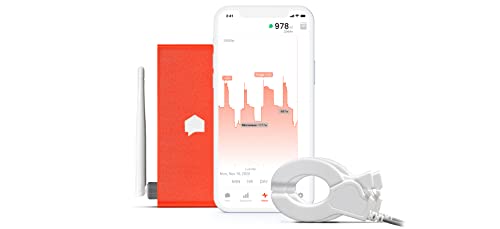
For homeowners keen on reducing their energy bills, the Sense Energy Monitor offers a powerful solution by tracking electricity usage in real-time. It meets strict ETL/Intertek safety standards, ensuring secure installation inside your electrical panel. With the Sense app for iOS, Android, and web, you can monitor your energy use from anywhere. You’ll gain insights into consumption patterns, helping you make informed decisions. Plus, you can set custom notifications for critical devices, preventing potential energy-related disasters. Currently, it’s available exclusively in the United States and Canada, making it a smart choice for families looking to enhance energy efficiency.
Best For: Homeowners in the United States and Canada looking to reduce energy bills and improve energy efficiency.
Pros:
- Real-time monitoring: Track electricity usage from anywhere via iOS, Android, and web apps.
- Custom notifications: Set alerts for critical devices to prevent potential energy-related disasters.
- Energy insights: Gain valuable insights into consumption patterns to make informed decisions.
Cons:
- Limited availability: Currently only available in the United States and Canada.
- Installation required: Requires installation inside the electrical panel, which may need professional assistance.
- Initial cost: The upfront investment may be a barrier for some homeowners.
Smart Home Energy Monitor with 16 50A Circuit Level Sensors

The Smart Home Energy Monitor with 16 50A Circuit Level Sensors is perfect for homeowners aiming to take control of their energy consumption. This device lets you measure real-time power usage and access historical data via an intuitive app. It installs easily in most circuit panels using clamp-on sensors and supports various electrical configurations. With its 2.4GHz WiFi connection, you can monitor your appliances—from air conditioners to water heaters—anytime, anywhere. You’ll receive actionable notifications to help lower your electric bills. Plus, the Super Privacy Mode guarantees your data remains secure without needing a cloud connection.
Best For: Homeowners looking to monitor and manage their energy consumption effectively.
Pros:
- Easy installation with clamp-on sensors for various circuit panel configurations.
- Real-time monitoring and historical data tracking via a user-friendly app.
- Super Privacy Mode ensures data security without relying on cloud services.
Cons:
- May require technical knowledge for installation in complex electrical systems.
- Limited compatibility with specific electrical configurations not mentioned.
- Reliance on WiFi may pose issues in areas with poor connectivity.
Smart Home Energy Monitor with App Control

Smart Home Energy Monitors with app control are perfect for tech-savvy homeowners who want to gain real-time insights into their electricity usage. This dual-channel monitor tracks up to 80A on two independent circuits, giving you detailed data on high-power appliances like air conditioners and washers. With the Tuya or Smart Life app, you can view real-time metrics such as power, voltage, and current, plus historical usage patterns. The simplified installation uses clamp-style sensors, connecting to your 2.4GHz Wi-Fi without any wire cutting. It’s also great for homes with solar panels, providing insights into energy flow direction.
Best For: Tech-savvy homeowners looking to monitor and manage their electricity usage in real-time.
Pros:
- Dual-channel monitoring allows tracking of multiple high-power appliances simultaneously.
- Real-time insights and historical data help users understand and optimize their energy consumption.
- Easy installation with clamp-style sensors eliminates the need for wire cutting.
Cons:
- Requires a 2.4GHz Wi-Fi network for operation, which may limit compatibility with some advanced home networks.
- May not provide complete monitoring for homes with highly complex electrical setups.
- The app may have a learning curve for users unfamiliar with smart home technology.
Emporia Energy Monitoring Smart Plug (4 Pack)

If you’re looking to take control of your energy consumption, the Emporia Energy Monitoring Smart Plug (4 Pack) is an excellent choice. These WiFi smart outlets work seamlessly with Alexa and Google Home, allowing you to manage various appliances like lights and fans with ease. With a maximum continuous load of 10A, you can monitor energy usage and cut down on wasteful standby power. The built-in scheduling lets you automate appliance control—imagine having your coffee brewed by 7 AM! Plus, you can access real-time updates and manage devices remotely through the Emporia App, making energy savings simple and convenient.
Best For: Individuals looking to monitor and control their home energy consumption efficiently.
Pros:
- Seamless integration with Alexa and Google Home for voice control.
- Energy monitoring capabilities help reduce electricity waste and extend appliance life.
- Remote access through the Emporia App allows for real-time updates and control from anywhere.
Cons:
- Limited to 2.4GHz WiFi networks, which may not be compatible with all home setups.
- Maximum continuous load of 10A may not support high-power appliances.
- Only suitable for devices plugged into 120V outlets, limiting versatility.
Smart Home Energy Monitor with 2 x 120A CTs
For homeowners looking to optimize their energy usage, the Smart Home Energy Monitor with 2 x 120A CTs stands out due to its bi-directional power monitoring capability. It tracks live electricity usage, providing precise data on voltage, current, and overall energy consumption. With its user-friendly setup, you can quickly install the compact split-core current transformers without complicated wiring. Plus, its compatibility with the Smart Life app allows for real-time data analysis and customizable automation scenes. This monitor is perfect for those with solar or battery systems, ensuring you maximize efficiency while reducing costs.
Best For: Homeowners with solar or battery systems looking to optimize energy usage and monitor consumption effectively.
Pros:
- Accurate Energy Monitoring: Provides precise tracking of voltage, current, power, and total energy consumption.
- User-Friendly Setup: Quick installation with pluggable terminals and compact split-core CTs simplifies the process.
- Smart Home Integration: Compatible with the Smart Life app for real-time data analysis and customizable automation scenes.
Cons:
- Limited to Single-Phase Systems: Only supports single-phase 3-wire setups, which may not suit all households.
- Wi-Fi Dependency: Requires a stable 2.4GHz Wi-Fi connection for optimal performance and data reporting.
- Lightweight Design: The relatively low weight may raise concerns about durability during installation or use.
Factors to Consider When Choosing a Home Energy Monitor With App
When you’re choosing a home energy monitor with an app, there are several important factors to keep in mind. Reflect on the complexity of the installation process, as well as how accurate the real-time data is. You’ll also want to take into account app compatibility, features, and energy management capabilities to guarantee you get the most out of your investment.
Installation Process Complexity
Choosing a home energy monitor with an app involves considering the complexity of the installation process, especially since some models offer simple clamp-on designs that you can set up without cutting wires. However, be aware that some monitors require intricate wiring within your electrical panel, which can complicate installation. Compatibility with your existing electrical system is essential; check whether the monitor supports single-phase or multi-phase setups. Look for models with detailed installation guides or in-app assistance, making it easier for those without electrical expertise. Additionally, consider the monitor’s size and weight, as larger units may need more space. Finally, factor in any extra components, like additional sensors, that could raise both installation complexity and costs.
Real-Time Data Accuracy
How accurately does your home energy monitor track real-time data? This accuracy is essential for effectively monitoring your electricity usage. Inaccuracies could lead to poor decisions about your energy consumption. Look for monitors that offer an accuracy rate of around ±2% to 1%, so you can trust the data you receive. High-accuracy monitoring provides detailed insights into power, current, voltage, and power factor, helping you identify usage patterns and optimize your appliances. Devices with advanced sensors, especially those supporting 60A or 200A circuits, deliver more precise readings for larger appliances and overall household consumption. Consistent tracking empowers you to set energy-saving goals and get actionable notifications, ultimately reducing your electricity bills.
App Compatibility and Features
As you explore home energy monitors, make certain the one you select is compatible with popular smart home apps like Home Assistant, Tuya, or Smart Life for seamless integration and control. Look for features that allow real-time monitoring of your electricity usage, giving you insights into power consumption and enabling you to optimize energy use. Customizable notifications within the app are also essential; they’ll alert you to high energy consumption, unusual spikes, or when specific appliances are left on. If you have solar power, verify that the app supports bi-directional energy tracking, allowing you to monitor both energy consumption and generation effectively. This functionality helps you make informed decisions about your energy habits.
Historical Data Storage
When evaluating home energy monitors, keep in mind that historical data storage plays an essential role in understanding your energy consumption patterns over time. This feature allows you to track usage trends, helping you identify ways to save. Some monitors store detailed electricity usage data for up to 36 months, giving you ample time to analyze your habits. Accessing this historical data enables you to assess how energy-saving measures or changes in appliance usage affect your bills. Furthermore, many systems include visual tools like charts and graphs, making it easier to grasp your consumption over time. By leveraging these insights, you can make informed decisions about appliance usage and develop effective energy-saving strategies.
Energy Management Capabilities
Understanding energy management capabilities is essential for choosing the right home energy monitor with an app. Look for monitors that allow real-time management and automation of your energy usage to help lower your electricity bills and prevent costly repairs. Devices that support solar energy production monitoring and net metering can help you optimize your renewable energy use. Additionally, choose monitors that offer customizable settings for time-of-use rates and peak demand management, guaranteeing you save during specific hours. Detailed historical data analysis can reveal usage patterns, enabling informed decisions about your consumption. Finally, verify your device provides notifications for unusual energy spikes, so you can take proactive steps to improve efficiency and manage your energy better.
Alerts and Notifications
Choosing a home energy monitor with effective alerts and notifications can make a significant difference in managing your energy consumption. Look for devices that offer customizable alerts for abnormal energy usage, allowing you to set specific thresholds. This way, you can prevent costly energy spikes. Many monitors provide actionable notifications, like reminders to turn off high-energy appliances when they’re not in use. Smart consumption alerts can also notify you when your energy usage exceeds preset limits, promoting efficient management. With mobile app integration, you’ll receive real-time insights, enabling quick responses to unusual patterns. Advanced systems may even offer personalized notifications for critical devices, ensuring safety and enhancing energy efficiency.
Type of Sensors
The type of sensors in a home energy monitor plays an essential role in its effectiveness and accuracy. You’ll want to take into account the current sensor capacity, which typically ranges from 50A to 200A for branch circuits. This range allows you to track the energy consumption of various appliances in detail. Some monitors offer multiple branch circuit sensors, like 16 x 50A or 16 x 60A, enabling simultaneous monitoring of multiple loads. Installation compatibility is important too; clamp-on designs work with single-phase, split-phase, and three-phase systems. Look for accuracy levels of ±1% to ±2% for reliable readings. If you have solar panels, think about advanced models with bi-directional sensors to track both consumption and energy export effectively.
Warranty and Support Options
When evaluating home energy monitors, warranty and support options should be high on your priority list. Look for warranties ranging from one to three years, as they provide peace of mind. Check the support options too; some manufacturers offer extensive customer service through phone, email, and live chat, while others may not. A clear return policy, typically around 30 days, allows you to return the monitor if it doesn’t meet your expectations. It’s also essential to take into account firmware updates and ongoing software support, since regular updates can improve functionality and security. Finally, research user reviews to assess customer support effectiveness; knowing how responsive the manufacturer is can save you headaches down the line.