The right cable cutter makes demanding electrical, communications, fencing, and wire-rope work faster, cleaner, and safer. However, capacity ratings and cutting mechanisms vary widely between compact pliers, ratcheting tools, and long-handle cutters.
This roundup compares 10 heavy-duty options by cable compatibility, cutting capacity, leverage, portability, and intended use, so you can choose a tool that matches your materials and workload.
Best 10 Cable Cutters for Heavy-Duty Use Picks for 2026
American-Made Workhorse
Klein Tools 63050 Cable Cutter
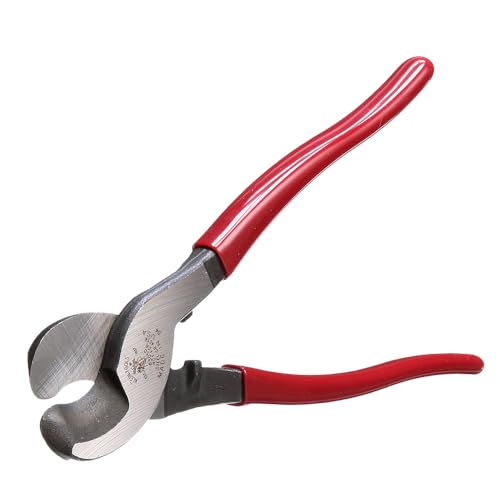
- Cuts 4/0 aluminum and 2/0 soft copper
- One-hand action for confined spaces
- Through-hardened, USA-made forged steel
Best For: Professional aluminum, copper, and communications cable work
Compact Steel-Cable Specialist
Heavy-Duty Steel Cable Cutters

- Cuts steel cable up to 5/32 inch
- Hardened CRV steel construction
- Compact 8-inch size with limited lifetime warranty
Best For: Smaller steel cable, bike, fence, and automotive work
High-Capacity Ratchet Choice

- Cuts copper and aluminum up to 240 mm²
- Ratchet action reduces hand fatigue
- Quick-release blade with tool-steel construction
Best For: Large, non-live copper and aluminum electrical cable
Long-Leverage Rope Cutter
MAXPOWER 24-Inch Wire Rope Cutter

- Cuts wire and rope up to 14 mm
- 24-inch handles deliver high leverage
- Hardened edge with rubber anti-slip grips
Best For: Larger steel wire rope and construction maintenance tasks
Best Compact Wire-Rope Cutter
8-Inch Heavy-Duty Cable Cutter

- Cuts wire rope, steel, aluminum, copper, and aircraft cable
- Forged chrome vanadium steel with shear-cut blades
- Spring-loaded, lockable, and easy to carry
Best For: Truck seals, fencing, railings, and workshop projects
Best Ratcheting Electrical Cable Cutter
HKS 300mm² Ratchet Cable Cutter

- Cuts copper and aluminum cables up to 300mm²
- Ratchet action reduces required hand force
- Compact design suits tight spaces
Best For: Large electrical cable cutting on non-live copper and aluminum conductors
Best High-Leverage Cable Pliers
WORKPRO 9-1/4-Inch Cr-V Cable Cutter

- Cuts 4/0 aluminum and 2/0 soft copper cable
- Shear jaws provide clean cuts with minimal distortion
- Long handles and ergonomic grips add leverage
Best For: Electrical and communications cable work involving aluminum and soft copper
Compact Fence & Cable Pick

- Cuts aluminum and copper cable up to 3/16 inch
- One-handed design with safety lock and spring-loaded handle
- Includes six aluminum sleeves and an organizer box
Best For: Fence work and compact cable-cutting kits
Maximum-Leverage Pick

- 24-inch long-arm design for leverage
- Cuts applicable cables up to 2 inches
- Designed for copper and aluminum, not steel wire
Best For: Large copper and aluminum cable work
Versatile High-Leverage Pick

- Cuts 4/0 aluminum and 2/0 soft copper cable
- Dual jaws add small-wire sheath stripping
- High-leverage design with heat-treated steel construction
Best For: Large electrical and communication cables
American-Made Workhorse – Klein Tools 63050 Cable Cutter
For cable cutters for heavy-duty use, the Klein Tools 63050 is a practical choice when you need a compact, one-hand tool for aluminum, soft copper, and communications cable. Its shear-type jaws and beveled tips are designed for clean mating and controlled cutting in confined work areas.
Best For: Professional electricians and technicians cutting aluminum, copper, and communications cable.
Pros:
- Cuts up to 4/0 aluminum, 2/0 soft copper, and 100-pair 24 AWG communications cable.
- One-hand shearing action and compact profile suit tight spaces and tool pouches.
- Through-hardened, forged-steel construction with double-dipped ergonomic handles.
- Made in the USA with beveled jaw tips to help protect the cutting edges.
Cons:
- Designed for aluminum, copper, and communications cable rather than steel wire rope.
- At 13 inches long, it may be larger than needed for lighter-duty cable work.
This is a focused professional cutter with useful capacity and durable construction. Choose it when your work centers on non-steel electrical and communications cable and you value one-hand operation.
Compact Steel-Cable Specialist – Heavy-Duty Steel Cable Cutters
Among cable cutters for heavy-duty use, this 8-inch CRV-steel model is aimed at smaller steel wire rope and cable jobs. It is compact enough for bikes, fencing, automotive work, and other tight-space applications while handling cable up to 5/32 inch, or 4 mm.
Best For: Cyclists, contractors, automotive users, and professionals cutting smaller steel cable or wire rope.
Pros:
- Hardened chromium-vanadium steel construction supports repeated use.
- Rated for braided wire rope, stainless cable, and steel cable up to 5/32 inch.
- Compact 8-inch design is useful in tight spaces and portable tool kits.
- Covered by a limited lifetime manufacturer warranty.
Cons:
- Its 5/32-inch capacity limits it to smaller cable than long-handled cutters.
- The supplied notes do not specify a separate locking or release feature.
This cutter balances portability with steel-cable capability. It is a sensible fit for smaller-diameter cable work, but users handling larger wire rope should consider a longer, higher-capacity tool.
High-Capacity Ratchet Choice – Knoweasy 240mm² Cable Cutter
For cable cutters for heavy-duty use on large electrical conductors, the Knoweasy ratchet cutter is built for copper and aluminum cable up to 240 mm². Its geared mechanism is intended to reduce hand fatigue, while the quick-release lever helps open the blade during a cycle.
Best For: Solar installers, marine rewiring projects, and industrial-panel work involving large copper or aluminum lines.
Pros:
- Handles copper and aluminum strands up to 240 mm².
- Ratchet gearing supports one-hand operation and helps reduce fatigue.
- Forge-hardened tool-steel construction is designed for heavy-duty reliability.
- Quick-release lever allows mid-cycle blade opening for adjustments.
Cons:
- Not intended for steel cable or wire rope.
- Must not be used on live lines, according to the supplied safety guidance.
- Its 1.54-pound weight may be more than needed for small-gauge wiring.
This is the strongest match here for large non-steel electrical cable. Its capacity and ratchet action are useful for demanding installation work, provided the line is copper or aluminum and de-energized.
Long-Leverage Rope Cutter – MAXPOWER 24-Inch Wire Rope Cutter
When cable cutters for heavy-duty use need extra leverage, the MAXPOWER 24-inch wire rope cutter offers a long handle and a 14 mm cutting capacity. Its induction-hardened edge and chromium-molybdenum construction are intended for steel wire, mesh, and single- or multi-strand wire rope.
Best For: Construction, maintenance, gardening, and other work involving larger iron wire or steel wire rope.
Pros:
- 14 mm maximum capacity covers larger wire and rope than compact cutters.
- 24-inch handles provide high leverage for one-handed cutting.
- Induction-hardened cutting edge is designed for sharp, durable performance.
- Anti-slip rubber handles provide a secure, comfortable grip.
Cons:
- At 24 inches and 1.96 kg, it is less portable than compact cable cutters.
- The supplied notes do not identify a quick-release or locking mechanism.
- Its size may be excessive for small cable and light maintenance tasks.
This is the heavy-duty option for users prioritizing diameter capacity and leverage over portability. It makes the most sense for steel wire rope and similar materials where a long-handled cutter can reduce cutting effort.
Best Compact Wire-Rope Cutter – 8-Inch Heavy-Duty Cable Cutter
If you need cable cutters for heavy-duty use across truck seals, fencing, railings, or workshop projects, this 8-inch model offers a compact, versatile option. Its forged chrome vanadium steel construction and shear-cut blades are designed for clean cuts through several types of wire and cable.
Best For: Truck drivers, DIYers, fence work, cable railings, and general workshop cutting.
Pros:
- Cuts up to 3/16-inch stainless steel wire rope along with steel, aluminum, copper, aircraft, and bike cables.
- Heat-treated chrome vanadium steel and precision-ground blades support clean, burr-free cuts.
- Spring-loaded action, non-slip grip, and safety lock help with comfort and storage.
Cons:
- Its stated cutting width is limited to 0.19 inches.
- It is a manual hand tool, so larger cable jobs may require more effort.
This is a practical pick when portability matters. It fits in a tool belt or glove box while covering a broad range of light-to-heavy wire-rope and cable tasks.
Best Ratcheting Electrical Cable Cutter – HKS 300mm² Ratchet Cable Cutter
For cable cutters for heavy-duty use on large electrical conductors, the HKS ratchet design reduces the hand force needed for straight cuts. It handles copper and aluminum single or multi-stranded cables up to 300mm² (AWG 600MCM) and is suited to work in tight spaces.
Best For: Electrical cable cutting involving copper and aluminum conductors in compact work areas.
Pros:
- Rated for copper and aluminum cables up to 300mm² (AWG 600MCM).
- Ratchet mechanism and high transmission ratio support one-hand operation with less force.
- Compact construction and quick-release lever improve handling and blade-opening control.
Cons:
- Not suitable for steel, steel wire, or iron wire.
- It must not be used on live cables despite the insulated handle.
- Its application is focused on electrical cables rather than general wire cutting.
This cutter makes the most sense for electricians and maintenance users who need mechanical advantage on thick copper or aluminum cable. The material restrictions are important to observe before buying.
Best High-Leverage Cable Pliers – WORKPRO 9-1/4-Inch Cr-V Cable Cutter
These cable cutters for heavy-duty use combine long handles with forged chrome vanadium steel for leverage on common electrical and communications cables. The WORKPRO model cuts specified aluminum, copper, and communications cable sizes while its shear-type jaws aim to minimize cable distortion.
Best For: Electrical, communications, and general cable-cutting jobs involving aluminum and soft copper.
Pros:
- Cuts 4/0 aluminum, 2/0 soft copper, and 100-pair 24 AWG communications cable.
- Forged, polished, heat-treated chrome vanadium steel supports durable cutting edges.
- Long handles, precision-sharpened jaws, and non-slip grips provide leverage and control.
Cons:
- Not suitable for cutting steel.
- The larger 9-1/4-inch format may be less convenient in confined spaces.
- It is designed for specified cable materials and sizes rather than every wire type.
Choose this model when leverage and a clean cut matter more than compactness. It is a strong fit for repeated aluminum, copper, and communications-cable work, provided steel cutting is not required.
Compact Fence & Cable Pick – DISEN Heavy-Duty Wire Cutter
For lighter-duty cable work where portability matters, the DISEN is a practical choice among cable cutters for heavy-duty use. It handles aluminum and copper cable up to 3/16 inch, plus select stainless steel wire rope and aircraft cable, while its spring-loaded handle supports one-handed operation.
Best For: Fence projects, bike lines, fish lines, aluminum or copper cable, and compact job kits.
Pros:
- Rated for aluminum and copper cable up to 3/16 inch.
- Also cuts stainless steel wire rope up to 5/32 inch and aircraft cable.
- Safety lock, non-slip ergonomic grip, retractable spring, and included aluminum sleeves.
- Lifetime warranty and included organizer box.
Cons:
- Its 3/16-inch maximum cable capacity is lower than the larger cutters here.
- The supplied notes do not specify suitability for heavy steel cable beyond the listed materials and sizes.
The DISEN stands out for portability and convenience rather than maximum capacity. Choose it when compact handling, a safety lock, and included rope sleeves are more important than cutting very large cable.
Maximum-Leverage Pick – AUPREX 24-Inch Cable Cutter
The AUPREX brings long-arm leverage to cable cutters for heavy-duty use, with a 24-inch carbon-steel frame and a stated capacity of up to 2 inches for applicable cables. It is designed for copper and aluminum cables, telecom lines, and other electrical or construction wire—not steel wire.
Best For: Electricians, mechanics, metalworkers, and demanding copper or aluminum cable cuts.
Pros:
- 24-inch handles provide substantial leverage for large cable.
- Rated for cables up to 2 inches in diameter.
- Suitable for copper-core and aluminum-core cables, telecom lines, battery cables, and welder cables.
- Hardened carbon steel, treated cutting blades, corrosion-resistant coating, and ergonomic non-slip grips.
Cons:
- Not suitable for steel wire.
- At 2 kg and 24 inches long, it is less portable than compact cutters.
- The large handles may be excessive for small cable jobs.
When cutting larger copper or aluminum cable is the priority, the AUPREX’s long handles offer a clear leverage advantage. Confirm the cable material before buying, since the manufacturer specifically excludes steel wire.
Versatile High-Leverage Pick – QUAXLENT 10-Inch Cable Cutter
The QUAXLENT combines high leverage with a secondary stripping function, making it a useful option among cable cutters for heavy-duty use. Its stated capacity covers 4/0 aluminum, 2/0 soft copper, and 100-pair 24AWG communication cable, but it should not be used on steel wire.
Best For: Electrical, communication, and utility work involving large aluminum or soft copper cable.
Pros:
- Rated for 4/0 aluminum, 2/0 soft copper, and 100-pair 24AWG communication cable.
- High-leverage handle is designed to reduce cutting effort.
- Large jaws cut cable while smaller jaws can strip small-wire sheaths.
- Heat-treated 55# steel body and high-frequency-quenched cutting edge support clean cuts.
Cons:
- Cannot be used to cut steel wire.
- Its broad cutting capability is specified for particular aluminum, soft copper, and communication-cable sizes.
- The notes identify plastic handles, which may feel less substantial than metal-handled alternatives.
The QUAXLENT is a strong middle-ground option for users who want cable cutting and limited wire stripping in one tool. Its material restrictions are important, but the dual-jaw design adds useful versatility for compatible electrical and communication cables.
How We Picked the Best Cable Cutters for Heavy-Duty Use
We organized these cutters around the jobs buyers actually need to perform: cutting copper and aluminum electrical cable, communications cable, multi-core conductors, steel wire rope, fencing wire, and harder stranded cable. We also considered stated cutting capacity, handle length, leverage, ratcheting action, portability, and the likelihood that a tool will be comfortable during repeated cuts.
Capacity claims should be treated as material-specific rather than universal. A cutter rated for a large aluminum conductor may not be suitable for steel wire rope of the same diameter. Always check the manufacturer’s specifications for the exact cable construction before cutting.
Quick Comparison
| Best For | Look For | Tool Type |
|---|---|---|
| Electrical and communications cable | Rated copper/aluminum capacity and clean-cut blades | Compact or ratchet cutter |
| Large conductors | High leverage, broad capacity, and secure grips | Long-handle cutter |
| Steel wire rope | Hardened or rope-specific cutting jaws | Wire-rope cutter |
| Frequent field work | Lower hand force, locking mechanism, and manageable weight | Ratchet cutter |
| Fencing and general wire | Published diameter limit and durable steel construction | High-leverage plier |
Key Buying Factors for Cable Cutters for Heavy-Duty Use
Material and Cable Construction
Start with the material, not just the diameter. Copper and aluminum are softer and commonly handled by electrical cable cutters, while steel wire rope and hardened fence wire require purpose-built jaws. Multi-core and stranded cables can also demand more leverage than solid conductors.
Capacity and Leverage
Match the cutter’s rated capacity to your largest routine cut, leaving some margin rather than working at the absolute limit. Longer handles generally increase leverage, but they also add weight and require more storage space. For large cable, a long-handle model can reduce effort; for confined spaces, a compact tool may be more practical.
Ratcheting Action and Ergonomics
Ratchet cutters can make high-capacity cuts with less peak hand force and provide better control during repeated work. Look for smooth progression, comfortable nonslip handles, and a release mechanism that is easy to operate if the jaws stall. Fixed-jaw cutters are often faster for occasional cuts when the cable is within their capacity.
Blade Quality and Maintenance
Strong, properly aligned blades matter more than an impressive maximum diameter. Keep cutting surfaces clean, avoid using electrical cable cutters on steel unless they are rated for it, and lubricate moving joints or ratchet mechanisms as recommended. Never use a cable cutter on energized conductors.
Who Should Buy Which Cable Cutters for Heavy-Duty Use?
- Electricians and installers: Choose a copper- and aluminum-rated cutter sized for your common conductors, with a ratchet mechanism if you make frequent large cuts.
- Utility and communications workers: Prioritize high capacity, clean cuts, and comfortable grips for multi-core or communications cable.
- Wire-rope and fencing users: Select a steel- or wire-rope-specific model with a published diameter limit; do not substitute a general electrical cutter.
- Truck drivers and field technicians: A compact cutter is easier to carry, store, and use for occasional cable or seal-cutting tasks.
- Heavy-duty workshop users: Long-handled cutters offer useful leverage for repeated large cuts, provided their material rating matches the cable.