The best conduit benders for professional workshops help electricians create accurate bends efficiently across common EMT, IMC, and RMC sizes. The right tool can improve consistency while reducing rework and fatigue.
This roundup compares 10 selected options, including lightweight aluminum benders, durable iron models, dual-size tools, hydraulic offset benders, and an electric option for higher-volume work.
Best 10 Conduit Benders for Professional Workshops Picks for 2026
Precision Repeatability Pick
Klein Tools 51607 3/4-Inch Aluminum Bender

- Angle Setter supports repeatable bends
- Handles 3/4 EMT and 1/2 RMC/IMC
- Lightweight reinforced aluminum head
Best For: Repeat 3/4-inch EMT bends
Heavy-Duty Workhorse
IDEAL 1-Inch Ductile Iron Conduit Bender
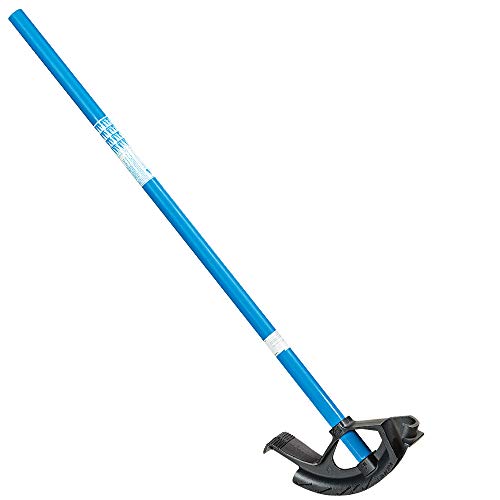
- Ductile iron head for heavy use
- Bends 1-inch EMT and 3/4-inch rigid/IMC
- Raised markings on both sides
Best For: Frequent 1-inch EMT bending
Compact EMT Accuracy Pick
Klein Tools 51606 1/2-Inch Aluminum Bender

- Built for 1/2-inch EMT
- Includes Angle Setter technology
- Clamp helps hold conduit for cutting
Best For: Repeatable 1/2-inch EMT work
Versatility Value Pick
TEMCo 2-in-1 Dual Shoe Conduit Bender

- Bends 1/2- and 3/4-inch EMT
- Also handles 1/2-inch rigid and IMC
- Includes handle offset multiplier chart
Best For: Multi-size conduit work with one tool
Lightweight EMT Workhorse

- Lightweight aluminum construction
- Raised markings on both sides
- Serrated step and grooved hook
Best For: Portable ¾-inch EMT bending
Repeat-Bend Specialist
Klein 1-Inch Iron Conduit Bender

- Includes Angle Setter technology
- Ductile iron construction
- Wide foot pedal for leverage
Best For: Repeatable manual bends across common angles
Hydraulic Offset Solution

- Hydraulic box-offset operation
- Reversible dies for two EMT sizes
- Includes carrying case
Best For: Frequent 1-inch and ¾-inch EMT box offsets
Versatile Set
3-Size Aluminum Conduit Bender Kit

- Includes 1/2-inch, 3/4-inch, and 1-inch heads
- Engraved angles and serrated gripping surfaces
- Designed for specified EMT, IMC, and RMC sizes
Best For: Workshops needing coverage for common conduit sizes
Offset Specialist
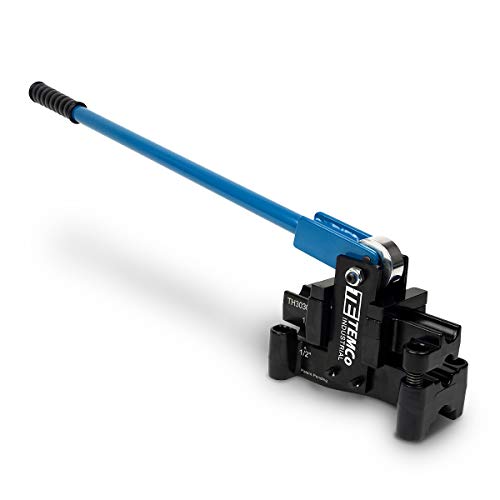
- Bends both 1/2-inch and 3/4-inch EMT
- Creates offsets in one motion
- Tool-free die changes take under a minute
Best For: Frequent electrical box offset work
Powered Workhorse
Current Tool 77EMT Electric Bender

- Corded electric motor supports heavy-duty bending
- Handles specified 180-degree bends up to 2-inch rigid
- Wheeled design and two-year warranty
Best For: Contractors handling repeated, larger conduit bends
Precision Repeatability Pick – Klein Tools 51607 3/4-Inch Aluminum Bender
For professional workshops seeking conduit benders for professional workshops, the Klein Tools 51607 combines a lightweight aluminum head with an Angle Setter designed to make repeated bends faster and more consistent. It handles 3/4-inch EMT plus 1/2-inch RMC and IMC.
Best For: Electricians who regularly make repeat 10-, 22.5-, 30-, and 45-degree bends in 3/4-inch EMT.
Pros:
- Angle Setter helps compensate for conduit spring back and creates a hard stop.
- Bold cast markings support alignment for saddles, offsets, and back-to-back bends.
- Wide foot pedal, interior hook surface, and reinforced aluminum head improve handling.
Cons:
- Its primary EMT size is 3/4 inch, so it is not a general-purpose multi-size bender.
- The complete assembly weighs 5.12 pounds.
The 51607 is a strong choice when repeatability and quick visual alignment matter more than maximum size versatility. Its included handle, head, and Angle Setter make it workshop-ready.
Heavy-Duty Workhorse – IDEAL 1-Inch Ductile Iron Conduit Bender
For demanding professional workshops, this IDEAL bender uses a ductile iron head built for heavy daily use. It bends 1-inch EMT and 3/4-inch rigid or IMC, with raised markings and a corrosion-resistant blue handle.
Best For: Tradespeople who prioritize a durable, substantial tool for frequent 1-inch EMT bending.
Pros:
- Ductile iron construction provides more strength than malleable iron or aluminum, according to the supplied product details.
- Raised markings on both sides improve visibility during layout.
- Serrated step and internal hook surface help prevent slippage.
- Baked-on blue enamel handle finish resists corrosion and improves visibility.
Cons:
- At 6.6 pounds, it is heavier than the supplied Klein aluminum models.
- It is limited to 1-inch EMT and 3/4-inch rigid or IMC sizes.
- The supplied details list no warranty.
This is the practical pick for users who value robust ductile iron construction and clear cast-in markings. Its heavier build may be worthwhile for intensive shop use.
Compact EMT Accuracy Pick – Klein Tools 51606 1/2-Inch Aluminum Bender
The Klein Tools 51606 is a focused option for professional workshops that mainly work with 1/2-inch EMT. Its assembled aluminum design includes an Angle Setter, clear cast markings, and features intended to steady conduit during bending and cutting.
Best For: Electricians who need repeatable 1/2-inch EMT bends with a ready-to-use handle-and-head assembly.
Pros:
- Angle Setter provides a hard stop for quick, consistent bends and accounts for spring back.
- Markings include common angles from 10 through 60 degrees plus offset multipliers.
- Wide foot pedal and interior hook surface support stability and reduce conduit twisting.
- Interior clamp can hold conduit while cutting with a hacksaw.
Cons:
- It is designed specifically for 1/2-inch EMT rather than multiple conduit sizes.
- The supplied product details do not identify compatibility with rigid conduit.
Choose the 51606 when 1/2-inch EMT is your routine material and repeatable layout is valuable. Its included Angle Setter adds convenience for production-style work.
Versatility Value Pick – TEMCo 2-in-1 Dual Shoe Conduit Bender
TEMCo 2 in 1 Dual Shoe Conduit Bender - 1/2" & 3/4" EMT, 1/2" Rigid - 2 Benders in 1 Tool
Check Price On AmazonFor workshops wanting one tool to cover common smaller conduit sizes, the TEMCo dual-shoe bender combines two benders in one. It handles 1/2- and 3/4-inch EMT, along with 1/2-inch rigid and IMC, and includes an offset multiplier chart on the handle.
Best For: Users who want size flexibility without carrying separate 1/2-inch and 3/4-inch EMT benders.
Pros:
- One tool bends both 1/2-inch and 3/4-inch EMT.
- Also bends 1/2-inch rigid and IMC.
- Uses the same bend radius as a standard bender.
- Handle-mounted offset multiplier chart supports on-tool reference.
Cons:
- The dual-shoe design weighs 7 pounds, making it the heaviest listed option.
- Its aluminum construction may not suit users specifically seeking ductile iron.
- The supplied details do not mention an Angle Setter or dedicated bend-angle markings.
The TEMCo stands out for size coverage and tool consolidation. It is a sensible workshop option when 1/2- and 3/4-inch EMT are both common and carrying separate benders is inconvenient.
Lightweight EMT Workhorse – IDEAL ¾-Inch EMT Bender
For professional workshops seeking conduit benders for professional workshops, the IDEAL 74-047 offers a practical ¾-inch EMT option. Its lightweight aluminum construction, raised markings, and grooved hook support controlled handling during everyday bending work.
Best For: Electricians and workshop users who need a portable ¾-inch EMT bender with visible markings and a stable starting surface.
Pros:
- Lightweight aluminum construction is easier to transport around the jobsite.
- Heat-treated head and reinforced stress points support long-term durability.
- Raised markings on both sides improve visibility during setup.
- Serrated step, grooved hook, and flat hook surface help provide stability.
Cons:
- Designed for ¾-inch EMT rather than multiple conduit sizes.
- The supplied listing specifies no warranty.
This is a straightforward choice when portability and basic bend control matter more than multi-size versatility or hydraulic assistance.
Repeat-Bend Specialist – Klein 1-Inch Iron Conduit Bender
The Klein Tools 51605 is built for professional workshops that value repeatable manual bends. Its heavy-duty ductile iron body, broad foot pedal, bold markings, and Angle Setter support accurate work across common bend angles.
Best For: Professional electricians making repeated 10-, 22.5-, 30-, and 45-degree bends in 1-inch EMT, ¾-inch RMC, or IMC.
Pros:
- Angle Setter creates a hard stop for quick, consistent bends.
- Heavy-duty cast ductile iron construction is suited to jobsite use.
- Bold markings and symbols help with alignment for saddles and back-to-back bends.
- Wide foot pedal provides stability, leverage, and comfort.
Cons:
- At 11.6 pounds, it is less portable than a lightweight aluminum bender.
- Its manual design requires user-applied bending force.
Choose this model when durability and repeatability are priorities, especially for shops handling frequent, standardized bends.
Hydraulic Offset Solution – TEMCo Dual-Size EMT Bender
The TEMCo TH3031 gives professional workshops a dedicated hydraulic approach to box offsets. Reversible dies let one tool handle both 1-inch and ¾-inch EMT, helping reduce hand-bending effort and the risk of offset errors.
Best For: Workshop and jobsite users who regularly make 1-inch and ¾-inch EMT box offsets and want hydraulic assistance.
Pros:
- Dual-size design bends both 1-inch and ¾-inch EMT.
- Hydraulic operation is intended to make box offsets easier to produce.
- Using an offset bender can help reduce mistakes and doglegs.
- Includes a carrying case for transport and storage.
Cons:
- At 30.5 pounds, it is substantially heavier than a hand bender.
- It is specialized for box offsets rather than general-purpose bending.
- Hydraulic operation may be more equipment than occasional users need.
This is the strongest fit for dedicated offset work where two EMT sizes and reduced manual effort justify the heavier, more specialized tool.
Versatile Set – 3-Size Aluminum Conduit Bender Kit
For workshops handling several common conduit sizes, this three-piece kit is a practical choice among conduit benders for professional workshops. It covers 1/2-inch, 3/4-inch, and 1-inch EMT, with compatibility for specified IMC and RMC sizes, and includes engraved angle markings for more controlled manual bends.
Best For: Workshop users who need one set for common EMT sizes and occasional specified IMC or RMC work.
Pros:
- Includes 1/2-inch, 3/4-inch, and 1-inch bender heads.
- Heat-treated construction combines aluminum heads with carbon-steel handles.
- Serrated gripping surfaces help reduce pipe slipping during bends.
- Engraved angle markings provide a quick visual reference.
Cons:
- It is a manual set, so larger or repeated bends require more physical effort.
- Compatibility is size-specific; other steel tubing may not bend properly.
- The three-piece kit is relatively bulky at about 15.67 pounds.
This set offers broad size coverage and useful visual angle guidance, making it a flexible manual option. Buyers should match each head to the specified conduit type and size before starting a project.
Offset Specialist – TEMCo Dual-Size Offset Bender
The TEMCo TH3030 is a focused option for electrical workshops that make frequent box offsets. As one of the more specialized conduit benders for professional workshops, it handles both 1/2-inch and 3/4-inch EMT in one tool and creates an offset in a single motion.
Best For: Professional or industrial users who regularly make quick, repeatable offsets in 1/2-inch and 3/4-inch EMT.
Pros:
- One tool supports both 1/2-inch and 3/4-inch EMT.
- Single-motion operation can reduce the time needed for box offsets.
- Die changes require no tools and can be completed in under a minute.
- Lightweight aluminum construction supports easier jobsite movement.
Cons:
- It is designed for offsets rather than general-purpose conduit bending.
- Its size range is limited to 1/2-inch and 3/4-inch EMT.
- A specialized offset tool may be unnecessary for occasional users.
With dual-size capability and fast die changes, the TH3030 is particularly useful when offset work is a regular part of the job. It is less suitable as a replacement for a full range of standard conduit benders.
Powered Workhorse – Current Tool 77EMT Electric Bender
For high-volume electrical work, the Current Tool 77EMT brings powered bending to the workshop. This corded-electric unit is built for heavy-duty applications and is specified to make 180-degree bends in conduit up to 2-inch rigid, helping professional teams work more efficiently than with manual conduit benders for professional workshops.
Best For: Electrical contractors and workshops that need powered bending for repeated work from 1/2-inch through 2-inch conduit.
Pros:
- Electric motor is designed for heavy-duty bending applications.
- Can make 180-degree bends on conduit up to 2-inch rigid.
- Heavy-duty rear wheels make the large unit easier to move around a jobsite.
- Includes a two-year warranty and is made in the USA.
Cons:
- Corded-electric operation requires access to a suitable power source.
- Its large dimensions make it less convenient for small or mobile work areas.
- Powered equipment generally makes less sense for occasional light-duty bending.
The 77EMT is the strongest fit here for production-oriented bending and larger conduit work. Its powered format and mobility features favor contractors who can accommodate a substantial corded machine.
How We Picked the Best Conduit Benders for Professional Workshops
We evaluated these tools according to the factors that matter most in a working shop: compatible conduit sizes, supported conduit types, construction materials, handle and shoe design, portability, bending control, and likely workload. We also considered whether each bender suits routine electrical installation, specialized offset work, or higher-volume production.
Because no single model is ideal for every crew, the selection includes dedicated single-size benders as well as combination tools. Always confirm the manufacturer’s size markings and specifications before using a bender on a particular conduit type.
Quick Comparison
| Best For | Recommended Type | Why It Stands Out |
|---|---|---|
| Common 1/2-inch EMT work | Dedicated aluminum or iron bender | Simple setup and predictable handling |
| Multiple conduit sizes | Dual-shoe or multi-size bender | Reduces the number of tools required |
| Rigid and IMC applications | Heavy-duty iron or combination model | Better suited to tougher conduit walls |
| Repeated offset bends | Hydraulic offset bender | Improves leverage and repeatability |
| High-volume shop production | Electric bender | Reduces manual effort and speeds workflow |
Key Buying Factors for Conduit Benders for Professional Workshops
Conduit Compatibility
Start with the sizes and materials your shop handles most often. EMT, IMC, and RMC require different shoe profiles and levels of leverage, so a bender designed for one application may not perform well on another. Multi-size models offer flexibility, but dedicated tools can be faster and easier to control for repetitive work.
Material and Durability
Aluminum benders are lighter and easier to carry between work areas. Ductile iron and iron models generally provide a more rugged feel for demanding applications, though they add weight. For a professional workshop, choose the material that matches your balance of portability, impact resistance, and daily use.
Accuracy and Usability
Clear degree markings, visible reference points, a stable shoe, and a comfortable handle all help produce repeatable bends. Check that the tool’s markings are easy to read from your normal working position and that the handle provides enough leverage without excessive flex.
Manual, Hydraulic, or Electric Operation
Manual benders are economical and versatile for standard jobs. Hydraulic offset models are useful when repeated offsets or larger conduit demand additional force. Electric benders make more sense for shops handling frequent, high-volume bending and willing to invest in a larger, less portable system.
Who Should Buy Which Conduit Benders for Professional Workshops?
- General electrical shops: Choose a reliable 1/2- or 3/4-inch EMT bender, then add larger sizes as your workload grows.
- Crews working across several conduit sizes: A dual-shoe or multi-size set can reduce tool changes and improve job-site flexibility.
- Industrial and commercial installers: Prioritize iron construction, rigid compatibility, and strong leverage.
- Offset-heavy workflows: Consider a hydraulic offset model for more consistent results with less physical strain.
- Production-focused workshops: An electric bender may justify its cost when speed, repeatability, and reduced operator fatigue are priorities.
Before purchasing, compare the bender’s exact size range with your conduit inventory, verify replacement-part availability, and allow room for safe operation around the tool.