Choosing the right tester for a solar installation means matching the tool to the job. Some testers identify wiring and GFCI faults in standard 120V receptacles, while others measure photovoltaic voltage, current, or power.
This roundup covers both categories, helping homeowners, installers, and maintenance professionals choose practical testing equipment for safer, more informed electrical checks.
Best 10 Electrical Outlet Testers for Solar Installations Picks for 2026
Best Displayed Diagnosis

- Backlit LCD shows voltage and wiring conditions
- Displays GFCI trip time
- Detects open neutral and open ground
Best For: Readable AC outlet and GFCI troubleshooting
Best Simple Fault Checker
Amprobe Home Electric Installation Kit

- Tests standard and GFCI outlets
- Detects five common wiring faults
- Push-button operation with UL and CSA listings
Best For: Quick North American receptacle checks
Best Rugged Basic Tester
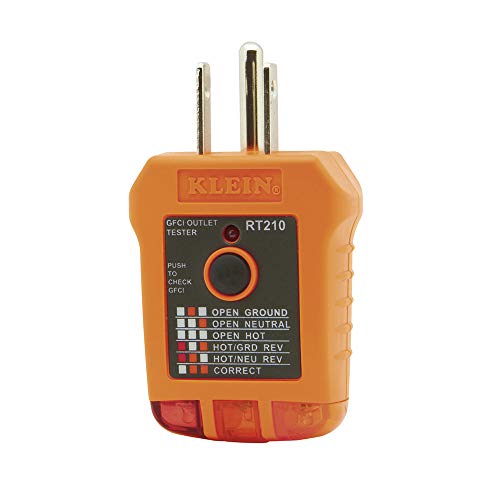
- Checks standard and GFCI receptacles
- Built to withstand a 6.6-foot drop
- Operates from 32–140°F
Best For: Durable field checks on North American AC outlets
Best Dedicated PV Measurement
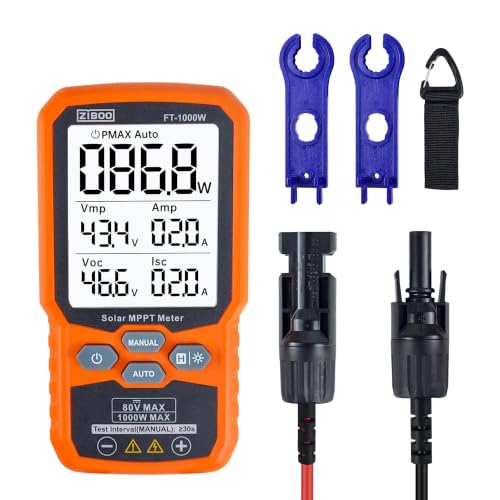
- Measures Voc, Isc, and up to 1000W
- Tracks Vmp and current in real time
- Backlit LCD with data hold for field work
Best For: PV-array performance and commissioning checks
Reliable Receptacle Check

- Clear light sequence identifies common wiring issues
- Supports 110/125V AC three-wire outlets
- Drop-resistant design with UL and CSA compliance
Best For: Basic AC receptacle testing around solar installations
Solar Power Measurement

- Measures voltage, current, power, capacity, and time
- Supports systems below 100V and 200A
- Backlit display suits outdoor and low-light testing
Best For: Low-voltage solar and battery performance measurement
Complete Circuit Diagnosis
KAIWEETS KT301P Circuit Tester

- Combines breaker finder, outlet tester, and GFCI tester
- LCD displays voltage, wiring status, and signal strength
- Includes NCV detection, adapters, and carrying case
Best For: 120V AC-side troubleshooting and breaker identification
Complete Kit Pick
Klein Tools 80025 Outlet Tester Kit

- Combines GFCI and non-contact voltage testing
- Checks common receptacle wiring problems
- Includes bright LED and audible voltage alerts
Best For: Home inspections and general receptacle checks
Simple Circuit Analyzer
GARDNER BENDER GFI-3501 Tester

- Tests standard, GFCI, and extension-cord outlets
- Shows seven common wiring conditions
- Compact tester with 6–9 mA GFCI trip range
Best For: Basic 110–125V AC receptacle screening
Display-Driven Pick

- Shows wiring status and voltage on a color LCD
- Detects seven common outlet wiring faults
- Adds auto-hold and one-click GFCI testing
Best For: Readable 120V outlet checks and home inspections
Best Displayed Diagnosis – Klein Tools RT250 GFCI Tester
For electrical outlet testers for solar installations involving standard 120V AC receptacles, the Klein Tools RT250 adds a clear LCD readout to basic wiring and GFCI checks. It is suited to troubleshooting the AC outlet side of an installation rather than testing PV-panel output.
Best For: Installers who want voltage, wiring-condition, and GFCI trip-time information in an easy-to-read display.
Pros:
- Backlit LCD shows voltage and wiring-condition information.
- Displays GFCI trip time for more detailed troubleshooting.
- Detects common faults, including open neutral and open ground.
- Auto-Hold helps preserve readings at hard-to-reach outlets.
Cons:
- Designed for 120V AC receptacles, not direct PV voltage or current testing.
- Requires two AAA batteries.
The RT250 is a strong choice when readable diagnostics matter more than a minimal, indicator-only design. Its 120V AC limitation should be considered when a solar project also requires dedicated PV-array testing.
Best Simple Fault Checker – Amprobe Home Electric Installation Kit
The Amprobe Home Electric Installation Kit is a straightforward option among electrical outlet testers for solar installations when you need to verify standard and GFCI receptacles on the 110–125V AC side. Its push-button operation keeps routine outlet checks simple.
Best For: Basic residential or light installation work requiring quick identification of common North American receptacle wiring faults.
Pros:
- Tests standard and GFCI outlets from 110–125V AC.
- Identifies five wiring faults, including open ground and reversed conductors.
- Push-button GFCI verification is simple to operate.
- UL- and CSA-listed according to the supplied notes.
Cons:
- Does not provide an LCD voltage or trip-time display.
- Intended for standard US and Canadian wall outlets, not PV-array measurements.
- The supplied details list no warranty.
This kit covers the essential receptacle checks without adding display-based features. Choose it for uncomplicated AC outlet verification, but pair it with a dedicated PV tester when evaluating solar modules or array performance.
Best Rugged Basic Tester – Klein Tools RT210 GFCI Tester
For basic AC-side verification in solar work, the Klein Tools RT210 is a compact choice among electrical outlet testers for solar installations. It checks 110/125V AC three-wire receptacles and confirms GFCI operation without adding display or PV-specific measurement functions.
Best For: Technicians who need a durable, quick tester for standard and GFCI North American receptacles.
Pros:
- Detects common wiring problems in standard and GFCI receptacles.
- Tests GFCI protective-device operation.
- Designed to withstand a 6.6-foot drop.
- Works across a 32–140°F operating-temperature range.
Cons:
- Limited to 110/125V AC three-wire outlets.
- Provides basic testing rather than LCD voltage or trip-time readings.
- Not intended for direct solar-panel electrical measurements.
The RT210 makes sense when durability and fast outlet checks are priorities. Its rugged construction suits field use, while its narrow AC-receptacle scope means it should complement—not replace—a PV module tester.
Best Dedicated PV Measurement – FT-1000W MPPT Solar Tester
The FT-1000W is the most directly relevant option for electrical outlet testers for solar installations when the job includes PV-array measurements. It evaluates solar modules and arrays by measuring Voc, Isc, and maximum power, making it a different category from AC receptacle testers.
Best For: Solar professionals checking PV performance, shading, degradation, and operating-point efficiency in field installations.
Pros:
- Measures up to 1000W, 80V Voc, and 35A Isc.
- Tracks Vmp and current in real time for MPPT-oriented evaluation.
- Includes data hold and a backlit LCD for field readings.
- Supplied notes cite CAT III 1000V/CAT IV 600V ratings, IP54 resistance, and auto-ranging.
Cons:
- It is a PV module and array tester, not a standard AC receptacle wiring tester.
- Its 80V/35A limits may not cover every PV system configuration.
- More specialized than needed for simple household outlet checks.
Unlike the other products here, the FT-1000W is designed to assess solar electrical performance rather than receptacle wiring. It is the better fit for PV-side commissioning and maintenance, while a dedicated GFCI tester remains appropriate for the installation’s AC outlets.
Reliable Receptacle Check – Klein Tools RT110
Klein Tools RT110 AC Electrical Outlet Tester | For North American Electrical Receptacles
Check Price On AmazonFor basic electrical outlet testers for solar installations, the Klein Tools RT110 is a straightforward choice for checking North American 110/125V AC, three-wire receptacles. Its light sequence helps identify common wiring problems quickly.
Best For: Testing standard AC outlets associated with residential or small solar electrical setups.
Pros:
- Clear light sequence indicates correct or incorrect wiring.
- Supports common 110/125V AC outlets at 50/60Hz.
- Designed to withstand a 6.6-foot drop.
- Conforms to UL 1436 and is CSA certified.
Cons:
- Only intended for 110/125V AC three-wire receptacles.
- Does not provide the broader solar-system measurements of a power analyzer.
The RT110 is a practical outlet-level tester rather than a full solar diagnostic instrument. Choose it when your priority is quickly checking AC receptacle wiring and verifying common faults.
Solar Power Measurement – 200A Digital Watt Meter
For electrical outlet testers for solar installations that need more than a wiring check, this digital watt meter measures voltage, current, power, capacity, and elapsed time. It is designed for systems below 100V and 200A, making rating verification essential before use.
Best For: Measuring output and energy characteristics in compatible low-voltage solar, battery, wind, and EV systems.
Pros:
- Measures 0–200A current, 0–100V voltage, and up to 6554W power.
- Tracks discharge capacity and time as well as electrical output.
- Backlit display improves visibility in low-light or outdoor conditions.
- Supports applications including solar panels, batteries, wind systems, and EV equipment.
Cons:
- Not intended for systems exceeding 100V or 200A.
- Connector specifications should be verified before purchase.
- Requires a minimum operating voltage of 4.8V for stable performance.
This analyzer is the most measurement-focused option in the group. It suits users who need quantified solar-system performance data, provided the system ratings and connector compatibility match its specifications.
Complete Circuit Diagnosis – KAIWEETS KT301P Circuit Tester
Among electrical outlet testers for solar installations, the KAIWEETS KT301P is suited to AC-side troubleshooting where breaker identification and outlet testing are both useful. It combines a circuit breaker finder, GFCI tester, non-contact voltage detector, and illuminated display for North American 120V AC circuits.
Best For: Locating breakers and diagnosing 120V AC outlets, wiring faults, and GFCI protection.
Pros:
- Combines breaker finding, outlet testing, and GFCI testing in one kit.
- LCD shows voltage from 30–150V, wiring status, and signal strength.
- Tests seven common wiring faults and includes automatic GFCI trip testing.
- Includes NCV detection, adapters, and a carrying case.
Cons:
- Designed for North American 120V AC circuits rather than direct DC solar-array testing.
- Requires batteries for operation.
- Its minimum operating voltage is 30V.
The KT301P offers broader AC troubleshooting than a basic receptacle tester, especially when the correct breaker is unknown. It is a strong fit for diagnosing the AC distribution side of a solar installation, not for measuring panel power output.
Complete Kit Pick – Klein Tools 80025 Outlet Tester Kit
For electrical outlet testers for solar installations, the Klein Tools 80025 is a practical two-piece option for checking standard and GFCI receptacles while also screening nearby wiring for voltage. It combines a plug-in GFCI tester with a non-contact voltage pen.
Best For: Home inspections, general receptacle checks, and users who want both outlet and non-contact voltage testing in one kit.
Pros:
- Includes both a GFCI outlet tester and non-contact voltage tester pen.
- Identifies common wiring issues in standard and GFCI receptacles.
- Bright LED indicators and an audible warning signal voltage detection.
Cons:
- Its outlet tester is rated for up to 125V AC, limiting it to compatible receptacle circuits.
- The supplied notes do not indicate advanced solar-system measurement functions.
This is a convenient value pick when your testing routine includes receptacles plus a quick non-contact voltage check. For solar work, confirm that the circuit being tested matches the tester’s voltage range and intended use.
Simple Circuit Analyzer – GARDNER BENDER GFI-3501 Tester
Among electrical outlet testers for solar installations, the nVent GARDNER BENDER GFI-3501 offers straightforward plug-in analysis for standard outlets, GFCI outlets, and extension cords. Its three-light display helps identify circuit status and common wiring errors.
Best For: Users who want a compact, uncomplicated tester for North American 110–125V AC receptacles and extension cords.
Pros:
- Tests standard outlets, GFCI outlets, and extension cords.
- Indicates seven wiring conditions, including open ground, open neutral, and reversed connections.
- Compact design with a GFCI trip range of 6–9 mA.
Cons:
- Designed for 110–125V AC receptacles rather than broader solar-system diagnostics.
- Uses a three-light indication system instead of a numeric voltage display.
The GFI-3501 is a focused choice for quickly screening compatible AC receptacles. Its compact format suits routine checks, but users needing displayed voltage or additional testing functions may prefer a more feature-rich model.
Display-Driven Pick – KAIWEETS KT301T GFCI Tester
The KAIWEETS KT301T stands out among electrical outlet testers for solar installations with a color LCD that shows outlet status and real-time voltage. It is designed for North American three-wire 120V outlets and adds a one-click GFCI test plus auto-hold results.
Best For: Home inspections and routine checks where a readable voltage display and stored results are useful.
Pros:
- Color LCD displays wiring status and real-time voltage.
- Detects seven common wiring faults on compatible 120V outlets.
- Auto-hold helps read results from hard-to-reach outlets.
- Includes a one-click GFCI test and a three-year warranty.
Cons:
- Intended for North American 120V AC outlets, not general solar-system testing.
- GFCI testing can trip wiring, so it requires caution on regular outlets.
- Its stated minimum operating voltage is 120V, limiting compatibility with lower-voltage circuits.
Choose the KT301T if visibility and quick interpretation matter more than a basic indicator-only design. The LCD and auto-hold are especially helpful in dim or awkward locations, provided the outlet matches its stated 120V use.
How We Picked the Best Electrical Outlet Testers for Solar Installations
We grouped these tools by their intended testing role rather than treating every model as interchangeable. Receptacle testers are useful for checking standard three-wire outlets, polarity, grounding, and GFCI operation. PV-focused meters are designed for solar-panel measurements such as open-circuit voltage, short-circuit current, and maximum power.
We also considered display clarity, test coverage, portability, included accessories, stated voltage and current limits, and how easily each tool fits into a typical troubleshooting workflow. A plug-in outlet tester cannot replace a photovoltaic meter, and neither should be used beyond its published ratings.
Quick Comparison
- Basic outlet checks: Klein Tools RT110 and Klein Tools 80025 are suited to straightforward receptacle testing.
- GFCI-focused testing: Klein Tools RT210, RT250, the KAIWEETS GFCI tester, and nVent GARDNER BENDER GFI-3501 add GFCI-related diagnostics.
- Broader electrical troubleshooting: The Amprobe kit and KAIWEETS circuit breaker finder provide additional tracing or installation tools.
- Solar-panel measurement: The FT-1000W MPPT meter and 200A digital watt meter are intended for PV voltage, current, and power checks.
Key Buying Factors for Electrical Outlet Testers for Solar Installations
Test Type and System Location
First decide whether you are testing an AC receptacle, a circuit, or the DC side of a solar array. For household outlets connected to an inverter, choose a tester rated for the applicable AC system. For panels and strings, use a meter specifically designed for PV voltage and current.
Voltage, Current, and Power Limits
Check the tester’s maximum ratings before connecting it. Solar arrays can produce hazardous DC voltage even when their output is modest, and exceeding a meter’s limits can damage the tool or create a safety hazard. Match the instrument to the panel, string, inverter, and expected measurement range.
Readability and Diagnostics
LCD displays can make readings and fault indications easier to interpret, particularly in dim or busy work areas. For outlet testers, look for clear wiring-status indicators and GFCI test functionality. For PV meters, prioritize accurate voltage, current, and power readings over features that do not support your task.
Safety and Use
Use personal protective equipment, follow the manufacturer’s procedure, and de-energize circuits whenever the test does not require live power. These tools support diagnosis; they do not replace code-compliant installation, lockout procedures, or a qualified electrician.
Who Should Buy Which Electrical Outlet Testers for Solar Installations?
Homeowners checking outlets after an inverter or electrical upgrade can usually start with a simple AC receptacle tester. Buyers who need GFCI verification should choose a model with an explicit GFCI test function. Electricians and maintenance teams may benefit from a kit or circuit tracer when locating circuits is as important as identifying outlet faults.
For installers, service technicians, and serious solar hobbyists measuring panel output, a dedicated PV analyzer is the better choice. If your work spans both the solar array and the building’s AC outlets, keep separate tools for each side of the system rather than relying on one tester for every measurement.