When storms hit, you need a dependable power system to maintain your home’s functionality. From portable power stations to versatile solar options, the right choice can make all the difference. Each system varies in capacity, recharge time, and output, meaning there’s a perfect fit for your needs. Let’s explore the top contenders that can keep you prepared and powered through any emergency situation.
Anker SOLIX C2000 Gen 2 Portable Power Station
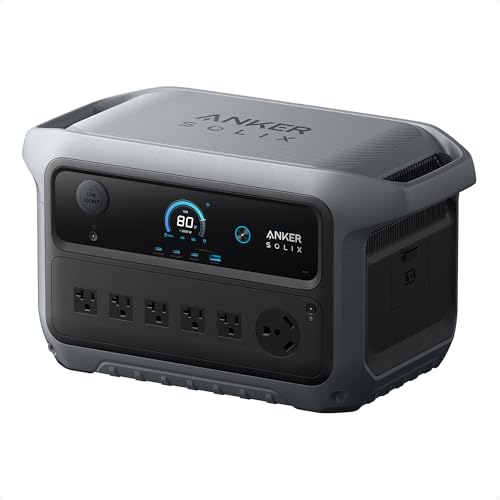
If you’re looking for a reliable and portable solution for power outages or outdoor adventures, the Anker SOLIX C2000 Gen 2 Portable Power Station is your best bet. With a peak power of 4,000W and a rated power of 2,400W, it’s perfect for running multiple appliances. Its 2048Wh LiFePO4 battery can keep a dual-door fridge running for up to 32 hours. You can recharge it in just 58 minutes via AC or solar, making it incredibly efficient. Weighing only 41.7 lb, it’s easy to transport, ensuring you’re always prepared for any storm or camping trip.
Best For: The Anker SOLIX C2000 Gen 2 Portable Power Station is best for individuals and families seeking a reliable power source for home backup, outdoor activities, or emergency situations.
Pros:
- Ultra-fast recharging capabilities allow for a full charge in just 58 minutes via AC or solar.
- Lightweight and compact design makes it easy to transport for camping or travel.
- High peak power of 4,000W enables the use of multiple appliances simultaneously, including larger devices.
Cons:
- The initial cost may be higher compared to traditional generators.
- Limited to 2048Wh battery capacity unless additional batteries are purchased for expansion.
- Despite being portable, it may still be too heavy for some users to carry comfortably over long distances.
Jackery Explorer 1000 v2 Portable Power Station

For those who need reliable power during emergencies, the Jackery Explorer 1000 v2 Portable Power Station stands out with its robust 1070Wh LiFePO4 battery and impressive 1500W output. Weighing just 23.8 lbs, it’s easy to transport, thanks to its compact design and foldable handle. You can charge it from 0% to 100% in just one hour using the Jackery App for emergency situations. With a lifespan of over 10 years and versatile connectivity options, including multiple output ports, it’s perfect for keeping your devices running smoothly. Plus, its smart control features guarantee efficient energy management.
Best For: Those seeking a reliable and portable power solution for emergencies, outdoor activities, or off-grid living.
Pros:
- Fast charging capability allows full charge in just one hour, ideal for urgent power needs.
- Long battery lifespan of over 10 years with significant capacity retention after multiple charge cycles.
- Multiple output ports offer versatile connectivity for various devices, enhancing usability.
Cons:
- Weight of 23.8 lbs may be cumbersome for some users during transport.
- Limited compatibility with solar panels, as it only works with Jackery’s own solar products.
- Higher price point compared to basic power stations, which may not fit every budget.
Jackery Portable Power Station Explorer 300

The Jackery Portable Power Station Explorer 300 is the ultimate choice for outdoor enthusiasts and those seeking reliable backup power during emergencies. Weighing just 7.1 pounds, it offers a robust 292Wh capacity, making it perfect for camping, road trips, or power outages. With two AC outlets and multiple USB ports, you can easily charge devices like laptops and smartphones. Recharge it in just two hours via a wall outlet or use solar panels for off-grid adventures. Plus, its quiet, maintenance-free operation guarantees you won’t disturb the peace. With a 2-year warranty, this power station’s reliability shines through.
Best For: Outdoor enthusiasts and individuals seeking reliable backup power during emergencies.
Pros:
- Lightweight and portable design at just 7.1 pounds.
- Quick recharge time of 2 hours to 80% via wall outlet.
- Multiple output options, including two AC outlets and various USB ports, for versatile device charging.
Cons:
- Limited battery capacity may not support high-power devices for extended periods.
- Solar panel not included, requiring separate purchase for solar charging.
- The price may be higher compared to basic power banks without advanced features.
Jackery HomePower 3000 Portable Power Station with Solar Panels

Homeowners looking for a reliable power solution during emergencies will find the Jackery HomePower 3000 Portable Power Station with Solar Panels to be an ideal choice. With a robust 3072Wh capacity, it powers essential appliances like refrigerators and lights for up to 15 hours. You can quickly recharge it in 1.7 hours via hybrid AC/DC or utilize solar panels for eco-friendly charging. Featuring multiple ports, including dual 100W PD ports for fast charging, this compact unit is durable and lightweight. Its advanced battery technology guarantees long-lasting performance, making it a smart investment for your home backup needs during storm outages.
Best For: Homeowners seeking a reliable and eco-friendly power solution during emergencies and power outages.
Pros:
- High capacity of 3072Wh, powering essential appliances for up to 15 hours.
- Fast recharge options including hybrid AC/DC in 1.7 hours and solar charging for eco-friendly use.
- Durable and compact design that is 47% smaller and 43% lighter than similar models.
Cons:
- Higher upfront cost compared to traditional generators.
- Weight of 59.52 pounds may make it less portable for some users.
- Solar charging can take up to 9 hours for optimal performance, which may not be suitable in urgent situations.
Jackery Explorer 2000 v2 Portable Power Station

When you’re facing unexpected power outages due to storms or other emergencies, the Jackery Explorer 2000 v2 Portable Power Station stands out as a reliable solution. With a capacity of 2042Wh, it provides ample power for your home or camping needs. Weighing just 39.5 lbs and featuring 3 AC ports with 2200W output, it’s both portable and powerful. You can charge it in as little as 66 minutes using AC or harness solar energy in around 6 hours. Its eco-friendly design and advanced safety features guarantee you can use it indoors without worry, making it perfect for any situation.
Best For: The Jackery Explorer 2000 v2 Portable Power Station is best for individuals and families seeking a reliable power source during emergencies, camping trips, or as a backup for home use.
Pros:
- High capacity of 2042Wh provides ample power for multiple devices and appliances.
- Fast charging capabilities allow it to reach 80% in just 66 minutes or fully charge in 102 minutes.
- Eco-friendly and safe for indoor use, producing no fumes and equipped with advanced safety features.
Cons:
- Higher initial cost compared to traditional generators may be a consideration for budget-conscious consumers.
- Weight of 39.5 lbs may be cumbersome for some users during transportation.
- Solar panel connection requires a specific straight plug, which may be an extra consideration for setup.
Anker SOLIX C1000 Gen 2 Portable Power Station

For those who frequently face power outages or enjoy off-grid living, the Anker SOLIX C1000 Gen 2 Portable Power Station is an excellent choice. With a robust 2,000W output and a capacity of 1,024Wh, it can power up to 10 devices simultaneously. You’ll appreciate the ultra-fast recharging in just 49 minutes at 1,600W, or opt for solar recharging. Its compact design makes it 14% smaller and 11% lighter than similar models, ensuring easy transport and storage. Plus, with 10 years of InfiniPower, you’ll rely on it for years, maintaining 80% capacity after 4,000 cycles.
Best For: Those who require reliable power solutions during outages, remote work, or off-grid living.
Pros:
- Ultra-fast recharging in just 49 minutes, allowing for quick turnaround between uses.
- Compact and lightweight design, making it easy to transport and store compared to similar models.
- Long-lasting battery life, with a lifespan of 10 years and at least 80% capacity retention after 4,000 cycles.
Cons:
- Higher initial investment compared to traditional power sources or smaller power stations.
- Limited solar recharging speed, requiring 1.8 hours for a full charge at 600W.
- Potential reliance on app for power management, which may not appeal to all users.
Anker Portable Power Station SOLIX C300
The Anker Portable Power Station SOLIX C300 is an excellent choice for outdoor enthusiasts and those seeking reliable backup power during emergencies, thanks to its compact design and impressive 288Wh capacity. With a 300W output and 600W surge capability, it handles multiple devices effortlessly. You’ll love the eight charging ports, including three AC outlets and two powerful USB-C options. It recharges to 80% in just 50 minutes via a wall outlet, and you can also use solar panels for off-grid adventures. Built to last, it operates quietly and is perfect for spontaneous trips or storm preparedness.
Best For: Outdoor enthusiasts, travelers, and anyone needing reliable backup power during emergencies.
Pros:
- Versatile Charging Options: Eight charging ports, including three AC outlets and two high-power USB-C ports.
- Fast Recharge Time: Recharges to 80% in just 50 minutes via a wall outlet.
- Durable and Quiet: Built to last with a quiet operation at just 25dB, making it ideal for camping and outdoor use.
Cons:
- Limited Solar Compatibility: Only compatible with specific Anker solar panels (100W or 60W), restricting solar charging options.
- Surge Limitation: While it supports a 600W surge, the continuous output is limited to 300W, which may not support high-power devices.
- Size Constraints: Although compact, it may still be bulkier than some smaller portable power solutions on the market.
Anker SOLIX C300 Portable Power Bank Station

Anker SOLIX C300 Portable Power Bank Station is perfect for outdoor enthusiasts and emergency preparedness alike, thanks to its impressive 288Wh capacity and 300W output. You’ll appreciate the versatility with seven charging ports, including two fast 140W USB-C options, a car socket, and more. Its LiFePO4 battery guarantees durability and safety, while the impact-resistant design stands up to the elements. Weighing 30% less than similar models, it’s easy to transport, especially with the optional strap. Plus, it recharges quickly—reach 80% in just one hour using dual PD 3.1 USB-C ports. Be prepared for anything with this reliable power solution.
Best For: Outdoor enthusiasts and individuals preparing for emergencies seeking a reliable and portable power solution.
Pros:
- Versatile charging options with seven ports, including two fast 140W USB-C ports for quick device charging.
- Durable design featuring LiFePO4 batteries and impact resistance, ensuring longevity and safety in various environments.
- Compact and lightweight, being 30% smaller than similar models, making it easy to transport, especially with the optional strap.
Cons:
- No wall charger included for initial activation, requiring a separate purchase or existing compatible charger.
- Limited solar charging compatibility, as it is only compatible with specific Anker solar panels.
- Not suitable for high-wattage devices, as the maximum output is capped at 300W, which may not power larger appliances.
BLUETTI Elite 200 V2 Portable Power Station

When you’re facing a storm and need reliable power, the BLUETTI Elite 200 V2 Portable Power Station stands out with its impressive 2600W continuous output. You can run up to nine devices simultaneously, making it perfect for high-demand appliances like refrigerators and coffee makers. Its efficient energy management system keeps standby power at just 10W, ensuring longer usage. With a LiFePO4 battery lasting over 17 years, you’ll enjoy durability and safety even in extreme conditions. Plus, the fast charging options let you reach 80% in just one hour, so you’ll always be prepared when the storm hits.
Best For: Those needing a reliable and durable power source for high-demand appliances during emergencies or outdoor activities.
Pros:
- 2600W continuous AC power allows for running multiple high-demand devices simultaneously.
- Long lifespan of 17 years with over 6,000 cycles, ensuring longevity and durability.
- Fast charging options, including Turbo Mode that charges to 80% in just one hour.
Cons:
- Higher initial cost compared to lower-capacity power stations.
- Weight and portability may be a concern for some users needing to transport it frequently.
- Limited solar charging efficiency may require additional investment in solar panels for optimal use.
EF ECOFLOW Portable Power Station DELTA 2

For anyone seeking reliable backup power during emergencies or outdoor adventures, the EF ECOFLOW Portable Power Station DELTA 2 stands out with its impressive 1024Wh capacity and rapid charging capabilities. It charges from 0-80% in just 50 minutes and can power 90% of your appliances with its 1800W output. You’ll appreciate the 15 outlets for multiple devices, plus the option to expand capacity up to 3kWh with extra batteries. With a clean, quiet operation and a robust LFP battery that lasts over 3000 cycles, the DELTA 2 is perfect for home backup, camping, and RV trips. Enjoy peace of mind wherever you go!
Best For: Those in need of reliable and portable backup power for home emergencies, camping trips, or RV adventures.
Pros:
- Fast charging: Reaches 80% in just 50 minutes, making it convenient for quick power needs.
- Expandable capacity: Can be increased from 1kWh to 3kWh with additional batteries, adapting to various power needs.
- Quiet operation: Provides clean energy without the noise associated with traditional generators.
Cons:
- Initial cost: Higher upfront investment compared to traditional generators.
- Weight: May be heavier than some portable power options, making transport more challenging.
- Solar panels sold separately: Requires additional purchase for solar charging capability.
Factors to Consider When Choosing Emergency Storm Power Systems
When choosing an emergency storm power system, you need to take into account several important factors. Think about your power capacity requirements, how portable and lightweight the system is, and what recharge options are available. You’ll also want to evaluate output compatibility and the durability and lifespan of the unit to guarantee it meets your needs during a storm.
Power Capacity Requirements
Choosing the right emergency storm power system requires a careful assessment of your power capacity needs, especially since essential appliances have varying wattage requirements. Start by evaluating the wattage of critical devices; for instance, a refrigerator typically needs 100-800 watts. Don’t forget to account for surge power, as some items, like hair dryers or power tools, can require 2-3 times their running wattage during startup. Next, check the system’s total power capacity in watt-hours (Wh) to guarantee it can operate your appliances for the desired duration during an outage. Also, consider runtime; a 2000Wh unit running a 500W device lasts about 4 hours. Finally, look for expandability options to increase capacity for longer emergencies.
Portability and Weight
Portability and weight play an essential role in selecting an emergency storm power system, especially since you’ll want a unit that’s easy to transport during chaotic situations. Lightweight models, like the Jackery Explorer 300 at just 7.1 lbs, are incredibly convenient for quick mobility. In contrast, the Anker SOLIX C2000 weighs around 41.7 lbs, which is still manageable for most users. Compact dimensions, such as the Explorer’s 9.1 x 5.2 x 7.8 inches, enhance portability, allowing you to fit the unit in vehicles or tight spaces. Look for power stations designed with carrying handles or straps to simplify transport during emergencies. Smaller, lighter units are generally preferable for quick deployment when every second counts.
Recharge Options Available
Having a reliable way to recharge your emergency storm power system is essential, especially during unexpected outages. Many portable power stations come with multiple recharging options like AC wall outlets, car chargers, and solar panels, giving you flexibility based on what’s available. Fast charging capabilities can drastically reduce downtime; some models recharge fully in under two hours via AC or quickly with solar. Look for advanced charging technologies like dual-input charging, which allows for quicker recharges using both AC and solar at once. Additionally, battery management systems enhance efficiency and safety, ensuring your power station performs effectively. Some systems even offer expanded capacity with extra battery packs, allowing for longer usage during emergencies.
Output Compatibility Needs
When selecting an emergency storm power system, it’s essential to assess the output compatibility to guarantee it meets your specific needs. Start by determining the wattage requirements of your essential appliances, as systems vary considerably in output capacity, with some delivering 2,400W and others offering up to 4,000W peak power. Look for systems with multiple output ports, including AC outlets, USB ports, and DC car ports, ensuring you can connect various devices. Pay attention to the surge power rating, vital for starting appliances like refrigerators. Confirm that the system supports the typical 120V voltage for household appliances. Finally, consider how many devices you’ll power simultaneously; some systems can handle up to nine devices, ideal for larger setups.
Durability and Lifespan
Choosing the right emergency storm power system goes beyond just wattage and output compatibility; durability and lifespan are essential factors that can affect your long-term investment. Look for portable power stations with high-quality lithium iron phosphate (LiFePO4) batteries, as they offer over 4,000 charge cycles while retaining at least 70% capacity. Many models are built to withstand extreme temperatures, ensuring reliable performance in various weather conditions. Advanced battery management systems (BMS) enhance longevity by regulating temperature and protecting against overcharging. Additionally, consider the materials used in construction; impact-resistant casings can appreciably boost durability. Warranties of up to 5 years reflect the manufacturer’s confidence in their products, giving you peace of mind for your emergency power needs.
Safety Features Consideration
Investing in a reliable emergency storm power system means not only considering durability but also prioritizing safety features. Look for systems that include built-in protection against short circuits, overcharging, and temperature fluctuations to prevent accidents during emergencies. Choosing a model with an Uninterruptible Power Supply (UPS) function guarantees seamless power transfer to critical devices when power interruptions occur. Pay attention to battery chemistry; LiFePO4 batteries are a safer, more stable option with a long cycle life. Additionally, opt for systems with low standby power consumption to reduce energy waste and overheating risks. Finally, multi-layer protection mechanisms against overcurrent, overvoltage, and excessive heat provide added safety, assuring reliable operation in various conditions.