A home EV charger should fit your car, your electrical panel, and the way you park—not just promise the highest charging speed. This roundup covers 10 Level 2 options, including J1772 and NACS models in plug-in and hardwired configurations.
Use the buying guide below to narrow the choices before you schedule an installation or buy a charger for an existing outlet.
Best 10 Ev Charging Stations for Home Picks for 2026
High-Output Pick
Autel MaxiCharger 50A in White
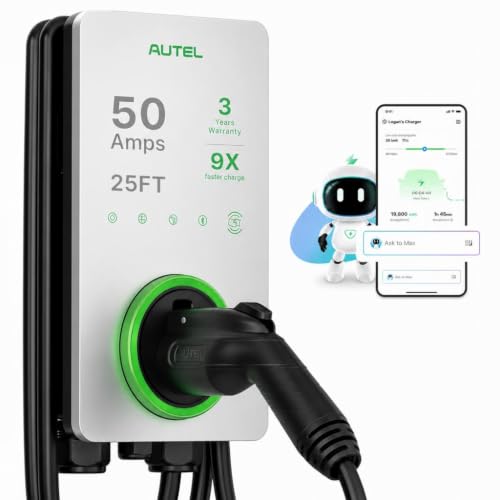
- Hardwired, adjustable 6–50A output
- 25-foot J1772 cable
- NEMA 4 rating and app scheduling
Best For: High-output J1772 home charging
Connected Charger Pick
Autel MaxiCharger 50A in Dark Gray

- Up to 50A hardwired charging
- Wi-Fi, Bluetooth, and Ethernet
- 25-foot cable; NEMA 4 housing
Best For: Connected J1772 charging at home
NACS Pick
EVIQO EVIPOWER-2 Hardwired Charger

- Direct NACS plug; 25-foot cable
- Up to 48A on a 60A circuit
- App tracking and IP66/NEMA 4 housing
Best For: Tesla and other NACS-port vehicles
Plug-In Pick
Autel MaxiCharger 40A NEMA 14-50

- NEMA 14-50 plug-in design
- Adjustable 16–40A charging
- 25-foot cable and NEMA 4X rating
Best For: Homes with a suitable NEMA 14-50 outlet
Best for Long Cable Reach
EVIQO 40A Plug-In J1772 Charger

- 25-foot charging cable
- Adjustable 6–40A output
- App scheduling and cost tracking
Best For: Plug-in setups needing extra cable reach
Best Hardwired Option
ChargePoint HomeFlex 50A J1772

- Hardwired, adjustable 16–50A
- 23-foot cable
- App controls and charging data
Best For: Permanent, electrician-installed home charging
Best Plug-In ChargePoint

- 240V NEMA 14-50 plug
- ChargePoint app controls
- UL-certified J1772 charger
Best For: ChargePoint users with a suitable 14-50 receptacle
Best for Limited Panel Capacity

- Automatically balances charging with home demand
- Up to 48A with a 25-foot J1772 cable
- Includes Vue energy monitoring and app scheduling
Best For: Homes with limited spare electrical capacity
Best Hardwired NACS Option

- Hardwired NACS connector for Tesla vehicles
- Up to 50A, subject to vehicle and electrical setup
- App controls, 24/7 support, and three-year warranty
Best For: Tesla drivers seeking a hardwired home installation
Best Plug-In NACS Option

- Plugs into a NEMA 14-50 outlet on a dedicated 50A circuit
- NACS connector and 25-foot cable
- App scheduling and adjustable 6–40A charging
Best For: NACS-equipped EV owners with a suitable 14-50 outlet
High-Output Pick – Autel MaxiCharger 50A in White
Among ev charging stations for home, this white Autel MaxiCharger suits drivers who want up to 50A from a hardwired Level 2 setup. Its adjustable 6–50A output and 25-foot J1772 cable offer flexibility for different charging needs and parking positions.
Best For: Drivers seeking a high-output J1772 charger for a professionally installed home setup.
Pros:
- Up to 50A and 12kW output.
- 25-foot cable is designed to stay flexible in cold weather.
- CSA certified, NEMA 4-rated, and backed by a three-year warranty.
- Autel Charge app supports charging schedules and off-peak planning.
Cons:
- Hardwired installation requires an electrician.
- Its J1772 connector may require an adapter for vehicles with a NACS port.
This is a strong fit when charging output and outdoor suitability matter more than plug-in convenience. Check your vehicle’s connector and have an electrician confirm the appropriate circuit before buying.
Connected Charger Pick – Autel MaxiCharger 50A in Dark Gray
If you’re comparing ev charging stations for home with robust connectivity, this dark gray Autel MaxiCharger combines up to 50A hardwired charging with Wi-Fi, Bluetooth, and Ethernet access. Its included 25-foot cable helps reach vehicles parked across a garage or driveway.
Best For: Drivers who want high-output J1772 charging plus multiple ways to connect to the Autel Charge app.
Pros:
- Up to 50A and 12kW output, with adjustable 16–50A settings.
- Wi-Fi, Bluetooth, and Ethernet connectivity support app control and firmware updates.
- CSA certified and NEMA 4-rated for indoor or outdoor placement.
- Includes a 25-foot cable and three-year warranty.
Cons:
- Requires hardwired installation by an electrician.
- J1772-equipped charging may require an adapter for vehicles with a NACS port.
Its connectivity options are the distinguishing draw, particularly if you want app-based scheduling and remote updates. As with any 50A hardwired charger, confirm the planned circuit and installation requirements with your electrician.
NACS Pick – EVIQO EVIPOWER-2 Hardwired Charger
For Tesla owners sorting through ev charging stations for home, the EVIQO EVIPOWER-2 has a built-in NACS connector, so compatible cars can plug in without an adapter. It delivers up to 48A on a dedicated 60A, 240V circuit and includes a 25-foot cable.
Best For: Tesla or other NACS-port drivers who want hardwired charging with app controls.
Pros:
- NACS plug connects directly to compatible vehicles and has a Tesla charge-port button.
- App supports charging schedules, adjustable 6–48A settings, and energy-cost tracking.
- IP66/NEMA 4 enclosure is designed for indoor or outdoor use.
- Includes a glow-in-the-dark holster and three-year warranty.
Cons:
- Requires professional hardwired installation and a suitable dedicated circuit.
- J1772 vehicles need a NACS-to-J1772 adapter, which is not included.
- App connectivity requires a 2.4 GHz Wi-Fi network.
The direct NACS connection makes this the clearest match here for a compatible Tesla setup. Verify your port type and electrical capacity before ordering, especially if you’re considering its higher-current configuration.
Plug-In Pick – Autel MaxiCharger 40A NEMA 14-50
Among ev charging stations for home, this Autel MaxiCharger stands out for its NEMA 14-50 plug rather than a hardwired connection. With an existing suitable receptacle, it offers adjustable 16–40A Level 2 charging and a 25-foot charging cable.
Best For: Drivers with an appropriate NEMA 14-50 outlet who prefer a removable charger.
Pros:
- Plug-in design can be mounted and removed more easily than a hardwired unit.
- Four charging settings: 16A, 24A, 32A, and 40A.
- Autel Charger app supports scheduling for off-peak rates.
- NEMA 4X-rated enclosure and three-year warranty.
Cons:
- Needs a suitable NEMA 14-50 receptacle; adding one still requires electrical work.
- 40A maximum output is lower than the 50A Autel hardwired models listed here.
This is the practical choice if plug-in flexibility matters and the right outlet is already available. Confirm the receptacle and circuit can support your selected current before using the higher settings.
Best for Long Cable Reach – EVIQO 40A Plug-In J1772 Charger
Among EV charging stations for home, this EVIQO model is a practical plug-in choice when your parking spot is some distance from the outlet. Its 25-foot cable and adjustable 6–40A charging give you flexibility for a garage or driveway setup.
Best For: Drivers with a dedicated 50A circuit and NEMA 14-50 outlet who want app scheduling and extra cable reach.
Pros:
- Plugs into a NEMA 14-50 outlet without hardwiring.
- App supports charging schedules, current adjustment, and energy-cost tracking.
- IP66/NEMA 4 housing suits indoor or outdoor installation.
Cons:
- Requires a dedicated 50A circuit and the correct NEMA 14-50 outlet—not a dryer outlet.
- App connectivity requires 2.4 GHz Wi-Fi.
The standard J1772 connector suits non-Tesla EVs with that port; Tesla drivers need a J1772 adapter. Check your vehicle’s port and electrical setup before ordering.
Best Hardwired Option – ChargePoint HomeFlex 50A J1772
For shoppers comparing EV charging stations for home and planning a permanent installation, the hardwired ChargePoint HomeFlex offers adjustable 16–50A charging and app-based controls. Its 23-foot cable provides room to position the unit around a parking space.
Best For: Drivers who want an electrician-installed, hardwired J1772 charger with flexible current settings.
Pros:
- Adjustable 16–50A output accommodates different installation setups.
- ChargePoint app provides charging information, reminders, and controls.
- UL-certified for indoor or outdoor installation and includes a cold-resistant cable.
Cons:
- Requires hardwired installation by an electrician rather than plugging into an existing outlet.
- Some app features and troubleshooting steps require Wi-Fi; Tesla vehicles need an adapter.
This is the HomeFlex to consider if you are already budgeting for electrical installation. Confirm the circuit size and charging setting with your electrician, since charging speed also depends on your vehicle.
Best Plug-In ChargePoint – HomeFlex NEMA 14-50 J1772
If you want ChargePoint’s app features in a plug-in unit, this HomeFlex is one of the EV charging stations for home designed around a 240V NEMA 14-50 receptacle. Its J1772 connector serves non-Tesla EVs, while Tesla drivers need an adapter.
Best For: Drivers with a suitable NEMA 14-50 receptacle who prefer a plug-in ChargePoint charger.
Pros:
- Uses a NEMA 14-50 plug rather than a hardwired connection.
- ChargePoint app offers charging controls, reminders, and charging information.
- UL-certified, with a cold-resistant cable for indoor or outdoor installation.
Cons:
- Requires a suitable 240V NEMA 14-50 receptacle on a 40A or 50A circuit.
- Tesla vehicles require a J1772 adapter.
The main decision is installation type: choose this version if your electrical setup supports its plug and you want the ChargePoint experience without selecting the hardwired model. Actual charging speed depends on your vehicle.
Best for Limited Panel Capacity – Emporia Pro with PowerSmart
Among EV charging stations for home, the Emporia Pro stands out if your electrical panel has limited spare capacity. Its included Vue monitor and PowerSmart software balance charging against household electricity use, helping you charge as quickly as your available capacity allows without a panel upgrade.
Best For: Homes where electrical capacity is tight and drivers want energy-use monitoring.
Pros:
- PowerSmart automatically adjusts charging load based on household demand.
- Up to 48A output and a 25-foot J1772 charging cable.
- App supports schedules, real-time usage tracking, and peak-rate avoidance.
- Includes a Vue home energy monitor for broader energy insights.
Cons:
- Its J1772 connector does not plug directly into a Tesla charge port.
- Full PowerSmart functionality depends on setting up the included home energy monitor.
This is the strongest fit of the three if managing a constrained home electrical supply matters more than having a native NACS connector. Confirm your vehicle’s charging-port compatibility and installation plan before ordering.
Best Hardwired NACS Option – ChargePoint HomeFlex
If you’re comparing EV charging stations for home and want a native NACS connector for a Tesla, this hardwired ChargePoint HomeFlex is worth a look. It supports up to 50A charging, with actual speed dependent on the vehicle and electrical setup.
Best For: Tesla drivers who want a permanently installed charger with app controls.
Pros:
- NACS connector plugs directly into compatible Tesla vehicles.
- ChargePoint app offers charging information, reminders, and smart-home connectivity.
- UL-certified for indoor or outdoor installation and equipped with a cold-resistant cable.
- Includes 24/7 support and a three-year warranty.
Cons:
- Requires hardwired installation by an electrician.
- The NACS connector is not a direct fit for vehicles with a J1772 port.
Choose this model if you prefer a fixed NACS setup and value ChargePoint’s app and support. Have an electrician confirm the appropriate circuit and installation requirements for your desired charging rate.
Best Plug-In NACS Option – EVIQO 40A Level 2 Charger
For shoppers seeking plug-in EV charging stations for home, the EVIQO 40A charger uses a NEMA 14-50 outlet on a dedicated 50A circuit instead of a hardwired connection. Its NACS plug connects directly to Teslas and other EVs with NACS ports, and its 25-foot cable offers flexibility around a garage or driveway.
Best For: NACS-equipped EV owners with a suitable NEMA 14-50 outlet who want app-based charging controls.
Pros:
- Delivers up to 40A through a 240V NEMA 14-50 plug.
- App lets you set charging speed, schedule sessions, and track energy use and cost.
- IP66/NEMA 4 housing is designed for indoor or outdoor use.
- Includes a glow-in-the-dark holster and a three-year warranty.
Cons:
- Requires a dedicated 50A circuit and the correct NEMA 14-50 outlet; it does not fit a dryer outlet.
- J1772 vehicles need a NACS-to-J1772 adapter, which is not included.
- App connectivity requires 2.4 GHz Wi-Fi.
This is a practical choice when the right outlet is already available and a direct NACS connection is the priority. Check your outlet, circuit, and vehicle port before buying.
How We Picked the Best Ev Charging Stations for Home
We focused on practical differences across the 10 selected Level 2 chargers: J1772 versus NACS connectors, plug-in versus hardwired installation, stated output ratings, cable length, and smart controls. The lineup includes models rated up to 40A, 48A, or 50A, so it covers different household electrical setups. Product specifications are a starting point, not a substitute for checking installation requirements or confirming current features with the manufacturer.
Quick Comparison: What Separates the Picks?
The biggest divide is installation. The EVIQO 40A, plug-in ChargePoint HomeFlex, and Tesla 40A use NEMA 14-50 plugs; the other selected chargers are hardwired. Next is connector type: the Tesla models and hardwired NACS ChargePoint suit NACS-equipped vehicles, while the selected Autel, EVIQO, J1772 ChargePoint, and EMPORIA chargers use J1772. Check your vehicle’s port and any adapter requirements before buying.
For higher stated output, compare the 50A Autel and hardwired J1772 ChargePoint models with the 48A Tesla and EMPORIA options. These ratings do not guarantee those speeds in your garage; the circuit, installation, charger settings, and vehicle all matter.
Key Buying Factors for Ev Charging Stations for Home
Electrical Capacity and Installation
Have a qualified electrician assess your panel, wiring, breaker capacity, and proposed mounting location. Under typical continuous-load rules, a 40A charging setting requires a 50A circuit, while 48A requires a 60A circuit; a 50A setting generally calls for a circuit rated at least 62.5A, subject to applicable code and equipment instructions. A plug-in model needs a properly installed, compatible outlet—not merely an outlet with the right shape. If your home cannot support the maximum output, ask whether the charger can be set to a lower current.
Connector, Cable, and Controls
Choose a connector that works with your vehicle, and confirm compatibility if you plan to use an adapter or charge more than one EV. Measure from the intended mounting point to the charge port in each parking position; a 25-foot cable can offer flexibility, but routing matters. Wi-Fi, scheduling, and energy monitoring can be useful, particularly for off-peak electricity rates. Check which features require an app or network connection. For an outdoor installation, verify the specific model’s environmental rating and follow its mounting instructions.
Who Should Buy Which Ev Charging Stations for Home?
Choose a NEMA 14-50 plug-in model if you already have a suitable outlet or want an installation that does not permanently wire the charger to the house. Choose hardwired if you want a fixed installation or need an output setting above 40A, provided your electrical setup supports it. NACS drivers can start with the Tesla and NACS ChargePoint options; J1772 drivers can compare Autel, EVIQO, J1772 ChargePoint, and EMPORIA. If your panel has limited spare capacity, prioritize a workable current setting and discuss the EMPORIA Pro’s PowerSmart requirements with your installer rather than assuming any charger will solve a capacity constraint.