Choosing the right tester can make solar diagnostics faster, safer, and more consistent. Whether you’re checking a residential array, a portable kit, or an RV setup, the right meter helps you verify output without guesswork.
This roundup focuses on solar panel testers that measure key PV values like Voc, Isc, Vmp, and Pmax, with options for different power ranges and field-use needs.
Best 10 Solar Panel Testers Picks for 2026
Professional PV Validation
ZIBOO FT-2000W Solar Panel Tester MPPT Meter

- Measures Pmax, Voc, Isc, Vmp, and Imp
- Up to 2000W, 150V, and 35A testing range
- CAT III/CAT IV rating with backlit LCD and data hold
Best For: R&D, installers, and field maintenance teams
Wide-Range Field Tester
1800W Solar Panel Tester MPPT Photovoltaic Multimeter

- Measures 5W-1800W, 20V-120V, and up to 60A
- No batteries needed; runs directly from the panel
- Includes MC4 and alligator clip cables in EVA box
Best For: Installers needing a portable, easy-to-use PV tester
Dual-Mode Commissioning Tool
Solar MPPT Power Tester SK-705X
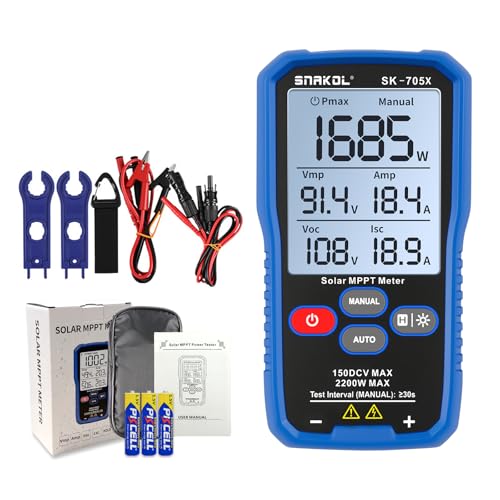
- Reads Pmax, Vmp, Imp, Voc, and Isc
- Automatic and manual measurement modes
- 3.2-inch backlit LCD with included accessories
Best For: Commissioning and inspection work with flexible testing needs
Practical Troubleshooter
1800W Solar Panel Tester MPPT Photovoltaic Multimeter Watt
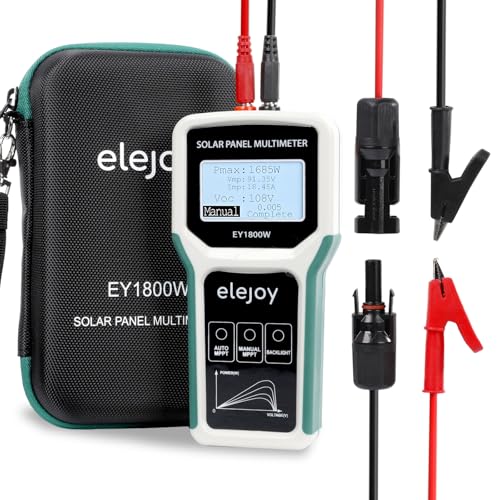
- Real-time Pmax, Voc, and Isc measurements
- Lightweight with EVA tool kit for portability
- No batteries required; includes MC-4 and alligator clips
Best For: Quick field diagnostics and panel output checks
Portable PV Performance Tester
Solar MPPT Power Tester for PV Modules
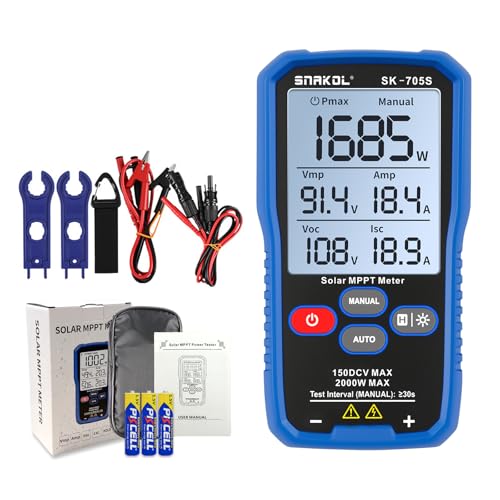
- Measures Pmax, Vmp, Imp, Voc, and Isc
- Auto and manual test modes
- Backlit 3.2-inch LCD with data hold
Best For: Installers and technicians checking PV module performance
High-Range Solar MPPT Meter
UNI-T UT673PV Solar Panel Tester

- Tests Pmax, Vmp, Imp, Voc, and Isc
- Solar-powered, no batteries needed
- Automatic/manual modes with multi-language display
Best For: Manufacturers, installers, and users needing broad PV testing
Professional Field PV Tester
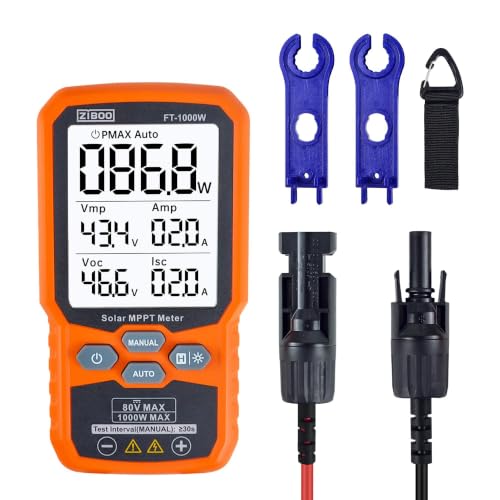
- Measures Pmax, Voc, Isc, Vmp, and current
- CAT III 1000V / CAT IV 600V rating
- Backlit LCD, data hold, IP54 resistance
Best For: Technicians needing a compact outdoor PV tester
Compact MPPT Meter

- Measures Pmax, Voc, and Isc with MPPT tracking
- MC4 plug-and-play setup with auto/manual modes
- Sunlight-readable LCD with built-in safety protections
Best For: Beginners and installers needing a simple, all-in-one solar tester
Portable Pro Reader
LODESTAR LD673PV Solar Panel Tester

- Reads Pmax, Vmp, Voc, Isc, and current
- Backlit display shows key values at once
- Compact kit includes pouch, leads, and MC4 tool
Best For: Portable single-panel testing for installers and DIY users
High-Capacity Tracker

- Tests up to 1800W and 120V input
- Auto and manual MPPT detection included
- Backlit LCD with multiple safety protections
Best For: Higher-capacity solar testing and troubleshooting
Professional PV Validation – ZIBOO FT-2000W Solar Panel Tester MPPT Meter
If you need solar panel testers for serious commissioning or maintenance work, this ZIBOO meter is built to check key PV output values quickly. It measures Pmax, Voc, Isc, Vmp, and Imp, making it useful for spotting underperforming modules, shading issues, or degradation in residential, commercial, and field settings.
Best For: R&D teams, installers, and maintenance techs who want high-capacity PV testing with safety-focused hardware.
Pros:
- Measures up to 2000W with Voc from 12-150V and Isc up to 35A.
- Includes MPPT-focused readings for Vmp and Imp to help evaluate panel performance.
- Built for safer high-voltage use with CAT III 1000V/CAT IV 600V ratings.
- Backlit LCD, data hold, auto-ranging, and IP54 resistance improve field usability.
Cons:
- Higher-end capability may be more than casual users need.
- Optimized for PV professionals rather than general-purpose electrical testing.
This is a strong pick if your priority is dependable solar diagnostics with broad measurement coverage and rugged, worksite-friendly features. It leans toward professional use, but the clear display and auto-ranging help keep day-to-day testing straightforward.
Wide-Range Field Tester – 1800W Solar Panel Tester MPPT Photovoltaic Multimeter
Among solar panel testers in this range, the FROGBRO unit stands out for its broad measurement window and simple no-battery operation. It measures solar output from 5W to 1800W, with voltage up to 120V and current up to 60A, so it works well for a variety of residential and commercial PV checks.
Best For: Installers and technicians who want a portable tester with a wide output range and easy setup.
Pros:
- Measures 5W to 1800W, 20V to 120V, and up to 60A.
- Clear LCD is designed for readability even in direct sunlight.
- No batteries required; powered directly by the solar panel during testing.
- Includes MC4 and alligator clip cables plus a durable EVA box.
Cons:
- Voltage ceiling is lower than some higher-end PV testers.
- Best suited to solar-specific jobs rather than general electrical diagnostics.
This is a practical choice if you value portability, simple operation, and a broad enough range for many common PV setups. The included carry case and cable options make it especially convenient for mobile work.
Dual-Mode Commissioning Tool – Solar MPPT Power Tester SK-705X
If you want solar panel testers that make installation checks and service work more flexible, this SK-705X offers both automatic and manual measurement modes. It reads Pmax, Vmp, Imp, Voc, and Isc, giving you a solid snapshot of photovoltaic module performance in the field.
Best For: Commissioning, servicing, and inspection tasks where quick readouts and mode flexibility matter.
Pros:
- Measures key PV values including Pmax, Vmp, Imp, Voc, and Isc.
- Automatic and manual modes support both continuous and controlled testing.
- 3.2-inch backlit LCD improves visibility outdoors.
- Includes test leads, alligator clips, storage pouch, and user manual.
Cons:
- The notes give conflicting output specs, so buyers should verify their exact testing needs.
- Not the most compact option if you only need basic spot checks.
This tester is a good fit for users who want more control over how measurements are taken. The backlit display and included accessories make it ready for field use right out of the box.
Practical Troubleshooter – 1800W Solar Panel Tester MPPT Photovoltaic Multimeter Watt
This entry among solar panel testers focuses on fast, practical PV troubleshooting. It measures Pmax, Voc, and Isc in real time, helping you compare actual output against specifications and identify performance issues without needing batteries or complicated setup.
Best For: Field users who want a lightweight tester for quick solar panel diagnostics.
Pros:
- Tracks Pmax, Voc, and Isc for basic PV performance checks.
- Lightweight design with EVA tool kit makes it easy to carry.
- No batteries required; connects directly to the panel.
- MC-4 connectors and alligator clips are included for setup flexibility.
Cons:
- Specification detail is lighter than on some other testers in this list.
- Best for focused solar testing rather than broad electrical measurement.
Choose this model if you want a straightforward way to spot panel issues and verify output in the field. Its emphasis on portability and immediate use makes it a sensible everyday diagnostic tool.
Portable PV Performance Tester – Solar MPPT Power Tester for PV Modules
If you need one of the more capable solar panel testers for installation or maintenance work, this SK-705S focuses on fast MPPT-style performance checks. It measures key values like Pmax, Vmp, Imp, Voc, and Isc, so you can quickly verify whether a photovoltaic module is performing as expected during commissioning or troubleshooting.
Best For: Installers, technicians, and maintenance teams checking panel output on residential or commercial PV systems.
Pros:
- Measures Pmax, Vmp, Imp, Voc, and Isc for practical PV diagnostics.
- Supports automatic and manual test modes for different field workflows.
- 3.2-inch backlit LCD with data hold improves readability outdoors.
- Compact, portable design includes leads, alligator clips, pouch, and manual.
Cons:
- Designed for PV module testing, not broader electrical troubleshooting.
- Its 150V DC max and 45A current limit may not suit every array setup.
This is a straightforward option if your priority is verifying solar module performance rather than adding a general-purpose meter. The included accessories and clear display make it easy to put to work right away.
High-Range Solar MPPT Meter – UNI-T UT673PV Solar Panel Tester
Among solar panel testers, the UNI-T UT673PV stands out for users who want a wide measurement range and simple, self-powered operation. It tests maximum power, peak power voltage, peak power current, open circuit voltage, and short circuit current, while displaying results together on a large screen for quicker field checks.
Best For: Photovoltaic manufacturers, installers, and end users who need a portable tester with broad measurement capability.
Pros:
- Wide testing range covers Pmax, Vmp, Imp, Voc, and Isc.
- Automatic and manual MPPT modes with data hold support flexible testing.
- No batteries required; powered by the solar panel itself.
- Includes MC4 test lead, wrench tool, cloth bag, and manual.
Cons:
- Its maximum operating voltage is listed at 60V, so it is not aimed at every high-voltage setup.
- The interface may be more than casual users need for occasional spot checks.
For teams that want a solar-powered tester with multi-language support and a broad measurement menu, this is a practical field tool. The included protections also add confidence during routine PV inspection work.
Professional Field PV Tester – ZIBOO FT-1000W MPPT Meter
If you want solar panel testers built for field validation and maintenance, the ZIBOO FT-1000W focuses on core PV measurements with a professional safety profile. It measures Pmax up to 1000W, plus Voc and Isc, and it tracks Vmp and current in real time to help identify shading or degradation issues on installed panels.
Best For: Solar technicians and installers who need a compact tester for PV performance checks in outdoor environments.
Pros:
- Measures Pmax, Voc, Isc, Vmp, and current for PV diagnostics.
- Backlit LCD and data hold help when working in low light.
- CAT III 1000V / CAT IV 600V rating supports professional use.
- IP54 resistance and auto-off add durability and convenience outdoors.
Cons:
- Its maximum power limit is 1000W, so larger systems may exceed its intended range.
- Focused on PV module testing rather than a wider electrical toolkit.
This model is a solid fit if you want a compact, safety-conscious tester for routine solar checks. The combination of measurement features and rugged design makes it well suited to install-and-inspect workflows.
Compact MPPT Meter – Solar Panel Tester 2000W
If you want solar panel testers that are simple to use but still give detailed readings, this compact MPPT meter is built for practical field checks. It measures Pmax, Voc, and Isc with built-in MPPT tracking, and the MC4 plug-and-play setup makes it easy to start testing quickly for RV, home, and off-grid systems.
Best For: Beginners and installers who want an easy, all-in-one tester for solar panel diagnostics and performance checks.
Pros:
- Measures Pmax, Voc, and Isc with MPPT tracking for reliable readings
- MC4 connection and auto/manual modes make setup straightforward
- 3.2-inch LCD is designed to stay readable in direct sunlight
- Built-in protections include over-voltage, over-current, reverse polarity, and overheating
Cons:
- Designed for solar panel testing rather than broader electrical troubleshooting
- Battery-powered tool may require upkeep for frequent field use
This is a strong pick if you value fast setup, outdoor readability, and a tester that covers the core solar measurements without a steep learning curve. Its protective design and all-in-one function make it especially practical for routine installation and maintenance work.
Portable Pro Reader – LODESTAR LD673PV Solar Panel Tester
Among solar panel testers, the LODESTAR LD673PV focuses on accurate single-panel measurements in a compact format. It reads Pmax, Vmp, Voc, Isc, and current, with a backlit LCD that shows the key data at once, making it useful for installation, troubleshooting, and maintenance.
Best For: Electricians, installers, and DIY users who need a portable tester for single solar panel measurements.
Pros:
- High-precision MPPT testing for Pmax, Vmp, Voc, Isc, and amp readings
- Backlit LCD displays multiple parameters on one screen
- Compact 193g design comes with pouch, test leads, and MC4 disconnect tool
- Reverse polarity protection and CE, RoHS compliance add confidence
Cons:
- For single solar panel measurement only, not series or parallel panels
- 1000W max power limit is lower than some larger testers
If you mainly test individual panels, this model offers a balanced mix of portability, visibility, and measurement coverage. The included accessories and safety protections make it a sensible choice for regular on-site use.
High-Capacity Tracker – EY1800W Solar Tester
If you need solar panel testers with a higher ceiling for larger panels, the EY1800W is built around 1800W capacity and 120V input support. It offers auto and manual MPPT detection, measures open-circuit voltage, current, and maximum power point data, and uses a backlit LCD for easier reading in bright conditions.
Best For: Users who want a higher-capacity tester for solar power checks and troubleshooting on larger panels.
Pros:
- Measures up to 1800W and supports voltage up to 120V
- Auto and manual MPPT detection help match different testing needs
- Backlit LCD improves visibility, with VOC readable in any mode
- Built-in protections cover over-voltage, over-temperature, over-current, reverse connection, and overrated power
Cons:
- Alligator clips are included, but the solar panel itself is not
- Focuses on power-meter style testing rather than broader multimeter functions
This model stands out for users who want more headroom than entry-level testers provide. Its stronger capacity and flexible MPPT modes make it well suited to practical solar troubleshooting where higher panel output matters.
How We Picked the Best Solar Panel Testers
We focused on Solar Panel Testers that balance measurement range, ease of use, portability, and clear data readouts. Priority went to models that support common PV diagnostics such as Voc, Isc, Vmp, and maximum power testing, with enough current and voltage capacity for real-world field work.
We also considered display quality, automatic versus manual testing modes, and whether the tester is a better fit for small systems, larger arrays, or frequent on-site troubleshooting.
Quick Comparison: What Matters Most
If you want a simple choice, match the tester to your system size first. Lower-capacity units can be a smart fit for smaller rooftops, RV solar, and compact installations, while higher-capacity meters are better for larger strings and higher-output modules.
For fast diagnostics, look for clear LCD or color screens, stable MPPT measurement behavior, and a device that makes it easy to confirm whether the panel is performing as expected.
Key Buying Factors for Solar Panel Testers
Voltage and Current Limits
Check the maximum DC voltage and current rating before buying. A tester should comfortably cover the panels you work with now and leave room for future projects.
Measurement Types
The most useful Solar Panel Testers measure Voc, Isc, Vmp, and Pmax. If you troubleshoot often, automatic and manual modes can save time and give you more control over test conditions.
Display and Usability
A readable display matters in bright outdoor conditions. Larger screens, backlighting, and simple menu layouts make field testing easier, especially when you are comparing multiple panels.
Portability and Job Fit
Compact testers suit installers, hobbyists, and RV owners who need quick checks on the go. More robust units are a better match for service teams and professionals testing multiple modules in the field.
Who Should Buy Which Solar Panel Testers?
Choose a basic or lower-capacity model if you mainly test smaller residential systems, portable solar kits, or RV setups. Step up to a higher-capacity tester if you handle larger arrays, higher-current modules, or need broader coverage for different panel sizes.
If you value speed and flexibility, prioritize MPPT-based Solar Panel Testers with both automatic and manual measurement options. If you mainly want straightforward verification, a simple meter with strong core readings may be all you need.