Reliable backup power starts with choosing a solar kit that matches your household’s essential loads, available roof space, and expected outage duration. The options in this roundup range from compact panel-and-controller packages to complete off-grid systems with split-phase inverters and substantial battery storage.
Use the guide below to compare system scale, component compatibility, installation requirements, and realistic backup needs before choosing a kit for your home.
Best 10 Rooftop Solar Panel Kits for Home Backup Picks for 2026
Best Whole-Home System
10kW ECO-WORTHY Off-Grid Solar Kit

- 10kW 120V/240V split-phase inverter
- 16.1kWh LiFePO4 battery storage
- Includes five 590W solar panels
Best For: High-output whole-home backup
Best Low-Maintenance Panels
HISHEN 990W Frameless Solar Panel Pair

- Two 495W panels provide 990W total
- UL 61730 certified with 10-year warranty
- Frameless design helps shed debris
Best For: Custom rooftop backup arrays
Best Mid-Size Complete Kit
SUNGOLDPOWER 5kW Off-Grid Solar Kit

- 5,000W 120V pure sine wave inverter
- 5.12kWh LiFePO4 battery included
- Six 200W panels plus mounting hardware
Best For: Moderate backup at cabins and smaller properties
Best High-Efficiency Panel Pair
Renogy 640W N-Type Solar Panels

- Two 320W panels deliver 640W total
- Up to 25% efficiency with N-type 18BB cells
- IP68-rated construction with pre-drilled holes
Best For: Durable additions to 12V/24V backup systems
Best Complete 48V Backup Kit
9.36kWh 2340W Off-Grid Solar System
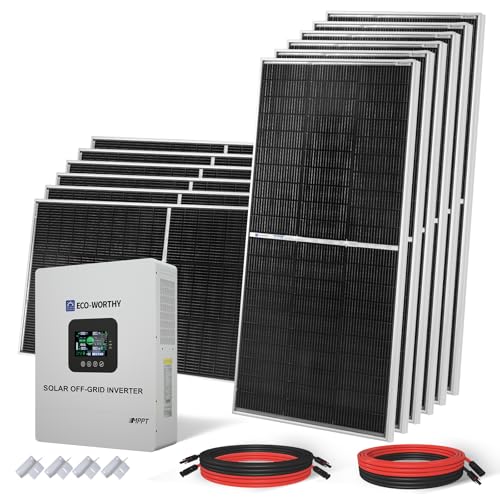
- Includes 12 panels and a 5,000W pure sine inverter
- Supports up to 9.36kWh daily output in stated conditions
- Expandable with parallel inverter operation
Best For: Off-grid homes, cabins, sheds, and farms needing a scalable 48V system
Best Single-Panel Expansion

- 25% efficient N-Type solar cells
- Works with 12V and 24V battery systems
- Backed by long-term workmanship and performance coverage
Best For: Expanding compatible rooftop, RV, van, cabin, or off-grid arrays
Best High-Power Complete System
10kW 120V/240V Solar Backup Kit

- Includes panels, two lithium batteries, and a 10kW inverter
- Provides 120V/240V split-phase output
- Offers app monitoring and multiple charging modes
Best For: Larger off-grid homes needing integrated storage and high-power appliance support
Best Mounting Hardware
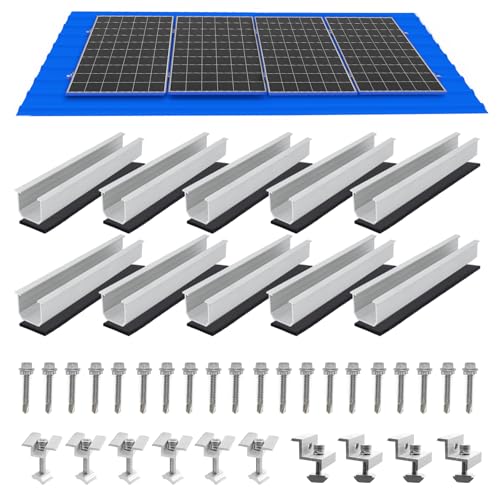
- Rails, clamps, pads, and screws included
- Fits 1.18- to 1.38-inch panels
- Designed for four panels in one row
Best For: DIY mounting of four compatible solar panels
Best Complete Home System
10kW Split-Phase Solar Backup Kit

- 10,620W of listed panel capacity
- 32.2kWh combined LiFePO4 storage
- 120V/240V split-phase inverter output
Best For: Large off-grid homes needing substantial backup capacity
Best Small Backup Starter
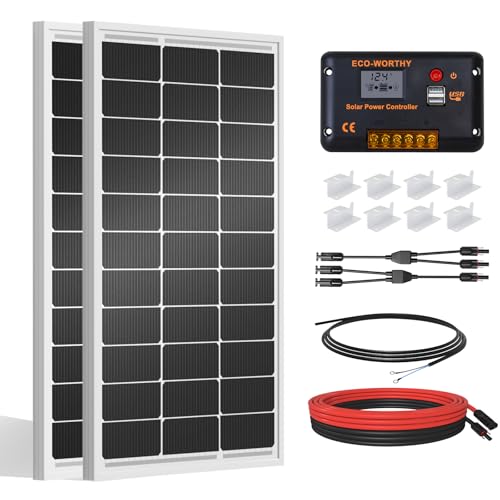
- Two 100W monocrystalline panels
- 30A PWM controller included
- Supports 12V parallel or 24V series wiring
Best For: Cabins, sheds, RVs, and low-demand backup systems
Best Whole-Home System – 10kW ECO-WORTHY Off-Grid Solar Kit
For shoppers seeking rooftop solar panel kits for home backup, this ECO-WORTHY package is a substantial whole-house option. It combines five 590W panels, a 10kW split-phase inverter, and a 48V 314Ah LiFePO4 battery with approximately 16.1kWh of storage. Because of its size and electrical complexity, professional installation is recommended.
Best For: Homeowners needing high-output 120V/240V backup and substantial battery storage.
Pros:
- 10,000W continuous output with 120V/240V split-phase support.
- Approximately 16.1kWh of LiFePO4 storage with monitoring through the display, Bluetooth, Wi-Fi, and PC connectivity.
- Includes five 590W panels, inverter, battery, and required cables.
Cons:
- Professional installation is recommended; this is not a beginner-friendly setup.
- Large panels and battery ship by truck on a pallet, requiring suitable delivery access.
- The listed 2,950W solar array is smaller than the inverter’s 10kW output capacity.
This is the most capable and expandable system in the group, with support for parallel battery and inverter configurations. It makes sense for serious home backup planning, provided the buyer has the space, budget, and qualified electrical help required.
Best Low-Maintenance Panels – HISHEN 990W Frameless Solar Panel Pair
This two-panel HISHEN package is a flexible building block for rooftop solar panel kits for home backup. It supplies 990W total from two 495W frameless monocrystalline panels and emphasizes a clean-edge design intended to reduce dust, water, snow, and debris accumulation. It includes panels only, so a compatible inverter, battery, wiring, and mounting solution are still needed.
Best For: Homeowners adding compact, high-wattage panels to a custom backup or off-grid system.
Pros:
- 990W total rated output from two 495W panels.
- UL 61730 certification and a stated 10-year product warranty.
- Frameless Cleanedge design may reduce edge buildup and routine cleaning needs.
Cons:
- Does not include a battery, inverter, cables, or mounting hardware.
- Frameless panels may require careful planning for installation and handling.
- Actual output depends on sunlight, shading, and system compatibility.
Choose this pair when panel efficiency, appearance, and reduced maintenance matter more than buying a complete backup system. Verify roof dimensions, mounting requirements, and electrical compatibility before ordering.
Best Mid-Size Complete Kit – SUNGOLDPOWER 5kW Off-Grid Solar Kit
For a smaller household, cabin, shed, or dedicated backup circuit, this SUNGOLDPOWER package offers a more approachable complete system than larger whole-home kits. It includes a 5,000W 48V inverter, six 200W panels, a 51.2V 100Ah LiFePO4 battery, mounting brackets, and extension cables. The inverter provides 120V output and pure sine wave power.
Best For: Small homes, cabins, RVs, sheds, and users building a moderate off-grid backup system.
Pros:
- Complete package includes inverter, six panels, battery, brackets, and extension cables.
- 5,000W inverter has a 10,000W peak rating and 100A MPPT controller.
- LiFePO4 battery offers a safer, longer-life storage option than traditional lead-acid batteries.
Cons:
- Provides 120V output rather than the 120V/240V split-phase output needed by some large appliances.
- The included battery is 5.12kWh, less storage than larger whole-home systems.
- Wi-Fi monitoring requires a separately sold Wi-Fi module.
This kit balances included components and usable output for moderate backup needs. Its 48V architecture and parallel capability allow expansion, but buyers should confirm that the 120V output and battery capacity match their essential loads.
Best High-Efficiency Panel Pair – Renogy 640W N-Type Solar Panels
This Renogy two-panel set is a component choice for shoppers assembling rooftop solar panel kits for home backup rather than buying an all-in-one package. The pair provides 640W total from two 320W N-type panels, with 18 busbars, up to 25% cell efficiency, IP68 protection, and pre-drilled mounting holes. An inverter, battery, and other system hardware are not included.
Best For: DIY-oriented buyers adding durable panels to a compatible 12V or 24V backup system.
Pros:
- Two 320W panels provide 640W total rated output.
- N-type 18BB cells are designed to reduce hot-spot effects and improve temperature tolerance.
- IP68 construction and pre-drilled holes support outdoor and off-grid installations.
Cons:
- Panels only; no battery, inverter, wiring, or mounting brackets are included.
- Requires a shade-free installation site for the stated performance.
- Each panel weighs about 90.5 pounds, which can complicate rooftop handling.
These panels are a practical fit for expanding a compatible backup array, especially where durability and efficient use of roof space are priorities. Check roof load capacity, voltage requirements, and available mounting hardware before installation.
Best Complete 48V Backup Kit – 9.36kWh 2340W Off-Grid Solar System
For shoppers comparing rooftop solar panel kits for home backup, this ECO-WORTHY system bundles 12 195W panels with a 5,000W pure sine wave inverter and 100A MPPT controller. It is designed for off-grid use and can support common 110V loads such as refrigerators, TVs, coffee makers, microwaves, and portable air conditioners when properly sized and installed.
Best For: Homes, cabins, sheds, farms, and other locations needing a ready-to-use 48V off-grid backup system.
Pros:
- Includes 2,340W of solar panels and a 5,000W inverter in one kit.
- Rated output is up to 9.36kWh per day under four hours of full sunshine.
- Pure sine wave inverter includes MPPT charging, multiple charging modes, and solar/mains hybrid charging.
- Supports parallel operation of up to six inverters for expanded capacity.
Cons:
- Does not include batteries, so storage must be purchased separately.
- Professional installation is recommended.
- The stated daily energy figure depends on four hours of full sunshine.
This is a strong foundation for a larger off-grid backup setup, especially if you already have compatible 48V batteries. Its expansion capability is useful, but the lack of included storage adds to the total project cost.
Best Single-Panel Expansion – 200W N-Type Solar Panel
If you are building rooftop solar panel kits for home backup one component at a time, this Renogy 200W N-Type panel offers a compact way to add generation capacity. Its 25% cell efficiency, 24V operating output, and compatibility with 12V and 24V battery systems make it a flexible panel for appropriately matched off-grid installations.
Best For: Buyers expanding a compatible solar array or working with limited roof space, including Class B vans, RVs, cabins, and small off-grid systems.
Pros:
- 200W output with 25% N-Type cell efficiency.
- Designed to be smaller and lighter than the previous model.
- Compatible with both 12V and 24V battery systems.
- Includes a 10-year material and workmanship warranty and 25-year performance guarantee at 80% output.
Cons:
- This is a single panel, not a complete backup kit.
- Requires a compatible charge controller, inverter, mounting hardware, and battery system.
- Its 200W rating alone is limited for whole-home backup loads.
This panel is best viewed as an expansion or starter component rather than a standalone home-backup solution. Confirm your system voltage, mounting arrangement, and controller compatibility before adding it to an array.
Best High-Power Complete System – 10kW 120V/240V Solar Backup Kit
For homeowners seeking rooftop solar panel kits for home backup with storage included, this ECO-WORTHY package combines 12 bifacial 195W panels, two 48V 100Ah lithium batteries, and a 10,000W 120V/240V inverter. The split-phase output is intended for higher-power household appliances, while battery monitoring and multiple operating modes add control over charging and discharging.
Best For: Larger off-grid homes or properties that need 120V/240V output, integrated battery storage, and room for future expansion.
Pros:
- Complete package includes 2,340W of panels, two 48V 100Ah lithium batteries, and a 10,000W inverter.
- Provides 120V/240V split-phase output for compatible high-power appliances.
- Battery supports CAN/RS485 communication plus Bluetooth and Wi-Fi monitoring.
- UL 1741 inverter certification and UL 1973/UL 9540A battery certifications are listed.
Cons:
- Professional installation is recommended.
- The stated 9.36kWh daily solar output depends on four hours of full sunshine.
- Large-system installation requires adequate roof, wiring, and equipment space.
Among these options, this is the most complete choice for a higher-capacity backup installation because batteries and split-phase output are included. Its expanded capabilities also make professional system design and installation particularly important.
Best Mounting Hardware – Four-Panel Roof Rail Kit
If you already have panels and are assembling rooftop solar panel kits for home backup, this four-panel mounting set supplies the rails, clamps, pads, and screws needed for a secure row installation. Its adjustable clamps fit panels from 1.18 to 1.38 inches thick and are designed for several roof and off-grid applications.
Best For: DIY builders mounting four panels on tin, flat, sheet, or other suitable roof surfaces.
Pros:
- Includes rails, EPDM rubber pads, middle clamps, end clamps, and stainless-steel screws.
- Adjustable clamps accommodate a stated 1.18- to 1.38-inch panel thickness range.
- Pre-drilled rails and self-tapping screws can simplify installation.
- Aluminum alloy, EPDM rubber, and stainless-steel components are intended for outdoor use.
Cons:
- This is mounting hardware, not a complete solar panel, battery, or inverter system.
- The kit is specified for a four-panel-in-a-row assembly, so larger arrays require additional planning or hardware.
This kit is a practical foundation for a compatible rooftop array, but confirm panel thickness, roof type, structural suitability, and local installation requirements before buying.
Best Complete Home System – 10kW Split-Phase Solar Backup Kit
For shoppers seeking rooftop solar panel kits for home backup with substantial storage, this complete off-grid package combines 18 590W panels, a 10kW split-phase inverter, and two 48V 314Ah LiFePO4 batteries. It is a large, professional-installation system intended to support common household loads and extended energy storage.
Best For: Homeowners needing a high-capacity 120V/240V off-grid setup with built-in monitoring and significant battery storage.
Pros:
- Provides 10,000W continuous output with 120V/240V split-phase support and up to 20,000W peak output.
- Includes 10,620W of listed PV capacity from 18 590W monocrystalline panels.
- Two batteries provide a stated 32.2kWh combined energy-storage capacity.
- Inverter and batteries support features such as Wi-Fi/Bluetooth monitoring, dual MPPT control, and battery-management protection.
Cons:
- Professional installation is recommended; the system is not intended for novice installation.
- Large, heavy components ship on a pallet by truck, so delivery access must be suitable.
- Its size and capacity may be excessive for smaller backup loads or limited installation spaces.
This is the most comprehensive option of the three, but buyers should confirm load calculations, permitting, roof capacity, delivery logistics, and installer availability before committing.
Best Small Backup Starter – 200W 12V/24V Solar Kit
This compact kit is a simpler entry point for rooftop solar panel kits for home backup, cabins, sheds, and small off-grid systems. It includes two 100W monocrystalline panels, a 30A PWM charge controller, mounting brackets, and cabling, with series or parallel wiring for 24V or 12V setups.
Best For: Small backup applications, cabins, sheds, RVs, and other low-demand 12V or 24V systems.
Pros:
- Complete starter package includes panels, Z brackets, charge controller, solar cables, connectors, and tray cable.
- Can be wired in series for 24V or parallel for 12V applications.
- Monocrystalline panels list up to 21.5% efficiency under suitable conditions.
- Corrosion-resistant aluminum frames and an IP65-rated junction box support outdoor use.
Cons:
- The 200W total rating and stated daily output are intended for smaller loads, not whole-home backup.
- It includes a PWM controller rather than a higher-efficiency MPPT controller.
- A battery is not listed among the included components, so energy storage must be added separately.
This kit offers an accessible way to build a modest backup system, but verify battery compatibility and expected energy needs before treating it as a home-backup solution.
How We Picked These Rooftop Solar Panel Kits for Home Backup
We focused on the components that determine whether a kit can provide useful backup power: solar-array wattage, inverter output, battery capacity, voltage, panel efficiency, certifications, and included equipment. The selection covers complete systems as well as individual panels and mounting hardware, since some homeowners may prefer to build a system in stages.
For home backup, specifications should be evaluated as a complete system rather than by panel wattage alone. A kit with a large array but limited battery storage may perform well during sunny hours yet provide little overnight coverage. Conversely, a large battery needs enough solar input and an appropriately sized inverter to recharge and run household loads.
Quick Comparison
| Kit type | Best suited for | What to check |
|---|---|---|
| Complete 10 kW-class systems | Large homes and heavier essential loads | Electrical service, split-phase compatibility, permits, and installation |
| 2.34 kW to 5 kW systems | Essential circuits and moderate backup needs | Battery runtime, expansion options, and peak-load handling |
| Standalone 200 W to 640 W panels | Custom systems, additions, and smaller loads | Controller, inverter, battery voltage, roof layout, and wiring |
| Mounting kits | Roof installation projects | Roof type, rafter spacing, wind and snow loads, and hardware compatibility |
Key Buying Factors for Rooftop Solar Panel Kits for Home Backup
Power Output and Battery Capacity
List the appliances you need during an outage, including refrigerators, freezers, medical equipment, internet equipment, pumps, and lighting. Compare both running watts and startup surges. Inverter capacity determines what can run simultaneously, while battery capacity determines how long those loads can operate. Usable capacity is lower than the advertised battery rating, so leave a practical reserve.
System Voltage and Inverter Compatibility
48-volt systems are common for larger residential installations because they can reduce current and cable size. Confirm that the panels, charge controller, battery bank, and inverter are designed to work together. If you need 120/240-volt power for well pumps, larger appliances, or a home transfer system, verify that the inverter provides true split-phase output.
Panel Efficiency, Roof Space, and Conditions
Higher-efficiency panels can produce more power from a limited roof area, but orientation, shade, temperature, and roof pitch also affect output. Check the panel’s electrical ratings against the controller or inverter’s maximum voltage and current. Do not assume advertised wattage equals daily production; local sunlight and seasonal conditions matter.
Installation, Safety, and Expansion
Roof-mounted electrical systems typically require proper racking, weatherproof penetrations, grounding, overcurrent protection, and local approval. Have a qualified installer review structural loading and code compliance. Also check whether the battery bank, panels, or inverter can be expanded without replacing the core equipment.
Who Should Buy Which Rooftop Solar Panel Kits for Home Backup?
Choose a complete high-capacity system if you want a coordinated package for a larger home and are prepared for professional installation. A mid-size system is a better fit when your priority is a defined group of essential circuits rather than whole-home coverage. Standalone panels make sense for experienced DIY system builders or homeowners expanding an existing battery setup. A mounting kit is useful only when the roof hardware matches your roof construction and the selected panels.
Before ordering, confirm included cables, breakers, batteries, monitoring equipment, warranties, and shipping details. Most importantly, size the system around your actual loads and local solar conditions—not the largest number printed in a product title.