Solar Panel Inverter Size Calculator
Description: Estimate inverter size from system size and peak load using the Solar Panel Inverter Size Calculator. Enter the system size (kW), peak load (kW), and desired headroom (%) to get the recommended inverter capacity. The calculator uses a simple formula to ensure the inverter can handle either your PV array or your peak demand plus a safety margin.
What this Solar Panel Inverter Size Calculator does
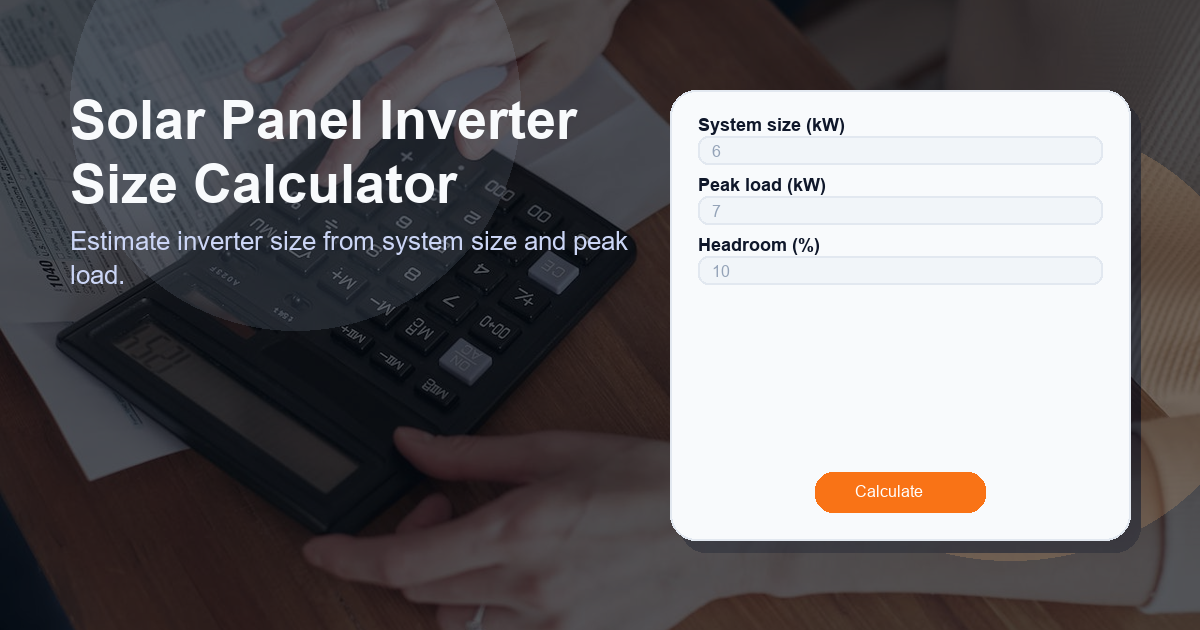
The Solar Panel Inverter Size Calculator provides a quick, conservative estimate of the inverter capacity you should specify for a solar installation. It compares two key inputs—your PV system size and your peak electrical load—and applies a configurable headroom percentage to recommend an inverter size. The calculator is designed for planning and early-specification stages; it gives a clear starting point for system designers, installers, and homeowners.
Inputs:
- System size (kW) — the rated DC or AC size of the solar array (depending on how you measure your PV system).
- Peak load (kW) — the highest sustained demand your site may draw from the inverter.
- Headroom (%) — the additional capacity you want above the larger of system size or peak load to allow for safety, inefficiencies, and future expansion.
Result label: Inverter Size (displayed in kW).
How to use the Solar Panel Inverter Size Calculator
Using the calculator is straightforward. Follow these steps to get a reliable inverter size estimate:
- Enter the System size (kW): This is typically the DC rating of your PV array or the AC nameplate size depending on how you model your system. Use the value you want the inverter to support.
- Enter the Peak load (kW): Input the maximum expected load the inverter will need to supply (for example, peak household demand or critical loads in an off-grid setup).
- Enter Headroom (%): Choose a safety margin. Typical values range from 5% to 25% depending on risk tolerance, expected inverter clipping, and plans for expansion.
- Read the Inverter Size result: The calculator displays the recommended inverter capacity in kW.
Example: If your system size is 6 kW, peak load is 5 kW, and headroom is 15%, the calculator will select the larger of 6 and 5 (which is 6) and apply 15% headroom to recommend an inverter size of 6 * 1.15 = 6.9 kW.
How the Solar Panel Inverter Size Calculator formula works
The calculator uses a simple, transparent formula that prioritizes the larger of two values—system size or peak load—and then increases it by the specified headroom percentage. The formula is:
Math.max(system_size_kw, peak_load_kw) * (1 + inverter_headroom_percent / 100)
Step-by-step explanation:
- Math.max(system_size_kw, peak_load_kw): Choose the higher of the PV system capacity or the peak electrical demand. This ensures the inverter is sized to handle the greater requirement.
- Multiply by (1 + headroom/100): Apply headroom to accommodate inefficiencies, start-up surges, voltage derating, or future expansion. For example, 10% headroom means multiplying by 1.10.
Why this logic? Inverter selection must ensure the inverter can handle the larger of the two conditions: when the solar array is producing at near-rated power, and when the site demands its highest load. By using the maximum and adding headroom, the calculator gives a practical and conservative sizing figure.
Use cases for the Solar Panel Inverter Size Calculator
The calculator is useful across many scenarios. Typical use cases include:
- Residential solar systems: Homeowners planning a grid-tied or hybrid solar system can estimate inverter size quickly based on array size and household peak demand.
- Commercial rooftop installations: Designers can use the tool during early design to balance PV capacity with building loads and budget constraints.
- Off-grid and hybrid systems: Off-grid systems with battery storage need an inverter that handles peak loads; this calculator highlights the peak-driven sizing requirement.
- Future expansion planning: Systems expected to expand later can include larger headroom to avoid inverter replacement when adding panels or loads.
- Quick feasibility checks: Use the calculator for fast, conservative estimates during client consultations or system proposals.
Other factors to consider when calculating inverter size
The calculator gives a baseline recommendation, but real-world inverter selection must account for many additional technical and practical factors. Consider the following when finalizing your inverter size:
- Inverter efficiency: Inverter losses affect usable power. Typical efficiencies are 95–98%. Factor this into final system modeling.
- Continuous vs surge rating: Some loads have high start-up currents (motors, pumps). Ensure the inverter can handle surge currents or provide separate start-up solutions.
- Array-to-inverter ratio (DC:AC ratio): Grid-tied systems often oversize DC relative to inverter AC capacity to increase energy yield. Check manufacturer limits for clipping and warranty compliance.
- Ambient temperature and derating: Inverter output can reduce at high temperatures. Evaluate site conditions and manufacturer derating curves.
- Voltage and current compatibility: Ensure PV string voltages, MPPT ranges, and inverter input currents match your array design.
- Battery integration and hybrid capabilities: If batteries are present, ensure the inverter supports battery charging/discharging profiles, round-trip efficiency, and system topology (AC vs DC coupling).
- Grid codes, safety and certifications: Local regulations may require specific inverter certifications, anti-islanding behavior, and disconnect hardware.
- Power factor and harmonics: Industrial or commercial sites may have reactive loads; check inverter capabilities for power factor correction and harmonic distortion limits.
- Future load growth: Plan ahead—if you expect to add electric vehicle charging, HVAC, or other loads, increase headroom accordingly.
FAQ
Q: Is the calculator result the final inverter specification?
A: No. The Solar Panel Inverter Size Calculator gives a fast, conservative estimate. Use it as a starting point—confirm final specifications with detailed design, manufacturer datasheets, and local codes.
Q: Should I size the inverter to the system size or the peak load?
A: The calculator uses the larger of the two values to ensure the inverter meets either condition. In practice, choose whichever is highest after considering DC:AC ratios, expected clipping, and surge demands.
Q: How much headroom should I use?
A: Typical headroom ranges from 5% to 25%. Use the lower end for carefully modeled systems and the higher end if you expect future expansion, higher temperatures, or uncertain load profiles.
Q: Can I use this for off-grid systems with batteries?
A: Yes, but additionally check battery inverter/charger specs, continuous and surge ratings, and whether the inverter’s charger can handle the expected battery bank and charge profiles.
Q: Does the calculator account for inverter clipping when array DC is larger than inverter AC?
A: No, clipping and array-to-inverter oversizing effects are not modeled here. If you plan a DC:AC oversize strategy, model energy yield and clipping losses with PV simulation tools and confirm inverter warranty limits.
Summary: The Solar Panel Inverter Size Calculator provides a clear, simple method to estimate inverter capacity using the formula Math.max(system_size_kw, peak_load_kw) * (1 + inverter_headroom_percent / 100). Use it for initial sizing, then refine with detailed design checks for efficiency, derating, surge capability, and compliance with local standards.